
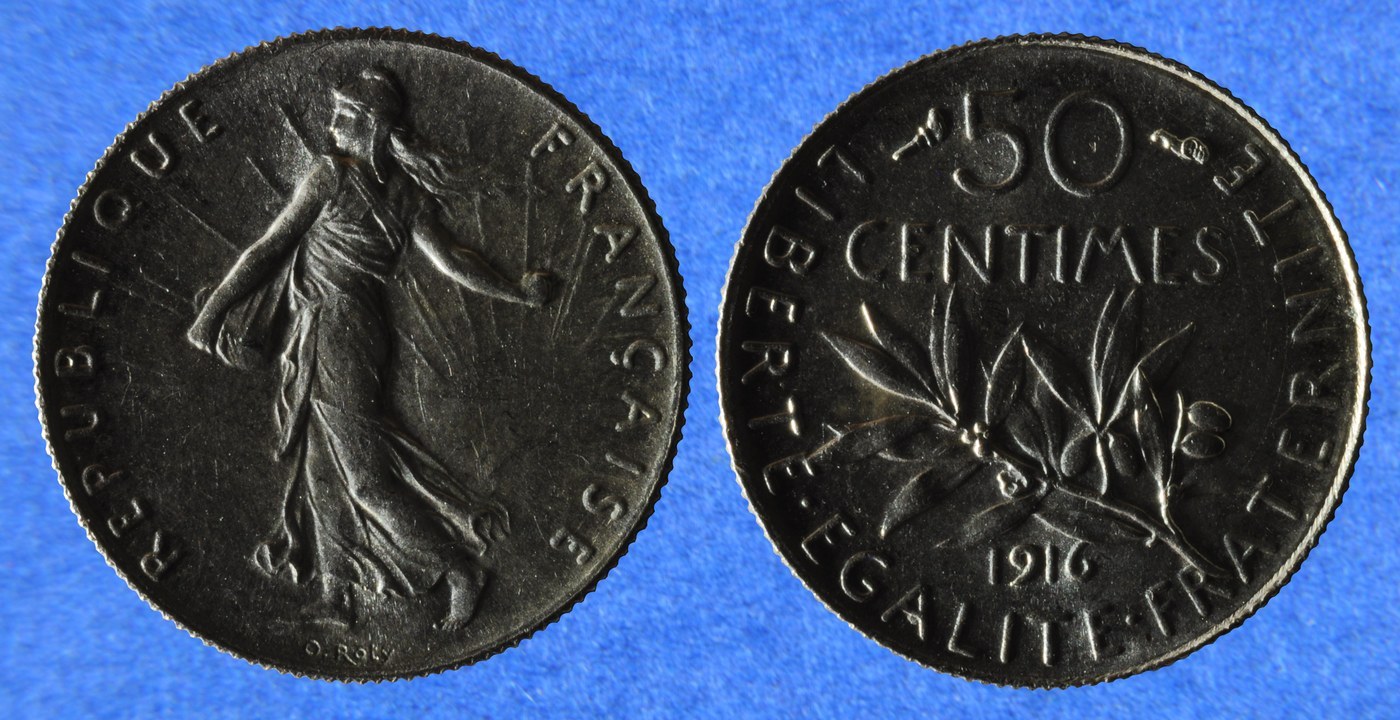
French Semeuse 50 Centimes
A small French silver coin showing the striding Semeuse (Sower) with a liberty cap; the reverse frames the value 50 CENTIMES in an oak-and-olive wreath.
- Country
- France
- Denomination
- 50 Centimes
- Metal
- Silver
Got a coin like this?
Identify any coin from a photo, free.
Overview
The French Semeuse 50 Centimes is a small silver coin of the French Third Republic, named for the Semeuse ("Sower") figure on its obverse: a woman striding forward against the sunrise, sowing seed, wearing a Phrygian liberty cap. The example shown here is dated 1916, struck during the First World War.
The reverse carries the denomination 50 CENTIMES with the date, enclosed by a wreath of oak and olive branches, and the republican motto LIBERTÉ ÉGALITÉ FRATERNITÉ around the rim. As a fifty-centime piece it was worth half a franc and served as everyday small silver change.
The Semeuse design by sculptor Louis-Oscar Roty is one of the most enduring images in French coinage, and the small silver 50-centime denomination was minted across many years of the early twentieth century, making worn examples common survivors today.
History & Background
The Sower was designed by the engraver and medallist Louis-Oscar Roty in the late 1890s and first appeared on French silver in 1897. The motif proved so popular that it was later revived on twentieth-century francs and, much later, on French euro coins, making the Semeuse a continuous thread through more than a century of French money.
The silver 50 centimes was struck through the opening decades of the Third Republic. Wartime issues such as this 1916 coin were produced as France was mobilised for the First World War, a period when silver small change was heavily used before rising metal costs and wartime economics curtailed such coinage.
Silver production of the small Semeuse denominations wound down around 1920, after which the composition and later the design of French minor coinage changed. The oak-and-olive wreath reverse and striding Sower obverse, however, remained fixed features of the silver series throughout its run.
How to Identify
Obverse (shown): the Semeuse — a woman walking left, sowing seed from a fold of her gown, wearing a Phrygian (liberty) cap, with the sun's rays low on the horizon behind her. The signature O. ROTY appears in the field, and the legend RÉPUBLIQUE FRANÇAISE curves around the design.
Reverse (shown): the value 50 CENTIMES over the date 1916, enclosed within a wreath of oak (left) and olive (right) branches tied at the base, with LIBERTÉ ÉGALITÉ FRATERNITÉ around the rim.
Size and metal: a small silver coin roughly 18 mm across and about 2.5 g, struck in .835 fine silver, with a reeded (milled) edge. Tiny mint-privy symbols appear on the reverse beside the date, identifying the mint and engraver. A single I would mark nothing here — the denomination is spelled out in words, which separates it from the larger 1- and 2-franc Semeuse pieces of the same design.
Value & Collectibility
Values depend mainly on date, mint, grade and eye appeal. The silver Semeuse 50 centimes was struck in large numbers over many years, so common dates in worn condition trade for only a little above their silver content.
A circulated 1916 example typically sells in the low single-figure to low tens of dollars/euros, while sharp, lightly worn or lustrous uncirculated pieces command more. Scarcer dates and mint combinations, and top-grade coins, can be worth substantially higher than common-date bullion-level pieces.
Because the coin contains real silver, badly worn examples still hold intrinsic value, but cleaned, bent, holed or heavily worn coins sell at a discount. Treat any single quoted figure as a guide and compare recent sales of the same date and grade before buying or selling.
Frequently asked questions
Who is the woman on the front of the coin?
She is the Semeuse, or "Sower" — an allegory of the French Republic shown striding forward sowing seed and wearing a Phrygian liberty cap. The design is by Louis-Oscar Roty.
Is the Semeuse 50 centimes made of silver?
Yes. The small Semeuse 50-centime pieces of this era were struck in silver, .835 fine, which is why worn examples still hold intrinsic metal value.
What do the branches around the value mean?
The reverse wreath is made of oak (strength) and olive (peace) branches enclosing the denomination 50 CENTIMES and the date, with the motto Liberté Égalité Fraternité around the rim.
How much is a 1916 example worth?
As a common-date silver coin, a worn 1916 piece is usually worth a little above its silver content, while sharp uncirculated examples bring more. Value depends on mint, grade and eye appeal.
How big is the coin?
It is small — about 18 mm across and roughly 2.5 g in silver, with a reeded edge, making it a half-franc piece worth 50 of the 100 centimes in a franc.
French Semeuse 50 Centimes guides
In-depth guides for identifying, valuing, and collecting French Semeuse 50 Centimes.
Other coins you may enjoy
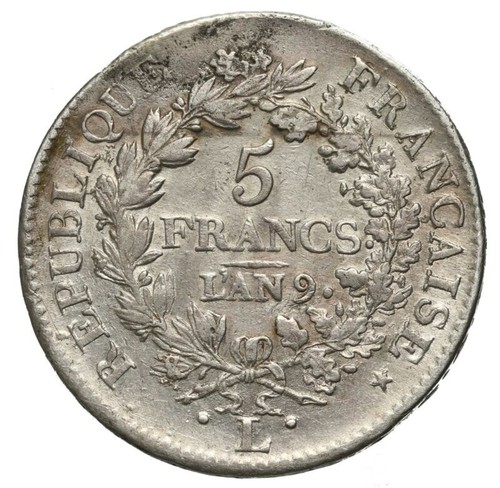
5 Francs (First Republic)
L'an 9 (1800–1801)
Trinidad and Tobago Dollar
2015
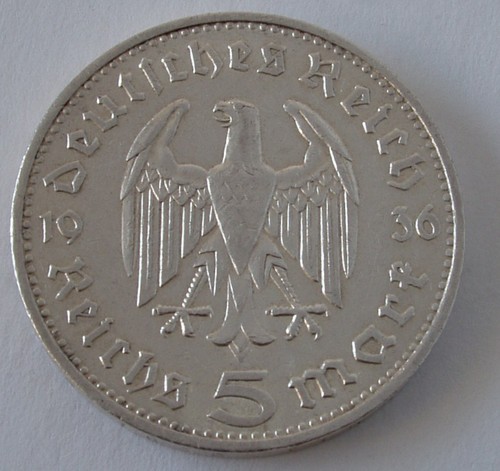
German 5 Reichsmark (Hindenburg)
1935–1936 (Hindenburg type with swastika)
5 Francs Semeuse
1960–1969
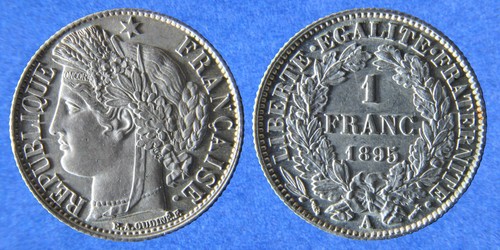
French Cérès 1 Franc
1849–1895
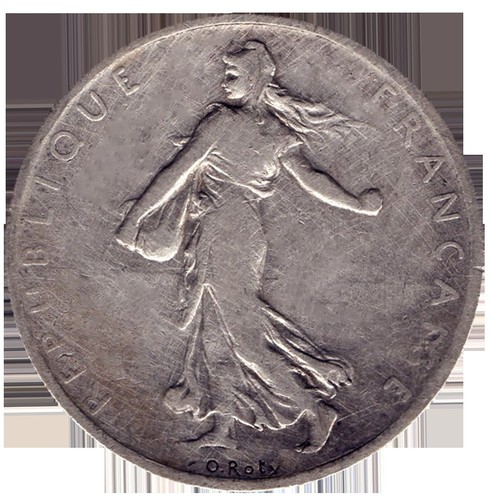
French Semeuse 2 Francs
1898–1920 (silver issues; pictured example dated 1899)
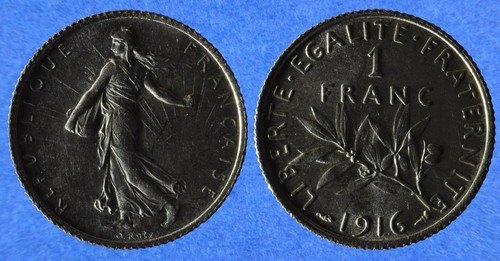
French Semeuse 1 Franc
1898–1920 (silver Semeuse 1 franc type)
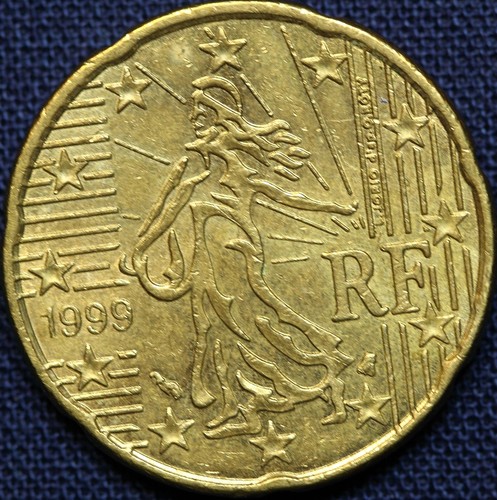
France 50 Cent Euro
1999–present
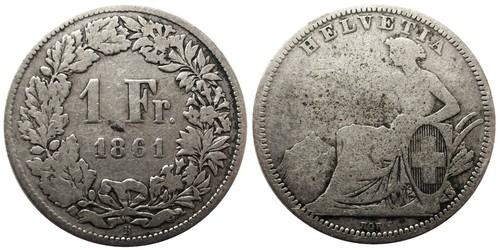
Swiss 1 Franc
1861
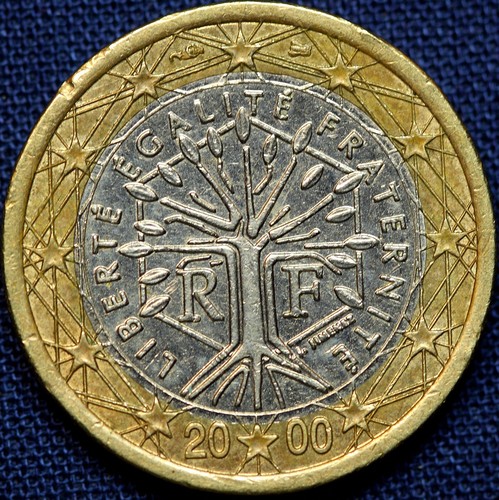
France 20 Centimes
1962–2001 (Fifth Republic, Marianne / Lagriffoul type)
Swiss 2 Francs
1860
Austria-Hungary 15 Kreuzer
1807