
How to Identify the French Semeuse 50 Centimes
A collector's guide to recognizing the small silver Sower 50 centimes by its striding Semeuse, oak-and-olive wreath, size and mint marks.
Read the full French Semeuse 50 Centimes encyclopedia entry →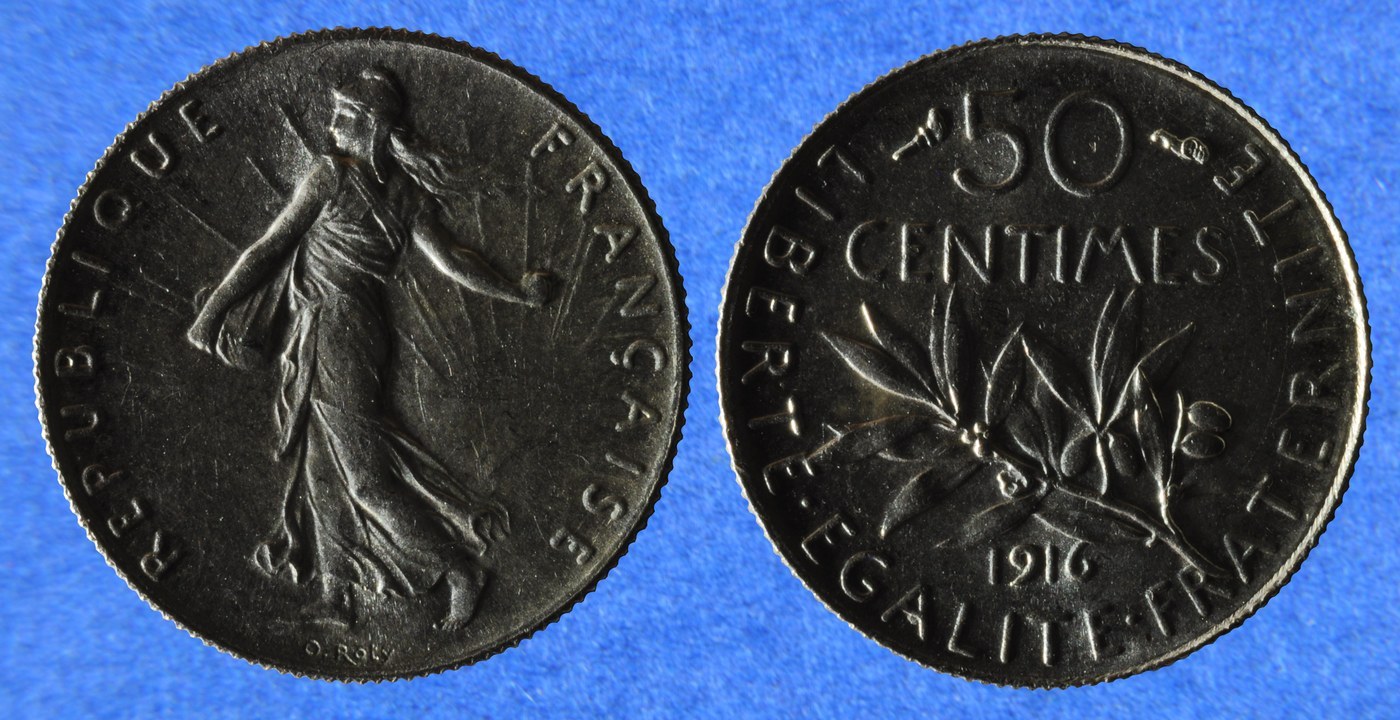
Start with the obverse, because the Semeuse is the coin's signature feature. Look for a woman walking left and sowing seed, wearing a Phrygian (liberty) cap, with the sun's rays low behind her and the ground beneath her feet. The legend RÉPUBLIQUE FRANÇAISE curves around the design and the engraver's signature O. ROTY sits in the field. This same figure appears on several French denominations, so the obverse alone tells you it is a Sower coin but not which value.
Turn to the reverse to confirm the denomination. A genuine 50-centime piece spells out 50 CENTIMES in words above the date, all enclosed in a wreath of oak and olive branches tied at the bottom, with LIBERTÉ ÉGALITÉ FRATERNITÉ around the rim. If the reverse instead reads 1 FRANC or 2 FRANCS, or shows a different reverse layout, you are holding a larger Semeuse coin, not the 50 centimes.
Check size and metal to rule out look-alikes. The silver 50 centimes is small — about 18 mm and roughly 2.5 g, .835 fine silver, with a reeded edge. It should look bright silver where unworn and is non-magnetic. A coin that is markedly larger or heavier is likely the 1- or 2-franc Sower; a base-metal, aluminium-bronze or magnetic "Sower" piece is a later, different composition.
Read the small symbols beside the date on the reverse. French coins carry tiny mint privy marks and an engraver's different (a small symbol such as a torch, cornucopia or similar) that identify the mint and year workshop. These, together with the date, determine which specific issue you have and matter for scarcer date-and-mint combinations.
Authenticate with care. Compare weight, diameter and the reeded edge against reference figures for a confirmed silver 50 centimes. Be wary of cleaned, tooled, holed or mounted coins (some were worn as jewellery), and of cast copies — a wrong weight, a visible edge seam, or soft, "soapy" detail can betray a fake. For a scarce date or an uncertain piece, seek an opinion from a reputable dealer or grading service rather than relying on images alone.
Frequently asked questions
How do I tell the 50 centimes from the 1- and 2-franc Sowers?
Read the reverse: the 50-centime piece spells out 50 CENTIMES in the oak-and-olive wreath and is the smallest of the silver Sowers, about 18 mm. The francs are larger and read 1 FRANC or 2 FRANCS.
What size and weight should it be?
About 18 mm in diameter and roughly 2.5 g in .835 silver, with a reeded edge and non-magnetic. Anything markedly larger, heavier, base-metal or magnetic is a different coin.
What are the little symbols next to the date?
They are French mint privy marks and the engraver's different, small symbols that identify the mint and workshop. With the date they pin down the exact issue and can affect value.
Should I clean the coin before identifying it?
No. Cleaning damages the silver surfaces and lowers both detail and value. Handle it by the edges, and identify it by weight, size and the design as found.