
Coin Encyclopedia
Search and identify coins from around the world — with country, denomination, metal, mint, history, and how to tell them apart.
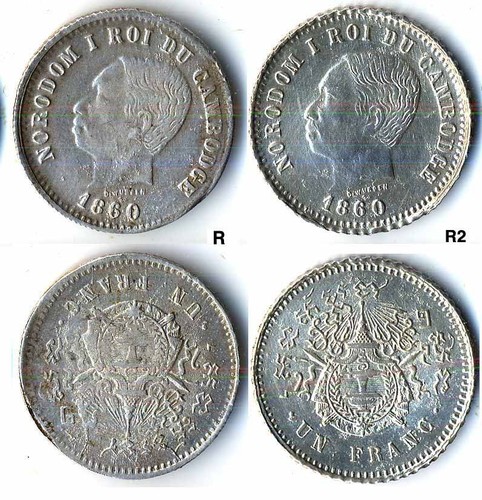
Cambodia One Franc
A mid-20th-century one-franc coin of the Kingdom of Cambodia, its obverse bearing a royal Norodom profile and its reverse a heraldic coat of arms.
Southeast Asia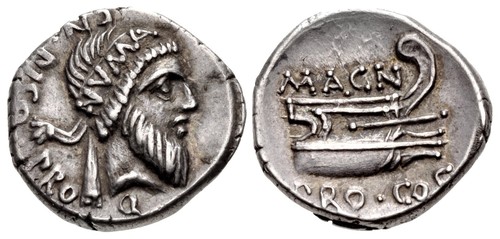
Numapis Denarius
A silver denarius of the Roman Republic (1st century BC) pairing a male portrait facing right with a ship or galley and lettering on the reverse.
Ancient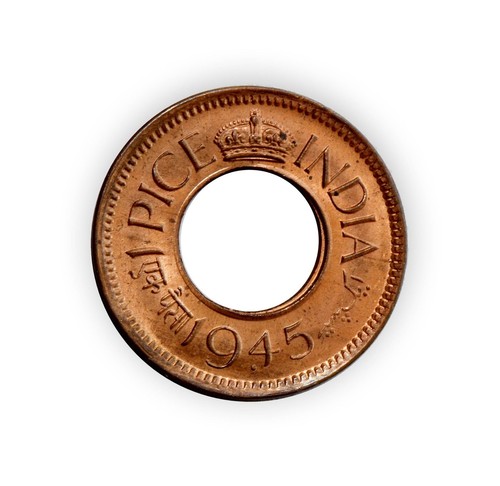
British India One Pice
A small holed copper-bronze One Pice of British India under George VI, dated 1945, its obverse crowned and lettered INDIA and PICE around a central hole.
British India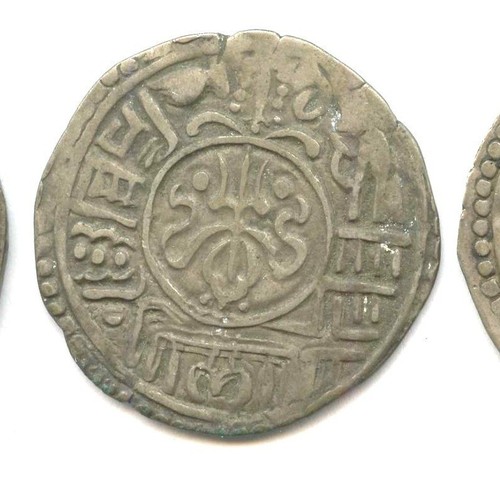
Tibetan Tangka
A silver tangka, the standard coin of old Tibet, its faces filled with Tibetan script and Buddhist ornamental motifs, struck from the late 18th into the 19th century.
Himalayan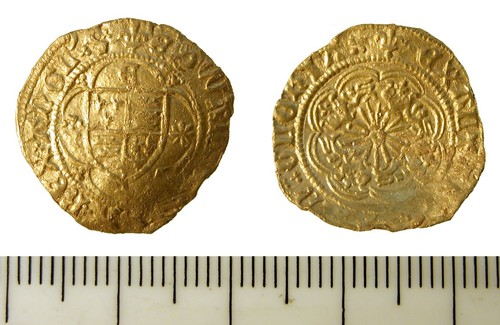
Edward IV Quarter Ryal
Small English medieval gold coin of Edward IV, bearing the crowned royal arms and an ornate radiate cross with a rose-on-sun at its center.
Medieval Coins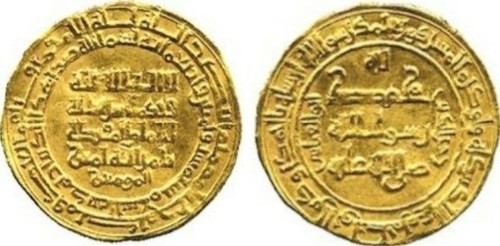
Gold Dinar of al-Muqtadi
An aniconic Abbasid gold dinar of Caliph al-Muqtadi, covered on both faces with Arabic calligraphy and ornamental borders, struck in the later 11th century.
Islamic (Medieval)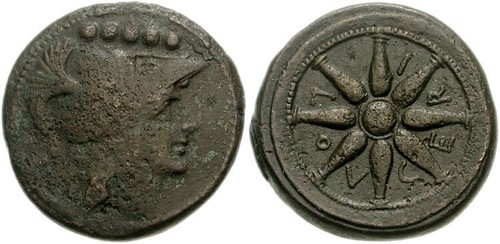
Quincunx of Luceria
A cast bronze quincunx of Luceria in Apulia (3rd century BC), showing a female head and a five-point floral or star device marking five unciae.
Ancient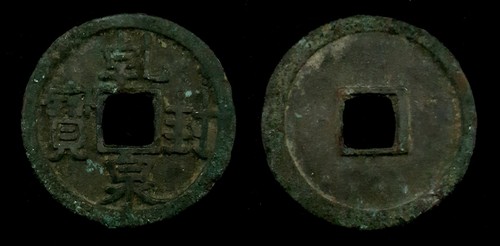
Qian Feng Quan Bao
A round bronze Tang cash coin with a square center hole, cast under Emperor Gaozong in the short-lived Qianfeng era and worth ten ordinary cash.
Cash Coin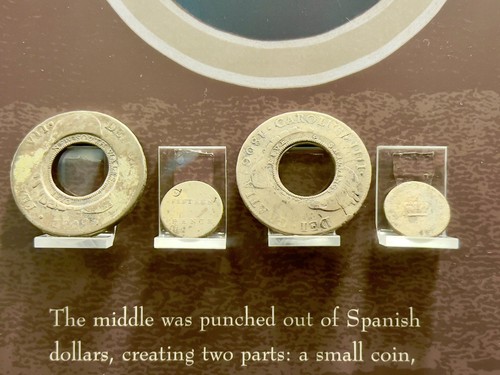
Holey Dollar
Australia's first struck coin: a Spanish silver dollar with its centre punched out, counterstamped NEW SOUTH WALES 1813 and revalued at five shillings.
Australian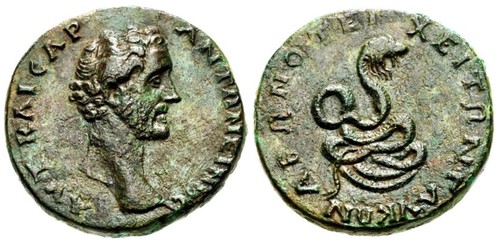
Glycon Bronze Coin
Roman provincial bronze of the 2nd century AD showing the snake-god Glycon: a bearded serpent head on one side and a coiled snake on the other.
Ancient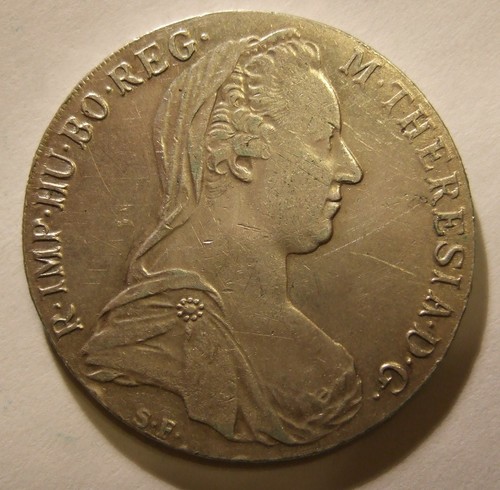
Maria Theresa Thaler
A large silver Austrian trade coin bearing the bust of Empress Maria Theresa, famously frozen at the date 1780 and restruck for centuries.
World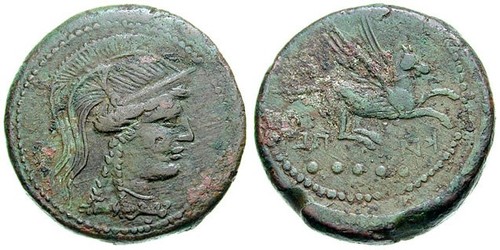
Quincunx of Capua
Bronze quincunx (5 unciae) struck by Capua in Campania in the 3rd century BC, pairing a diademed female head with a lion or griffin and five value pellets.
Ancient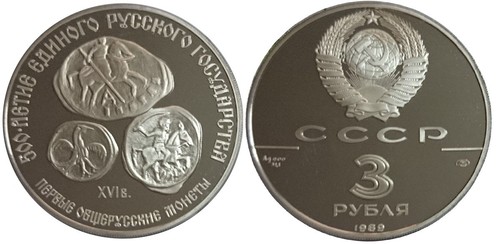
3 Roubles (First All-Russian Coins)
Soviet 1982 commemorative 3 Roubles honoring the first all-Russian coins, showing three historical 18th-century Russian coins with the state emblem reverse.
Commemorative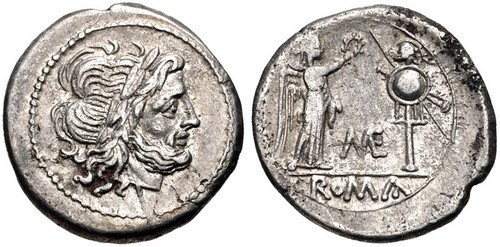
Roman Victoriatus
Silver Roman Republican victoriatus of the late 3rd–2nd century BC, with the laureate head of Jupiter and a Victory crowning a trophy above ROMA.
Ancient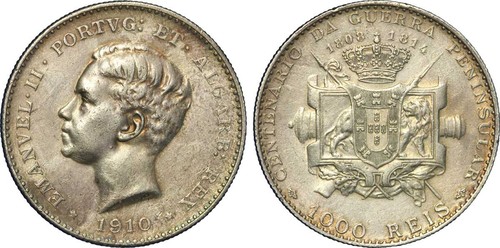
Reis (Peninsular War)
A 1910 Portuguese silver Reis struck under King Manuel II to mark the centenary of the Peninsular War, dated 1808-1814 across the king's bust.
Modern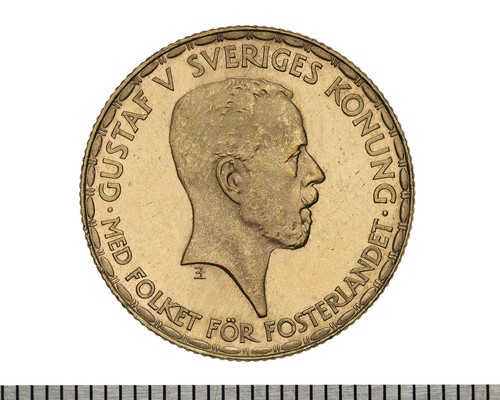
Swedish Gold Commemorative
An early-20th-century Swedish gold coin showing a right-facing royal profile with the legend SVERIGES KONUNG and the fatherland motto.
Commemorative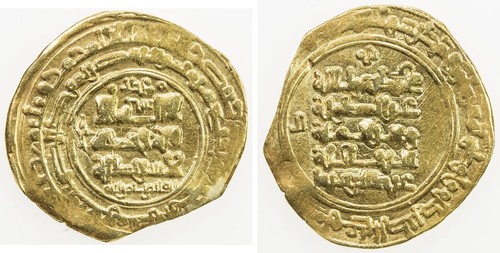
Ghaznavid Dinar
Gold dinar of the Ghaznavid dynasty (c. 10th–11th century), an epigraphic Islamic coin struck at Ghazna and allied mints in Afghanistan.
Medieval Islamic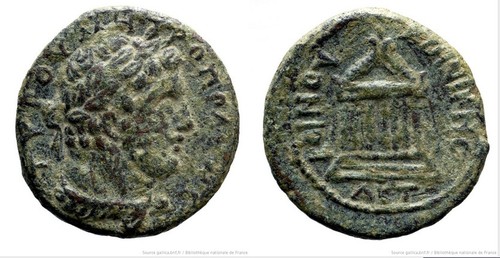
Bronze Coin of Septimius Severus (Tyre)
Roman provincial bronze struck at Tyre (Phoenicia) under Septimius Severus, 193-211 AD, with the emperor's bust on the obverse and a temple or deity reverse.
Ancient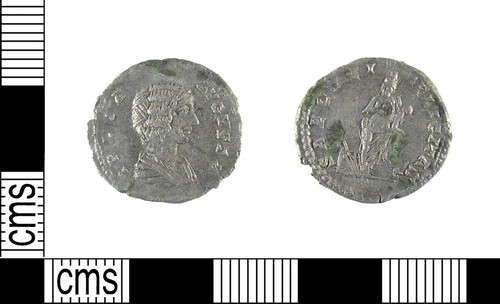
Denarius of Julia Domna
Roman silver denarius of the empress Julia Domna (193-217 CE), with her draped bust and a standing goddess or personification on the reverse.
Ancient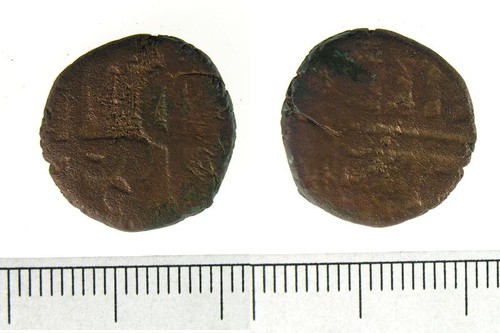
Indian Paisa
A hand-struck copper paisa from early 19th-century India, its legends worn smooth by age and circulation. A humble base-metal coin of everyday commerce.
Princely & Presidency States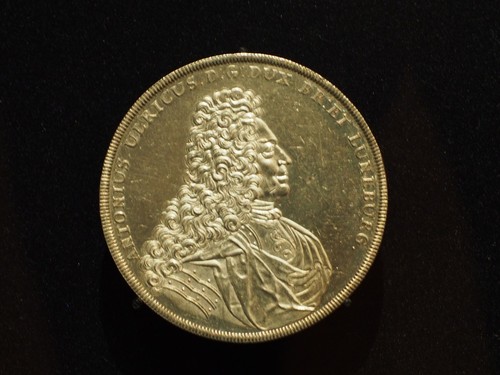
Schaummünze Gold Thaler
A 17th-century German gold Schaummünze in thaler form, its obverse showing a bearded profile portrait of Anton Ulrich flanked by two standing figures.
Medal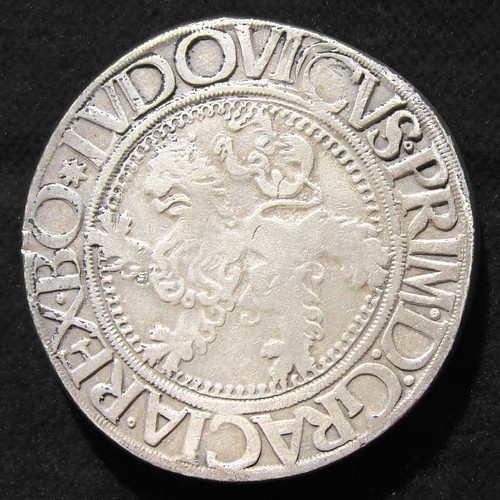
Joachimsthaler (Thaler)
A large early-16th-century Bohemian silver thaler from Joachimsthal, dated 1525; the coin whose name gave rise to the words 'thaler' and 'dollar'.
Early Modern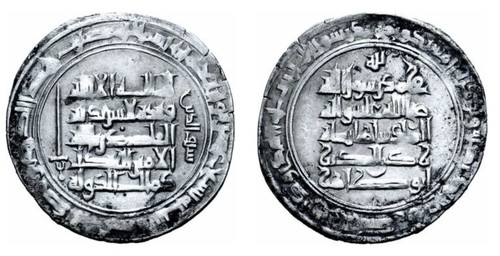
Dirham of Kamal al-Dawla Gharib
Silver dirham from 10th-century Iraq/Mesopotamia naming the ruler Gharib with the honorific Kamal al-Dawla, struck with Kufic Arabic legends.
Medieval Islamic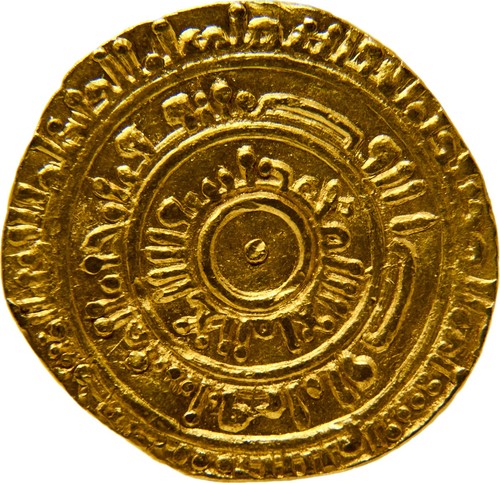
Fatimid Dinar of Imam Nizar
An 11th-century Fatimid gold dinar with concentric circular Kufic inscriptions naming the ruler and Shi'a invocations, a hallmark of Fatimid coinage.
Islamic (Medieval)