
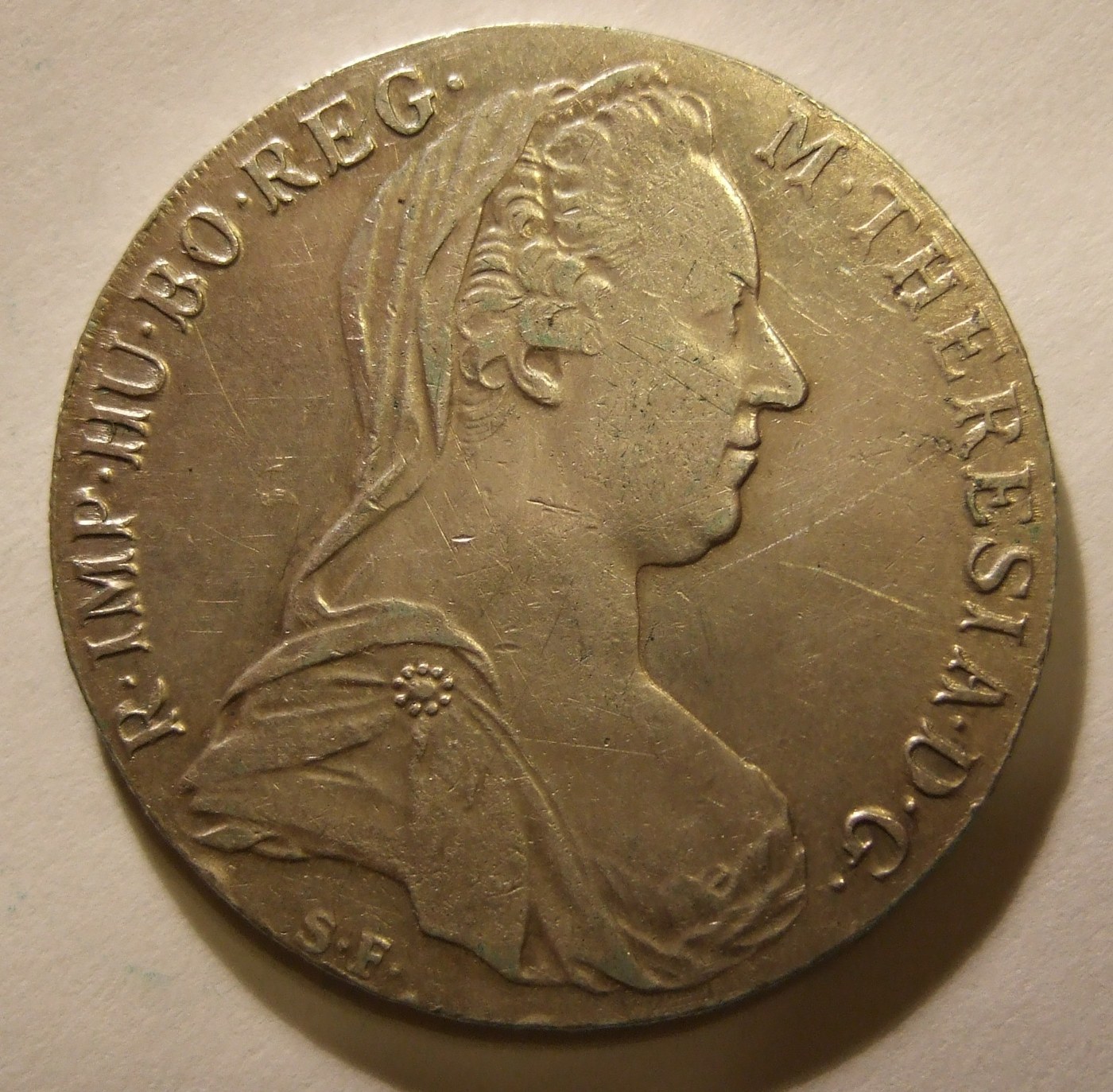
Maria Theresa Thaler
A large silver Austrian trade coin bearing the bust of Empress Maria Theresa, famously frozen at the date 1780 and restruck for centuries.
- Country
- Austria
- Denomination
- 1 Thaler
- Metal
- Silver
Got a coin like this?
Identify any coin from a photo, free.
Overview
The Maria Theresa Thaler is one of the most widely recognized silver trade coins ever produced. It shows the veiled, bejeweled bust of Empress Maria Theresa of Austria facing right, her hair partly covered and rendered in ornate detail, and it is almost always dated 1780 even though the vast majority of examples were struck long after that year.
After the Empress died in 1780, Austria continued to strike the thaler with that same frozen date to preserve the coin's trusted, unchanging appearance in international trade. As a result the 1780 date is not a reliable indicator of when a given piece was actually made; genuine restrikes have been produced by Austria and, under license, by several other mints over more than two centuries.
Because it was accepted as a reliable full-bodied silver coin across the Middle East, the Horn of Africa, and beyond, the Maria Theresa Thaler became a de facto trade currency far outside Austria. It remains among the most collected and most restruck world crowns.
History & Background
Maria Theresa ruled the Habsburg lands from 1740 to 1780 as Archduchess of Austria and Queen of Hungary and Bohemia. Thalers bearing her portrait were struck during her reign, but the coin's lasting fame comes from what happened after her death in 1780.
The 1780-dated thaler proved so trusted by merchants in the Levant, Arabia, and East Africa that Austria kept striking it with the frozen 1780 date to maintain confidence in the coin. Over time it circulated as a standard trade dollar across a vast region, valued for its consistent weight and fineness rather than for any government's face value. In parts of Arabia and Ethiopia it functioned as everyday money well into the twentieth century.
Demand was so great that mints outside Austria were at various points licensed or permitted to strike the coin, and Vienna itself continued restriking it long after the Empress's era. Modern restrikes carry the same 1780 date and the familiar design, which is why the coin is best understood as a continuously reissued trade piece rather than a one-year issue.
How to Identify
The obverse shows Maria Theresa's draped bust facing right, wearing a veil or hair covering with a diadem or brooch and elaborately detailed drapery; a Latin legend surrounds the portrait naming her as Empress. The date 1780 appears on nearly all examples regardless of when the coin was actually made.
The reverse, not visible in this photograph, carries the crowned Habsburg double-headed eagle with a central shield, surrounded by a Latin legend and titles. A key diagnostic is the raised lettering on the coin's edge, which reads a Latin motto (commonly rendered as JUSTITIA ET CLEMENTIA). The standard coin is a large silver crown roughly 39–41 mm in diameter and about 28 grams, struck in high-grade silver.
Because the design and 1780 date were held constant across generations of restrikes, small differences in the brooch, veil folds, drapery, and lettering are used by specialists to attribute a piece to a particular mint or striking period. The 1780 date alone does not date the coin.
Value & Collectibility
The Maria Theresa Thaler is common, and most examples are official restrikes valued primarily for their silver content. Ordinary restrikes typically trade at a modest premium over the coin's roughly three-quarters of an ounce of silver, so their price tracks the bullion market and generally sits in the low tens of dollars in typical conditions.
Genuine lifetime issues struck during or shortly after Maria Theresa's reign, and scarce mint-specific varieties, can command substantially more than common restrikes, sometimes many times the bullion value. Attribution to a specific historic mint, strong original detail, and demonstrable age are the main drivers of any premium.
Because the same design and date were reused for centuries, and because contemporary counterfeits and modern copies exist, condition and reliable attribution matter more here than the 1780 date. Treat any single figure as a rough guide that moves with the silver price and with how confidently a particular striking can be identified.
Frequently asked questions
Why are so many Maria Theresa Thalers dated 1780?
Maria Theresa died in 1780, and Austria kept striking the thaler with that frozen date to preserve the coin's trusted, unchanging look in international trade. The 1780 date therefore does not tell you when a given coin was actually made.
Is my 1780 thaler actually from 1780?
Usually not. The great majority of surviving pieces are later restrikes bearing the 1780 date. Genuine lifetime strikes exist but are far scarcer, and telling them apart requires examining fine design and mint details rather than the date.
How much silver does it contain?
The standard coin is a large silver crown of about 28 grams containing roughly three-quarters of a troy ounce of silver, which is why most examples are valued close to their bullion content.
Why was this coin used so far outside Austria?
Its consistent weight and high silver fineness made it a trusted trade coin across the Levant, Arabia, and East Africa, where it circulated as a de facto currency for generations, valued for its metal rather than a stated face value.
Are there fakes?
Yes. Because the coin is famous and long-lived, contemporary counterfeits and modern copies exist. Checking weight, diameter, silver quality, and the raised edge motto helps separate genuine strikes from imitations.
Maria Theresa Thaler guides
In-depth guides for identifying, valuing, and collecting Maria Theresa Thaler.
Other coins you may enjoy
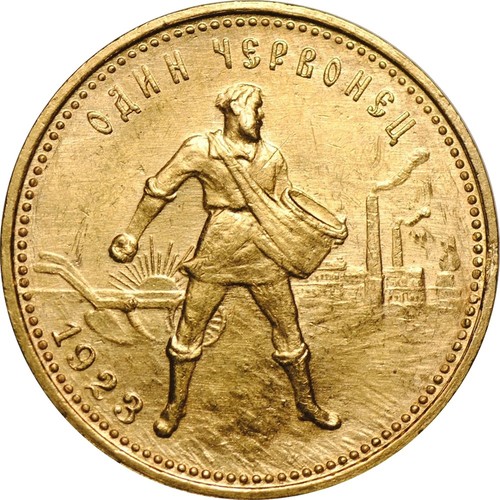
Gold Chervonets
1923
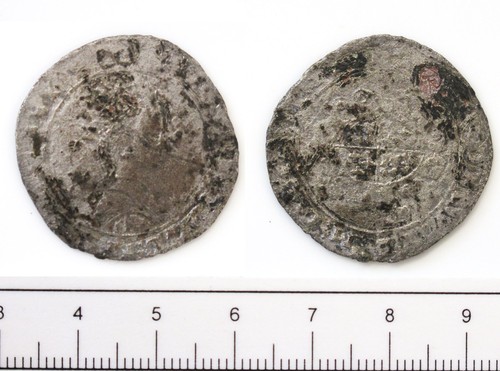
Shilling of Edward VI
1547–1553 (reign of Edward VI)
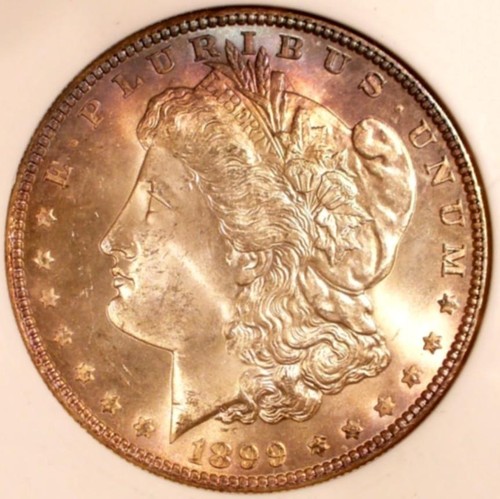
French Silver Franc
c. 1871–1920 (example dated 1899)
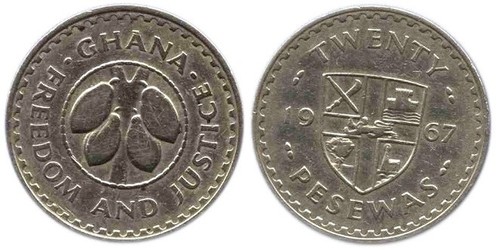
Ghana 20 Pesewas
1967
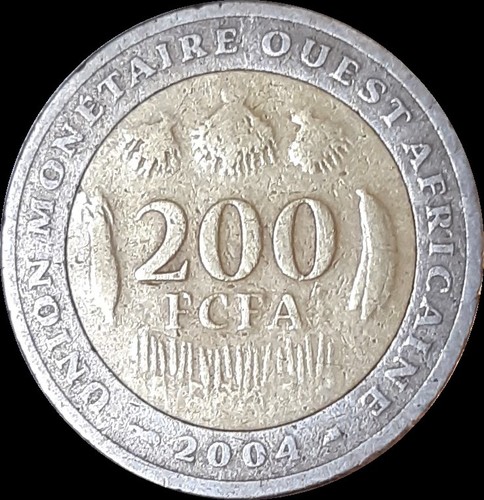
200 CFA Francs
2003–present
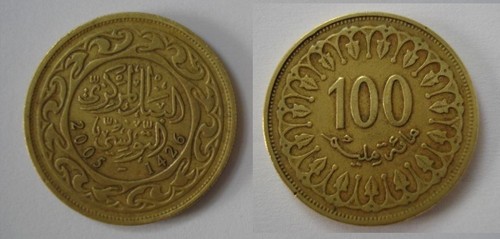
Tunisia 100 Millimes
1983–2005 (this brass type)
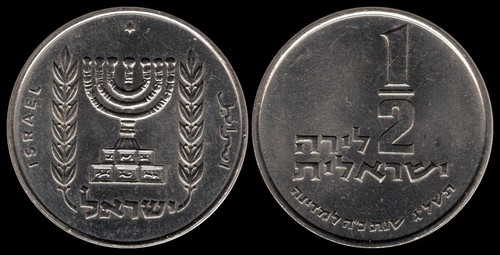
Israel Half Lira (25th Anniversary)
1973 (5733)
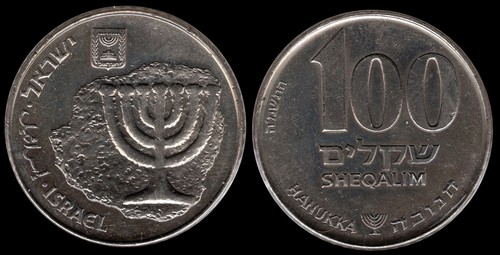
Israel 100 Sheqalim Hanukka Commemorative
1985
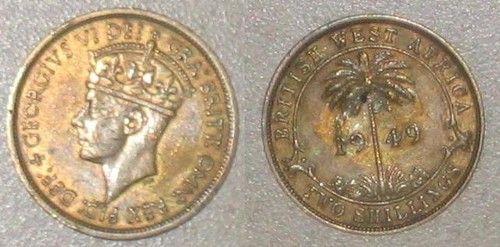
British West Africa 2 Shillings
1936–1952 (George VI type)
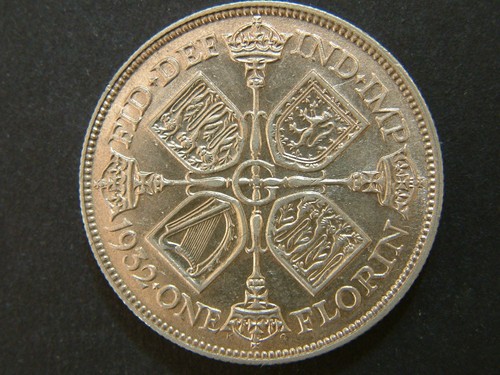
British Florin
Victorian issues c. 1849–1901 (example dated 1890)
Swiss 5 Francs
1888–1916 (this design)
North Yemen 1 Rial
1963 (AH 1382)