
How to Identify the Maria Theresa Thaler
A collector's guide to identifying the Maria Theresa Thaler by its portrait, frozen 1780 date, eagle reverse, edge motto, and silver specs.
Read the full Maria Theresa Thaler encyclopedia entry →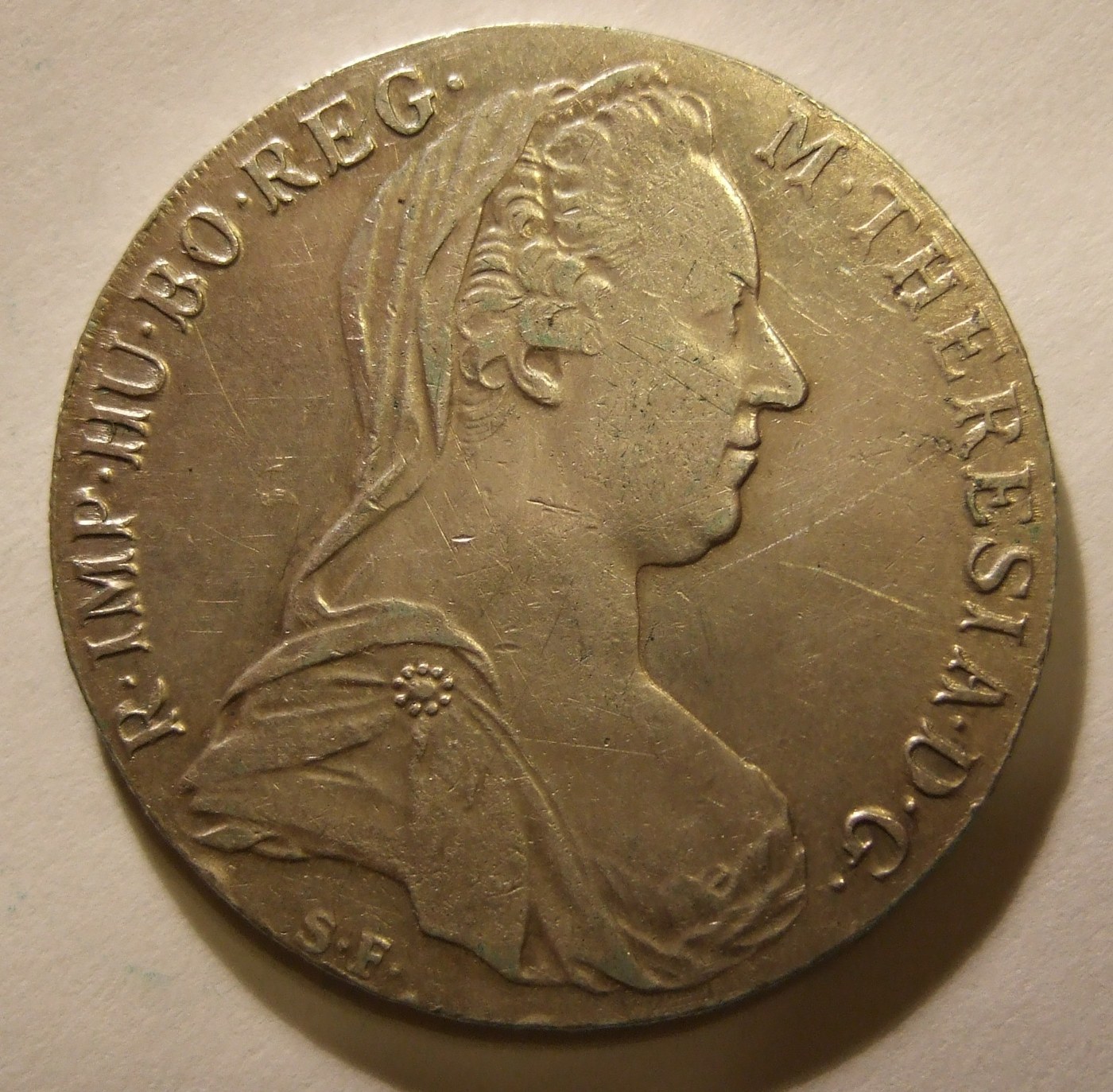
Begin with the portrait. The obverse shows Empress Maria Theresa's bust facing right, wearing a veil or hair covering with a diadem or ornamental brooch and heavily detailed drapery, encircled by a Latin legend giving her imperial titles. This ornate veiled profile is the coin's signature and the first thing to confirm.
Check the date, but do not trust it as an age indicator. Almost every genuine example is dated 1780, the year the Empress died, because Austria deliberately froze that date on later restrikes. A crisp 1780 tells you the coin is a Maria Theresa Thaler of the standard type; it does not tell you the coin was made in 1780. Actual dating relies on subtle differences in the brooch, veil, drapery folds, and lettering that specialists use to assign a striking to a particular mint or period.
Turn the coin over and read the reverse and edge. The reverse should show the crowned Habsburg double-headed eagle with a central shield and a surrounding Latin legend. Then examine the edge: a genuine standard thaler has a raised Latin motto lettered into the edge (commonly rendered JUSTITIA ET CLEMENTIA). A missing, incuse, or garbled edge inscription is a warning sign. Confirm the physical specs as well: roughly 39–41 mm across, about 28 grams, and clearly high-grade silver.
Beware look-alikes and copies. Because the design was reused for centuries and the coin is world-famous, it is among the more frequently copied crowns. Cast fakes may show seams, bubbles, mushy detail, or wrong weight and diameter; modern souvenir pieces and gilt or oversized novelty versions also circulate. Weighing and measuring the coin, testing for the correct silver look and ring, and inspecting the edge motto under magnification will catch most problem pieces.
For final attribution, compare the fine portrait and legend details against published references for the various mints that struck the coin. Since the type is standardized and the date is frozen, confident identification of a specific issue rests on die and design characteristics rather than on the year shown.
Frequently asked questions
Does the 1780 date mean the coin is genuine and old?
No. The 1780 date confirms it is the standard Maria Theresa Thaler type, but it was frozen onto restrikes for centuries. A 1780 coin can be a modern official restrike, so age must be judged from design and mint details, not the date.
What should the edge look like?
A standard thaler has a raised Latin edge motto, commonly rendered JUSTITIA ET CLEMENTIA. A blank, incuse, or garbled edge is a red flag for a counterfeit or a novelty copy.
What size and weight confirm the standard coin?
Expect a large silver crown roughly 39 to 41 mm in diameter and about 28 grams. Pieces well outside those figures, or that do not look and ring like good silver, warrant caution.
How do I tell a lifetime strike from a later restrike?
Both share the 1780 date and design, so you compare fine details of the brooch, veil, drapery, and lettering against mint references. This is specialist work, and reliable attribution often benefits from an expert opinion.