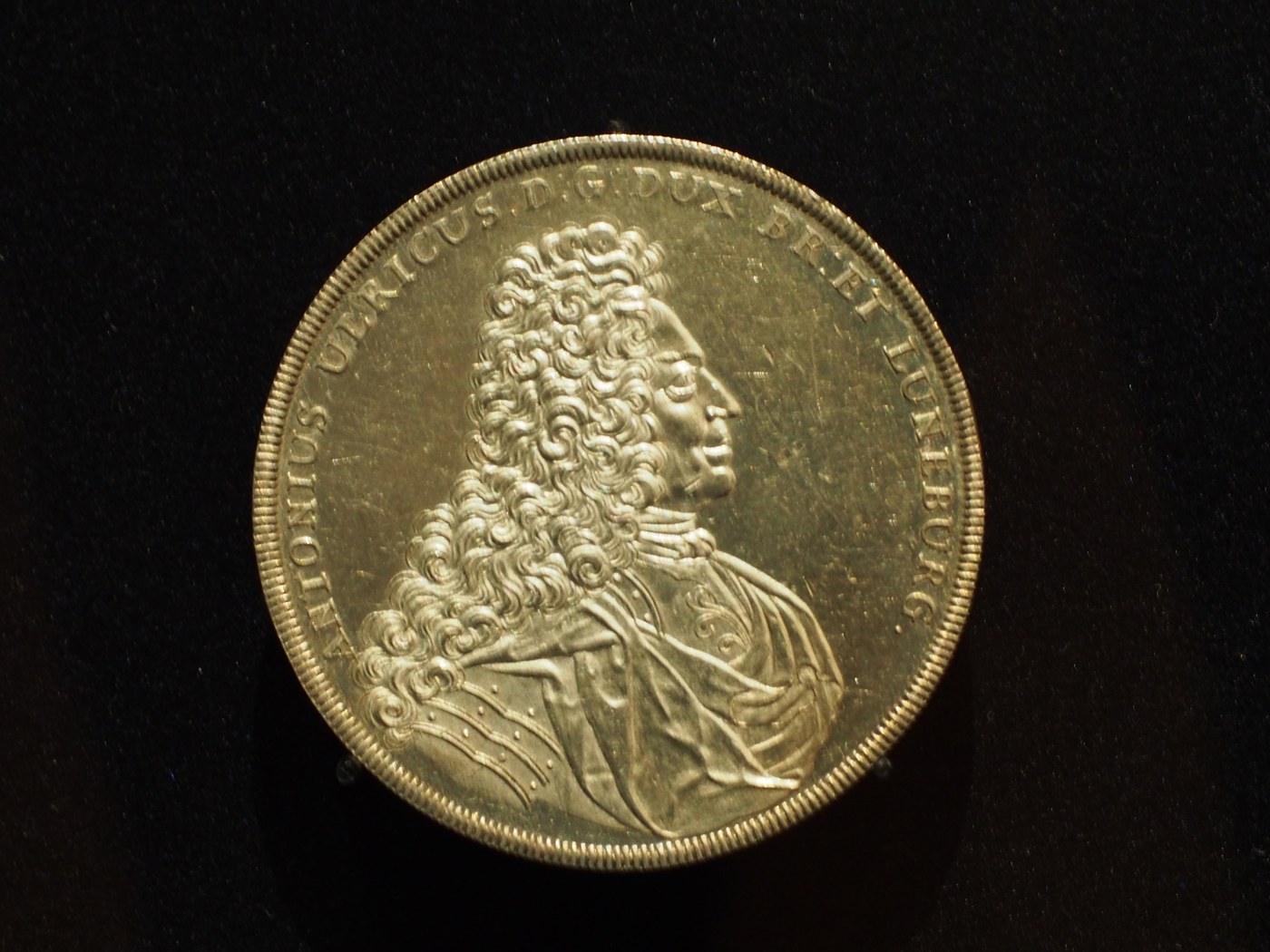
Schaummünze Gold Thaler
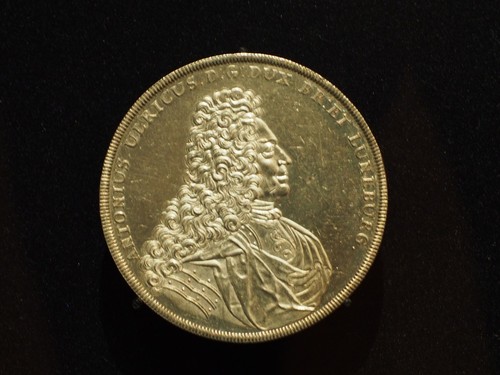
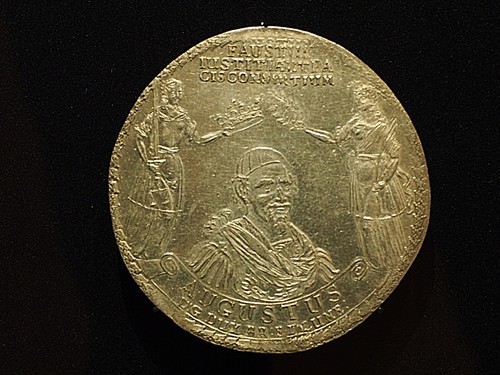
A 17th-century German gold Schaummünze in thaler form, its obverse showing a bearded profile portrait of Anton Ulrich flanked by two standing figures.
- Country
- Germany
- Denomination
- Thaler
- Metal
- Gold
Got a coin like this?
Identify any coin from a photo, free.
Overview
The Schaummünze Gold Thaler is a German presentation piece — a Schaummünze (literally a "show coin" or medal) struck in gold to the dimensions of a thaler. Unlike a circulating coin, a Schaummünze was made to be displayed, gifted, or worn rather than spent, so the type sits in the medal category even though it borrows the size and format of the thaler.
The example shown has an obverse bearing a bearded man in profile, identified as Anton Ulrich, flanked by two standing figures on either side. The reverse is not visible in this image. The piece dates from the 17th century, the era in which Anton Ulrich, Duke of Brunswick-Lüneburg (Wolfenbüttel), was a leading patron of the arts in the German lands.
History & Background
Schaumünzen — show or presentation medals — flourished across the German states from the 16th through the 18th centuries. Rulers and princely houses commissioned them to mark events, celebrate dynasties, and serve as prestigious gifts. Striking such a piece in gold and to thaler module made it both a work of portrait art and a store of precious-metal value.
The portrait here is associated with Anton Ulrich (1633–1714), Duke of Brunswick-Lüneburg at Wolfenbüttel, a noted collector, builder, and cultural patron of the Baroque German courts. Court medallists of the period produced portrait pieces of such princes in gold and silver, often surrounded by allegorical or attendant figures of the kind flanking the bust on this example.
Because the type is a medal rather than a circulating currency, it was not tied to a fixed monetary standard or minted in the quantities of everyday coinage. Surviving 17th-century German gold Schaumünzen are prized today as records of Baroque court portraiture and of the medallic art of the German princely states.
How to Identify
Obverse: a bearded man in right-facing profile, identified as Anton Ulrich, with a standing figure on each side of the central bust. The pairing of a profile portrait with flanking full-length figures is the key visual signature of this example, and any surrounding legend would give the ruler's name and titles.
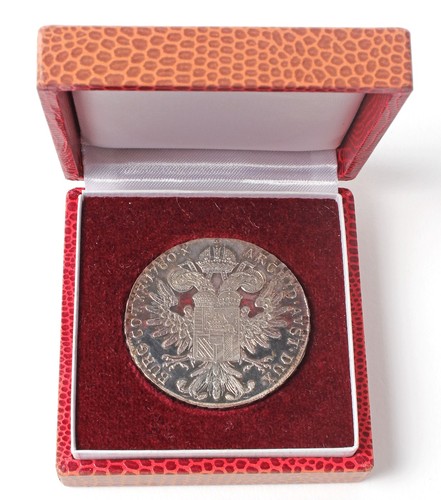
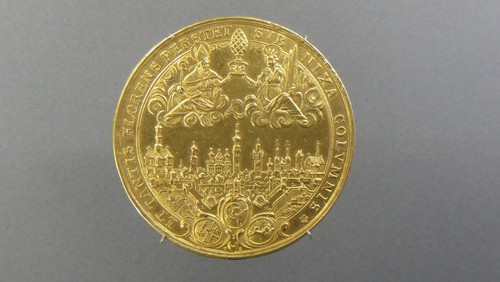
Reverse: not visible in the available image. Reverses of German gold Schaumünzen of this era commonly carry a coat of arms, an allegorical scene, a dedicatory inscription, or a date; confirm these on the actual piece rather than assuming a specific design.
Physical clues: the piece is gold and struck to a thaler-sized module, so expect a broad, substantial flan. Because it is a Schaummünze (medal), it need not follow a coin's denominational markings or edge conventions. Identify the type from the Anton Ulrich portrait, the two flanking figures, the gold metal, and the thaler format together, rather than from any single feature.
Value & Collectibility
Value depends on the weight and fineness of the gold, the artistry and sharpness of the portrait and figures, the reverse design, condition, and any historical or provenance interest. As a gold presentation piece of a named German prince, it carries both precious-metal value and collector appeal, and fine examples can trade well above bullion.
Exact prices vary widely with size, grade, and rarity, so treat any single figure with caution — presentation medals are individual, often scarce pieces rather than standardized coins. Because early gold portrait pieces are frequently cast, gilded, or otherwise reproduced, compare recent auction results for comparable German gold Schaumünzen and obtain a specialist or third-party opinion before buying or selling.
Frequently asked questions
What is a Schaummünze Gold Thaler?
It is a German gold presentation piece — a Schaummünze, or show medal — struck to the size of a thaler. It was made to be displayed, gifted, or worn rather than spent, which is why it is classed as a medal rather than a circulating coin.
Who is on the coin?
The obverse shows a bearded man in profile identified as Anton Ulrich, Duke of Brunswick-Lüneburg (Wolfenbüttel), flanked by a standing figure on each side. Any surrounding legend would give his name and titles.
Is it a real coin or a medal?
It is a medal. A Schaummünze borrows the size and format of a thaler but was not intended for circulation, so it need not carry a denomination or follow coin edge conventions.
What year is it from?
The example dates from the 17th century, the era of Anton Ulrich, a leading Baroque art patron among the German princely states. Presentation medals of this kind often bear a date on the reverse.
Is it valuable?
As a gold portrait medal its metal sets a floor, and artistry, condition, and rarity can raise the value well above bullion. Because such gold pieces are often reproduced, have any example authenticated before buying or selling.
Schaummünze Gold Thaler guides
In-depth guides for identifying, valuing, and collecting Schaummünze Gold Thaler.