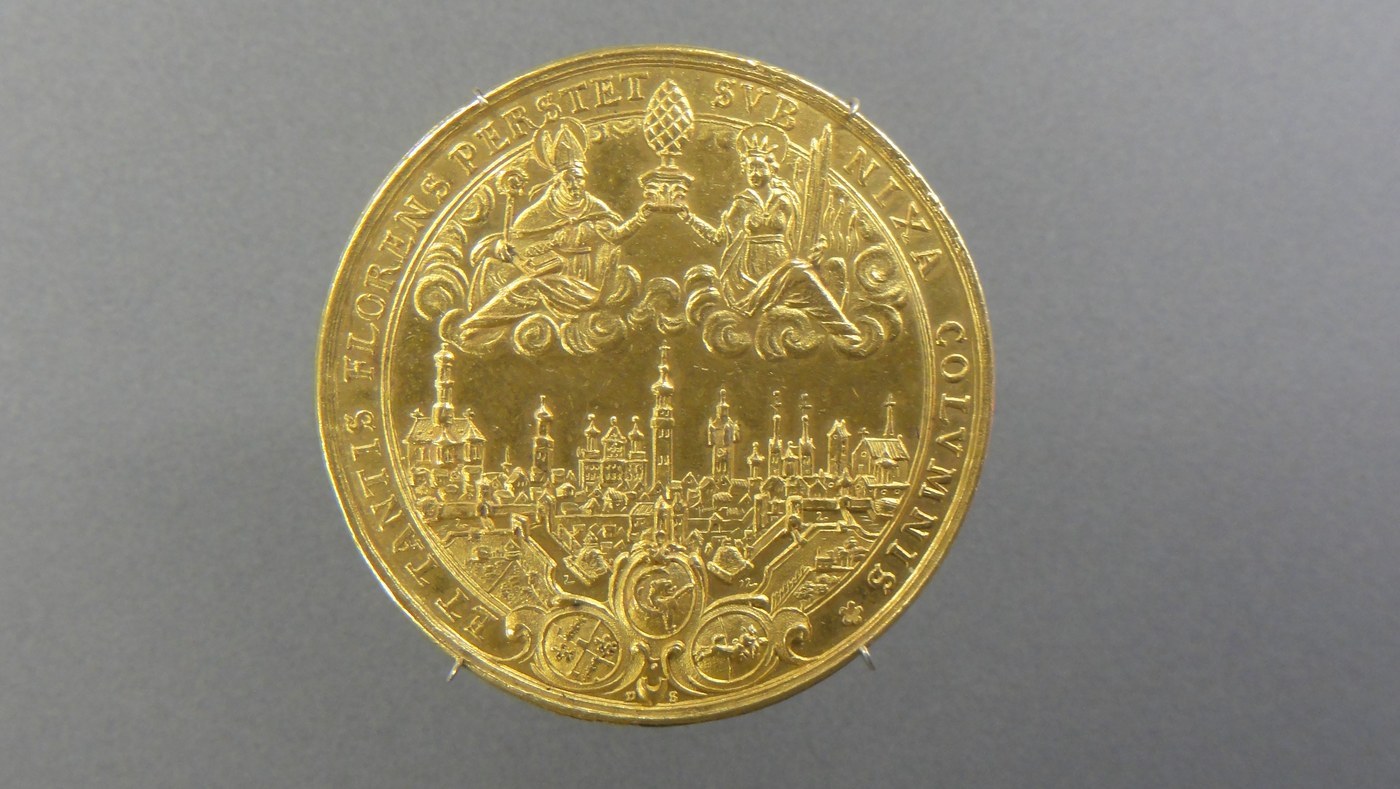
Augsburg Commemorative Medal
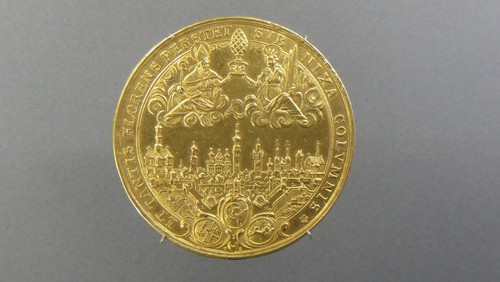
A gold commemorative medal of the Free Imperial City of Augsburg, showing a detailed spired cityscape with religious imagery and a heraldic reverse.
- Country
- Germany (Augsburg)
- Denomination
- Medal
- Metal
- Gold
Got a coin like this?
Identify any coin from a photo, free.
Overview
The Augsburg Commemorative Medal is a gold medallic piece associated with the Free Imperial City of Augsburg in southern Germany. Unlike a circulating coin, a medal of this kind carried no fixed face value; it was struck or cast to commemorate the city, an event, or a person, and to display the skill of Augsburg's celebrated goldsmiths.
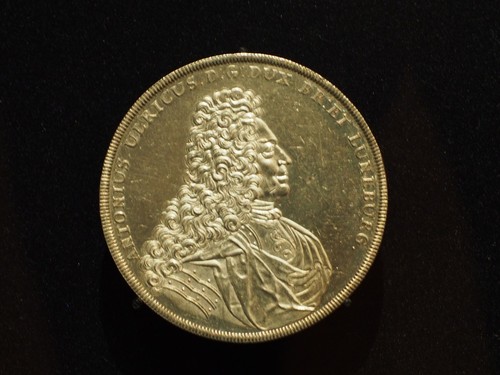
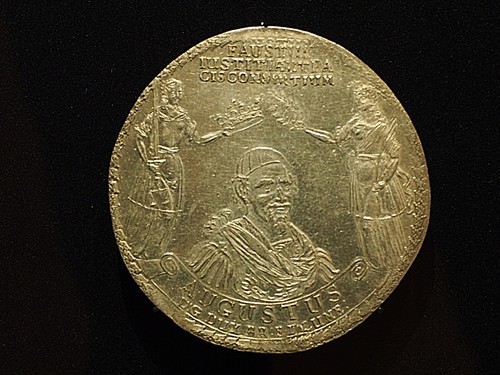
The example shown has an intricate cityscape crowded with spires and towers on the obverse, combined with religious imagery, and a heraldic and ornamental design on the reverse. That pairing — a proud panorama of the city on one face and civic or dynastic heraldry on the other — is characteristic of the commemorative medals produced in Augsburg during the late medieval and early modern periods.
History & Background
Augsburg was one of the wealthiest and most important cities of the Holy Roman Empire, a Free Imperial City enriched by trade, banking, and the great merchant houses such as the Fugger and Welser families. From the 16th through the 18th century it was also one of Europe's leading centers for gold- and silversmithing and for the engraving and striking of medals.
Augsburg's goldsmiths and medalists produced commemorative pieces in gold and silver to mark religious occasions, imperial visits, civic milestones, and personal events like weddings and baptisms. City-view medals showing the skyline of Augsburg — dense with church towers and spires — were a popular local specialty, celebrating the city itself as a subject.
Because such medals were made across a long span of time by many different workshops, they exist in a wide range of designs, sizes, and finishes. A gold example represents the more prestigious end of this tradition, typically commissioned as a presentation or keepsake piece rather than for everyday exchange.
How to Identify
Obverse: a detailed cityscape filled with multiple spires, towers, and rooftops, often accompanied by religious imagery — a view meant to represent Augsburg and its many churches. Fine, crowded engraving of the skyline is a strong clue to the type.
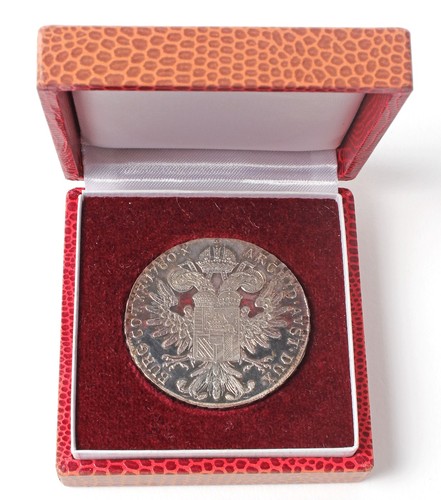
Reverse: heraldic decoration and ornamental elements, which may include a coat of arms, civic emblem, foliate scrollwork, or an inscription within a decorative frame. Augsburg's own civic badge is a pine-cone-like device (the Stadtpyr), though heraldry on medals can also reference a person or event.
Physical clues: the piece is gold and medallic in character — usually thicker and more sculptural than a circulating coin, with no denomination. It may be either struck or cast. As a non-denominated commemorative object, it will not carry a face-value mark; identification rests on the imagery, any inscription, and the workmanship rather than a stated value.
Value & Collectibility
A gold Augsburg medal's value depends on its precise subject, age, size and weight, the quality of the engraving, condition, and whether it can be attributed to a known medalist or occasion. The gold content alone sets a floor, but fine early workmanship and historical interest can carry a piece well above bullion value.
Medals vary enormously — an anonymous small keepsake and a large, finely signed presentation medal occupy very different price ranges. Because the field includes both period originals and later restrikes or copies, and because gold pieces attract fakes, obtain a specialist opinion and compare recent auction results for closely matching examples before assigning a value.
Frequently asked questions
What is an Augsburg Commemorative Medal?
It is a medallic piece — here in gold — associated with the Free Imperial City of Augsburg, made to commemorate the city, an event, or a person rather than to circulate as money.
Is it a coin or a medal?
It is a medal. It has no denomination or face value; its purpose was commemorative and decorative, showcasing Augsburg and the skill of its goldsmiths.
What is shown on it?
The obverse shows a detailed Augsburg cityscape crowded with spires and religious imagery, while the reverse carries heraldic decoration and ornamental elements.
Why is Augsburg associated with fine medals?
Augsburg was a wealthy imperial city and one of Europe's foremost centers of gold- and silversmithing, famous for engravers and medalists from the 16th to 18th centuries.
Is a gold Augsburg medal valuable?
Its gold content sets a baseline, and fine workmanship, age, size, and a documented subject or maker can raise the value considerably. Have any gold example authenticated before buying or selling.
Augsburg Commemorative Medal guides
In-depth guides for identifying, valuing, and collecting Augsburg Commemorative Medal.