Austrian Award Medal
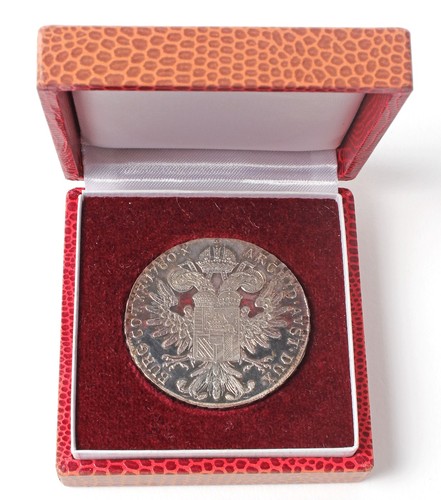
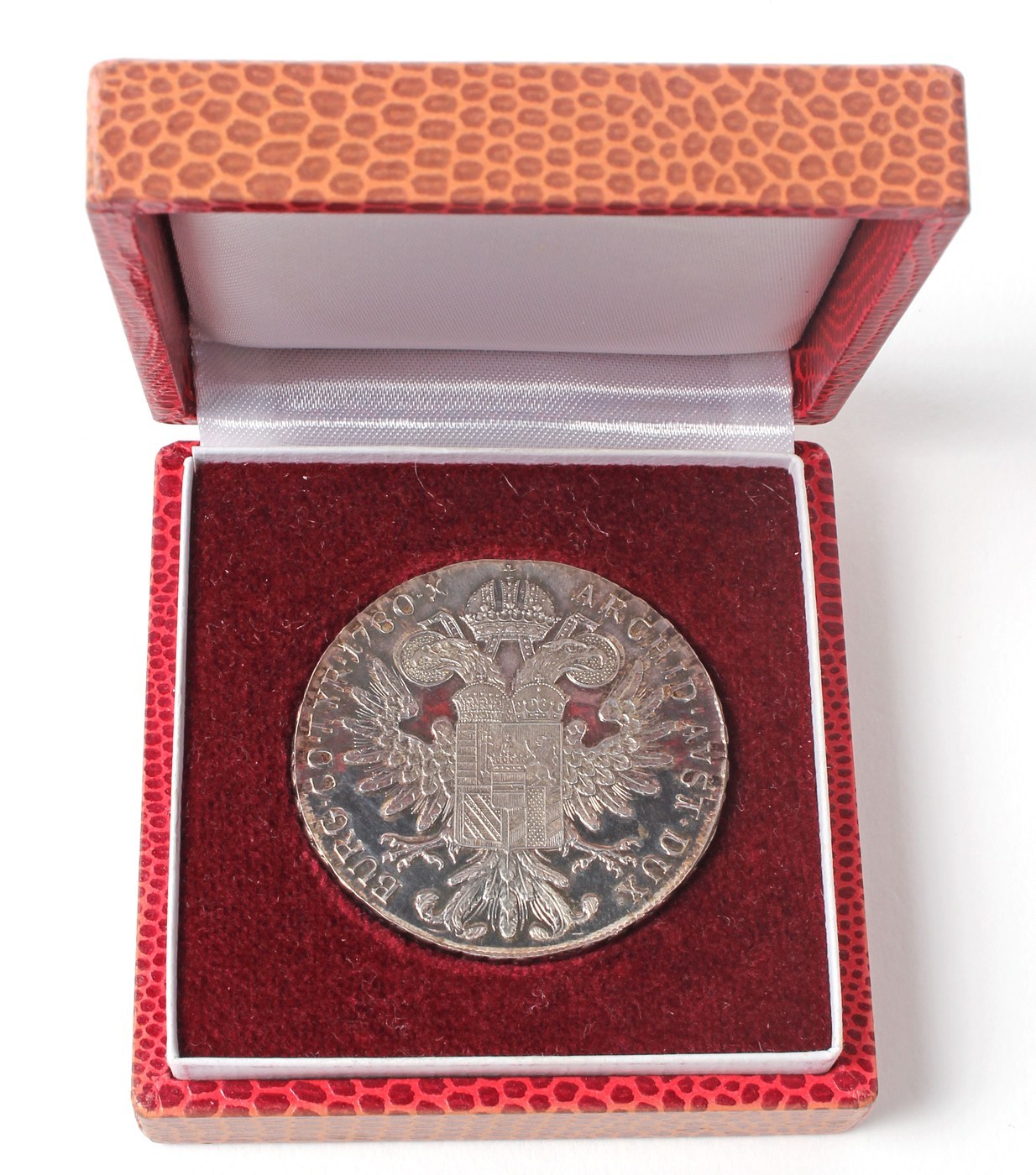
A silver Austrian award medal with a crowned double-headed eagle bearing a coat of arms on the obverse and a decorative heraldic shield on the reverse.
- Country
- Austria
- Denomination
- Award Medal
- Metal
- Silver
Got a coin like this?
Identify any coin from a photo, free.
Overview
The Austrian Award Medal is a silver medallic piece of the type presented in Austria as a prize, merit, or commemorative honor rather than circulated as money. Medals of this class carry no face value; they were struck to recognize achievement, service, or participation and to display official Austrian and Habsburg heraldry.
The example shown has a crowned double-headed eagle bearing a coat of arms on the obverse — the classic heraldic emblem of the Austrian Empire and the House of Habsburg — paired with a decorative heraldic shield carrying a central coat of arms on the reverse. That combination of imperial eagle and armorial shield is characteristic of Austrian award and merit medals of the 19th and early 20th centuries.
History & Background
Austria under the Habsburgs, and later the Austro-Hungarian Empire, maintained a rich tradition of award and merit medals struck by official mints and private engravers. Such pieces were given for service, agricultural and industrial exhibitions, artistic and academic achievement, military and civil merit, and civic anniversaries across the 19th and into the 20th century.
The double-headed eagle was the central emblem of imperial Austria and the Habsburg dynasty, appearing on state insignia, coins, and medals alike; crowned and bearing a breast shield of arms, it signaled official or imperial sanction. Award medals frequently combined this eagle with an armorial shield representing the state, a province, a city, or an institution granting the honor.
Because award medals were produced over many decades by numerous workshops and for countless purposes, they survive in a wide variety of designs, sizes, and inscriptions. Silver was a common metal for the more prestigious grades, with bronze and occasionally gold used for other classes of the same award.
How to Identify
Obverse: a double-headed eagle with a crown, its breast bearing a coat of arms — the imperial and Habsburg emblem of Austria. The spread wings, twin crowned heads, and central shield are the strongest visual cues to an Austrian imperial medal.
Reverse: a decorative heraldic shield with a central coat of arms, often framed by ornamental scrollwork, wreaths, or an inscription naming the awarding body, occasion, or recipient. Any lettering or date in this field is important for narrowing down the specific award and period.
Physical clues: the piece is silver and medallic in character — typically thicker and more sculptural than a circulating coin, with no denomination. It may or may not have an integral loop or suspension for wearing. Because it carries no face value, identification rests on the eagle and shield imagery, any inscription, and the workmanship rather than a stated value.
Value & Collectibility
An Austrian silver award medal's value depends on its specific subject and awarding body, its age, size and weight, the quality of the engraving, its condition, and whether it can be tied to a known event, institution, or recipient. The silver content sets a floor, while historical interest, fine workmanship, and a documented association can carry a piece above bullion value.
Award medals vary widely, so a common unattributed exhibition or merit medal and a rare, finely signed imperial presentation piece occupy very different price ranges. Because the field spans period originals, later restrikes, and reproductions, compare recent auction results for closely matching examples and seek a specialist opinion before assigning a firm value.
Frequently asked questions
What is an Austrian Award Medal?
It is a medallic piece — here in silver — given in Austria as a prize, merit, or commemorative honor rather than circulated as money. This example shows a crowned double-headed eagle on the obverse and a heraldic shield on the reverse.
Is it a coin or a medal?
It is a medal. It has no denomination or face value; its purpose was to recognize achievement or service, or to commemorate an event, and it displays official Austrian and Habsburg heraldry.
What does the double-headed eagle mean?
The crowned double-headed eagle bearing a coat of arms is the emblem of imperial Austria and the House of Habsburg. On a medal it signals official or imperial association with the award.
How old is it?
Medals of this design were produced in Austria during the 19th and early 20th centuries. Any inscription or date on the reverse can help pin down the specific award and period.
Is it valuable?
As a silver medal its metal sets a floor, and the subject, workmanship, condition, and any documented association can raise the value above bullion. Compare matching auction results and get a specialist opinion for prized examples.
Austrian Award Medal guides
In-depth guides for identifying, valuing, and collecting Austrian Award Medal.