
How to Identify the Austrian Award Medal
Identify an Austrian silver award medal by its crowned double-headed eagle with coat of arms, its heraldic shield reverse, medallic form, and any inscription.
Read the full Austrian Award Medal encyclopedia entry →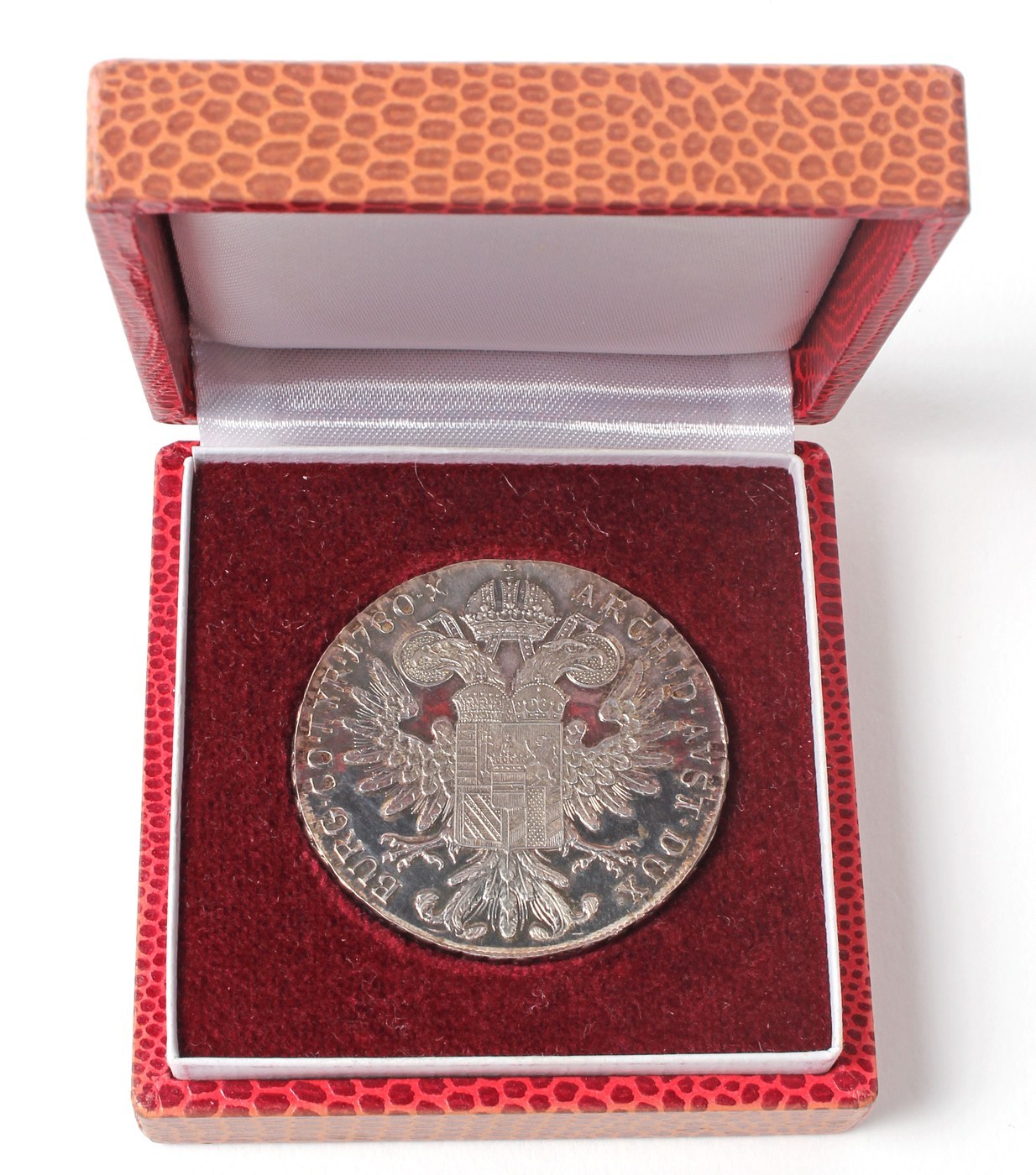
Start with the eagle. The defining obverse feature is a crowned double-headed eagle bearing a coat of arms on its breast — the emblem of imperial Austria and the Habsburgs. Note the twin crowned heads, the spread wings, and the central shield; this combination points firmly to an Austrian or Austro-Hungarian imperial medal rather than a German-states or other national piece.
Read the reverse and any inscription. Look for a decorative heraldic shield with a central coat of arms, often surrounded by scrollwork, a wreath, or lettering. Any legend naming an exhibition, society, city, or recipient, or giving a date, is the single most useful clue for identifying the exact award, its purpose, and its period. Record it carefully.
Check form, metal, and size. Confirm the piece is medallic — usually thicker and more sculptural than a coin, with no denomination. This example is silver; weigh and measure it, and test that genuine silver is non-magnetic with the expected density and tone. Check for an integral suspension loop, which indicates it was meant to be worn, and note whether the edge is plain or marked, as edge stamps can carry fineness or maker information.
Watch for look-alikes. The double-headed eagle was also used by Russia, the Holy Roman Empire, Serbia, and other states, so do not attribute a medal to Austria on the eagle alone — confirm it with the arms on the breast shield and the reverse heraldry and inscription. Award, merit, and exhibition medals of similar design were made across Central Europe, and bronze or gilt versions of the same award exist.
Authenticate carefully. Because award medals span originals, official restrikes, and later reproductions, be cautious with unmarked or suspiciously bright pieces. Judge whether the eagle, shield, and lettering are crisp rather than soft or mushy, watch for casting seams or a filed loop, and verify the metal. For any medal of real value, compare recent auction records for closely matching examples and seek a specialist or third-party opinion.
Frequently asked questions
How do I know the eagle is Austrian and not Russian or another state's?
Both Austria and Russia used a crowned double-headed eagle. Confirm Austria by the coat of arms on the eagle's breast and by the reverse heraldry and any inscription, rather than relying on the eagle shape alone.
Where should I look for identifying details?
Check the reverse shield and surrounding field for lettering that names an awarding body, event, city, or recipient, or gives a date. The edge may also carry a fineness or maker's mark.
How can I tell a medal from a coin?
A medal carries no denomination or face value and is usually thicker and more sculptural than a circulating coin. This piece is identified by its eagle and shield imagery, not by any stated value.
What are the main authentication risks?
Restrikes, reproductions, and altered pieces exist. Look for crisp detail in the eagle, shield, and lettering, check the edge and any suspension loop for tampering, verify the silver, and get valuable examples professionally assessed.