
How to Identify the Schaummünze Gold Thaler
Identify this German gold Schaummünze by its bearded Anton Ulrich profile flanked by two standing figures, its thaler-sized gold flan, and its medallic form.
Read the full Schaummünze Gold Thaler encyclopedia entry →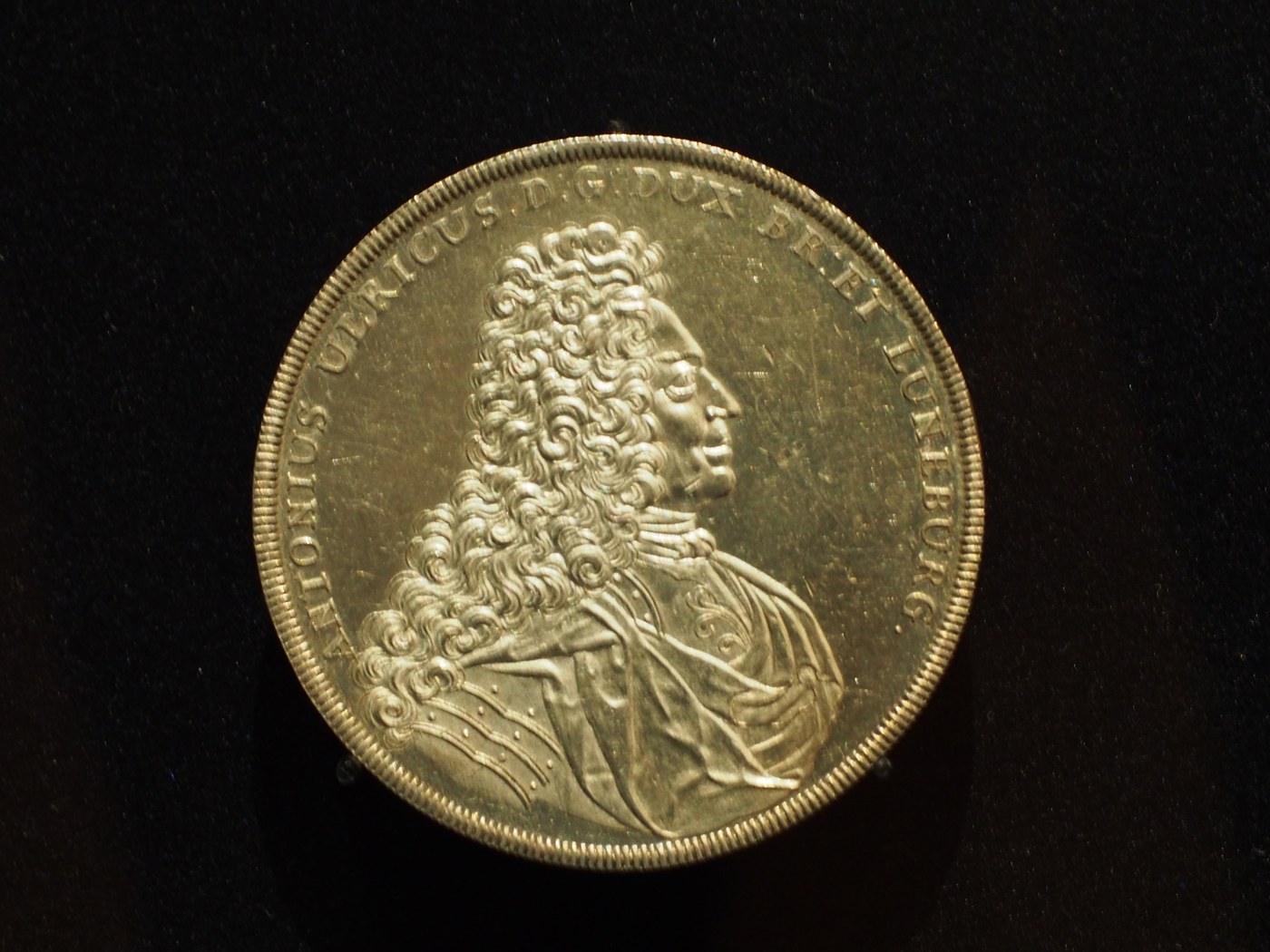
Start with the obverse portrait. The defining feature is a bearded man in profile, identified as Anton Ulrich, with a standing figure on either side of the bust. This combination — a central profile portrait framed by two full-length attendant or allegorical figures — is the clearest signature of this example. Read any surrounding legend, which would abbreviate the ruler's name and titles, to confirm the attribution rather than judging the face alone.
Recognize it as a Schaummünze, not a coin. A Schaummünze is a show or presentation medal made in the size and style of a thaler. Because it was never meant to circulate, it may lack a denomination, mint mark, or standard coin edge. Do not expect the value markings or edge lettering of a currency piece; the absence of them is consistent with a medal, not evidence of a fake.
Check the metal and module. This example is gold struck to a thaler-sized flan, so it should be broad and substantial. Weigh and measure it and compare against the specifications of comparable German gold medals; genuine gold is dense, warm-toned, and non-magnetic. Note that many Schaumünzen were also struck in silver, so verify the metal directly rather than assuming gold from color.
Examine the reverse and watch for look-alikes. The reverse is not shown here, but on the actual piece look for a coat of arms, allegorical scene, dedication, or date that ties it to Anton Ulrich or the Brunswick house. Many German princes commissioned similar Baroque portrait medals, so a bearded profile with flanking figures alone is not decisive — confirm the legend and reverse together.
Authenticate carefully. Early gold portrait pieces are among the most copied objects in the market. Inspect the edge and fields for casting seams, porosity, or a soft, mushy strike, and be wary of gilt base-metal reproductions and later restrikes. Because presentation medals are individual and often scarce, seek a specialist or third-party opinion and compare recent auction records for comparable German gold Schaumünzen before assigning value.
Frequently asked questions
How do I confirm the portrait is Anton Ulrich?
Read any legend around the bust, which abbreviates the ruler's name and titles, and check the reverse for arms or a dedication tied to the Brunswick house. A bearded profile alone is not decisive, since many German princes used similar Baroque portrait styles.
Why doesn't it look like a normal coin?
Because it is a Schaummünze — a presentation medal in thaler form. It was made to be shown or gifted, not spent, so it may lack a denomination, mint mark, or standard edge. That is normal for the type, not a defect.
How can I tell the gold version from a silver one?
Many Schaumünzen were struck in both metals. Check the metal directly rather than by color: gold is denser, warm-toned, and non-magnetic. Weigh and measure the piece and compare against published specifications for comparable medals.
What are the main authentication risks?
Casts, gilt base-metal copies, and later restrikes are common for early gold portrait pieces. Inspect the edge for seams, look for crisp rather than soft detail, and have any valuable gold example professionally authenticated.