
Joachimsthaler (Thaler)
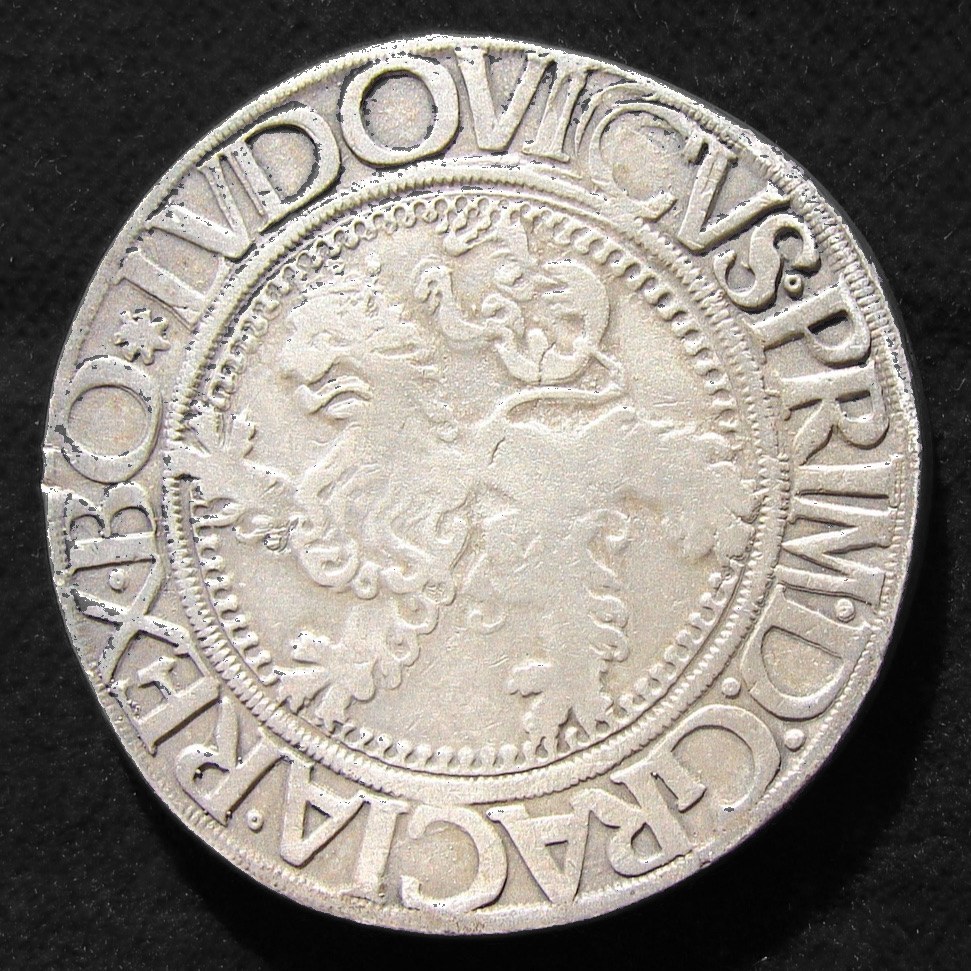
A large early-16th-century Bohemian silver thaler from Joachimsthal, dated 1525; the coin whose name gave rise to the words 'thaler' and 'dollar'.
- Country
- Bohemia
- Denomination
- Thaler
- Metal
- Silver
Got a coin like this?
Identify any coin from a photo, free.
Overview
The Joachimsthaler is a large silver coin struck in the Bohemian mining town of Sankt Joachimsthal (St. Joachim's Valley, today Jáchymov in the Czech Republic) beginning in the early 1520s. It is one of the most historically important coins in the world, because its name was shortened to Thaler, a term that spread across Europe and eventually gave English the word dollar. The example shown here is dated 1525 and belongs to this founding series.
Our photograph shows the reverse side only: a heraldic coat of arms surrounded by an inscription band that carries the date. The obverse, not pictured here, typically bears the standing figure of St. Joachim, the town's patron saint, with the arms of the Counts of Schlick, while the paired side shows the crowned Bohemian lion. Together these designs identify the piece as a Schlick-era Joachimsthaler.
Struck to the heavy 'Guldengroschen' standard of about 29 grams of high-grade silver and roughly 40 mm across, the Joachimsthaler was a substantial, showy coin meant to circulate as the silver equivalent of a gold gulden. It set the pattern for the crown-sized silver coinage that dominated European trade for the next three centuries.
History & Background
The Joachimsthaler was born from a silver boom. In the 1510s rich ore was discovered in the valley of St. Joachim in the Ore Mountains of Bohemia, and the local landowners, the noble Counts of Schlick, secured the right to open a mint. From about 1519–1520 they began striking large silver coins to the Guldengroschen standard, and because they came from Joachimsthal they were called Joachimsthaler, soon clipped to thaler. A coin of 1525 falls squarely within this early Schlick issue.
The idea of a big silver coin worth a gold gulden was not new — Tyrol and Saxony had struck Guldengroschen a generation earlier — but the Joachimsthal mines produced silver on such a scale that the Bohemian coin became the most famous of its kind. Its name travelled with the coinage concept across the German lands, Scandinavia (as daler), the Low Countries, and beyond, so that 'thaler' became a generic word for a large silver piece and, centuries later, the ancestor of 'dollar'.
The Schlick family's control did not last long. In 1528 the Bohemian crown under King Ferdinand I asserted its royal monopoly over coinage and took direct control of the Joachimsthal mint, though large silver thalers continued to be struck there under royal authority. Because of this, the privately minted Schlick thalers of roughly 1520 to 1528, including 1525-dated pieces, form a distinct and historically prized early group.
How to Identify
Start with the overall character: this is a big, heavy silver coin, on the order of 40 mm across and about 28–29 grams, with the bright, coolly reflective surfaces of high-grade silver and the soft grey toning of a genuinely old piece. A coin much smaller, lighter, or yellow-toned is not a Joachimsthaler of this type.
The side shown in our photograph is the heraldic side: a coat of arms — the crowned Bohemian lion and/or the Schlick family shield — set within a circular inscription band. On coins of this series the legends are in Latin and typically name the ruling King of Bohemia on one face and the lords of Schlick on the other, alongside the date 1525. The companion side (not pictured here) usually carries the standing figure of St. Joachim holding a book or staff.
Because the coin is hand-struck from the 1520s, expect slightly irregular flans, uneven striking, and lettering in an early Renaissance style rather than the crisp uniformity of a machine-made coin. Read the Latin legends carefully and match the specific arms and wording against a reference, since the exact form of the lion, the shields, and the royal titles distinguish one year and variety from another within the Joachimsthal series.
Value & Collectibility
As a large, high-silver coin from the very origin of the thaler, a genuine 1525 Joachimsthaler carries value from its silver content, its considerable age, and strong historical and collector interest. Early Schlick-era thalers are among the most sought-after pieces of the whole thaler tradition precisely because of their place in monetary history.
Actual prices vary enormously with condition, striking quality, variety, and above all authenticity. A worn but genuine example is a serious collector coin, while a well-preserved, sharply struck piece can command a substantial premium far above its silver value. Because the range is so wide and variety-dependent, any specific coin is best appraised individually rather than valued from a single figure.
Authentication is essential here. The Joachimsthaler's fame has made it a frequent target for casts, tourist replicas, and modern restrikes, some in silver and some in plated base metal. A piece being bought or sold at any meaningful price should be examined by a specialist in early modern coinage or certified by a recognised grading service before money changes hands.
Frequently asked questions
Why is this coin so historically important?
Its name, Joachimsthaler, was shortened to 'thaler', which became a generic term for a large silver coin across Europe and, over centuries, the origin of the word 'dollar'. The coin type essentially named a whole family of world currencies.
Where was it made?
In Sankt Joachimsthal (St. Joachim's Valley), a silver-mining town in the Ore Mountains of Bohemia, today Jáchymov in the Czech Republic. The mint was established by the noble Counts of Schlick after rich silver was found there.
What is shown on the coin?
The side in our photo is the heraldic side: a coat of arms — the crowned Bohemian lion and the Schlick shield — inside an inscription band with the 1525 date. The other side typically shows the standing figure of St. Joachim, the town's patron saint.
What is it made of and how big is it?
It is a large high-grade silver coin struck to the Guldengroschen standard, roughly 40 mm in diameter and about 28–29 grams. In hand it has real heft and the cool, bright look of silver.
Is a 1525 Joachimsthaler valuable?
A genuine one is a significant historical collector coin whose value depends heavily on condition, variety, and authenticity. Because the type is famous, it is also frequently copied, so verification matters as much as grade.
Joachimsthaler (Thaler) guides
In-depth guides for identifying, valuing, and collecting Joachimsthaler (Thaler).
Other coins you may enjoy
Scudo (Philip V)
c. 1701–1708
Rijksdaalder van Leicester
1580s-1590s
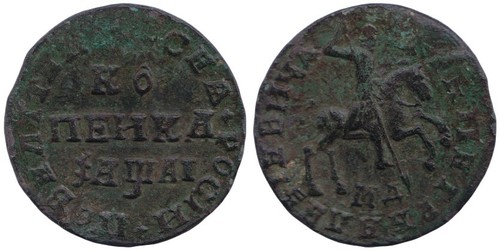
Kopek (Peter I)
c. 1704–1718 (observed 1711)
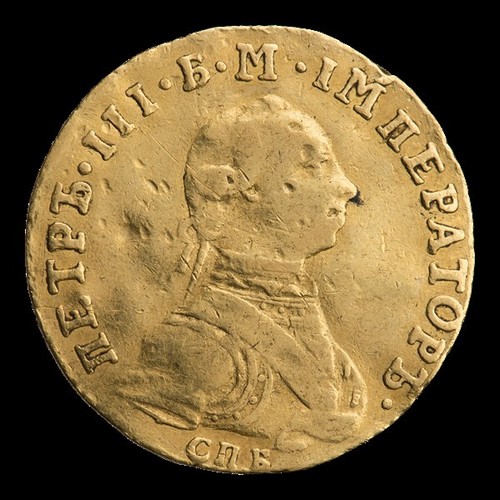
Imperial Chervonets
1762
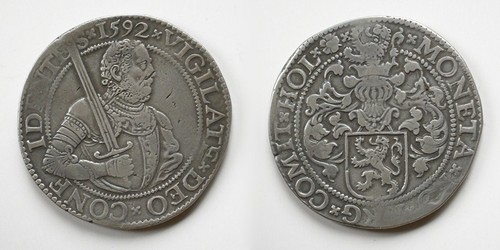
Prinsendaalder (Rijksdaalder)
1592
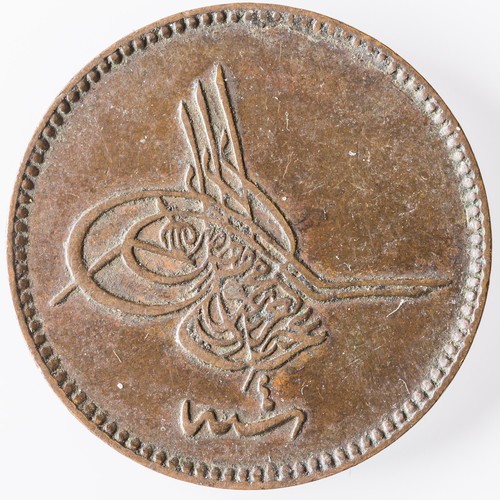
10 Para
AH 1280 (1863-1864 CE)
Halve Rijksdaalder van Leicester
1580s-1590s
Gouden Dukaat
1724
Escudo (Joanna and Charles V, contemporary copy)
1516-1558
Duit (VOC)
1790
4 Escudos
1780s
Tymf
1663