
How to Identify the Joachimsthaler (Thaler)
Recognise an early Bohemian Joachimsthaler by its crown size and silver heft, its Latin-legend arms and St. Joachim figure, and hand-struck 1520s workmanship.
Read the full Joachimsthaler (Thaler) encyclopedia entry →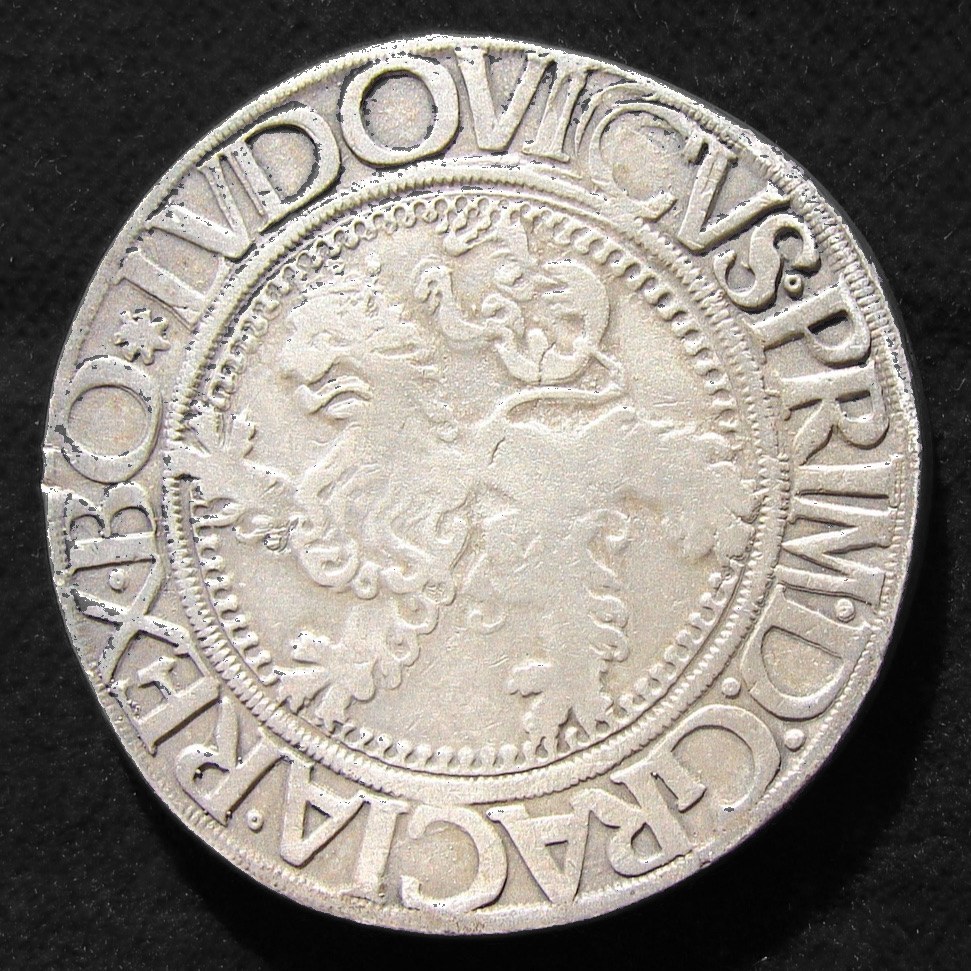
Begin with size and metal, because the Joachimsthaler is defined by them. It is a crown-sized silver coin struck to the Guldengroschen standard — about 40 mm across and roughly 28–29 grams of high-grade silver — so it should feel genuinely heavy and show the bright, coolly reflective surface and soft grey toning of old silver. It is non-magnetic and does not have the yellowish cast of gold or brass. A piece that is small, light, magnetic, or dull base-metal in tone is not a thaler of this class.
Read the heraldic side, which is the face shown in our photograph. Look for a coat of arms — the crowned, double-tailed Bohemian lion and the Schlick family shield — enclosed by a circular inscription band in Latin that carries the date, here 1525. The legends of this series name the King of Bohemia and the lords of Schlick; copying out the exact wording and comparing the shields against a reference is the surest way to pin down the year and variety.
Now consider the companion side, even though it is not pictured on this example. Genuine Joachimsthalers of the Schlick period typically pair the arms with a standing figure of St. Joachim, the town's patron saint, holding a book or staff. The presence of that saintly figure on one face and the lion-and-shield heraldry on the other is the classic diagnostic pairing for the type.
Judge the workmanship as an early hand-struck coin, not a modern one. Expect a slightly irregular flan, some unevenness in the strike where high points are weak, and Renaissance-style lettering rather than sharp, perfectly aligned machine engraving. Genuine 16th-century strikes show crisp, confidently cut detail even when worn; suspiciously smooth, grainy, or 'soapy' surfaces, soft mushy lettering, or a visible edge seam point to a cast copy.
Finally, treat authentication as part of identification. The Joachimsthaler is famous enough that replicas, tourist pieces, and modern restrikes are common, in both silver and plated base metal, and some carry plausible-looking dates. Check that weight and diameter match the standard, be wary of any coin that looks too clean or too uniform for its age, and have any valuable example confirmed by a specialist in early modern coinage or a recognised grading service before relying on the identification.
Frequently asked questions
What is the single best clue that a coin is a Joachimsthaler?
The combination of crown-sized silver (about 40 mm and 28–29 grams) with the Bohemian lion and Schlick arms on one face and a standing St. Joachim on the other, all lettered in Latin. Size and metal narrow it down; the arms and saint confirm the type.
How do I read the date and variety on the arms side?
The date sits within the circular inscription band around the coat of arms — 1525 on this piece. To fix the exact variety, transcribe the full Latin legend naming the King of Bohemia and the lords of Schlick and compare the lion and shields against a catalogue of the Joachimsthal series.
Should the coin look perfectly round and evenly struck?
No. It was hand-struck in the 1520s, so a slightly irregular flan, uneven relief, and Renaissance-style lettering are normal and expected. Perfectly round, uniform surfaces are more consistent with a modern copy or restrike than with a genuine early thaler.
How can I spot a fake Joachimsthaler?
Watch for the wrong weight or diameter, grainy or overly smooth surfaces, soft or blurry lettering, an edge seam from casting, or a magnetic base-metal core. Because this coin is widely copied, have any valuable example authenticated by a specialist or grading service.