
Coin Encyclopedia
Search and identify coins from around the world — with country, denomination, metal, mint, history, and how to tell them apart.
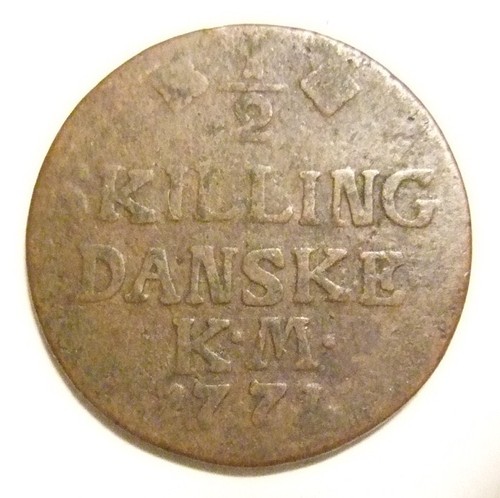
½ Skilling
A small copper Danish half skilling of 1771, showing a royal crown over the king's cipher and the value ½ SKILLING DANMARK K:M on the reverse.
Early Modern
Canadian 50 Cents
Canada's mid-century silver 50-cent piece bearing King George VI, struck in 80% silver with the Canadian coat of arms.
World Coins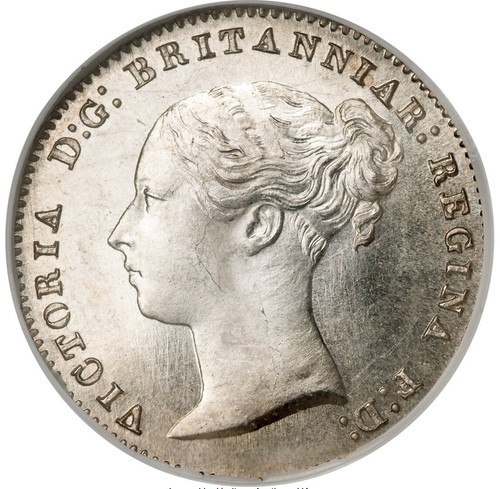
British Silver Threepence
Tiny sterling-silver threepence of Queen Victoria; the young-head type shown here dates to 1858 and is one of Britain's smallest circulating coins.
British Isles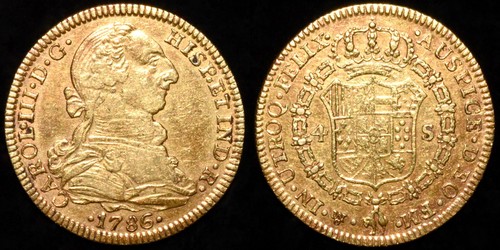
4 Escudos
Spanish Bourbon gold 4 Escudos of the 1780s, with an armored royal bust facing right and a crowned coat of arms on the reverse.
Early Modern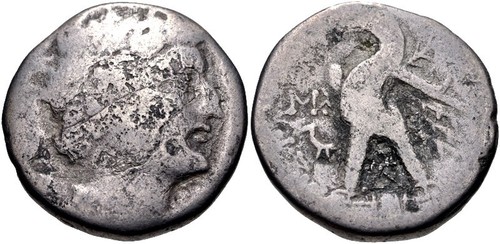
Tetradrachm of Ptolemy XII
Silver tetradrachm struck under Ptolemy XII of Egypt, father of Cleopatra VII, bearing a diademed royal Ptolemaic head and the dynasty's eagle-on-thunderbolt reverse.
Ancient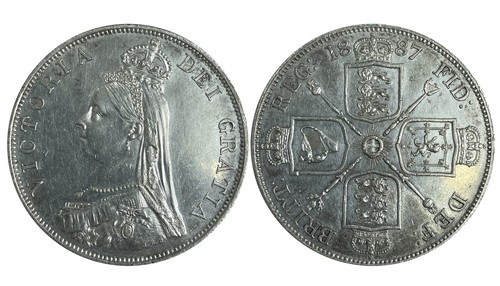
British Double Florin
Large Victorian silver four-shilling piece with the Jubilee Head of Queen Victoria and a cross of four crowned shields on the reverse.
World Coins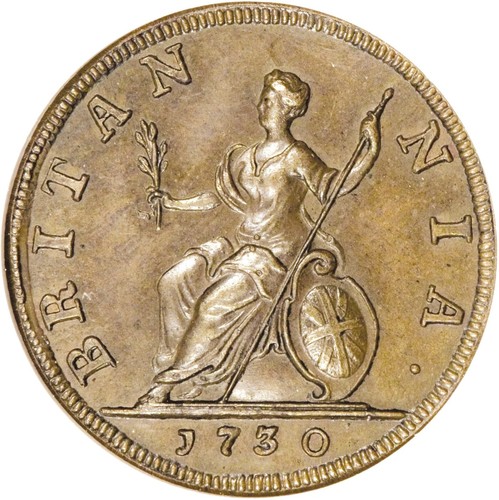
British Farthing
Small copper farthing of King George II, with his laureate bust facing left and a seated Britannia on the reverse; struck in the 1730s.
British Isles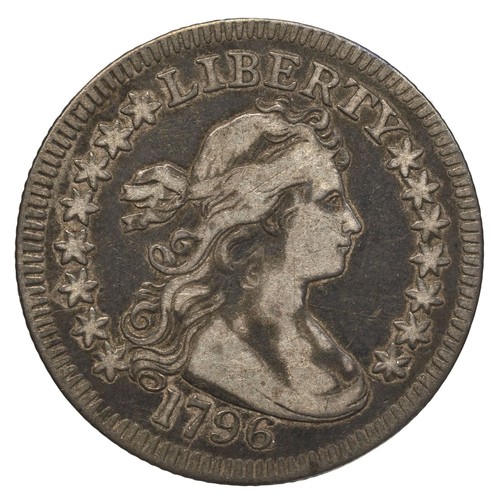
Draped Bust Quarter
The first United States quarter dollar, struck in silver with a draped Liberty and border stars on the obverse and an eagle reverse; the type began in 1796.
Quarter
Charles II Halfpenny
A milled copper halfpenny of Charles II showing his laureate bust and a seated Britannia, part of the first regal copper coinage of England, dated 1675.
Milled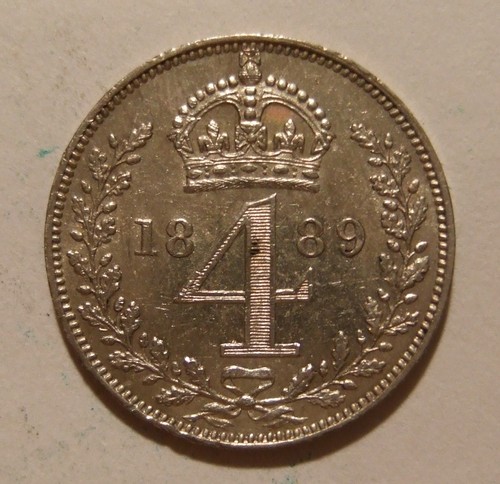
Victoria Maundy Fourpence
A tiny sterling-silver ceremonial coin from a royal Maundy set. This 1889 example shows Victoria's crowned Jubilee Head and a crowned '4' in a wreath.
British Isles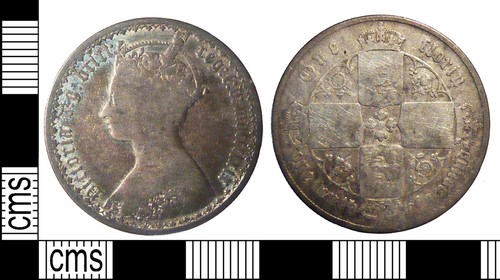
Gothic Florin
A silver two-shilling florin of Queen Victoria in the medieval-revival Gothic style, with an ornate crowned cruciform shield reverse dated 1869.
Milled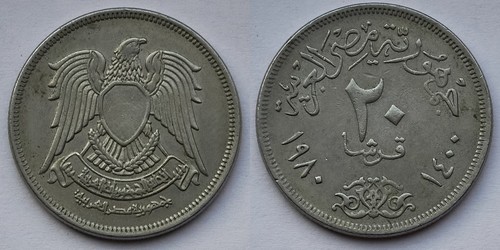
Egyptian 20 Piastres Commemorative
A cupro-nickel Egyptian 20 piastres commemorative dated 1980, with an ornate Arabic calligraphic obverse and a heraldic double-headed eagle reverse.
World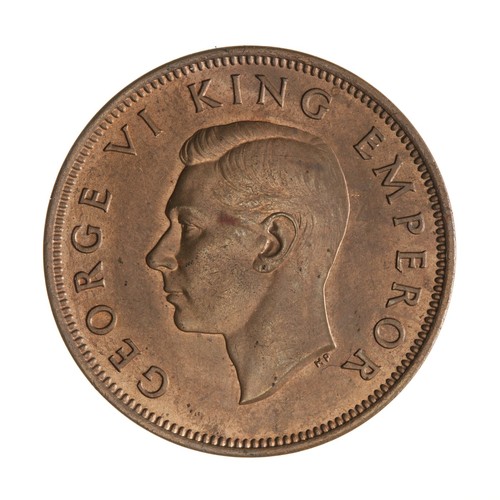
New Zealand Halfpenny
New Zealand's small bronze halfpenny, struck from 1940, with a royal portrait obverse and a Maori hei-tiki reverse. The coin shown is a 1940 George VI issue.
New Zealand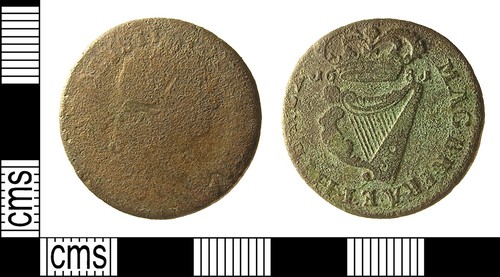
Irish Halfpenny of Charles II
A milled copper halfpenny struck for Ireland under Charles II, with his right-facing laureate bust and a crowned Irish harp on the reverse.
Milled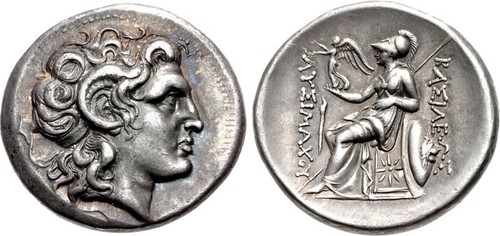
Lysimachos Tetradrachm
Silver tetradrachm of Lysimachos of Thrace, c. 297-282 BC, showing the deified head of Alexander the Great and Athena seated with a shield and spear.
Ancient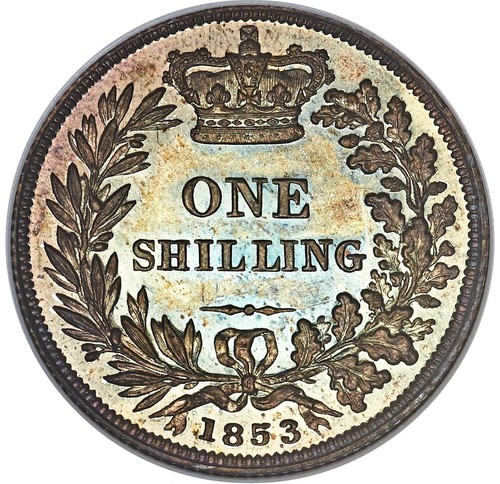
Shilling of Victoria
A milled sterling-silver British shilling of Queen Victoria, worth twelvepence, with the queen's head on the obverse and a crowned 'ONE SHILLING' reverse.
Milled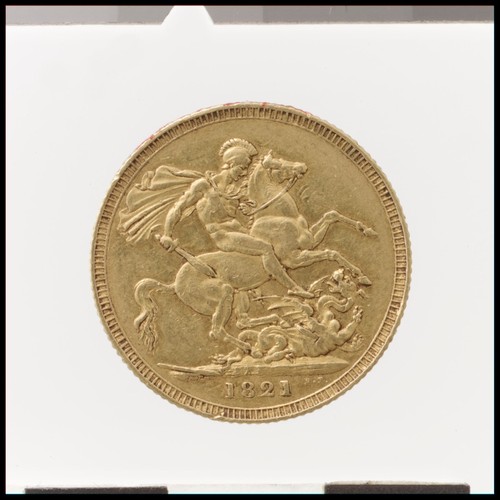
Sovereign of George IV
A milled gold sovereign of Great Britain struck under George IV, with the king's laureate head and Pistrucci's St George slaying the dragon reverse, dated 1821.
Milled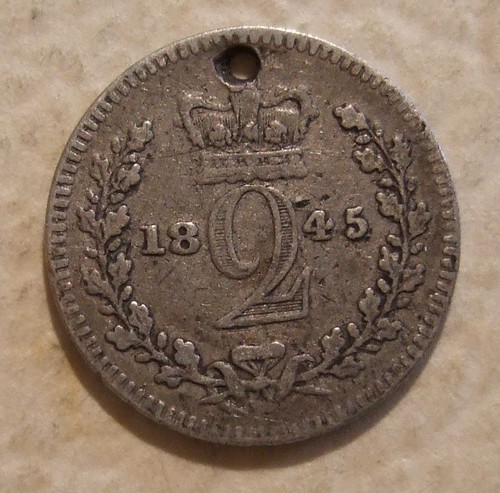
Victoria Maundy Twopence
A tiny sterling-silver ceremonial coin from a Royal Maundy set. This 1845 example shows Victoria's young head and a crowned 2 in a wreath.
British Isles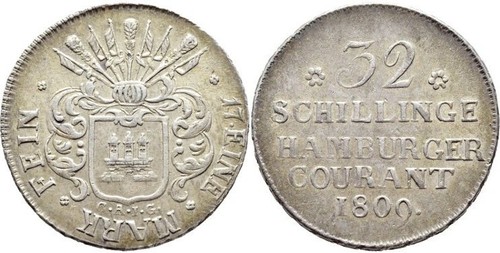
Hamburg 32 Schilling
A 1800 silver 32 Schilling of the Free City of Hamburg, with the city coat of arms and a 'HAMBURGER COURANT' reverse.
German States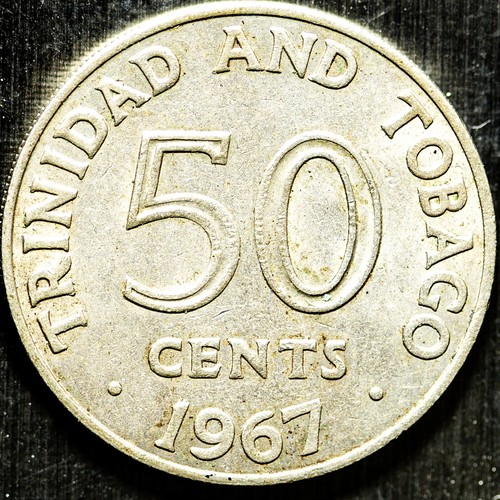
Trinidad and Tobago 50 Cents
A large copper-nickel Caribbean circulation coin; the 1967 example carries the national coat of arms and country name on the obverse and the 50-cent value on the reverse.
Circulation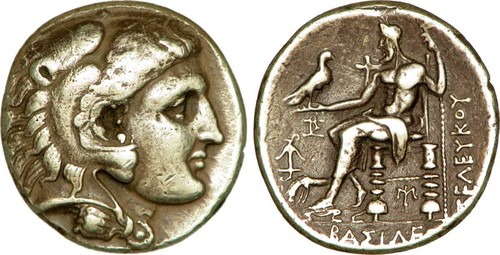
Seleucus I Nicator Tetradrachm
Large silver tetradrachm of Seleucus I Nicator, founder of the Seleucid Empire, showing a horned Alexander-type head and a mounted figure with a spear.
Ancient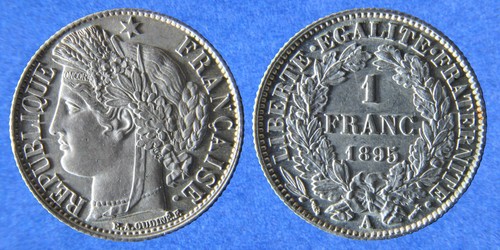
French Cérès 1 Franc
A .835 silver French 1 Franc showing the goddess Cérès in a liberty cap; this example is an 1895 Third Republic issue with a wreath-and-value reverse.
Circulation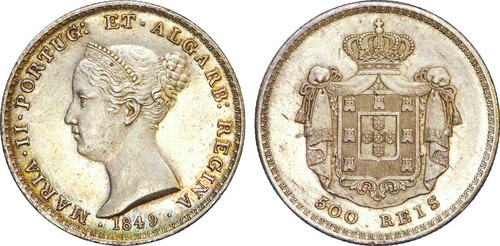
500 Reis
A Portuguese silver 500 Reis of Queen Maria II, with her left-facing draped bust on the obverse and a crowned coat of arms on the reverse.
Modern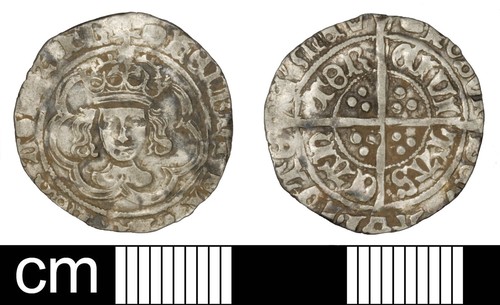
Medieval Halfgroat of Henry VII
Hammered silver twopence of England's first Tudor king, with a crowned royal portrait and a long-cross reverse over a shield.
British Isles