
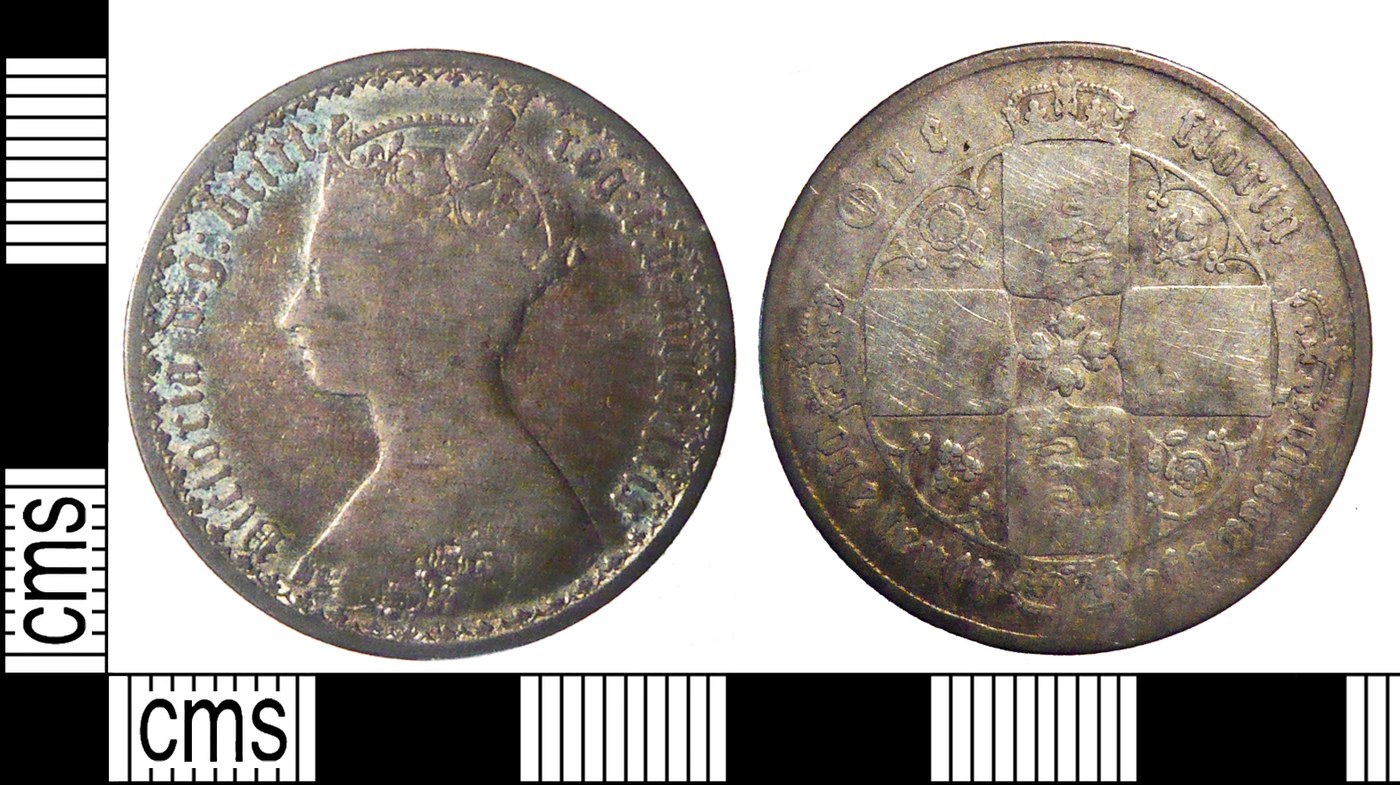
Gothic Florin
A silver two-shilling florin of Queen Victoria in the medieval-revival Gothic style, with an ornate crowned cruciform shield reverse dated 1869.
- Country
- United Kingdom
- Denomination
- Florin (2 shillings)
- Metal
- Silver
Got a coin like this?
Identify any coin from a photo, free.
Overview
The Gothic Florin is a British silver two-shilling coin issued during the reign of Queen Victoria in a distinctive medieval-revival, or "Gothic," style. It takes its name from the elaborate Gothic-script lettering and ornate heraldic design that set it apart from ordinary Victorian coinage. The photographed example shows the reverse, which is the most recognisable side of the type: a design built around four crowned shields arranged in a cross, separated by floral emblems, with the date 1869.
The florin was a two-shilling piece, equal to one-tenth of a pound, introduced as an early step toward decimal coinage. The Gothic version of the florin is one of the most admired designs in the British series, prized for its intricate detail and its departure from the plain lettering used on most contemporary coins. The reverse cross-and-shields layout with floral ornaments is the defining visual signature of the type.
History & Background
The florin was introduced in 1849 as a two-shilling coin, worth one-tenth of a pound, as a cautious experiment toward a decimal currency. The first "Godless" florins of 1849 famously omitted part of the usual religious inscription, and from 1851 the design was reworked into the elaborate Gothic style that gives this coin its name. Gothic florins were then struck across much of Victoria's middle reign.
The Gothic style reflected the broader Victorian fascination with medieval revival that also shaped the era's architecture, art, and typography. The coin's legends were rendered in Gothic blackletter script rather than Roman capitals, and the young crowned bust of the Queen was paired with a richly heraldic reverse. Dates on Gothic florins were themselves written in Roman numerals in the Gothic lettering, a further period touch. An 1869 piece such as this falls within the long run of the type before it was eventually replaced by later florin designs in Victoria's reign.
How to Identify
The reverse shown here is the key to recognising a Gothic Florin. It is arranged as a cross composed of four crowned shields, each bearing the heraldic quarters of the royal arms, with floral emblems — such as the rose, thistle, and shamrock — filling the spaces between the arms of the cross. The date, here 1869, appears as part of this design. The ornate, medieval styling and the crowned cruciform shields distinguish it immediately from the plainer florins that came before and after.
The obverse, not shown on this example, carries a crowned portrait of Queen Victoria with the surrounding legend in Gothic blackletter lettering, a hallmark of the type. As a silver two-shilling piece the coin is a mid-sized crown-family denomination, larger than a shilling but smaller than a halfcrown. Confirming the Gothic script, the cruciform shield reverse, and the silver fabric together is the surest way to identify the coin.
Value & Collectibility
Gothic Florins are collectable Victorian silver coins, and their value depends heavily on the specific date, die variety, and state of preservation. Because the type was struck over many years, some dates and varieties are common while others are notably scarcer, and small differences in the lettering or the way the date is rendered can matter to specialists. Well-struck, lightly worn examples with crisp Gothic detail command a clear premium over worn pieces.
As a general silver coin, a heavily worn Gothic florin carries only a modest value, while sharp, high-grade examples and scarce dates can be worth substantially more to collectors. Condition, originality of surface, and correct attribution of the date and variety are the main drivers. For a specific 1869 coin, an accurate figure should come from recent auction and dealer results for comparable graded examples rather than any single quoted price, and any coin of real value is best assessed by a specialist.
Frequently asked questions
What is a Gothic Florin?
It is a British silver two-shilling coin of Queen Victoria struck in a medieval-revival "Gothic" style, named for its ornate blackletter lettering and heraldic design. This example is dated 1869 and shows the characteristic crowned cruciform shields on the reverse.
Why is it called "Gothic"?
The name comes from the Gothic blackletter script used for the legends and dates and the medieval-revival styling of the design, which reflected the Victorian taste for the Gothic. It is not a separate denomination but a distinctive design of the florin.
What is the reverse design?
The reverse is built as a cross of four crowned shields bearing the royal heraldic quarters, separated by floral emblems such as the rose, thistle, and shamrock, with the date incorporated into the design. On this coin the date reads 1869.
What is it made of and what was it worth?
It is a silver coin with a face value of two shillings, equal to one-tenth of a pound. The florin was introduced as an early move toward decimal coinage in Britain.
Is a Gothic Florin valuable?
Value depends on the date, variety, and condition. Worn examples are modest, while sharp high-grade coins and scarcer dates can be worth considerably more. A specific value should come from recent sales of comparable graded examples.
Gothic Florin guides
In-depth guides for identifying, valuing, and collecting Gothic Florin.
Other coins you may enjoy
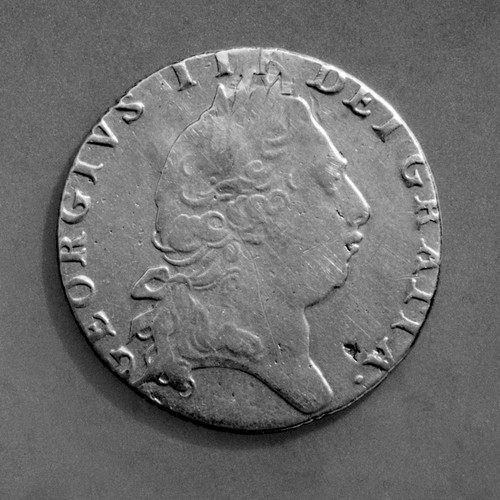
Spade Guinea
1760-1820
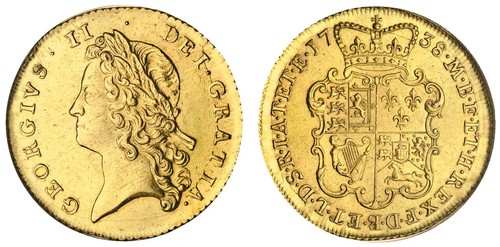
Two Guineas of George II
1738–1753
Shilling of Victoria
1838-1901
Sovereign of George IV
1821-1830
Sovereign of William IV
1831–1837
Penny of William IV
1831-1837
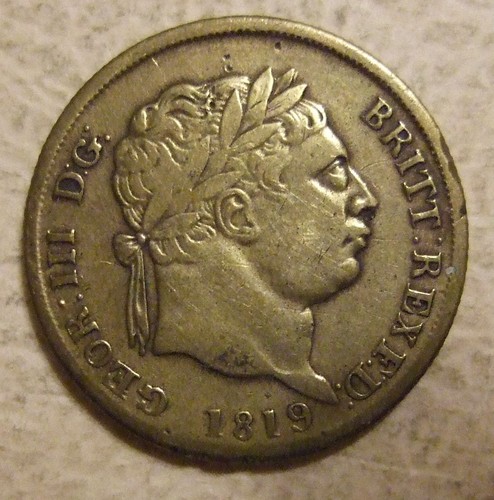
Shilling of George III
1816-1820
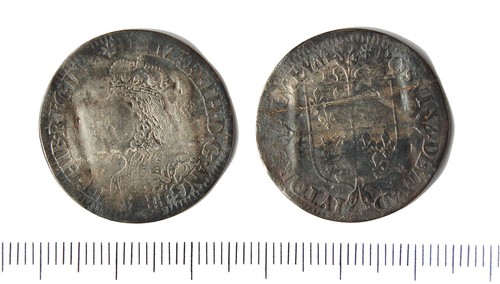
Milled Sixpence of Elizabeth I
1561-1571
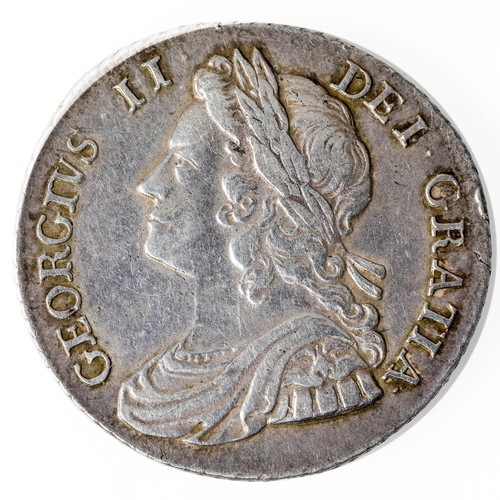
Shilling of George II
1727-1758
Shilling of Anne
1702-1714
Charles II Twopence
1660-1685
Charles II Half Crown
1660–1685