
How to Identify the Gothic Florin
A collector's guide to recognising Victoria's Gothic florin by its blackletter lettering, crowned cruciform shields, silver fabric, and date styling.
Read the full Gothic Florin encyclopedia entry →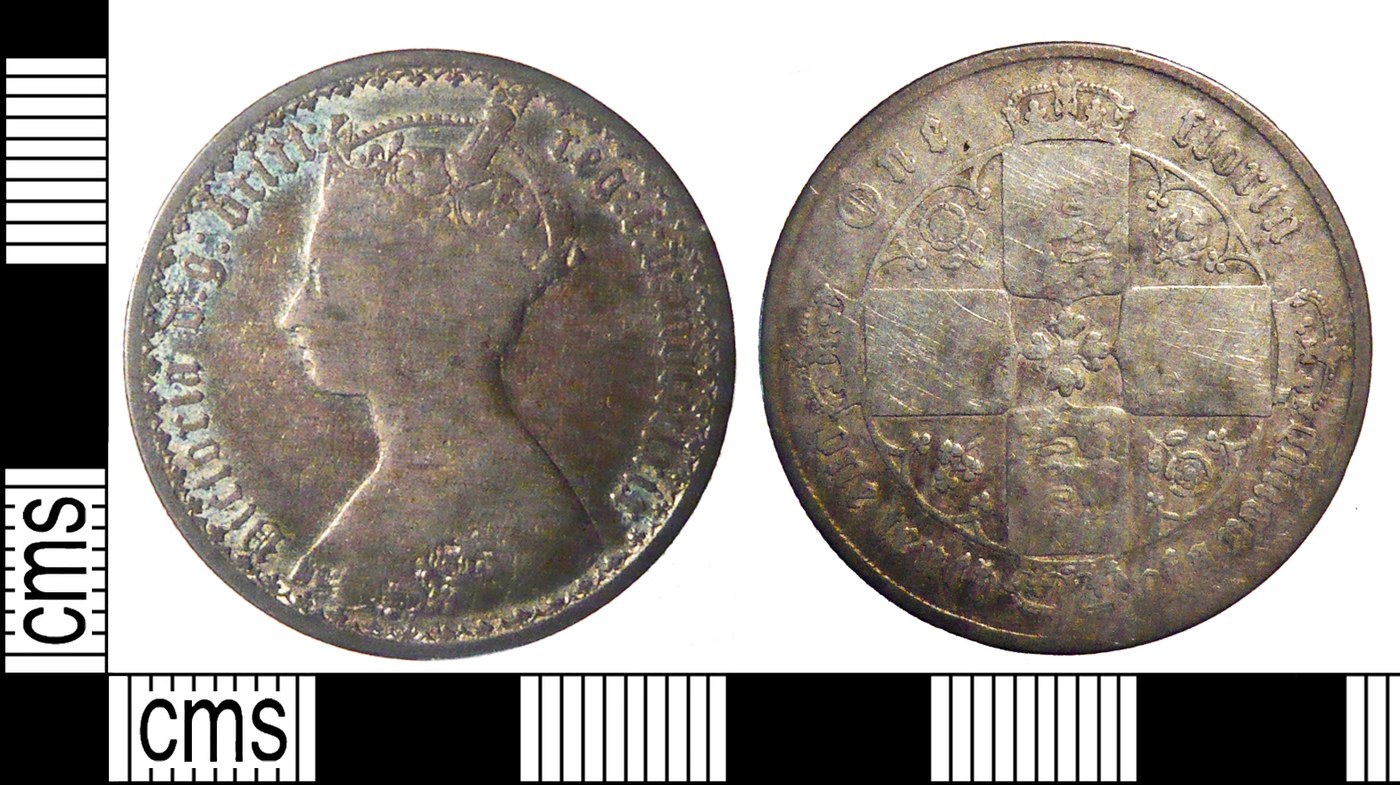
Start with the reverse, which is the most distinctive feature of the type. Look for a design laid out as a cross made up of four crowned shields, each showing the heraldic quarters of the royal arms, with floral emblems filling the spaces between the arms of the cross. On the coin shown the date 1869 is worked into this design. This crowned cruciform shield arrangement, combined with the ornate medieval styling, is the single clearest sign that you are looking at a Gothic florin rather than an ordinary Victorian florin.
Check the lettering. Genuine Gothic florins use Gothic blackletter script for the legends rather than the plain Roman capitals seen on most other coins, and the date is rendered in that same medieval style. The obverse, absent from this example, carries a crowned bust of Queen Victoria with the surrounding inscription also in blackletter. If you can view the obverse, confirm the crowned portrait and the Gothic script together.
Confirm size and metal. This is a silver two-shilling piece, a mid-sized coin of the crown family: larger than a shilling and smaller than a halfcrown. Weighing and measuring the coin and comparing it to published florin specifications helps confirm that it is a genuine silver florin and not a smaller denomination or a base-metal imitation. The tone and wear should read as period silver.
Be aware of dates and varieties. The Gothic florin was produced over many years, and specialists distinguish numerous dates and die varieties, including differences in the lettering and in how the date is expressed. Reading the date carefully — here 1869 — and noting the exact form of the legends is important both for attribution and for value, since some varieties are far scarcer than others.
Authenticate with care. Because attractive Victorian silver is collectable, be alert to cleaned surfaces, worn casts, and modern reproductions. Genuine examples show honest wear consistent with silver circulation and crisp original Gothic detail where unworn. Cast or pressed copies typically have soft, mushy lettering, wrong weight, or seams. Any coin of significant value should be checked against reference images and, where warranted, examined or graded by a specialist before relying on an identification or price.
Frequently asked questions
How do I know it is a Gothic florin and not an ordinary florin?
Look for the blackletter Gothic lettering and the reverse built as a cross of four crowned shields with floral emblems between them. Ordinary Victorian florins use plainer lettering and different reverse layouts; the ornate Gothic styling is the giveaway.
Which side identifies the coin here?
The reverse. It shows the crowned cruciform shields with heraldic quarters, floral ornaments, and the date — 1869 on this coin. The obverse, not shown, carries the crowned bust of Queen Victoria in matching Gothic script.
How can I confirm it is silver and the right size?
Weigh and measure the coin and compare against published florin specifications. It should be a mid-sized silver two-shilling piece, larger than a shilling and smaller than a halfcrown, with the tone and wear of genuine period silver.
Why does the exact date and variety matter?
Gothic florins were struck over many years with numerous dates and die varieties, and scarcity varies widely between them. Reading the date and the precise form of the lettering is essential for correct attribution and for judging value.