
Coin Encyclopedia
Search and identify coins from around the world — with country, denomination, metal, mint, history, and how to tell them apart.
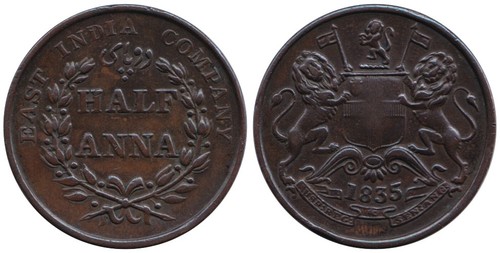
East India Company Half Anna
Large copper Half Anna of the East India Company, dated 1835, with laurel-wreath legend and the Company's heraldic lion-and-shield arms.
British India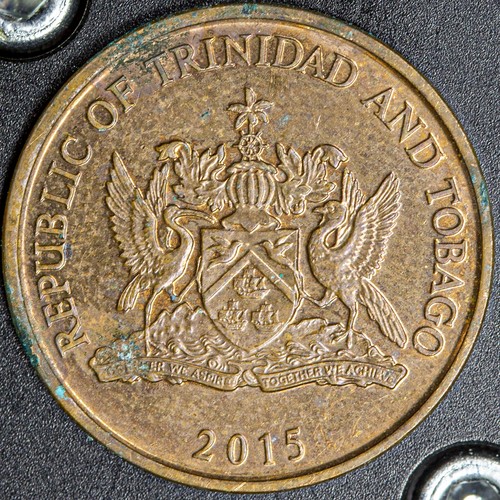
Trinidad and Tobago 1 Dollar
A nickel-plated steel one-dollar coin of Trinidad and Tobago, carrying the national coat of arms and heraldic emblems, dated 2015.
Circulation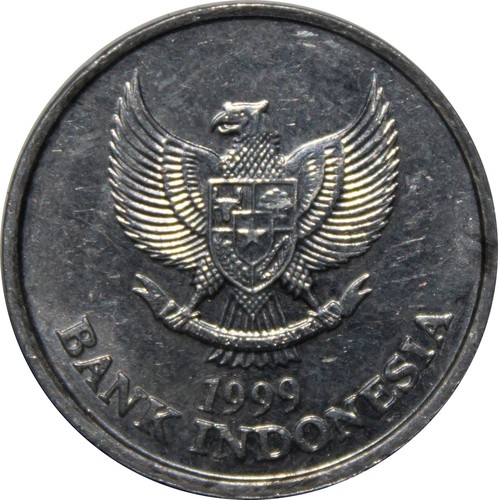
Indonesia 100 Rupiah
A modern lightweight aluminium 100 Rupiah of Indonesia, carrying the Garuda Pancasila national emblem, the BANK INDONESIA legend and the 100 denomination.
Southeast Asia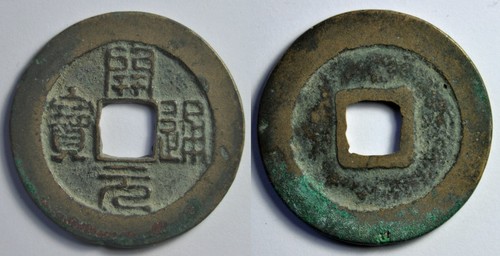
Kai Yuan Tong Bao
A Tang-dynasty Chinese bronze cash coin with the four seal-script characters Kai Yuan Tong Bao around a central square hole.
Cash Coin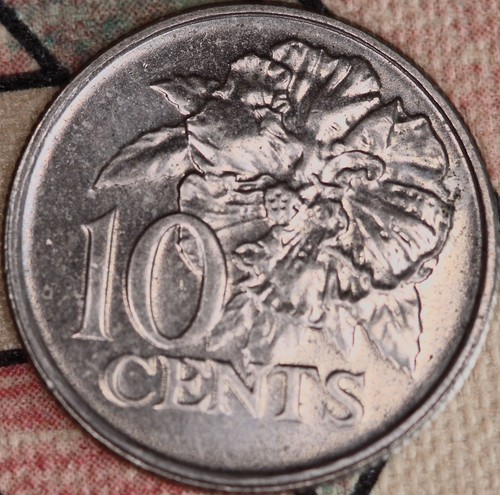
Trinidad and Tobago 10 Cents
A copper-nickel 10-cent coin of Trinidad and Tobago: the national coat of arms on the obverse and the denomination on the reverse.
Circulation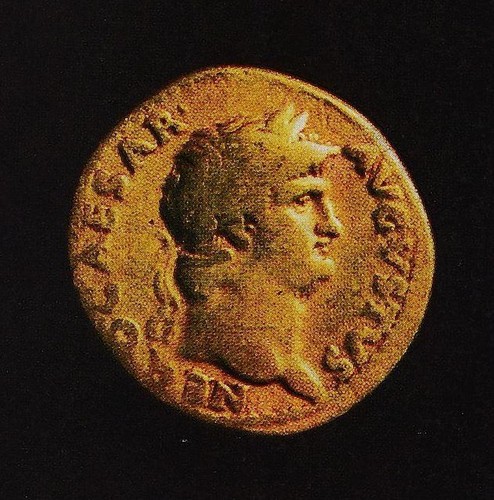
Aureus of Nero
Roman imperial gold aureus of Emperor Nero (54-68 AD), showing his curly-haired portrait facing right with a Latin imperial legend.
Ancient Coins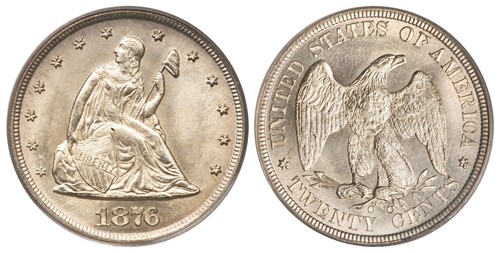
Twenty Cent Piece
A short-lived U.S. silver coin worth twenty cents, showing a seated Liberty and a soaring eagle, struck only from 1875 to 1878.
Twenty Cent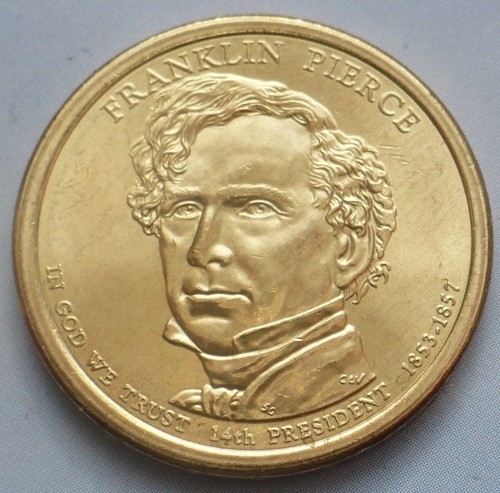
Franklin Pierce Presidential Dollar
Golden-colored U.S. dollar from the Presidential $1 Coin series, honoring Franklin Pierce, the 14th President, with a Statue of Liberty reverse.
Dollar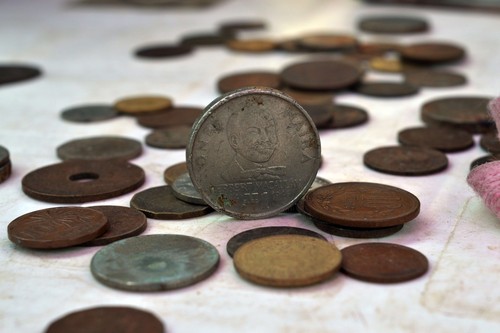
Nigeria 1 Naira
Nigeria's copper-nickel 1 Naira showing the nationalist Herbert Macaulay on the obverse and the national coat of arms on the reverse.
World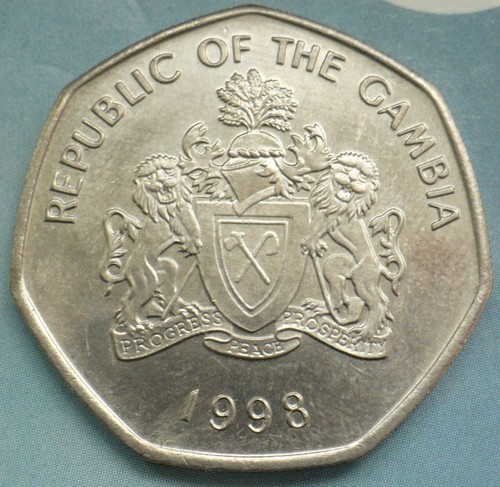
Gambia 1 Dalasi
A distinctive octagonal copper-nickel coin of The Gambia, showing the national coat of arms and the bold value 1 Dalasi dated 1998.
World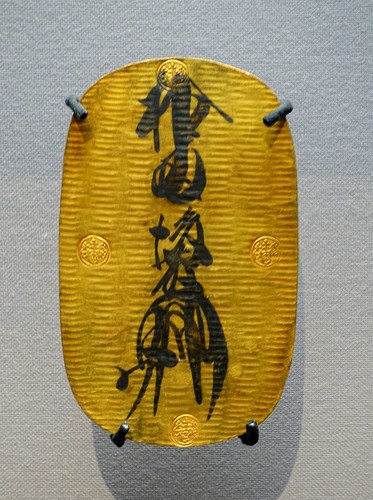
Keicho Oban
A large, thin oval Japanese gold oban of the Keicho era, hammer-marked with horizontal striations and bearing brush-inked ink signatures and paulownia crests.
Historic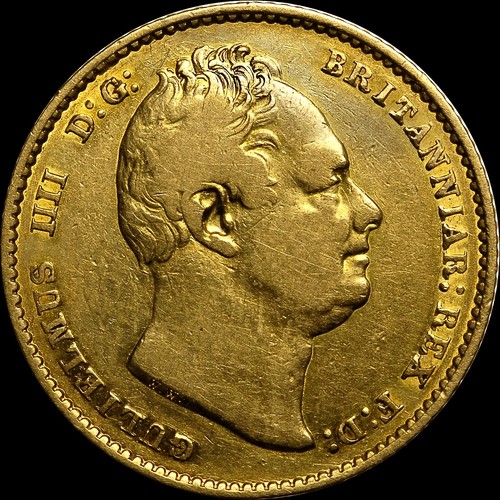
Sovereign of William IV
A 22-carat gold sovereign of William IV, with the king's bare head facing right and a crowned royal shield of arms on the reverse.
Milled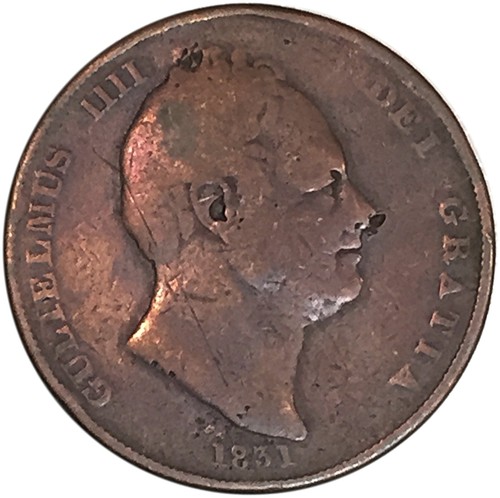
Penny of William IV
A large copper penny of King William IV, struck in the 1830s, with the king's right-facing head and the Latin legend GULIELMUS IIII D:G.
Milled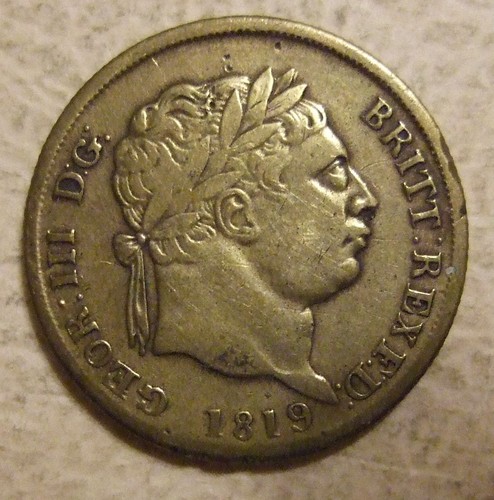
Shilling of George III
A milled silver shilling of George III from the Great Recoinage, with his laureate bust facing right and a crowned quartered royal shield within the Garter.
Milled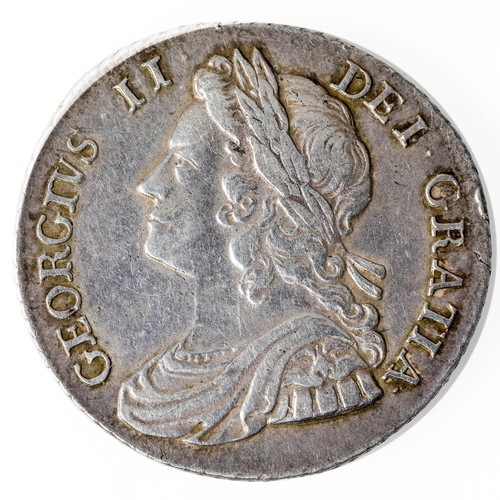
Shilling of George II
A milled silver shilling of George II, with a left-facing bust reading GEORGIVS II DEI GRATIA and a crowned cruciform-shields reverse; this one is a 1736 roses and plumes issue.
Milled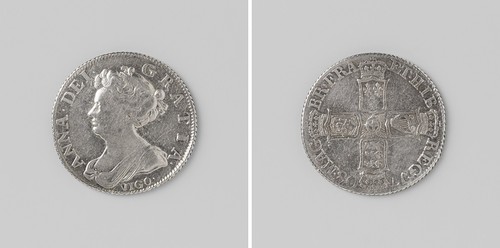
Shilling of Anne
A machine-struck silver shilling of Queen Anne, with her draped bust facing right and a reverse of crowned shields bearing the royal arms in a cross.
Milled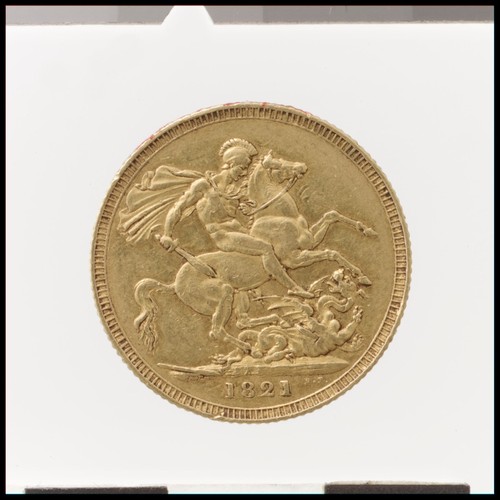
Sovereign of George IV
A milled gold sovereign of Great Britain struck under George IV, with the king's laureate head and Pistrucci's St George slaying the dragon reverse, dated 1821.
Milled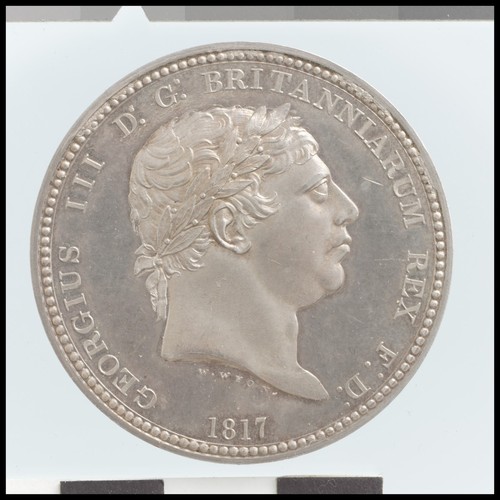
Three Graces Pattern Crown
A celebrated 1817 silver pattern crown of George III, engraved by William Wyon and never issued for circulation — a prized masterpiece of British coinage.
Pattern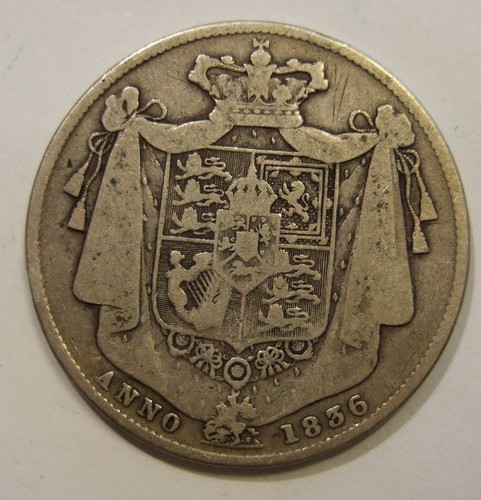
Half Crown of William IV
A milled British silver half crown of King William IV, with the king's bare head facing right and a crowned royal shield of arms on the reverse.
Milled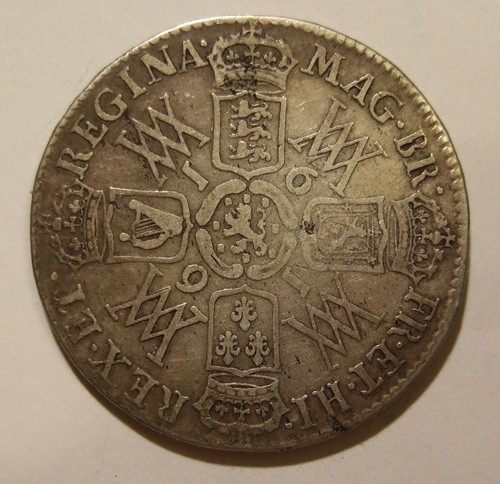
Half Crown of William III and Mary II
A milled silver half crown of the joint reign of William III and Mary II, showing their conjoined busts and a crowned heraldic shield, dated 1691.
Milled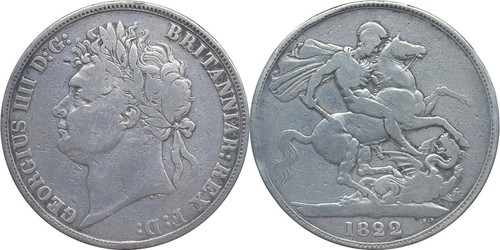
Crown of George IV
A milled silver crown of George IV, with a laureate head facing left and Pistrucci's St George and the dragon on the reverse; the photographed piece is dated 1822.
Milled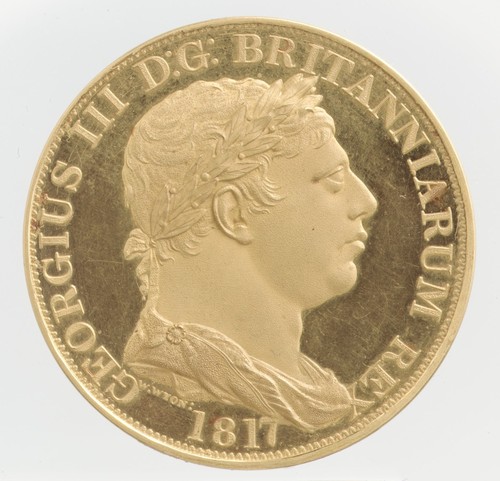
Crown of George III (Incorrupta)
A milled crown of George III dated 1817, named for its INCORRUPTA reverse legend, showing a laureate draped bust and crowned royal arms.
Milled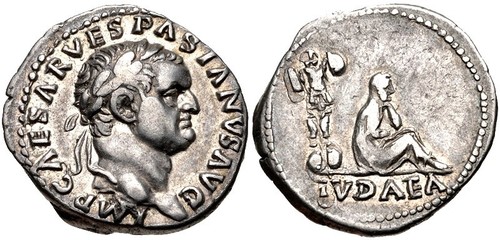
Vespasian Judaea Capta Denarius
Silver denarius of Emperor Vespasian (71–79 AD) with his laureate bust and a Judaea Capta reverse showing a mourning seated captive.
Ancient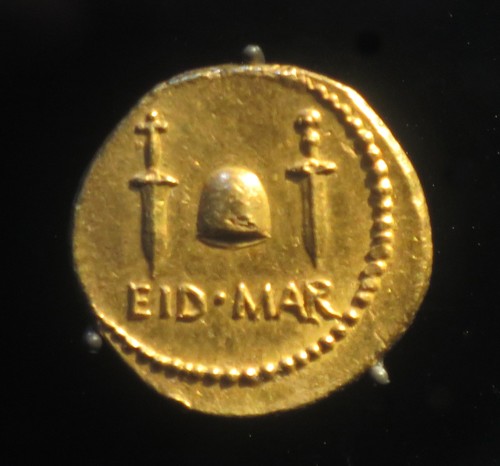
Brutus Aureus
The gold aureus of Marcus Junius Brutus, struck 42 BC, whose reverse celebrates Caesar's assassination with EID MAR, a cap of liberty, and two daggers.
Ancient