
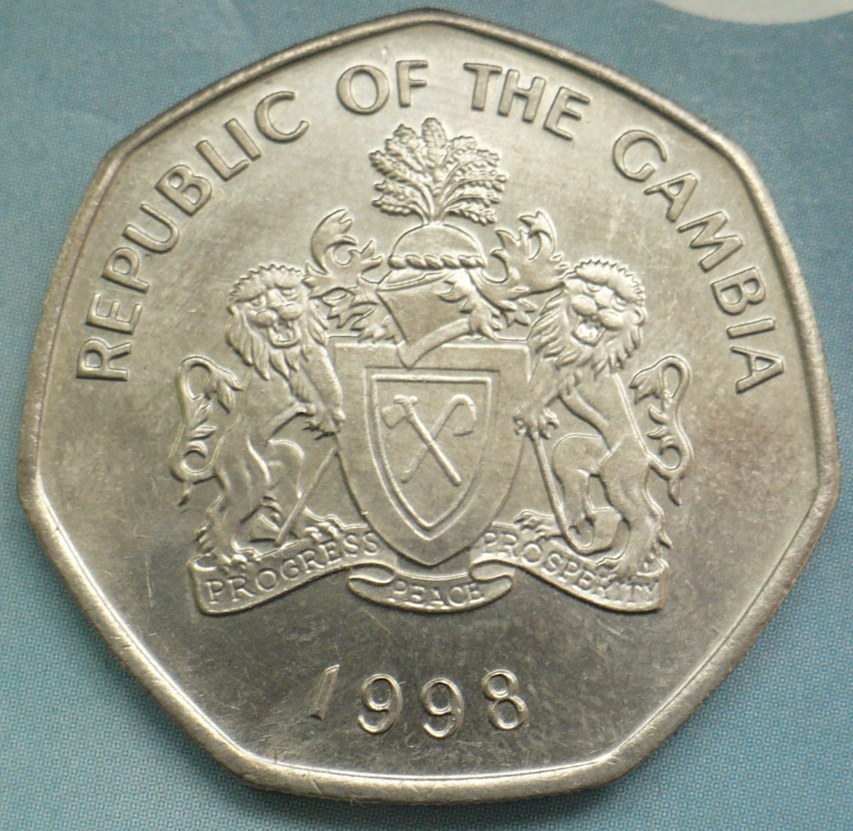
Gambia 1 Dalasi
A distinctive octagonal copper-nickel coin of The Gambia, showing the national coat of arms and the bold value 1 Dalasi dated 1998.
- Country
- Gambia
- Denomination
- 1 Dalasi
- Metal
- Copper-Nickel
Got a coin like this?
Identify any coin from a photo, free.
Overview
The Gambia 1 dalasi is a circulation coin of The Gambia, a small nation on the West African coast surrounding the Gambia River. The dalasi is the country's principal currency unit, and this piece represents one whole dalasi. It is struck in a pale, silvery copper-nickel alloy and is instantly recognizable by its unusual octagonal (eight-sided) shape.
As seen on the coin, the obverse carries the full coat of arms of The Gambia with its animal supporters and the inscription REPUBLIC OF THE GAMBIA, while the reverse presents the denomination and the date 1998 within the eight-sided form. The design is national and heraldic rather than commemorative, meant for everyday commerce.
Among modern African coinage the octagonal outline makes the 1 dalasi easy to pick out at a glance, and it is a common example of post-independence Gambian money that collectors of West African coins encounter frequently.
History & Background
The Gambia adopted the dalasi as its currency in 1971, replacing the earlier Gambian pound after the country became a republic. The name dalasi derives from a local term associated with a traditional unit of value, and the currency is issued through the Central Bank of The Gambia. It is divided into 100 bututs.
The 1 dalasi coin has appeared in the country's decimal coinage alongside smaller butut denominations. The 1998-dated eight-sided copper-nickel piece belongs to this modern series and carries the standard republican arms adopted after independence, reflecting the nation's identity rather than a monarch or colonial authority.
Because The Gambia is a small economy, its coins were struck in comparatively modest numbers by outside mints and circulated locally. The dalasi has gradually lost purchasing power over the decades, so a single-dalasi coin is a low-value everyday piece rather than a store of wealth.
How to Identify
The single strongest identifier is the shape. This coin is octagonal, an eight-sided outline that immediately sets it apart from the round coins around it. Confirm the copper-nickel color: a pale, gray-silver tone, not the yellow of brass or the reddish tint of bronze.
Read the obverse legend REPUBLIC OF THE GAMBIA around the national coat of arms, which shows a central shield flanked by animal supporters and topped by a crest. The reverse carries the value expressed as 1 DALASI together with the date, shown here as 1998. Together the arms, the country name, and the octagonal form make misidentification unlikely.
The coin is a mid-size circulation piece, heavier and larger than the small butut coins of the same country. There is no ruler's portrait; the heraldic arms occupy the main face. Use the date and denomination on the reverse to confirm you have the 1 dalasi rather than a fractional butut value.
Value & Collectibility
The 1 dalasi is a common, low-face-value circulation coin, and most examples are worth only a small amount above their nominal value. Worn pieces typically trade as inexpensive world-coin filler, often for well under a dollar.
Condition is the main driver of any premium. Bright, uncirculated examples with full detail on the coat of arms and sharp octagonal edges can bring a modest amount from collectors of Gambian or West African coinage, but figures generally stay in the low single-dollar range.
Because these coins are widely available, treat any price as a rough guide and check recent world-coin listings for the specific date. The novelty octagonal shape gives the type some collector appeal, yet ordinary circulated 1998 pieces remain affordable and easy to find.
Frequently asked questions
Why is the Gambia 1 dalasi eight-sided?
The octagonal shape is a deliberate design choice that makes the coin easy to distinguish by touch and sight from other denominations. It is one of the coin's most recognizable features.
Is the 1 dalasi coin made of silver?
No. Its pale gray color comes from a copper-nickel alloy, a common base metal for modern circulation coins. It contains no precious metal.
What is shown on the obverse of the coin?
The obverse displays the coat of arms of The Gambia, with a central shield, animal supporters, and a crest, surrounded by the inscription REPUBLIC OF THE GAMBIA.
What is a dalasi?
The dalasi is the currency of The Gambia, introduced in 1971 and divided into 100 bututs. One dalasi is the whole-unit denomination represented by this coin.
Is my 1998 Gambia 1 dalasi valuable?
Usually only modestly. It is a common circulation coin worth little beyond face value, though clean uncirculated examples can bring a small premium from collectors.
Gambia 1 Dalasi guides
In-depth guides for identifying, valuing, and collecting Gambia 1 Dalasi.
Other coins you may enjoy
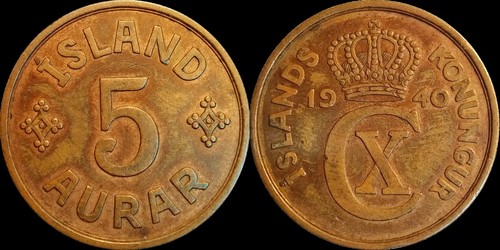
5 Aurar
1926-1942
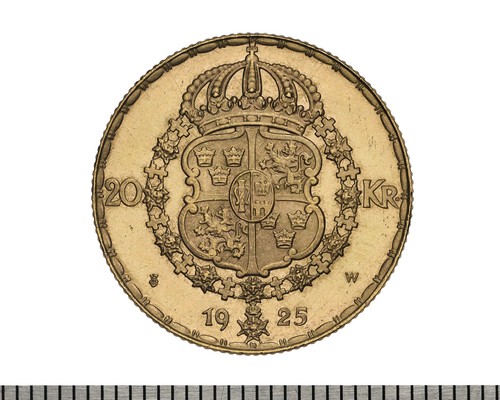
20 Kronor
1925 (denomination struck 1873-1925)
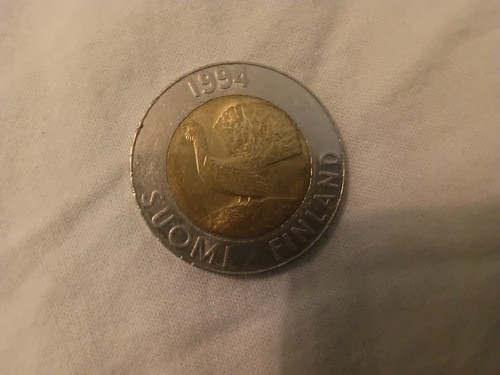
10 Markka
1993–2001
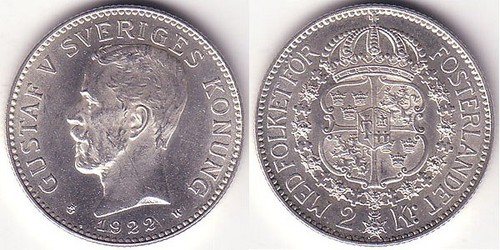
2 Kronor
1910-1940 (this example dated 1922)
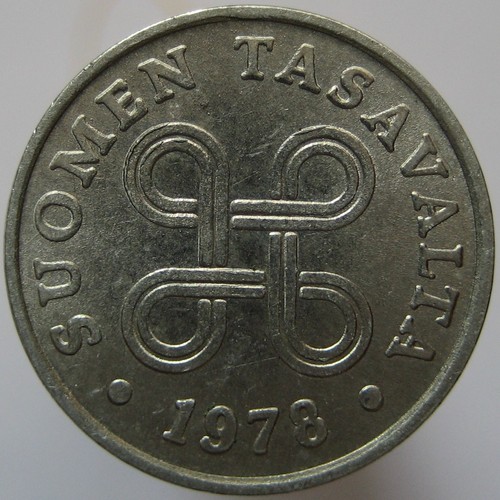
1 Penni
1969–1979
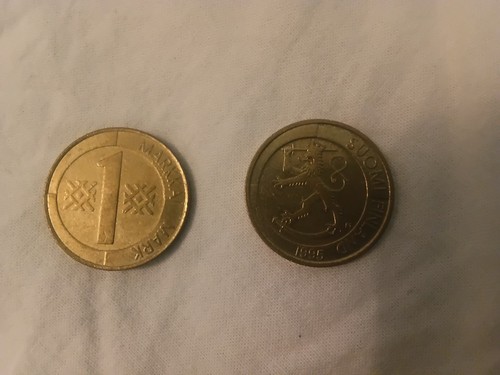
1 Markka
1993–2001
Kenya 5 Shillings
Bimetallic issues (2005–2010)
Kenya 20 Shillings
Modern issue (late 1990s–2000s)
South Africa Farthing
1923-1960
Kenya 10 Shillings
Republic of Kenya, bimetallic issues (mid-1990s to c. 2010)
Gold Sovereign
1817–present
Henri V Five Francs
1831