
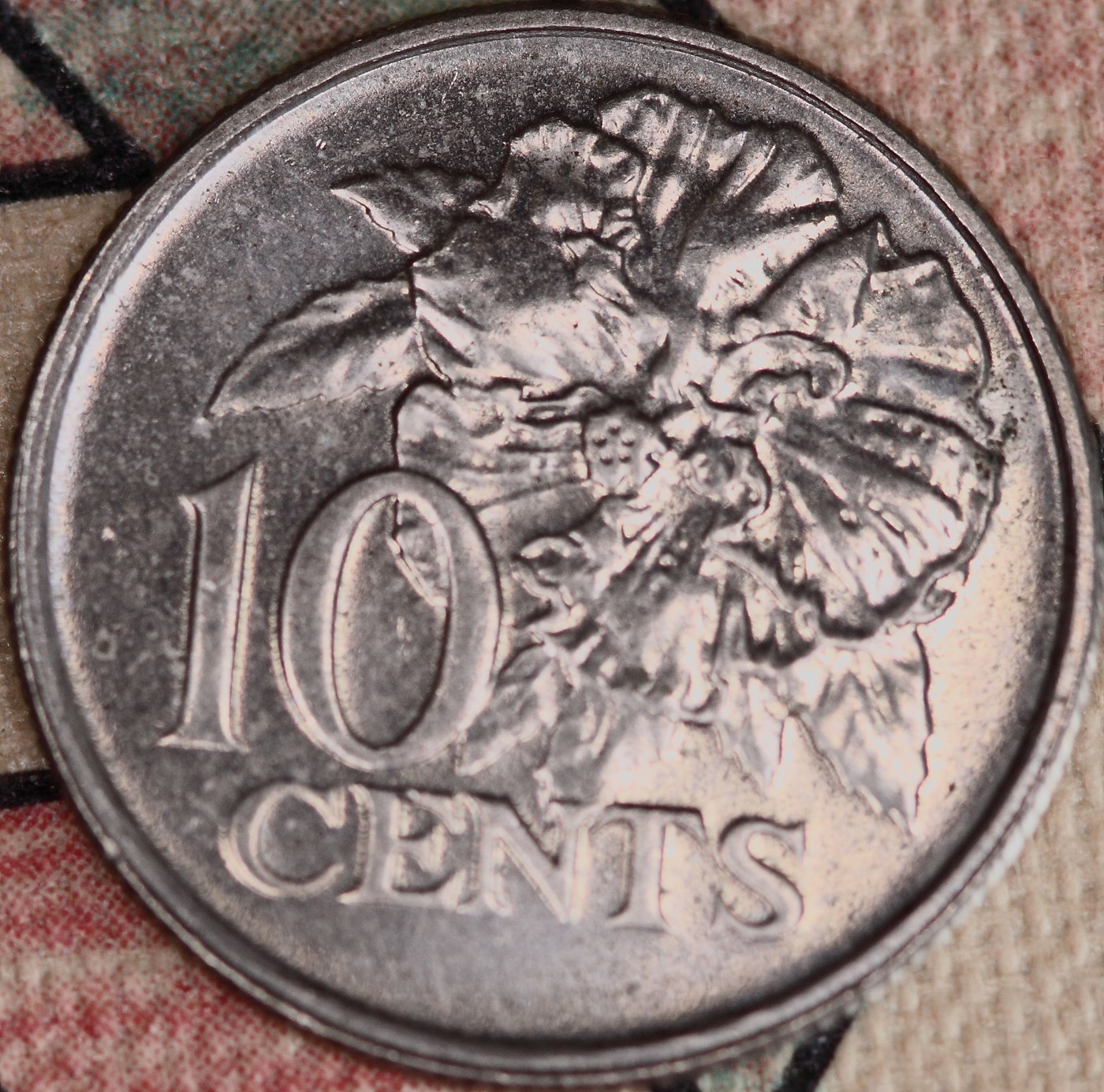
Trinidad and Tobago 10 Cents
A copper-nickel 10-cent coin of Trinidad and Tobago: the national coat of arms on the obverse and the denomination on the reverse.
- Country
- Trinidad and Tobago
- Denomination
- 10 Cents
- Metal
- Copper-nickel
Got a coin like this?
Identify any coin from a photo, free.
Overview
The Trinidad and Tobago 10 cents is a small circulating coin of the twin-island Caribbean nation. This example is struck in copper-nickel and carries the country's national coat of arms on the obverse, with the denomination ‘10’ and the words for ten cents on the reverse.
As a common piece of everyday small change from the 1990s and 2000s, the 10 cents sits between the lower bronze denominations and the higher cupronickel coins of the Trinidad and Tobago dollar system. It is a workaday circulation coin rather than a rarity, and large numbers were struck and used across the islands.
History & Background
Trinidad and Tobago introduced its own dollar-and-cent coinage in the 1960s following independence, replacing the earlier British West Indies currency. The 10-cent denomination has been part of that system from the start, and the coat-of-arms obverse became a consistent hallmark of the country's coins.
The pieces of the 1990s and 2000s continue this established design tradition. Struck in copper-nickel, they were produced in substantial quantities for general circulation, keeping the same national-arms theme that identifies the coinage as Trinidadian rather than that of a neighboring Caribbean state.
Because the design changed little across decades, individual 10-cent coins are distinguished mainly by their date rather than by major redesigns, and they remain familiar objects of daily commerce throughout the country's modern history.
How to Identify
The obverse shows the national coat of arms of Trinidad and Tobago, typically with the country name around the design and the date below or beside the arms. The arms include the shield with ships and birds and the supporting elements characteristic of the nation's heraldry.
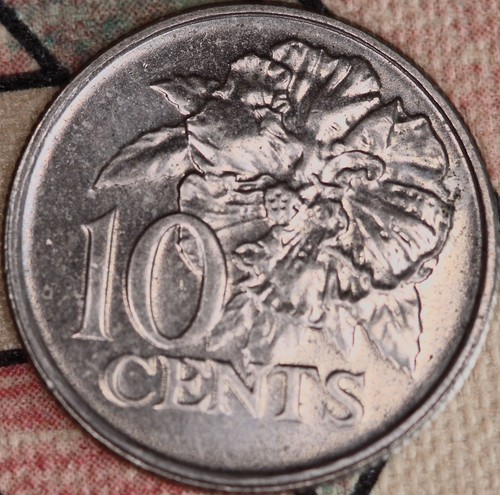
The reverse is dominated by the value: the numeral ‘10’ and the word CENTS, identifying the denomination clearly. The coin is a small round copper-nickel piece with a silvery-grey tone rather than the reddish-brown of the lower bronze denominations.
Confirm the country by the coat of arms and the name “TRINIDAD AND TOBAGO,” and confirm the value by the ‘10 CENTS’ reverse. The date, found on the obverse, tells you which year within the 1990s–2000s span your specific coin belongs to.
Value & Collectibility
As a modern, widely struck circulation coin, the Trinidad and Tobago 10 cents is generally worth little more than its face value when worn. Common dates in circulated condition are inexpensive and readily available.
Value rises modestly for coins in uncirculated or near-mint condition, for particular scarcer dates, and for pieces still holding original mint luster. Collectors assembling date runs or Caribbean type sets may pay a small premium over face for clean, problem-free examples.
For an accurate figure, check the specific date and grade against recent world-coin listings and dealer prices, since values vary by year and condition. Damage, heavy wear, or cleaning reduces desirability on a coin this common.
Frequently asked questions
What is on the Trinidad and Tobago 10 cents?
The obverse carries the national coat of arms and the country name, while the reverse shows the denomination ‘10 CENTS’ with the date on the obverse identifying the year.
What metal is the 10-cent coin made of?
The circulating 10 cents of this era is struck in copper-nickel, giving it a silvery-grey appearance distinct from the reddish lower-value bronze coins.
Is the Trinidad and Tobago 10 cents valuable?
In circulated condition it is common and worth little above face value. Uncirculated coins, scarcer dates, or pieces with full luster can carry a small collector premium.
How can I tell which year my coin is?
Look for the date on the obverse near the coat of arms. Coins of this type from the 1990s and 2000s share the same design, so the date is the main way to distinguish issues.
Trinidad and Tobago 10 Cents guides
In-depth guides for identifying, valuing, and collecting Trinidad and Tobago 10 Cents.
Other coins you may enjoy
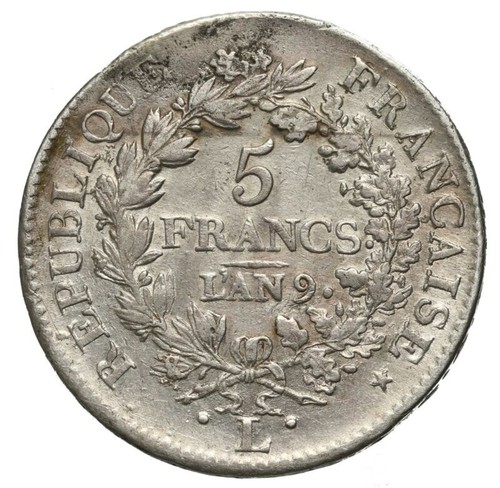
5 Francs (First Republic)
L'an 9 (1800–1801)
Trinidad and Tobago Dollar
2015
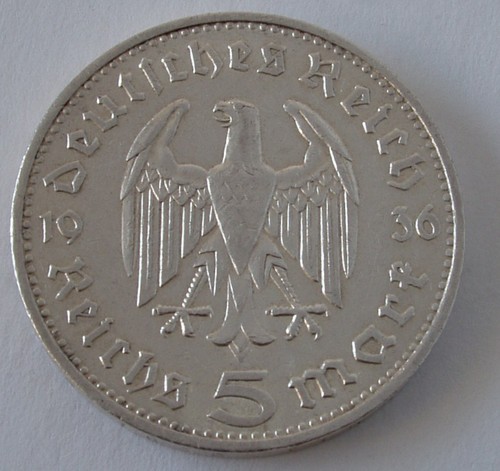
German 5 Reichsmark (Hindenburg)
1935–1936 (Hindenburg type with swastika)
5 Francs Semeuse
1960–1969
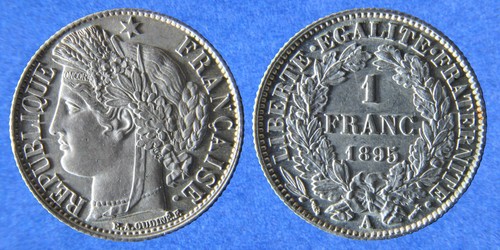
French Cérès 1 Franc
1849–1895
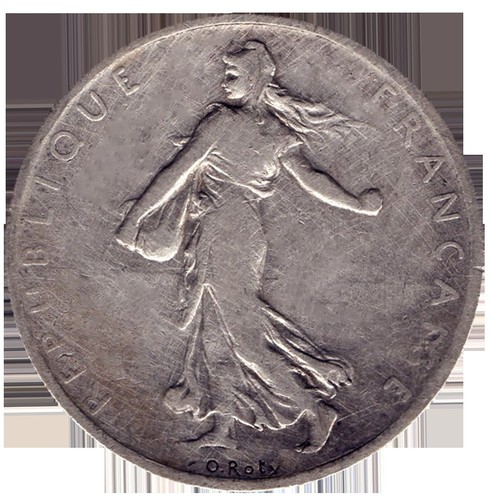
French Semeuse 2 Francs
1898–1920 (silver issues; pictured example dated 1899)
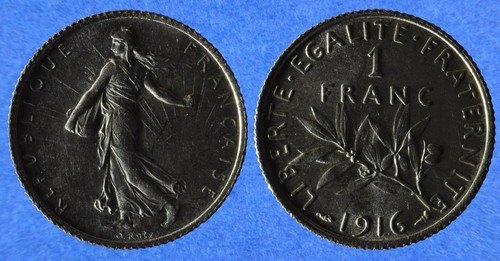
French Semeuse 1 Franc
1898–1920 (silver Semeuse 1 franc type)
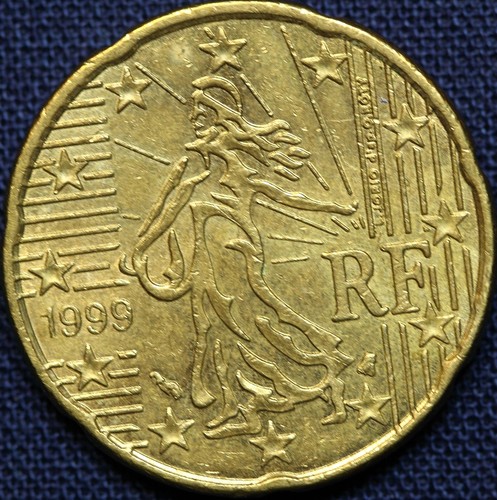
France 50 Cent Euro
1999–present
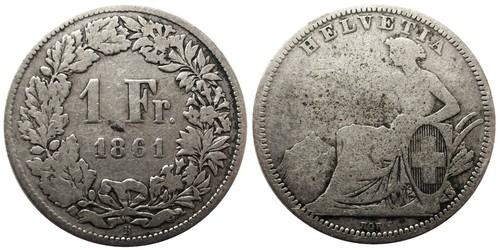
Swiss 1 Franc
1861
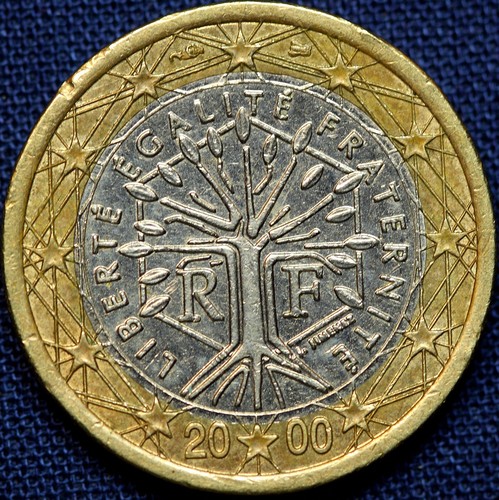
France 20 Centimes
1962–2001 (Fifth Republic, Marianne / Lagriffoul type)
Swiss 2 Francs
1860
Austria-Hungary 15 Kreuzer
1807