
How to Identify the Trinidad and Tobago 10 Cents
A collector's guide to recognizing the copper-nickel Trinidad and Tobago 10-cent coin by its coat-of-arms obverse and denomination reverse.
Read the full Trinidad and Tobago 10 Cents encyclopedia entry →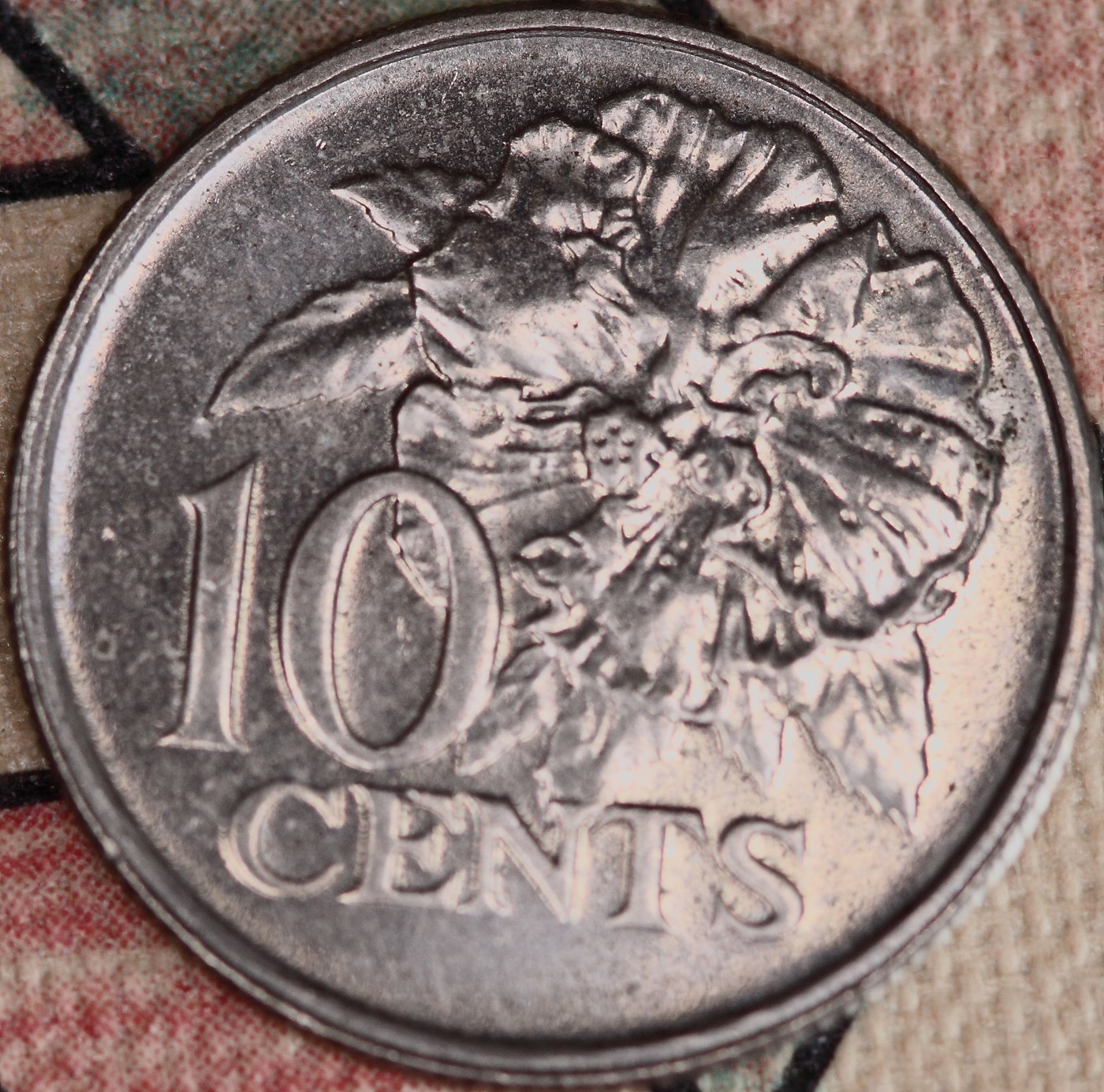
Begin with the obverse. A genuine Trinidad and Tobago 10 cents displays the national coat of arms—a shield flanked by supporters and topped by heraldic elements—encircled by the country name “TRINIDAD AND TOBAGO.” The date appears on this side. Reading the country name is the surest way to separate this coin from similar cupronickel small change of other Caribbean nations.
Turn the coin over to confirm the value. The reverse is designed around the denomination, showing the numeral ‘10’ with the word CENTS. This value-forward reverse tells you the denomination directly, so you never need to guess from size alone.
Use metal and size as a cross-check. The 10 cents is a small, round copper-nickel piece with a silvery-grey color. If a coin of similar size looks coppery-red, it is likely a lower bronze denomination rather than the 10 cents. Weigh and measure against published specifications for the type if you are matching a specific date, and note that copper-nickel is only weakly affected, if at all, by a magnet.
Watch for look-alikes. Other Eastern Caribbean and world coins share the small silvery-grey format and even similar arms-and-value layouts, so always read the legends. Do not rely on the coat of arms alone—several nations use heraldic shields—but pair it with the printed country name and the ‘10 CENTS’ reverse.
Authentication is rarely a concern on a coin this common and low in value, as it is seldom counterfeited. Focus instead on correctly reading the country, denomination and date, and on judging condition. Be cautious of coins that have been polished or artificially toned to look better than they are; original, unaltered surfaces are preferable when adding a specimen to a collection.
Frequently asked questions
How do I tell the 10 cents from other Trinidad coins?
Read the reverse: the ‘10 CENTS’ value identifies the denomination. The silvery copper-nickel color also separates it from the reddish bronze lower-value coins.
Does the coat of arms confirm it's from Trinidad and Tobago?
It's a strong clue, but several countries use heraldic shields. Confirm by reading the country name “TRINIDAD AND TOBAGO” around the obverse together with the arms.
Where is the date on this coin?
The date is on the obverse, near the coat of arms. Since the design stayed consistent through the 1990s and 2000s, the date is how you distinguish one year from another.
Is my 10-cent coin likely to be counterfeit?
Very unlikely. As a common, low-value circulation coin it is rarely faked. Concentrate on reading the legends and date correctly and on assessing wear and surfaces.