
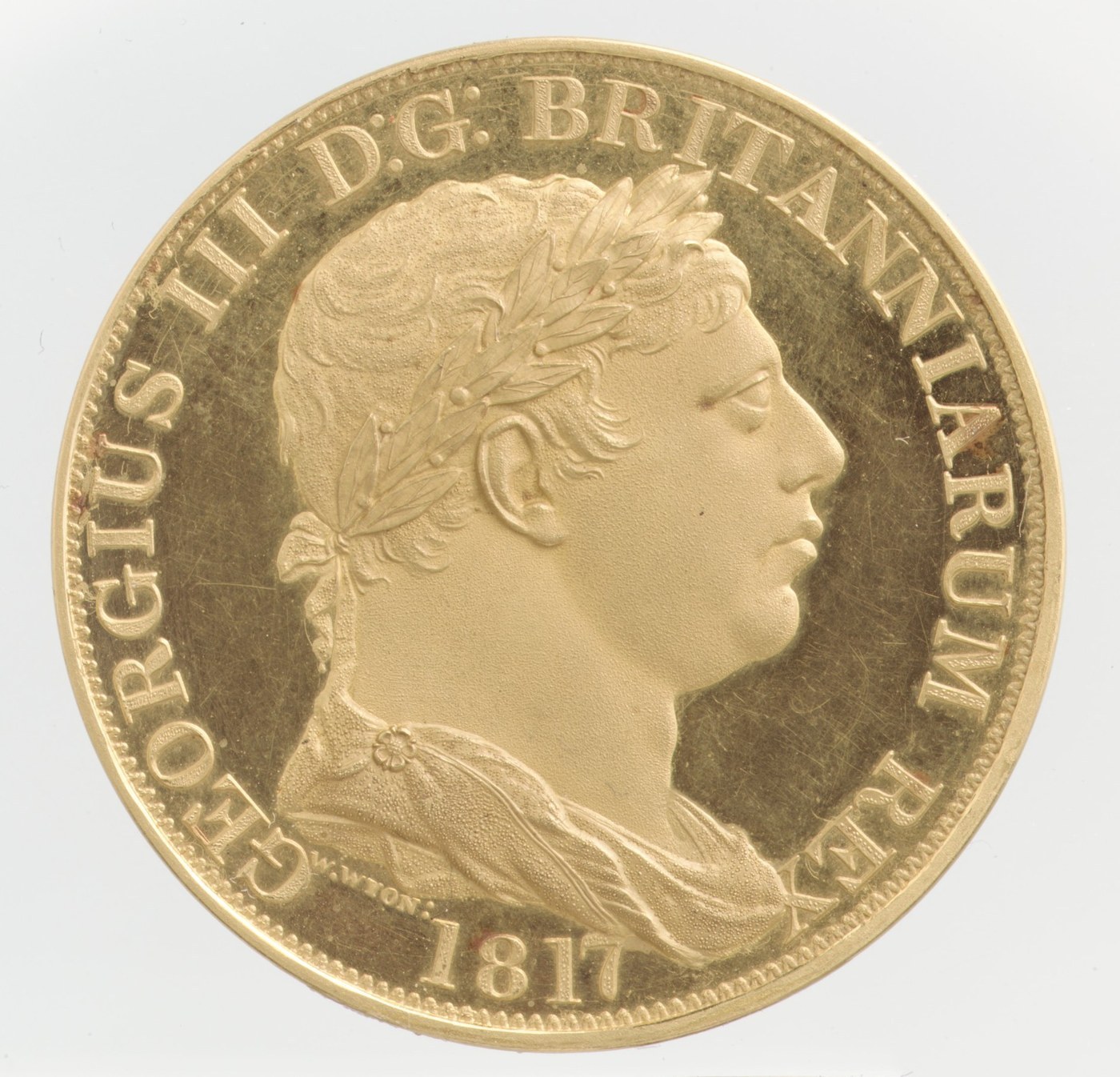
Crown of George III (Incorrupta)
A milled crown of George III dated 1817, named for its INCORRUPTA reverse legend, showing a laureate draped bust and crowned royal arms.
- Country
- Great Britain
- Denomination
- Crown
- Metal
- Gold
Got a coin like this?
Identify any coin from a photo, free.
Overview
The Crown of George III known as the "Incorrupta" is a milled crown-sized coin dated 1817, produced late in the reign of George III (1760–1820). It takes its popular name from the opening word of the Latin legend surrounding its heraldic reverse, INCORRUPTA, and belongs to the celebrated series of pattern and proof crowns prepared as Britain overhauled its coinage in the years after the Great Recoinage of 1816.
The photographed example shows a draped bust of George III facing right, wearing a laurel wreath, with a crowned display of the royal arms and heraldic shields on the reverse. It is a machine-struck (milled) coin rather than a hammered one, so it shows the sharp, regular relief and even flan characteristic of early nineteenth-century engraving at its finest.
As an Incorrupta crown it is associated with the engraver Benedetto Pistrucci and the wave of highly finished crown designs of 1817–1820. Struck in precious metal and produced in very small numbers as a pattern or presentation piece, it is a rarity prized by collectors of British milled gold and of the late George III coinage.
History & Background
George III reigned from 1760 to 1820, and the closing years of his reign saw a sweeping reform of the British coinage. The Great Recoinage of 1816 introduced new standards and reintroduced silver crowns and half-crowns, and in the years that followed the Royal Mint and its engravers prepared a range of new crown designs, several of which survive only as patterns and proofs struck in limited numbers.
The Italian engraver Benedetto Pistrucci arrived at the Royal Mint in this period and produced some of the most admired work of the era, including the famous St George and dragon crown. Alongside the adopted circulating designs, a series of alternative crown reverses was tried, among them the heraldic "Incorrupta" type dated 1817, whose Latin legend proclaims an incorruptible faith and constancy in the manner of formal royal mottoes.
Because the Incorrupta was a pattern or presentation striking rather than a coin issued for everyday commerce, it was made in small quantity and did not circulate. It survives as a testament to the experimentation and craftsmanship of the late George III coinage, and pieces struck in gold are especially rare within an already scarce type.
How to Identify
The obverse shows George III as a draped bust facing right, wearing a laurel wreath, in the neoclassical style of the late-reign coinage, with a Latin legend giving the king's titles around the rim. The laureate, right-facing head is the primary identifier and distinguishes this from the earlier, older-style busts used on his eighteenth-century coinage.
The reverse is heraldic: a crowned arrangement of the royal arms and shields, encircled by a Latin legend that begins with the word INCORRUPTA, from which the type takes its name. The date 1817 appears with the reverse design. It is this heraldic, crowned-arms reverse—not the St George and dragon—that marks the Incorrupta type, so both sides should be read together before attributing a coin.
As a milled crown the piece is large, round, and struck to sharp, even relief, with fine detail in the wreath, drapery, crown and heraldry. Genuine examples show crisp engraving and precise lettering; the metal, weight and diameter should be checked against published crown specifications, and any edge inscription or plain edge noted, as these details help place a specific striking within the series.
Value & Collectibility
The Incorrupta crown of George III is a rare pattern-style piece rather than a common circulating coin, and genuine examples trade far above bullion value. Price is governed by the metal of striking, grade, provenance and the exact variety, and pieces in gold sit at the top of the range for the type; authenticated examples of rare George III pattern crowns can reach into the high four-, five- or six-figure territory at specialist auction.
Because coins of this class are scarce and famous, condition and a clear pedigree matter enormously. A well-documented proof or pattern with a recorded auction history will command a substantial premium over an unattributed piece, and the difference between varieties and metals can be very large.
Given the rarity and value involved, any specific coin should be assessed against recent auction records for the matching type and metal and, ideally, examined by a specialist. Treat any single quoted figure as broad context rather than a firm valuation.
Frequently asked questions
Why is it called the "Incorrupta" crown?
The name comes from the Latin legend around the heraldic reverse, which begins with the word INCORRUPTA ("incorruptible"). Collectors use this opening word as a convenient label for the 1817 type.
Is this the same as the George III St George crown?
No. The Incorrupta type has a crowned heraldic reverse showing the royal arms and shields, not the St George and dragon design. Both belong to the late George III crown series but are distinct reverses.
Was the Incorrupta crown used in everyday circulation?
Not in the ordinary sense. It was produced as a pattern or presentation striking in very small numbers, so it survives as a collector's rarity rather than as a coin that saw general commerce.
Who engraved it?
The Incorrupta type belongs to the wave of finely engraved crown designs of 1817–1820 associated with Benedetto Pistrucci and the Royal Mint, produced during the reform of the coinage under George III.
Are there fakes of this coin?
Yes. Rare and valuable British pattern crowns are widely copied and faked, so weight, metal, dimensions and engraving quality must be checked and specialist authentication obtained before treating any piece as genuine.
Crown of George III (Incorrupta) guides
In-depth guides for identifying, valuing, and collecting Crown of George III (Incorrupta).
Other coins you may enjoy
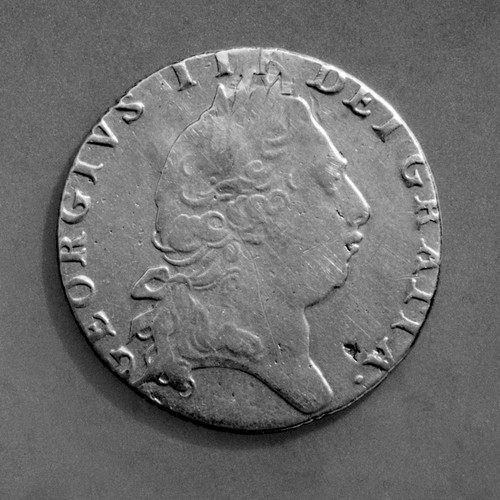
Spade Guinea
1760-1820
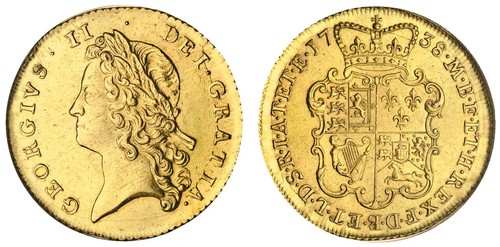
Two Guineas of George II
1738–1753
Shilling of Victoria
1838-1901
Sovereign of George IV
1821-1830
Sovereign of William IV
1831–1837
Penny of William IV
1831-1837
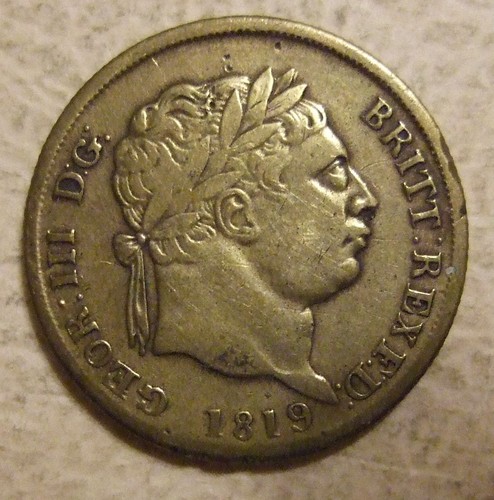
Shilling of George III
1816-1820
Milled Sixpence of Elizabeth I
1561-1571
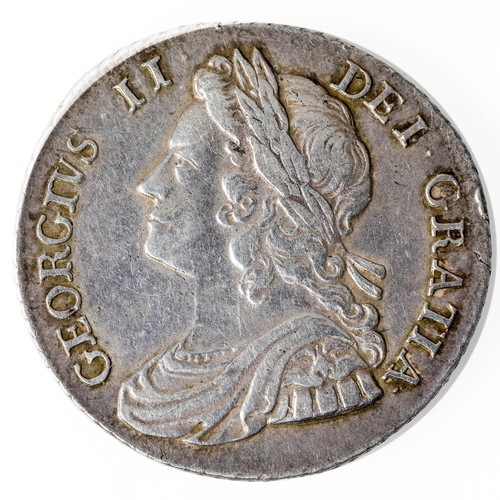
Shilling of George II
1727-1758
Shilling of Anne
1702-1714
Charles II Twopence
1660-1685
Charles II Half Crown
1660–1685