
How to Identify the Crown of George III (Incorrupta)
A collector's guide to spotting the George III Incorrupta crown by its laureate 1817 bust, INCORRUPTA reverse legend and crowned royal arms.
Read the full Crown of George III (Incorrupta) encyclopedia entry →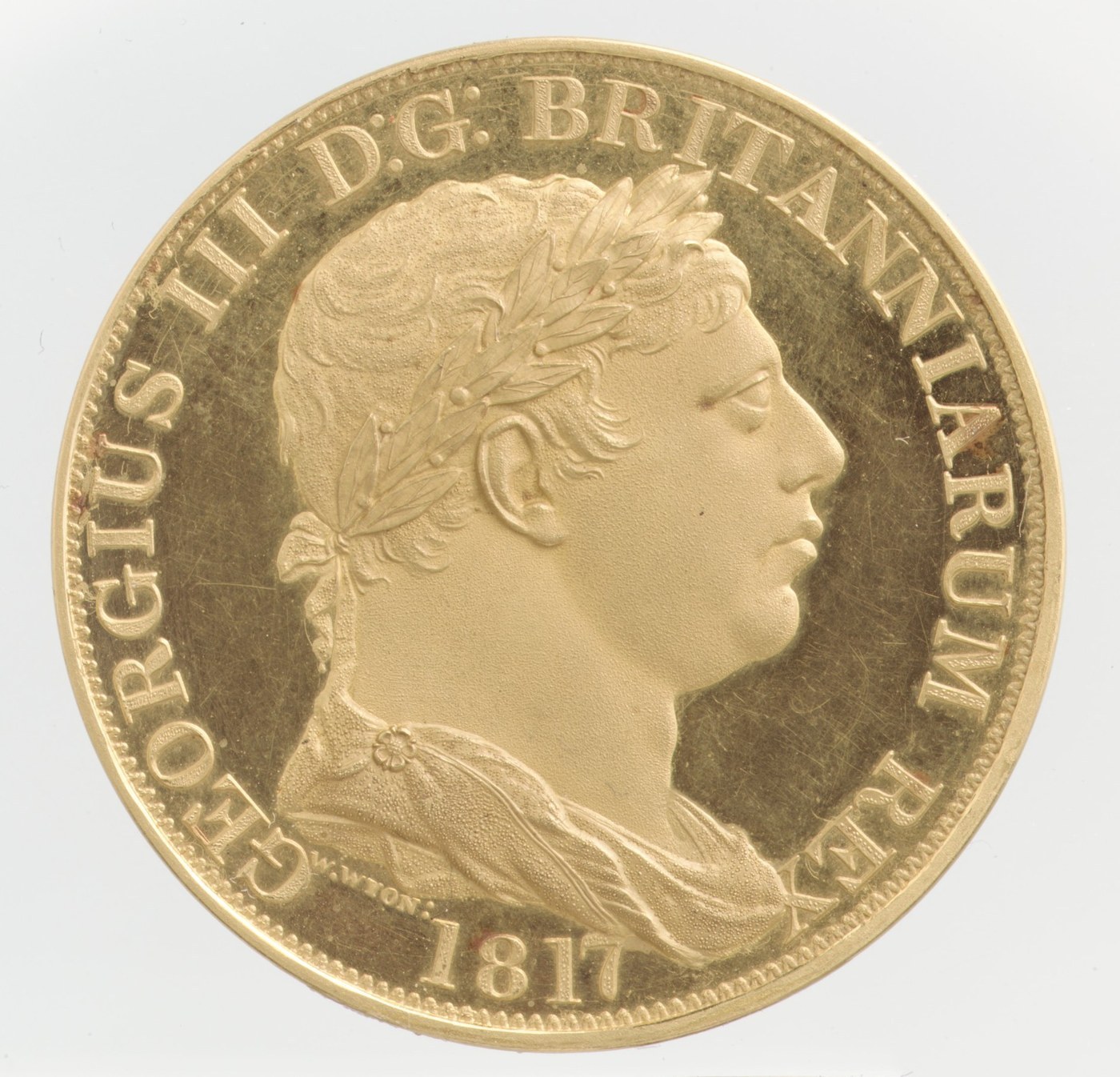
Begin with the reverse legend, because it defines the type. Look for the crowned display of the royal arms and heraldic shields surrounded by a Latin inscription that opens with the word INCORRUPTA. This single word is the reason the coin is called the Incorrupta crown, and finding it around a crowned-arms reverse is the strongest confirmation you have the right type rather than another George III crown reverse.
Read the obverse next. It should show George III as a draped bust facing right, wearing a laurel wreath, in the neoclassical late-reign style, with the king's Latin titles around the rim. A laureate, right-facing head paired with the INCORRUPTA heraldic reverse and the date 1817 is the core diagnostic; check both sides together, since the wrong pairing usually means a different type, a muling, or a fantasy piece.
Assess size, metal and fabric. This is a milled crown, so expect a large, perfectly round coin struck to sharp, even relief with fine wreath, drapery and heraldic detail, not the irregular flan of a hammered coin. Weigh and measure the piece and compare against published crown specifications for the metal in hand, and note the edge treatment—plain or inscribed—as edge details help place a specific striking within the pattern and proof series.
Separate it from look-alikes. The most common confusion is with the George III St George and dragon crown of the same era: that coin has a mounted St George reverse, whereas the Incorrupta has a crowned heraldic reverse. Later restrikes, electrotypes, and reproductions of famous George III crowns also circulate, so a heraldic reverse alone is not proof of an original striking.
Authenticate with care. Because Incorrupta crowns are rare and valuable, cast copies and modern fakes are a real risk. Watch for casting seams, bubbles, unnaturally smooth or grainy fields, soft or uneven lettering, and any weight or diameter that does not match published figures. For a coin of this class, an opinion from a specialist in British milled coinage or a reputable grading service is essential before purchase.
Frequently asked questions
Which side is the obverse?
The side with the laurel-wreathed, right-facing bust of George III and his Latin titles is the obverse. The crowned royal arms with the INCORRUPTA legend and the 1817 date is the reverse.
How do I tell it from the St George and dragon crown?
Check the reverse. The Incorrupta type shows a crowned heraldic display of the royal arms and shields; the St George crown shows the mounted saint spearing a dragon. The obverse busts are similar, so the reverse decides it.
Does a heraldic reverse guarantee it is genuine?
No. The crowned-arms reverse identifies the type but not its authenticity. Rare George III crowns are widely copied, so confirm metal, weight, diameter, edge and engraving quality, and seek specialist verification.
What should make me suspicious of a fake?
Casting seams or bubbles, soft or mushy lettering, fields that look too smooth or grainy, and any weight or size that departs from published crown specifications are all warning signs that call for expert examination.