
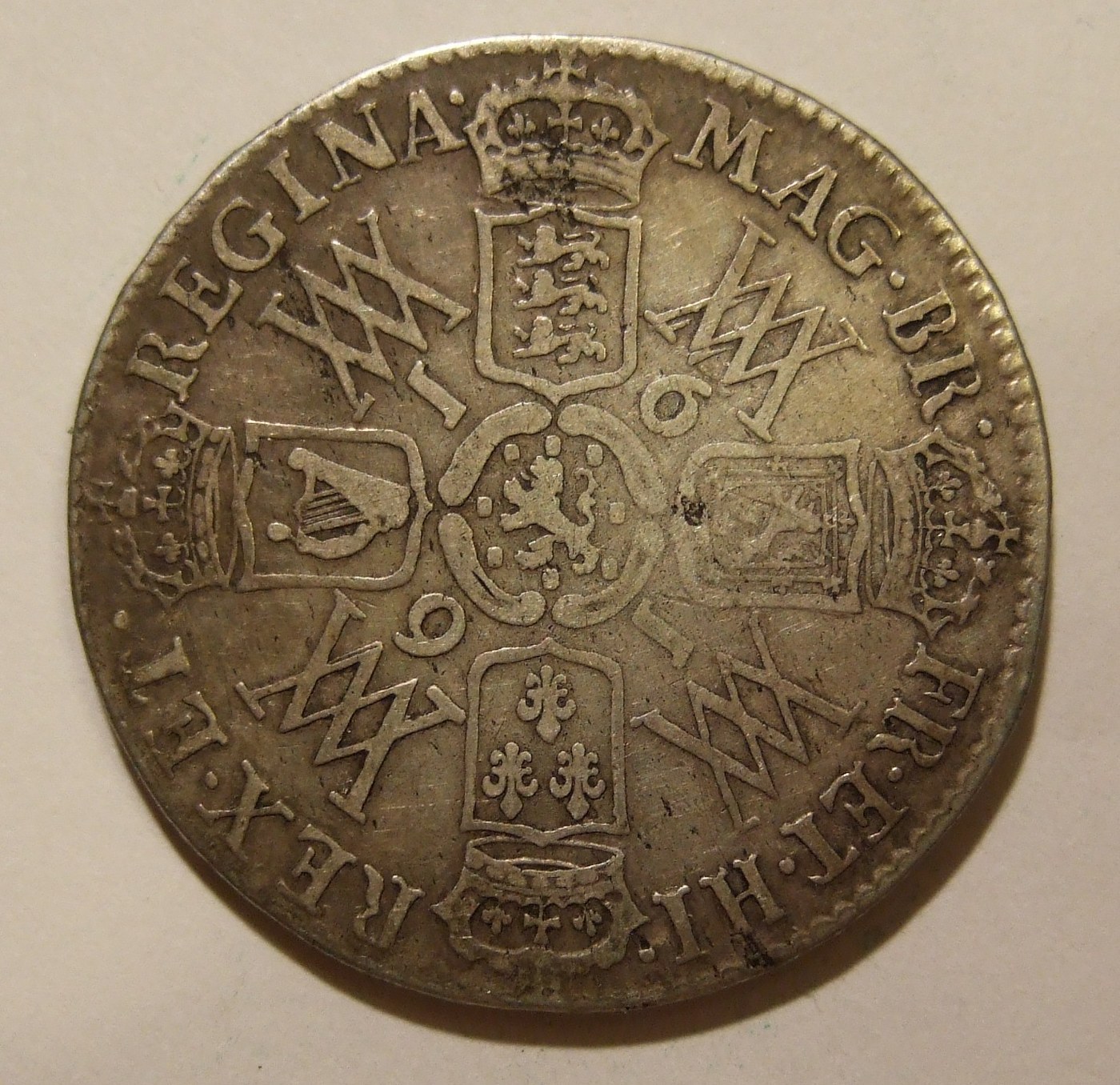
Half Crown of William III and Mary II
A milled silver half crown of the joint reign of William III and Mary II, showing their conjoined busts and a crowned heraldic shield, dated 1691.
- Country
- Great Britain
- Denomination
- Half Crown
- Metal
- Silver
Got a coin like this?
Identify any coin from a photo, free.
Overview
The Half Crown of William III and Mary II is a milled silver coin struck during the joint reign of the two sovereigns who ruled together from 1689 to 1694. Worth two shillings and sixpence — half of a crown — it was one of the principal larger silver denominations of the period and was produced by machine at the Royal Mint rather than struck by hand.
The defining feature of this type is the pair of conjoined, or overlapping, portraits of William and Mary facing right on the obverse, one of the very few English coins to show two reigning monarchs together. The reverse carries a large crowned heraldic design built from the shields of arms of the kingdoms, with a small shield of Nassau at the center reflecting William's Dutch House of Orange-Nassau.
The photographed example is dated 1691, placing it in the middle of the short joint reign. As a milled coin it has a regular round flan, evenly struck detail, and a protected edge, distinguishing it clearly from the hammered coinage of earlier Stuart reigns.
History & Background
William of Orange and his wife Mary, daughter of James II, were offered the crown jointly after the Glorious Revolution of 1688 removed James II from the throne. They reigned together as William III and Mary II from 1689, an unusual arrangement in which both were recognized as reigning sovereigns rather than one being merely a royal consort. This joint sovereignty is exactly what the coinage was designed to express.
The half crown formed part of a full silver coinage issued in their names, running through the early 1690s. Coins dated 1689 through 1694 belong to the joint reign; the 1691 date of the photographed piece falls squarely within it. The design was produced by the Royal Mint using milling machinery that had become standard in England after the 1660s, giving these coins their neat, mechanical appearance.
Mary II died of smallpox in late 1694, ending the joint reign. William continued to rule alone as William III until 1702, and the coinage struck after Mary's death shows only his single portrait. The two-portrait half crowns therefore belong to a distinct and comparatively brief period of just a few years.
How to Identify
The obverse shows the conjoined busts of William III and Mary II facing right, William's profile in front and Mary's behind, surrounded by a Latin legend giving their joint titles. Two overlapping royal portraits on a single coin are the immediate and decisive diagnostic of this type; almost no other English silver coin displays a king and queen together in this way.
The reverse bears a large crowned heraldic design formed from the arms of England, Scotland, France and Ireland, with a small central shield carrying the lion of Nassau for William's house. The date, 1691 on the photographed coin, appears in the reverse legend. This crowned shield arrangement with the Nassau inescutcheon is characteristic of William and Mary silver and separates it from later single-portrait William III issues.
The coin is milled silver, roughly the diameter of a large crown-sized silver piece though a step smaller, with a regular round flan, uniform relief, and an edge that carries protective lettering or graining. Because the type was struck over several years, small details of the busts, the shields, and the edge inscription vary by date, and specialist references should be consulted to pin down the exact issue.
Value & Collectibility
As a genuine milled silver coin more than three hundred years old from a short and historically significant joint reign, the William and Mary half crown is a sought-after collectable that trades well above its silver content. Value is governed chiefly by grade, strength of strike, evenness of the portraits, and eye appeal rather than by any single fixed figure.
Heavily worn but authentic examples change hands for moderate sums typical of period silver, while sharp, well-centered coins with clear busts and attractive toning command substantially more at specialist auction. Scarcer dates within the 1689–1694 range and pieces with strong original surfaces can carry significant premiums.
Because the type is old, valuable, and widely admired, it has been reproduced and occasionally faked, and worn or cleaned coins are common. Anyone valuing a specific piece should compare recent auction records for the matching date and grade and treat any single quoted price as broad context rather than a firm valuation.
Frequently asked questions
What was a half crown worth?
A half crown was worth two shillings and sixpence, or half of a five-shilling crown, in the pre-decimal British system. It was one of the larger everyday silver denominations of the period.
Why does this coin show two monarchs?
William III and Mary II reigned jointly from 1689 to 1694 as co-sovereigns after the Glorious Revolution. The coinage shows their conjoined busts to reflect that both were reigning rulers, not one being merely a consort.
What is the small shield in the middle of the reverse?
It is the inescutcheon of Nassau, carrying the lion of William's House of Orange-Nassau, placed at the center of the crowned arms of the kingdoms on the reverse.
How is this different from a William III half crown?
The joint-reign half crowns show two conjoined portraits and are dated 1689 to 1694. After Mary died in late 1694, coins show only William's single portrait, so a two-portrait coin identifies the joint reign.
Is a 1691 half crown rare?
It is a scarce and desirable coin more than three centuries old, though not the rarest date of the reign. Actual value depends heavily on condition, strike, and originality, so grade matters far more than date alone.
Half Crown of William III and Mary II guides
In-depth guides for identifying, valuing, and collecting Half Crown of William III and Mary II.
Other coins you may enjoy
Spade Guinea
1760-1820
Two Guineas of George II
1738–1753
Shilling of Victoria
1838-1901
Sovereign of George IV
1821-1830
Sovereign of William IV
1831–1837
Penny of William IV
1831-1837
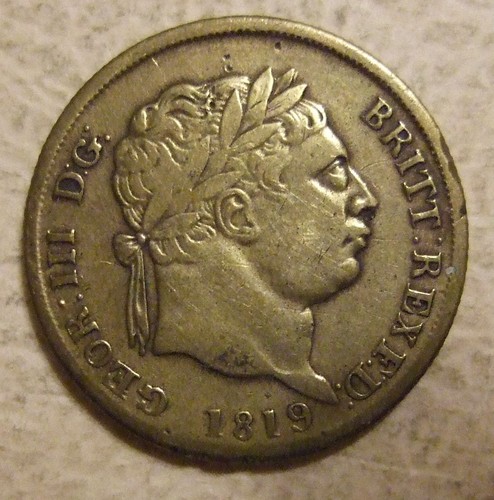
Shilling of George III
1816-1820
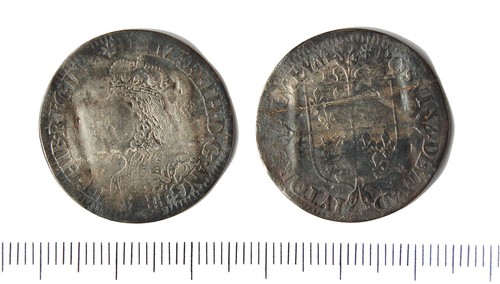
Milled Sixpence of Elizabeth I
1561-1571
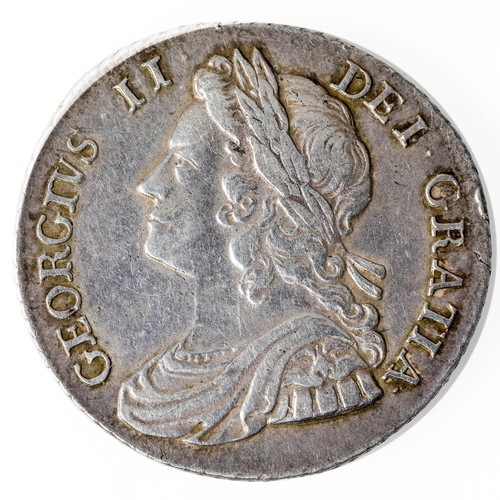
Shilling of George II
1727-1758
Shilling of Anne
1702-1714
Charles II Twopence
1660-1685
Charles II Half Crown
1660–1685