
How to Identify the Half Crown of William III and Mary II
A collector's guide to recognizing the William and Mary half crown by its conjoined double portrait, crowned Nassau shield, size, and milled fabric.
Read the full Half Crown of William III and Mary II encyclopedia entry →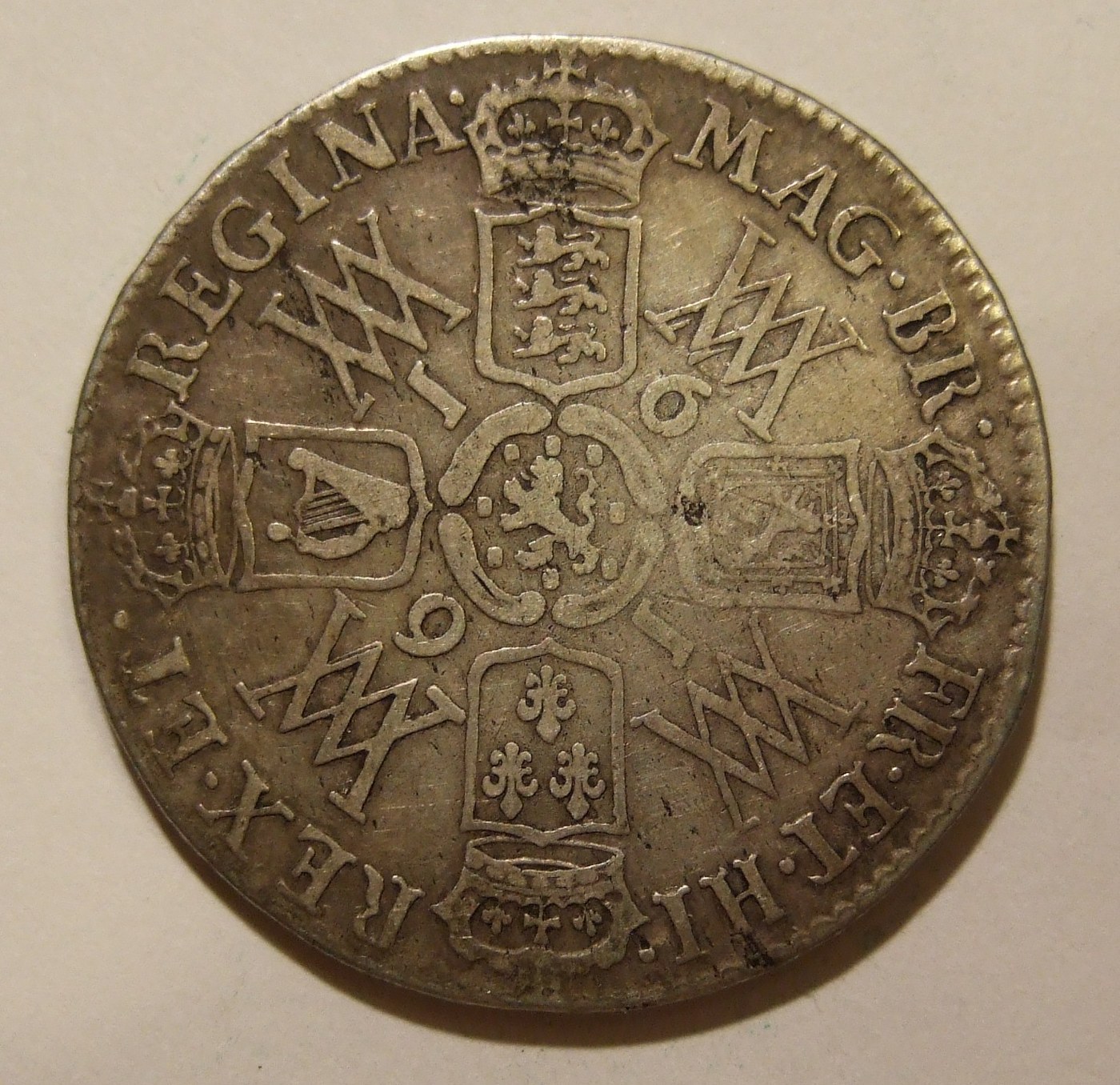
Begin with the obverse portraits. The single most decisive feature of this type is a pair of conjoined, overlapping busts facing right — William III in front and Mary II behind — surrounded by a Latin legend naming them both. Two reigning monarchs shown together on one coin is almost unique to William and Mary, so a genuine double portrait immediately narrows the identification. Confirm that both heads are present and that the coin is not a single-portrait ruler.
Read the reverse heraldry. Look for a large crowned design built from four shields of arms — England, Scotland, France and Ireland — arranged around a crown, with a small central shield bearing the lion of Nassau for William's house. The date sits in the surrounding legend; on the photographed coin it reads 1691. The Nassau inescutcheon at the center is a strong confirming detail and distinguishes this reverse from other Stuart and later crowned-shield coinages.
Check size, metal, and fabric. This is a milled silver half crown, worth two shillings and sixpence, so it should be a substantial round silver coin a step smaller than a full crown. Weigh and measure it and compare against published specifications for the denomination. Because it is machine-struck, expect a regular circular flan, even relief, and a lettered or grained edge — not the irregular outline and hand-cut look of earlier hammered coins.
Distinguish it from look-alikes. Do not confuse it with the single-portrait half crowns of William III struck after Mary's death in 1694, nor with the crowns (five shillings) of the same reign, which share the design but are larger and heavier. Confirm the denomination by diameter and weight, and read the date to ensure it falls within the 1689–1694 joint reign.
Authenticate with care. Given the coin's age and value, cast copies, cleaned coins, and modern replicas exist. Look for casting seams, bubbles, or unnaturally smooth fields, check that weight and diameter match reference figures, and examine the edge inscription and portrait sharpness. For any piece of meaningful value, obtain an opinion from a specialist in British milled silver or a reputable grading service before purchase.
Frequently asked questions
Which side is the obverse?
The side showing the two conjoined right-facing busts of William III and Mary II with their joint Latin titles is the obverse. The crowned shield design with the central Nassau shield and the date is the reverse.
How do I tell it from a William III solo half crown?
Count the portraits. The joint-reign coin has two overlapping busts and is dated 1689–1694. A single portrait indicates William III ruling alone after Mary's death in late 1694.
How can I be sure it is a half crown and not a crown?
The crown (five shillings) shares the design but is noticeably larger and heavier. Measure the diameter and weigh the coin, then compare with published specifications to confirm the half-crown denomination.
How do I spot a fake or a cast copy?
Check for casting seams, surface bubbles, soft or mushy detail, and incorrect weight or diameter. Genuine milled coins show crisp relief and a properly formed edge; specialist authentication is advisable for valuable examples.