
Coin Encyclopedia
Search and identify coins from around the world — with country, denomination, metal, mint, history, and how to tell them apart.
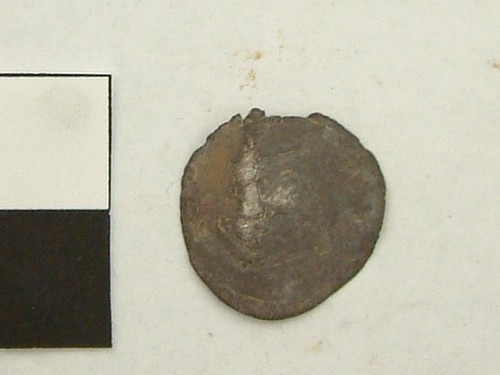
Quarter Merk
A small hammered silver coin of Scotland worth a quarter of a merk, showing a crowned heraldic shield with a cross and a Latin legend.
Hammered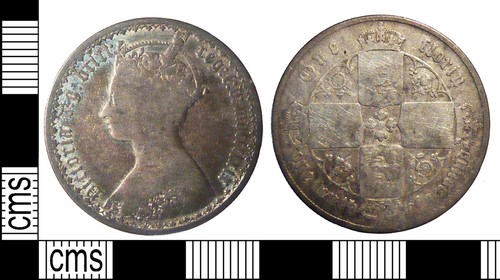
Gothic Florin
A silver two-shilling florin of Queen Victoria in the medieval-revival Gothic style, with an ornate crowned cruciform shield reverse dated 1869.
Milled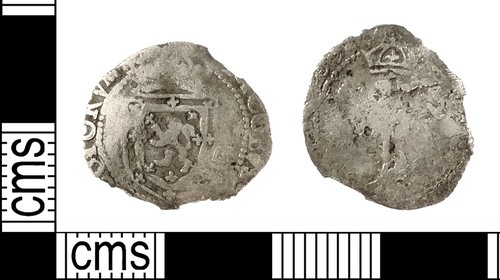
Eighth Thistle Merk
A small hammered silver Scottish coin of James VI, showing a crowned heraldic shield of arms on one side and a crowned thistle on the other.
Hammered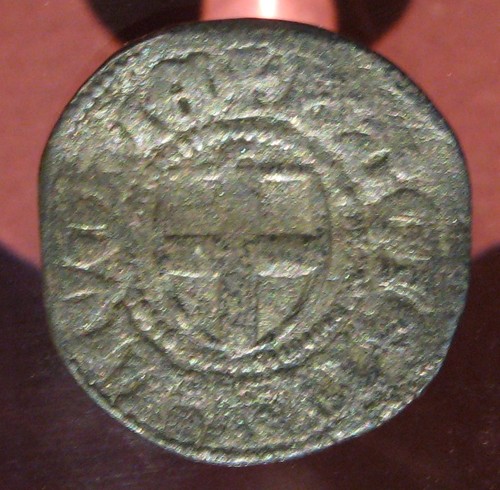
Livonian Order Schilling
A small hammered silver schilling of the medieval Livonian Order, showing heraldic shields and a cross, struck in the Baltic around 1410–1415.
Medieval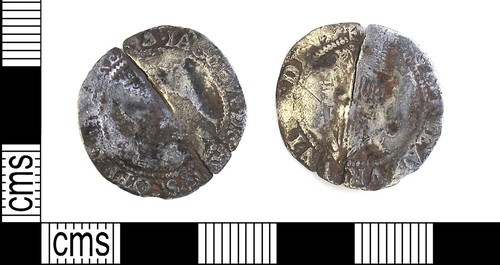
Sixpence of James I
A hammered silver sixpence of James I of England: crowned profile bust with VI value mark, and a dated garnished shield over a cross on the reverse.
Hammered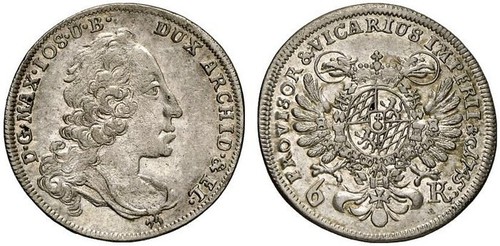
Bavaria 6 Kreuzer
A small silver 6 Kreuzer of the Electorate of Bavaria, showing the profile of Charles VII and a crowned double-headed imperial eagle marking the value.
German States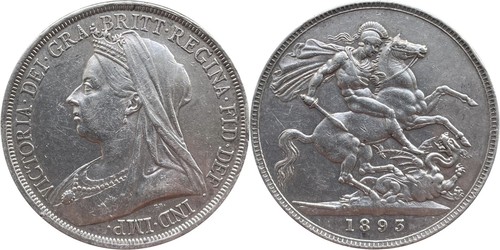
Victorian Crown
Large Victorian silver crown showing Queen Victoria's veiled "Old Head" portrait and Pistrucci's Saint George slaying the dragon, dated 1893.
World Coins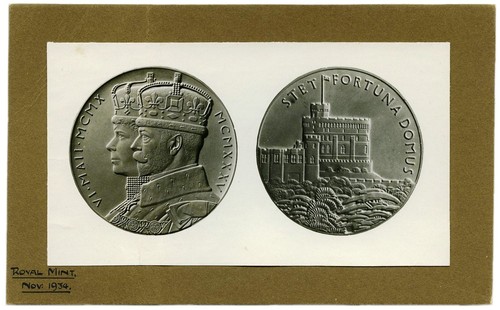
King's Silver Jubilee Medal
British 1935 commemorative medal with overlaid profiles of King George V and Queen Mary and a castle reverse marking the Silver Jubilee.
Medals & Tokens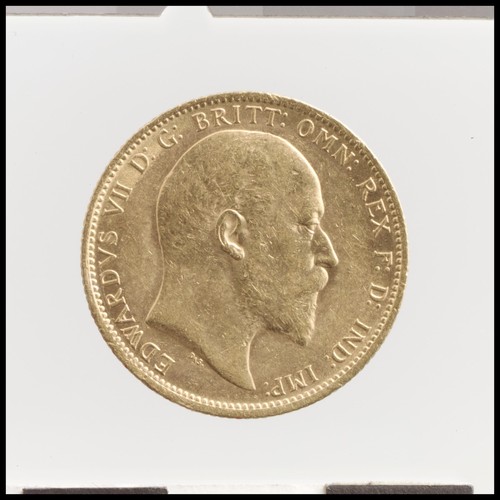
Gold Sovereign
The British gold sovereign: a one-pound gold coin. This 1817 George III example shows a laureate bust and a crowned heraldic shield of the royal arms.
World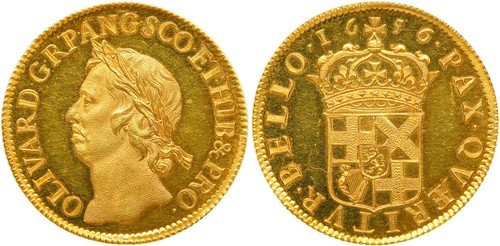
Broad
A gold twenty-shilling coin of the Protectorate bearing Oliver Cromwell's Roman-style profile and a crowned quartered shield, dated 1656.
Hammered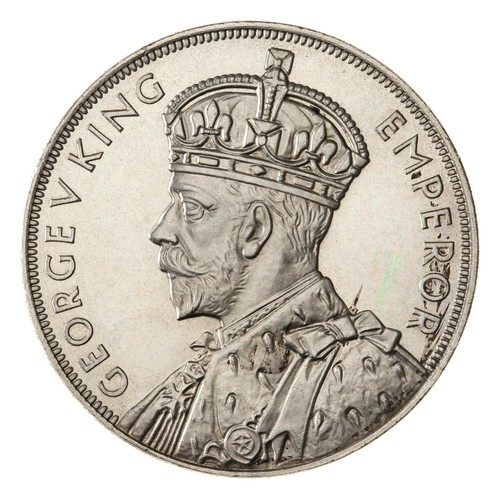
New Zealand Waitangi Crown
New Zealand's first and rarest crown, a 1935 silver five-shilling piece with a crowned George V obverse and the Treaty of Waitangi handshake reverse.
New Zealand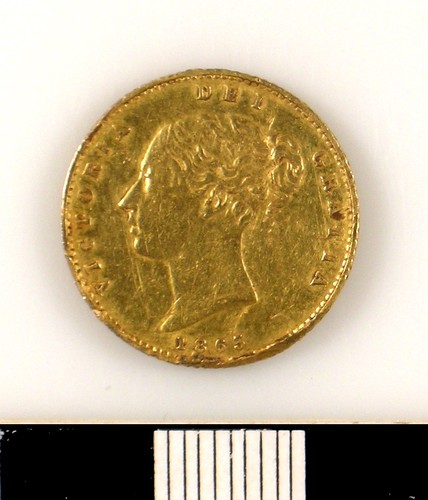
British Half Sovereign
A small 22-carat British gold coin worth ten shillings; the pictured example shows Queen Victoria's left-facing Young Head portrait, dated 1863.
British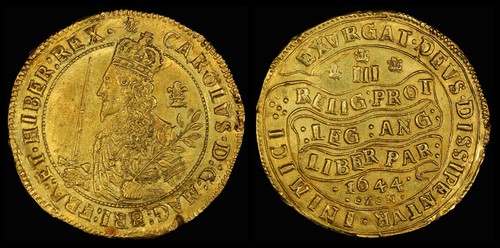
Triple Unite
The largest English hammered gold coin, struck for Charles I during the Civil War and valued at 60 shillings (three pounds).
Hammered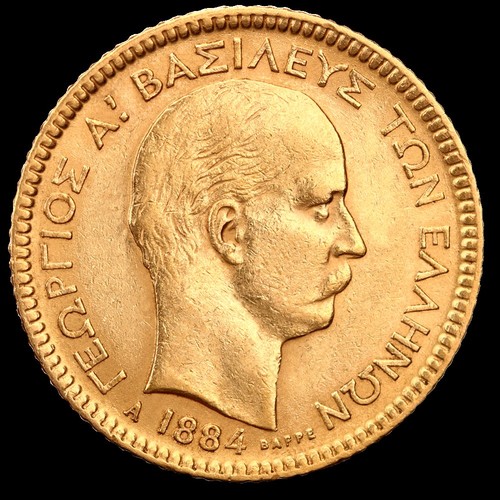
20 Drachmai
Greece's 1884 gold 20 Drachmai of King George I: a small Latin Monetary Union gold coin with the king's portrait and the crowned royal arms.
Modern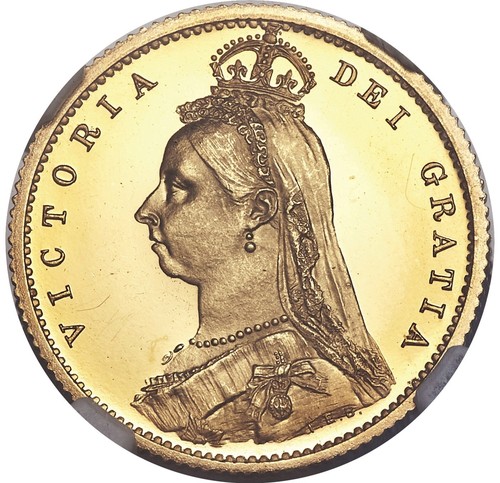
Half Sovereign
A small British 22-carat gold coin worth ten shillings; this example shows Queen Victoria's veiled, crowned Jubilee Head portrait and is dated 1887.
World Coins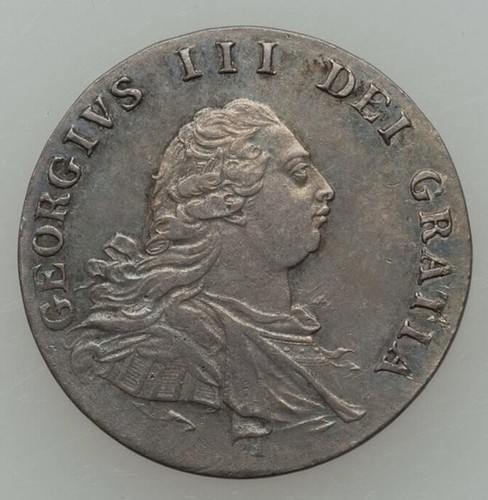
British Groat
A small George III silver fourpence of 1792, the British groat: laureate king's profile obverse, crowned shield and value reverse.
Circulation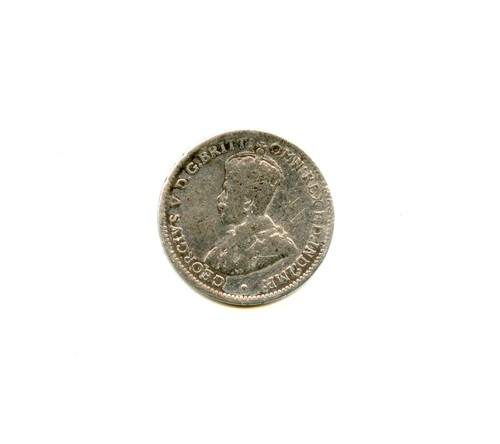
Australian Threepence
Australia's small pre-decimal silver threepence (3d), the country's tiniest coin, struck 1910-1964. The example shown carries a George V portrait.
Australian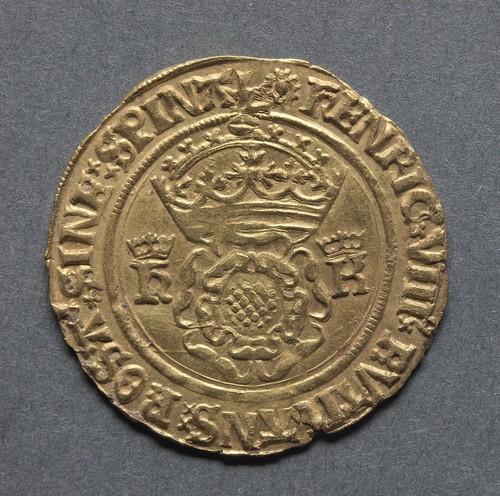
Crown of the Double Rose
A hammered Tudor gold crown of Henry VIII, valued at five shillings and named for the crowned double Tudor rose that defines its design.
Hammered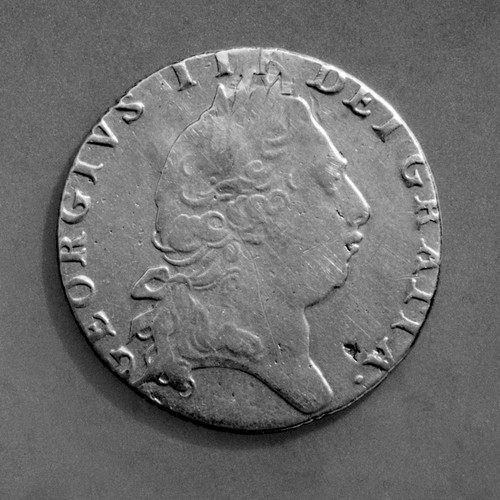
Spade Guinea
A late George III gold guinea named for the distinctive spade-shaped shield on its reverse, struck in England from 1787 into the early 1800s.
Milled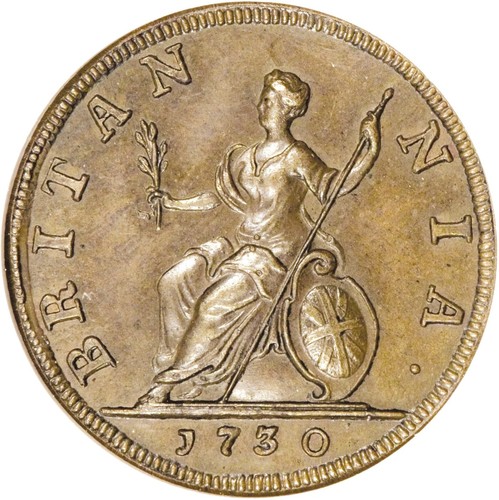
British Farthing
Small copper farthing of King George II, with his laureate bust facing left and a seated Britannia on the reverse; struck in the 1730s.
British Isles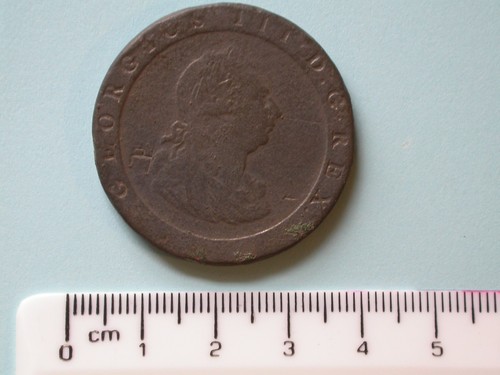
Cartwheel Penny
The heavy 1797 copper penny of George III, with a broad raised rim and sunken lettering, struck by steam power at Matthew Boulton's Soho Mint.
Milled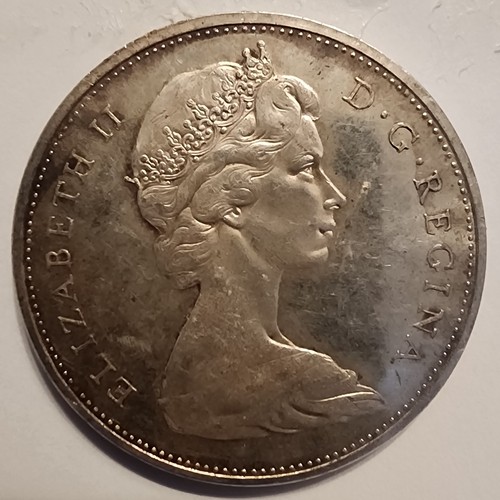
Voyageur Dollar
Canada's first circulating silver dollar, struck in 1935 for King George V's Silver Jubilee, showing a voyageur and guide paddling a canoe.
World Coins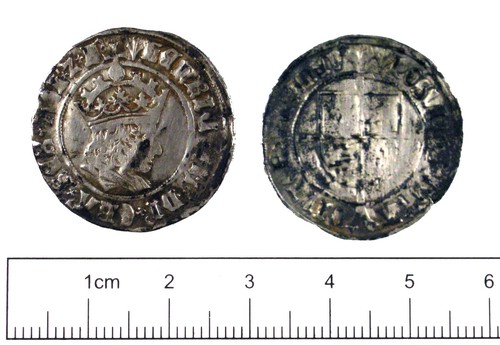
Henry VII Groat
Hammered silver fourpence of Henry VII, first Tudor king, showing a crowned royal portrait on one side and a shield of the English arms on the other.
Medieval Coins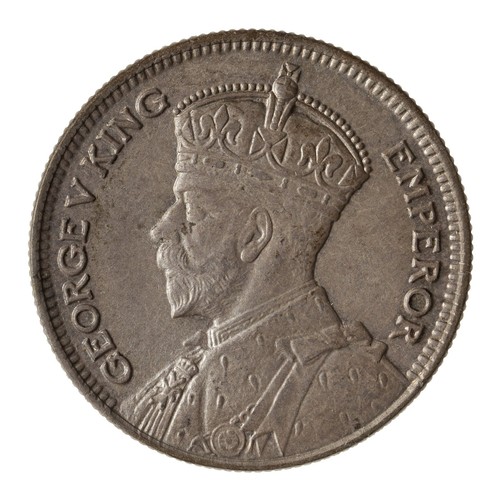
New Zealand Sixpence
New Zealand's small silver sixpence, famed for its native-bird reverse. This 1934 example shows King George V and the bird design with NEW ZEALAND SIXPENCE.
New Zealand