British Half Sovereign
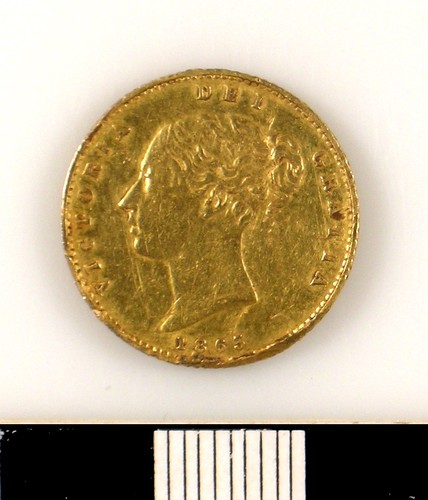
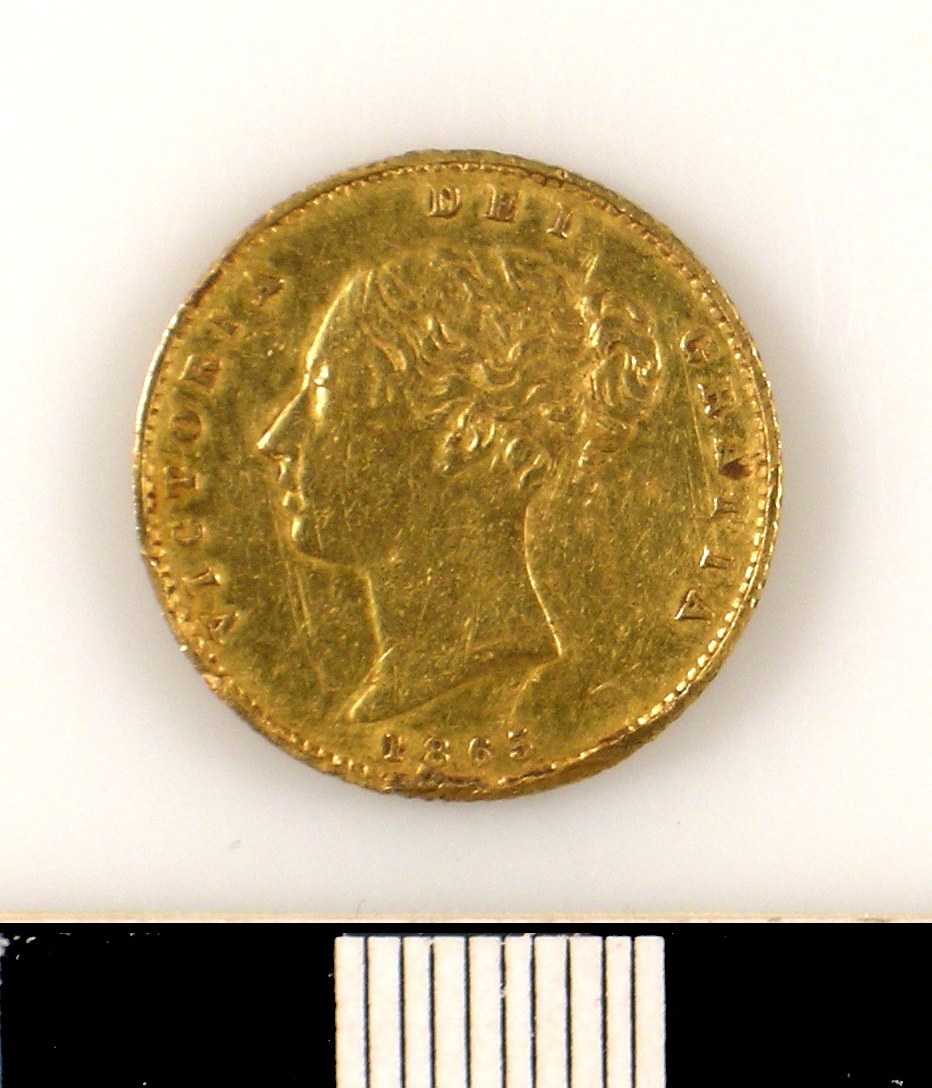
A small 22-carat British gold coin worth ten shillings; the pictured example shows Queen Victoria's left-facing Young Head portrait, dated 1863.
- Country
- United Kingdom
- Denomination
- Half Sovereign
- Metal
- Gold
Got a coin like this?
Identify any coin from a photo, free.
Overview
The half sovereign is a small British gold coin with a face value of ten shillings, or half of one pound sterling. Struck in 22-carat gold, it is the junior partner to the full sovereign, sharing the same design tradition but at roughly half the weight and diameter. The example in these photographs is a Queen Victoria issue, showing her left-facing Young Head portrait and the date 1863.
Half sovereigns circulated widely as everyday high-value coinage across Britain and the Empire in the nineteenth and early twentieth centuries. Their small size and modest gold content made them practical for ordinary large purchases, and they remain among the most affordable and recognizable British gold coins for collectors today.
Because the type was produced across several reigns, the denomination is studied by portrait and reverse type. A Victorian Young Head piece like this one belongs to the earliest phase of Victoria's long series of half sovereigns.
History & Background
The modern half sovereign was introduced in 1817 during the Great Recoinage under King George III, alongside the reintroduced full sovereign, replacing the older guinea system. It was intended as a convenient gold coin for larger everyday transactions at a time when a pound was a substantial sum.
Under Queen Victoria (reigned 1837–1901), half sovereigns were struck with three successive portraits: the Young Head by William Wyon (used from 1838), the Jubilee Head (from 1887), and the Old or Veiled Head (from 1893). The 1863 coin shown here is a Young Head issue. The year 1863 is notable because the Royal Mint began adding a small die number to half sovereign reverses around this time, a bookkeeping mark that helps date and classify pieces from this period.
Half sovereigns continued into the twentieth century under Edward VII and George V, with production largely suspended after 1915. The Royal Mint later revived the denomination as a modern bullion and collector coin, so the type as a whole spans from 1817 to the present day.
How to Identify
This is a small gold coin, roughly 19 mm across and weighing close to 4 grams, struck in 22-carat (crown) gold alloyed with a little copper, which gives it a warm yellow tone. The obverse shows Queen Victoria facing left in her Young Head portrait, with a Latin legend naming her as queen; the visible date is 1863.
On Victorian Young Head half sovereigns the reverse (not shown in this image) carries a crowned, garnished quartered shield of the Royal Arms rather than the St George and dragon design familiar from full sovereigns. On issues of this era a tiny die number may appear below the shield. There is no branch-mint letter on London strikings; branch-mint marks (such as an S for Sydney) appear only on certain later colonial issues.
Key confirmation points are the small diameter, the 22-carat gold weight of about 3.99 grams, the left-facing Young Head bust, and the shield reverse. These separate the half sovereign from the physically larger full sovereign and from base-metal look-alikes and modern novelty pieces.
Value & Collectibility
A half sovereign contains a little over one-tenth of a troy ounce of fine gold, so every genuine example carries a baseline bullion value that rises and falls with the gold market. Well-worn common-date Victorian pieces typically trade close to that gold value, making them an accessible entry point into British gold.
Premiums above melt depend on date, portrait type, die number, mint, and condition. Scarcer dates, sharply struck examples, and coins in high grade command more than common circulated pieces, while damaged, mounted, or polished coins are worth less. Because gold coins of this type were widely counterfeited and sometimes ex-jewellery, condition and authenticity strongly affect price.
Exact values are best confirmed against current gold spot prices and recent auction or dealer records for the specific date and grade, and higher-value pieces are worth having authenticated by a reputable coin grading service or dealer.
Frequently asked questions
What was a half sovereign worth when it was in circulation?
Its face value was ten shillings, or half of one pound sterling. In 1863 that represented a significant sum for everyday transactions.
Is the half sovereign made of real gold?
Yes. It is struck in 22-carat gold (about 91.7% pure) alloyed with a small amount of copper for durability, and weighs close to 4 grams.
How is a half sovereign different from a full sovereign?
A half sovereign is worth ten shillings versus the sovereign's one pound, and it is physically smaller and about half the weight, at roughly 19 mm and 4 grams.
Why does the 1863 coin sometimes have a small number on the back?
Around this period the Royal Mint added a tiny die number below the shield on half sovereign reverses as an internal record-keeping mark. It is normal and helps classify the coin.
Does the half sovereign show St George and the dragon?
Victorian Young Head half sovereigns like this 1863 piece use a crowned quartered shield reverse, not the St George and dragon design seen on many full sovereigns.
British Half Sovereign guides
In-depth guides for identifying, valuing, and collecting British Half Sovereign.