
How to Identify the British Half Sovereign
A collector's checklist for the ten-shilling gold coin: size, weight, Victoria's Young Head, the shield reverse, die numbers, and authentication cautions.
Read the full British Half Sovereign encyclopedia entry →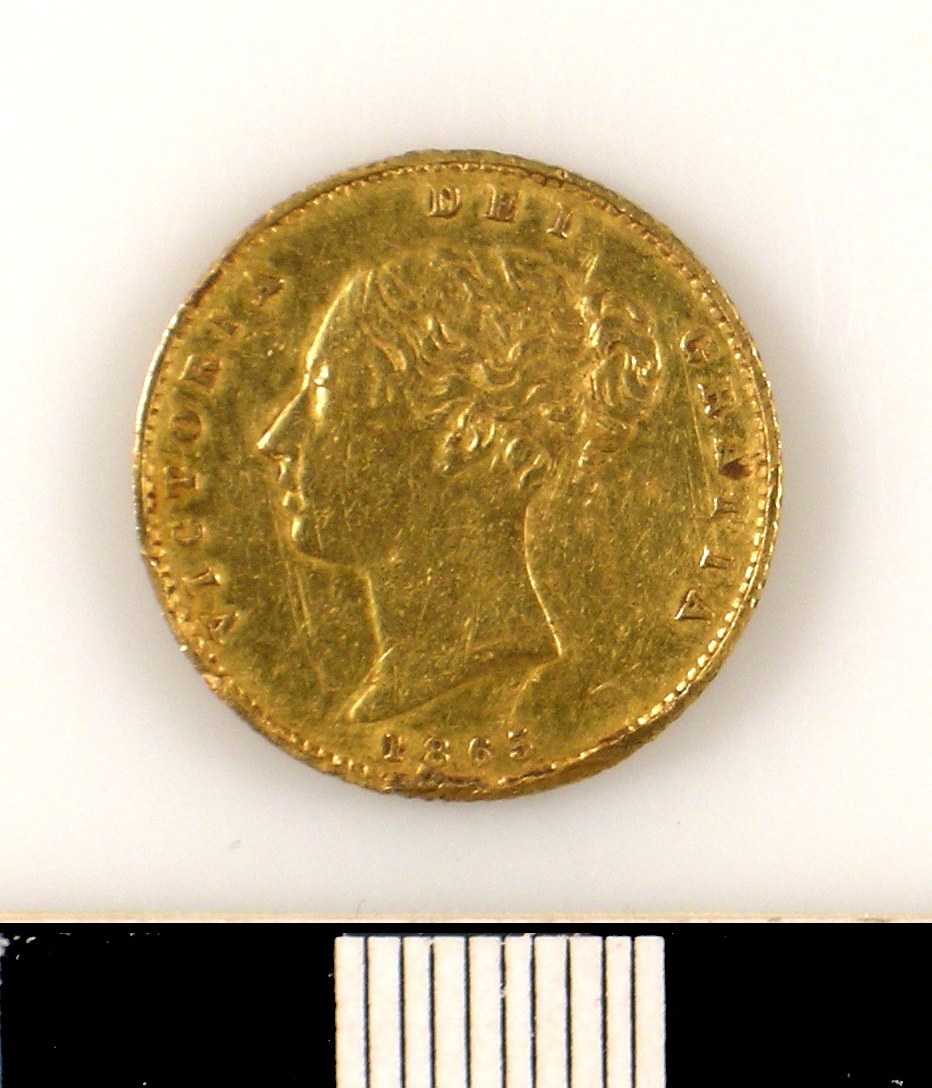
Start with size and weight, because they are the most reliable first check. A genuine half sovereign is small, about 19 mm in diameter, and weighs roughly 3.99 grams in 22-carat gold. Set beside a full sovereign it is noticeably smaller and lighter; if a coin the size of a sovereign is called a half sovereign, something is wrong. The gold should show a warm, slightly coppery yellow rather than the brassy tone of imitation metals.
Read the obverse portrait to place the coin in time. This example shows Queen Victoria facing left in the Young Head style, the earliest of her three portraits, with a Latin legend identifying her as queen. Later Victorian half sovereigns use the Jubilee Head or the Old (Veiled) Head, and Edwardian and later pieces show different monarchs facing the opposite direction, so the bust direction and style narrow the date range quickly.
Check the reverse type even though it is not shown in this particular image. Victorian Young Head half sovereigns carry a crowned, garnished quartered shield of the Royal Arms, not the St George and dragon used on many full sovereigns. On issues from the early 1860s onward, look for a small die number below the shield; its presence is normal and can help confirm the period and pin down the exact variety.
Look for mint marks with care. London strikings carry no mint letter. A small letter above the date or on the reverse ground line indicates a colonial branch mint (for example S for Sydney) on certain later issues, which affects rarity. Absence of a mark on an 1863 coin is expected, since branch-mint half sovereigns come later.
Be cautious about authenticity. Half sovereigns were heavily counterfeited and were often mounted in jewellery, so inspect the edge for solder traces, filing, or a seam, and be wary of coins that feel too light, sound dull, or show soft, mushy detail. Weight and dimensions that miss the standard, an unnaturally shiny polished surface, or a wrong-for-the-date portrait are all warning signs. For any piece carrying a real premium, confirm it against reference images and, where value warrants, have it authenticated by a reputable grading service or dealer.
Frequently asked questions
What size and weight should a genuine half sovereign be?
About 19 mm across and close to 3.99 grams in 22-carat gold. Significant deviation in either measurement is a red flag.
How can I tell a Young Head half sovereign from later Victorian types?
The Young Head shows a youthful left-facing Victoria and was used from 1838. Later coins use the Jubilee Head (from 1887) or the crowned, veiled Old Head (from 1893).
Does an 1863 half sovereign have a mint mark?
No. It was struck at the Royal Mint in London, which used no mint letter. Branch-mint marks such as S for Sydney appear only on some later issues.
What are the most common authenticity problems?
Ex-jewellery coins with solder or filing on the edge, underweight or wrong-sized fakes, and polished or tooled surfaces. Weigh and measure the coin and inspect the edge before trusting it.