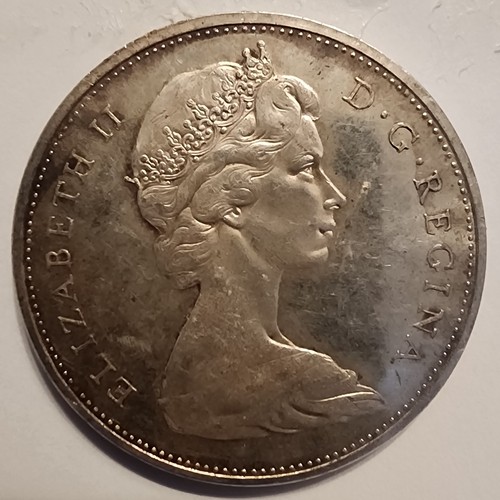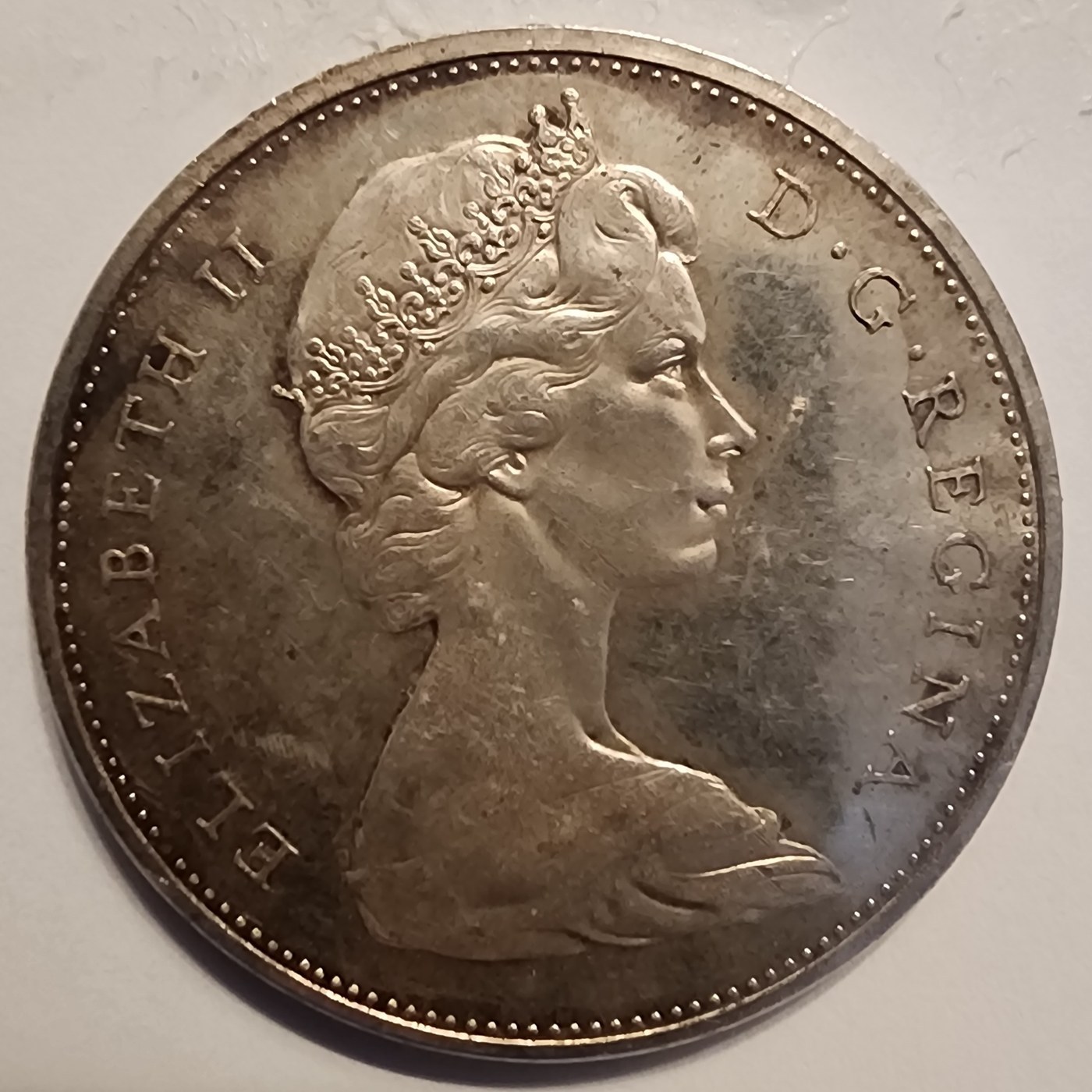
Voyageur Dollar
Canada's first circulating silver dollar, struck in 1935 for King George V's Silver Jubilee, showing a voyageur and guide paddling a canoe.
- Country
- Canada
- Denomination
- 1 Dollar
- Metal
- 80% Silver, 20% Copper
Got a coin like this?
Identify any coin from a photo, free.
Overview
The Voyageur Dollar is Canada's first silver dollar issued for general circulation, released in 1935 to mark the Silver Jubilee of King George V. It pairs a crowned imperial portrait of the King on the obverse with a now-famous canoe scene on the reverse.
The design shown here, engraved by Emanuel Hahn, depicts two figures paddling a birch-bark canoe past a small islet, an image that became so closely associated with Canadian coinage that the term "Voyageur Dollar" is often applied to later silver dollars using the same reverse. The 1935 issue, however, is a distinct one-year type tied specifically to the Jubilee.
Struck in 80% silver, the coin is large and heavy, and it is a cornerstone piece for collectors of Canadian numismatics as the country's inaugural circulating dollar.
History & Background
Canada had struck earlier silver denominations, but no circulating silver dollar existed until 1935. Legislation authorizing a Canadian silver dollar was passed in 1910, yet plans were repeatedly shelved, and it was the Silver Jubilee of King George V that finally prompted the coin's release for the 25th anniversary of his reign.
The reverse was created by sculptor Emanuel Hahn and shows a voyageur and an Indigenous guide paddling a fur-trade canoe, with a bundle at the center bearing the initials "HB" for the Hudson's Bay Company and streaks in the sky representing the northern lights. The motif drew on Canada's fur-trade heritage and proved enduringly popular.
Because 1935 was a single Jubilee year, this issue is separate from the regular Voyageur dollars that followed from 1936 onward under George V and later George VI. It was produced only at the Royal Canadian Mint in Ottawa.
How to Identify
The obverse shows a crowned bust of King George V facing left, surrounded by the Latin imperial legend "GEORGIVS V REX ET IND:IMP:" (George V, King and Emperor of India), confirming the imperial-era inscription seen on the coin. The reverse carries the voyageur-in-canoe scene with "CANADA" above and "DOLLAR" and the date "1935" below.
The coin is a large silver piece, roughly 36 mm in diameter and about 23.3 grams, struck in .800 fine silver with a reeded edge. The 1935 date is fixed for this type; unlike later dates, there is no second commemorative variety.
Key diagnostics are the specific imperial legend naming George V as Emperor of India, the "HB" bundle in the canoe, the two small windswept trees on the islet, and the Jubilee-year 1935 date. Together these separate it from the visually similar Voyageur dollars of 1936 and later years.
Value & Collectibility
As a large 80% silver coin, the 1935 Voyageur Dollar carries a base value tied to its silver content, so even well-worn examples trade at a meaningful premium over face value. It was struck in modest numbers for a single year, which supports collector demand.
Circulated examples are generally affordable and widely available, while values rise for pieces with strong detail and original luster. Uncirculated and problem-free specimens command notable premiums, and prices increase further for high-grade certified coins.
Condition, eye appeal, and originality drive most of the value spread. Cleaned, damaged, or heavily worn coins sit near the bullion end of the range, while sharp, lustrous examples are prized by Canadian collectors. For current figures, check recent auction results and dealer listings, as silver prices and market demand shift over time.
Frequently asked questions
Why is it called the Voyageur Dollar?
The nickname comes from the reverse design, which shows a voyageur (a fur-trade canoeman) and a guide paddling a canoe. The scene was engraved by Emanuel Hahn and became a defining image of Canadian coinage.
Is the 1935 dollar made of real silver?
Yes. It was struck in .800 fine silver (80% silver, 20% copper) and weighs about 23.3 grams, giving it substantial silver content.
What does the obverse inscription mean?
The Latin legend "GEORGIVS V REX ET IND:IMP:" means "George V, King and Emperor of India," reflecting the imperial titles used on Commonwealth coinage during his reign.
Was the 1935 dollar issued for a special occasion?
Yes. It was released to mark the Silver Jubilee, the 25th anniversary of King George V's accession, making it Canada's first circulating silver dollar.
Is the 1935 dollar rare?
It was struck for only one year in modest quantities, so it is collectible, but circulated examples are readily available. Rarity and premiums increase sharply in high, uncirculated grades.
Voyageur Dollar guides
In-depth guides for identifying, valuing, and collecting Voyageur Dollar.