
Coin Encyclopedia
Search and identify coins from around the world — with country, denomination, metal, mint, history, and how to tell them apart.
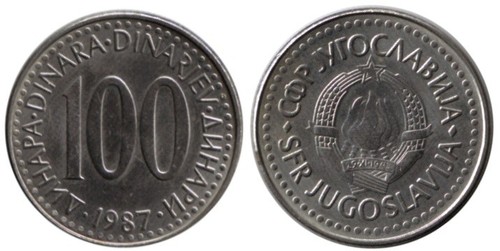
100 Dinara
A copper-nickel 100 Dinara circulation coin of socialist Yugoslavia dated 1987, with a big numeral 100 on one face and the Yugoslav state emblem on the other.
Modern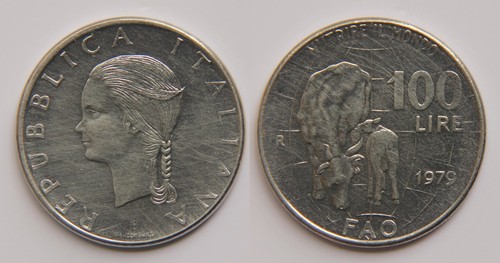
100 Lire
Italy's 1979 100 Lire, a nickel-hued FAO commemorative with a woman's profile on the obverse and an allegorical figure beside the value on the reverse.
Modern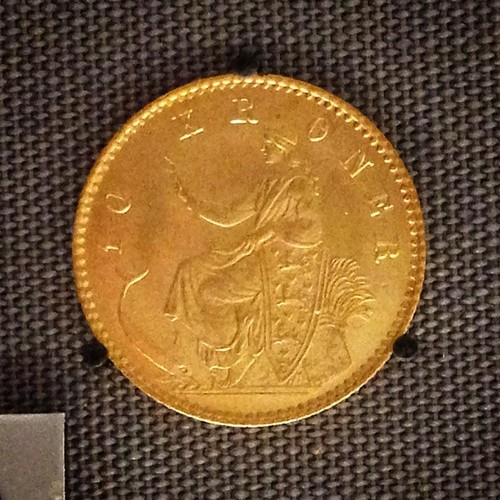
10 Kroner
A small Danish gold 10 kroner dated 1873, the first year of the type, with the bearded profile of King Christian IX and a seated allegorical figure of Denmark on the reverse.
Modern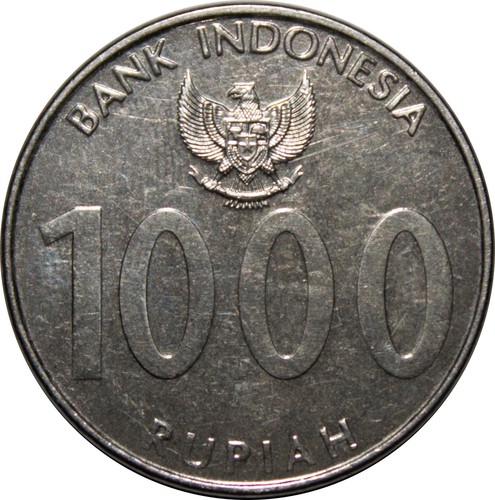
Indonesia 1000 Rupiah
A 2010 Indonesian 1000-rupiah circulation coin, its obverse bearing the Garuda Pancasila emblem and Bank Indonesia legend, its reverse a traditional monument design.
Southeast Asia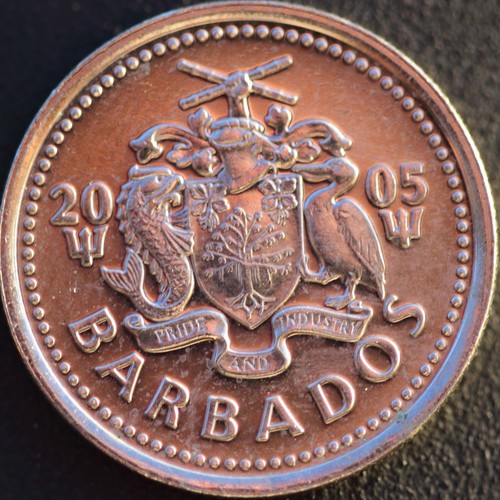
Barbados 10 Cents
A small copper-nickel Barbadian 10-cent coin showing the national coat of arms on one side and the value and country name on the other.
Circulation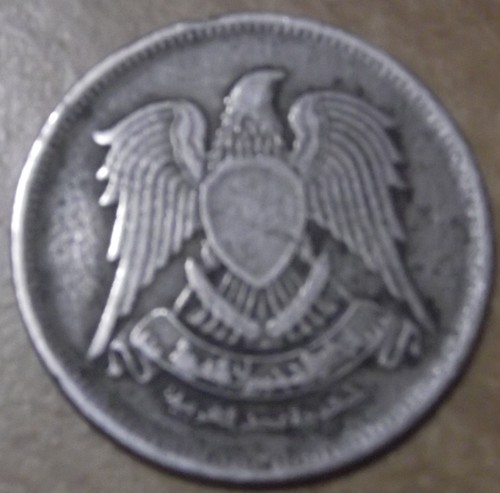
Egyptian 10 Piastres
A modern Egyptian 10 piastres in cupro-nickel, its face carrying Arabic script framed by geometric ornament and diamond-shaped decorative patterns.
World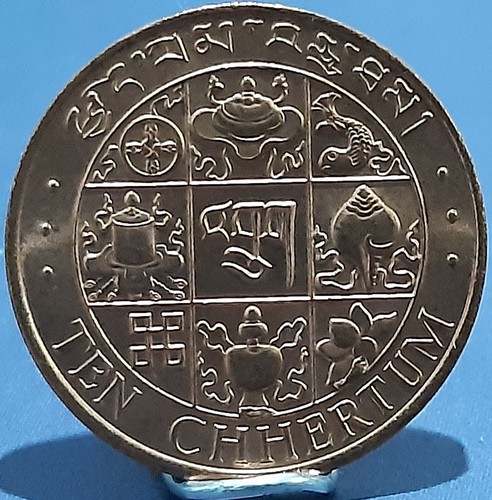
Bhutan 10 Sengtrum
A 1979 cupro-nickel minor coin of the Kingdom of Bhutan, worth one-tenth of a ngultrum, with the national arms on one face and an ornamental gateway on the other.
Himalayan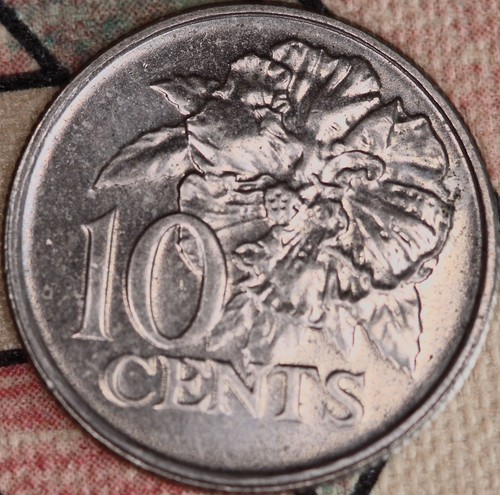
Trinidad and Tobago 10 Cents
A copper-nickel 10-cent coin of Trinidad and Tobago: the national coat of arms on the obverse and the denomination on the reverse.
Circulation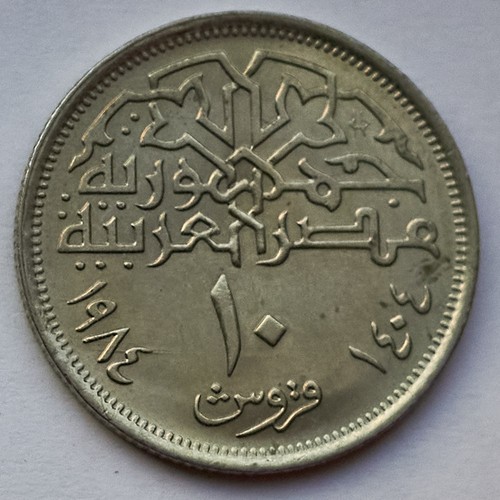
Egyptian 10 Piastres Commemorative
A cupro-nickel Egyptian 10 piastres commemorative dated 1984, showing a domed mosque on one face and Arabic legends throughout.
World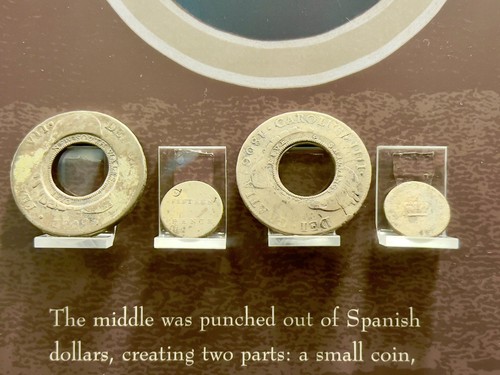
Holey Dollar
Australia's first struck coin: a Spanish silver dollar with its centre punched out, counterstamped NEW SOUTH WALES 1813 and revalued at five shillings.
Australian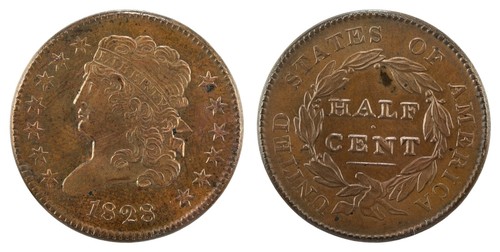
Classic Head Half Cent
A small U.S. copper half cent of 1809–1836 showing Liberty in a beaded headband ringed by stars, with a plain wreath and HALF CENT on the reverse.
Half Cent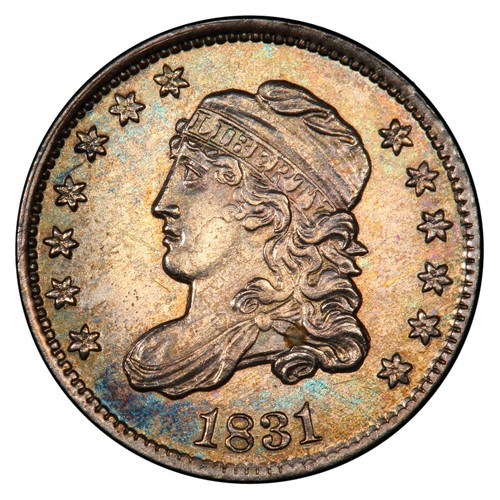
Capped Bust Half Dime
A small early U.S. silver five-cent piece showing Liberty in a Phrygian cap and a shielded eagle reverse, struck at Philadelphia from 1829 to 1837.
Half Dime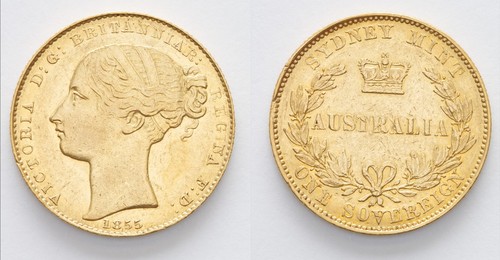
Australian Sovereign
22-carat gold sovereign struck at Australian branch mints; the 1855 Sydney Mint issue was the country's first gold coin.
Australian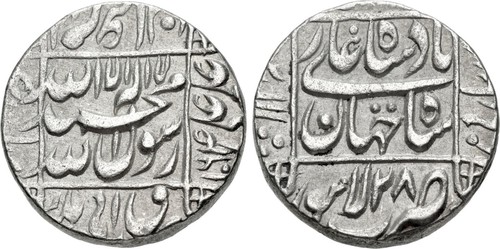
Shah Jahan Rupee
Hand-struck silver rupee of Mughal emperor Shah Jahan, all-Persian calligraphy in ornate cartouches, dated AH 1064 (AD 1653-1654).
Mughal India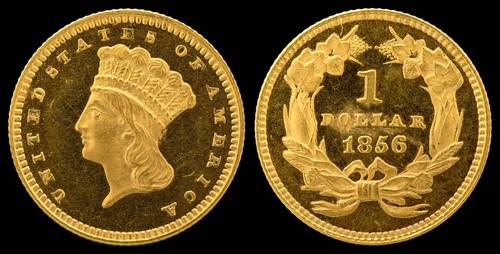
Indian Head Gold Dollar
Tiny U.S. one-dollar gold coin (1854–1889) with an Indian-princess Liberty in a feathered headdress and a denomination-and-date wreath reverse.
Gold Dollar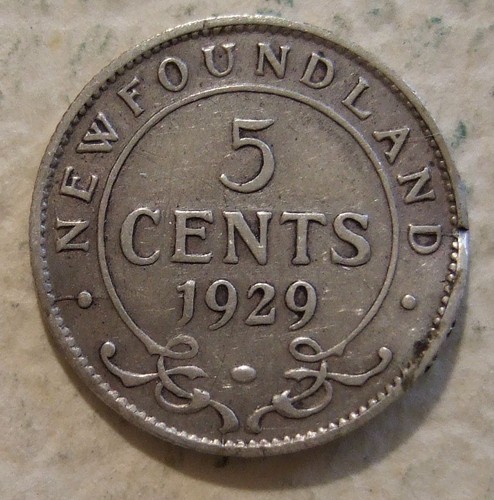
Newfoundland Five Cents
Tiny sterling-silver 5-cent piece of the Dominion of Newfoundland; the 1929 issue bears King George V and a crowned denomination reverse.
Canadian & Provincial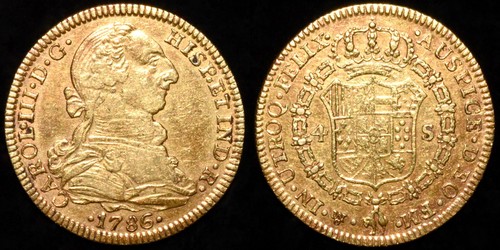
4 Escudos
Spanish Bourbon gold 4 Escudos of the 1780s, with an armored royal bust facing right and a crowned coat of arms on the reverse.
Early Modern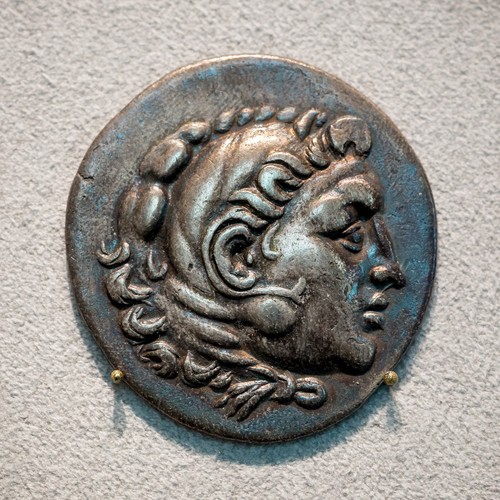
Macedonian Silver Tetradrachm
Large silver tetradrachm of ancient Macedon in the Alexander type, c. 188-170 BC, with the head of Heracles in a lion skin and Zeus enthroned holding an eagle.
Ancient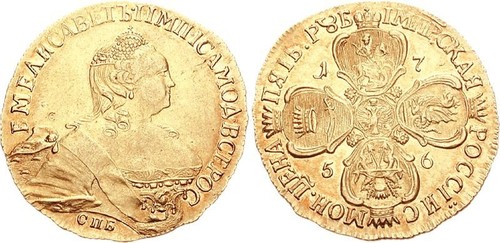
5 Roubles (Alexander III)
An Imperial Russian gold 5 Roubles of Alexander III, showing the tsar's bearded profile and the crowned double-headed eagle, struck in the late 1880s.
Modern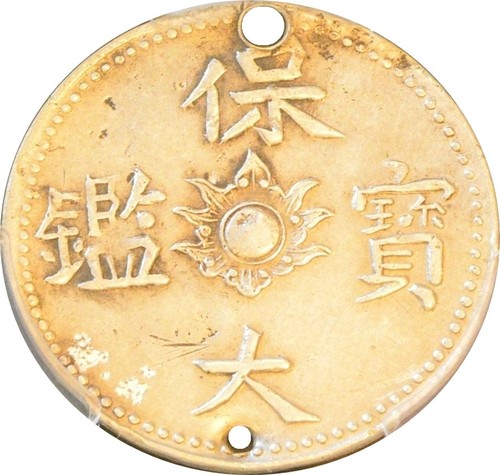
Vietnam 2 Tien - Bao Dai
A gold 2 Tien of Vietnam's last emperor, Bao Dai (1926-1945), its face bearing a radiant sun motif and Chinese-Vietnamese court inscriptions.
Southeast Asia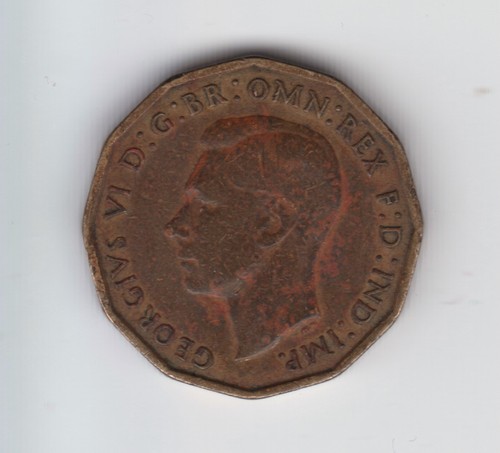
British Brass Threepence
Chunky twelve-sided nickel-brass threepence of George VI, showing his head and a thrift plant reverse; the example shown is dated 1942.
British Isles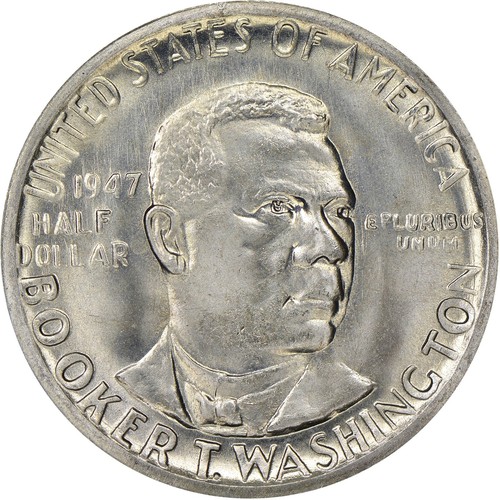
Booker T. Washington Memorial Half Dollar
A U.S. silver commemorative half dollar (1946–1951) honoring educator Booker T. Washington, the first African American portrayed on a U.S. coin.
Classic Commemorative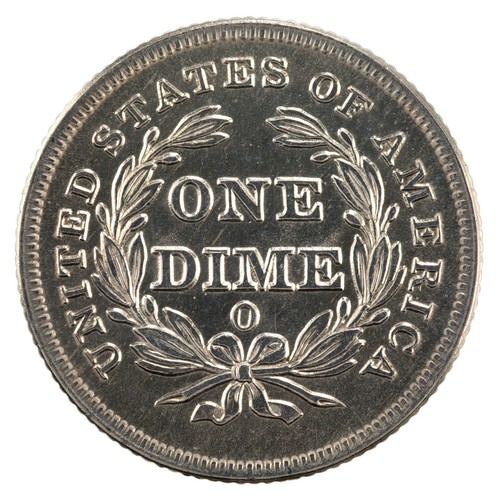
Seated Liberty Dime
A U.S. silver ten-cent coin showing Liberty seated with a pole and shield; the early No Stars type has a plain obverse and a laurel-wreath ONE DIME reverse.
Dime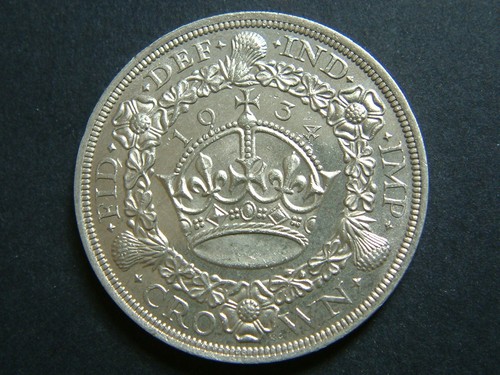
British Crown
A large George V silver crown of the 1927–1936 'wreath' type, showing the king's profile and a royal crown framed by an ornamental wreath.
British Isles