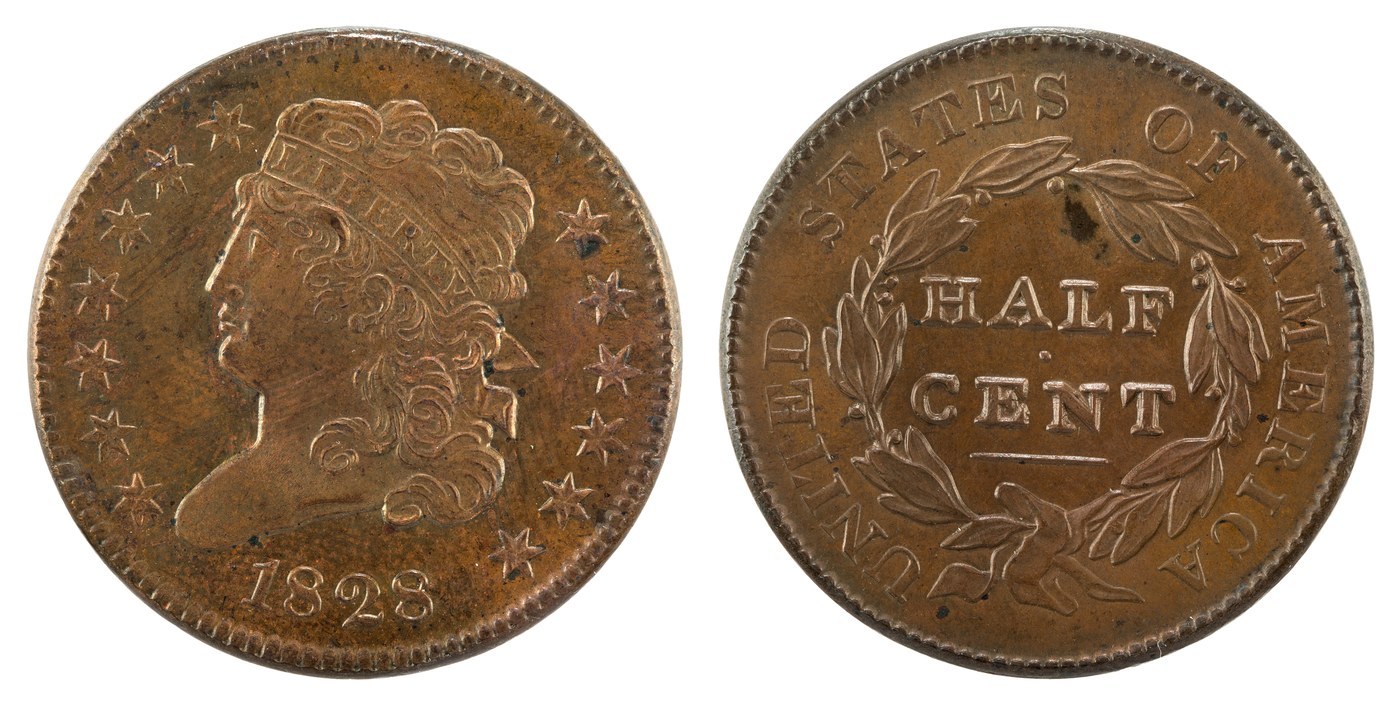
Classic Head Half Cent
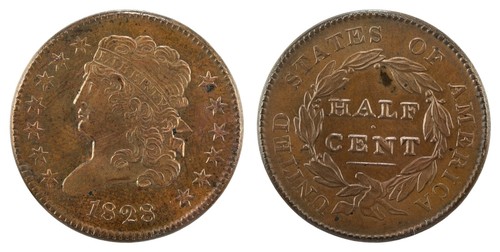
A small U.S. copper half cent of 1809–1836 showing Liberty in a beaded headband ringed by stars, with a plain wreath and HALF CENT on the reverse.
- Country
- United States
- Denomination
- 1/2 Cent
- Metal
- Copper
Got a coin like this?
Identify any coin from a photo, free.
Overview
The Classic Head half cent is a small copper coin worth one two-hundredth of a dollar, struck by the United States Mint at Philadelphia between 1809 and 1836. The obverse shows a left-facing bust of Liberty with curled hair bound by a beaded band, surrounded by stars, while the reverse carries a wreath enclosing HALF CENT with UNITED STATES OF AMERICA around the rim. The example photographed here is dated 1828, a common year within the series.
As the smallest-denomination coin the Mint produced, the half cent circulated alongside the larger copper cent and saw limited everyday use. Collectors value the Classic Head type for its clean neoclassical design and its place in early American coinage, and many pieces survive in worn but collectible grades.
History & Background
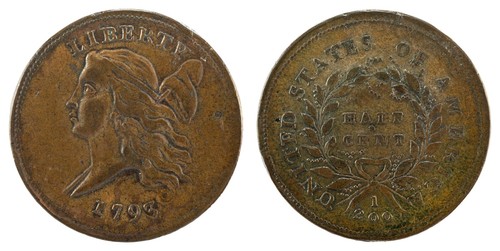
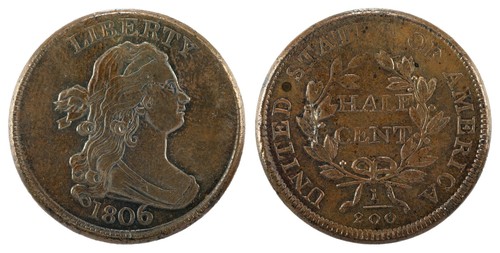
The Classic Head design was engraved by John Reich, an assistant at the Philadelphia Mint, and first appeared on the half cent in 1809. It replaced the earlier Draped Bust type and remained in use, with interruptions, through 1836. Half cents were never struck every year: production was intermittent, tied to demand and to the availability of copper planchets, so gaps in the date run are normal for the type.
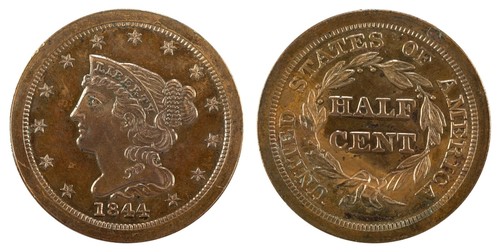
Half cents met the need for very small change in an era when many goods were priced in fractions of a cent, but public demand for the denomination was always modest. The 1828 date, like several years in the 1820s and 1830s, was struck in relatively large numbers for the series. The Classic Head was eventually succeeded by the Braided Hair half cent, and the half cent denomination itself was discontinued in 1857.
How to Identify
Look first at the obverse: a left-facing head of Liberty with flowing curls held by a plain band, encircled by stars with the date below. On the Classic Head the word LIBERTY appears on the headband. The reverse shows a continuous wreath tied at the bottom, enclosing the words HALF CENT, with UNITED STATES OF AMERICA following the rim.
The coin is struck in pure copper and is physically small — roughly 23 mm across, noticeably smaller than the large copper cent of the same era. There is no mint mark, because all half cents were made at the Philadelphia Mint. The 1828 issue is known in two varieties distinguished by the number of obverse stars (thirteen stars versus twelve stars), a detail worth checking under magnification.
Value & Collectibility
Classic Head half cents are among the more affordable early U.S. copper coins, and common dates such as 1828 survive in enough quantity that worn examples remain modestly priced. Value depends heavily on grade, surface color, and the absence of corrosion or cleaning; problem-free brown pieces command a premium over damaged or scrubbed coins.
Within the 1828 date, the 13-star variety is more common than the 12-star, and the scarcer variety carries a higher premium. Key dates elsewhere in the 1809–1836 series, along with high-grade or original red-brown survivors, can be worth substantially more. For any specific coin, condition and variety should be confirmed before assigning a value, and significant pieces are best evaluated by a specialist or third-party grading service.
Frequently asked questions
What is a Classic Head half cent worth?
It depends on date, variety, and condition. Common dates like 1828 in worn grades are among the more affordable early copper coins, while scarce varieties, high grades, or original surfaces bring much higher premiums. Have a specific coin evaluated for grade and variety.
Why does my half cent have no mint mark?
All U.S. half cents were struck at the Philadelphia Mint, which did not use a mint mark in this period. The absence of a mint mark is normal and expected for the type.
What is the difference between the 12-star and 13-star 1828 half cent?
Both are 1828 Classic Head half cents but differ in the number of stars around Liberty on the obverse. The 13-star variety is more common; the 12-star variety is scarcer and generally more valuable.
Is the Classic Head half cent made of pure copper?
Yes. Half cents of this era were struck in pure copper, with no silver or gold content. Their value comes from collector demand rather than metal content.
Classic Head Half Cent guides
In-depth guides for identifying, valuing, and collecting Classic Head Half Cent.