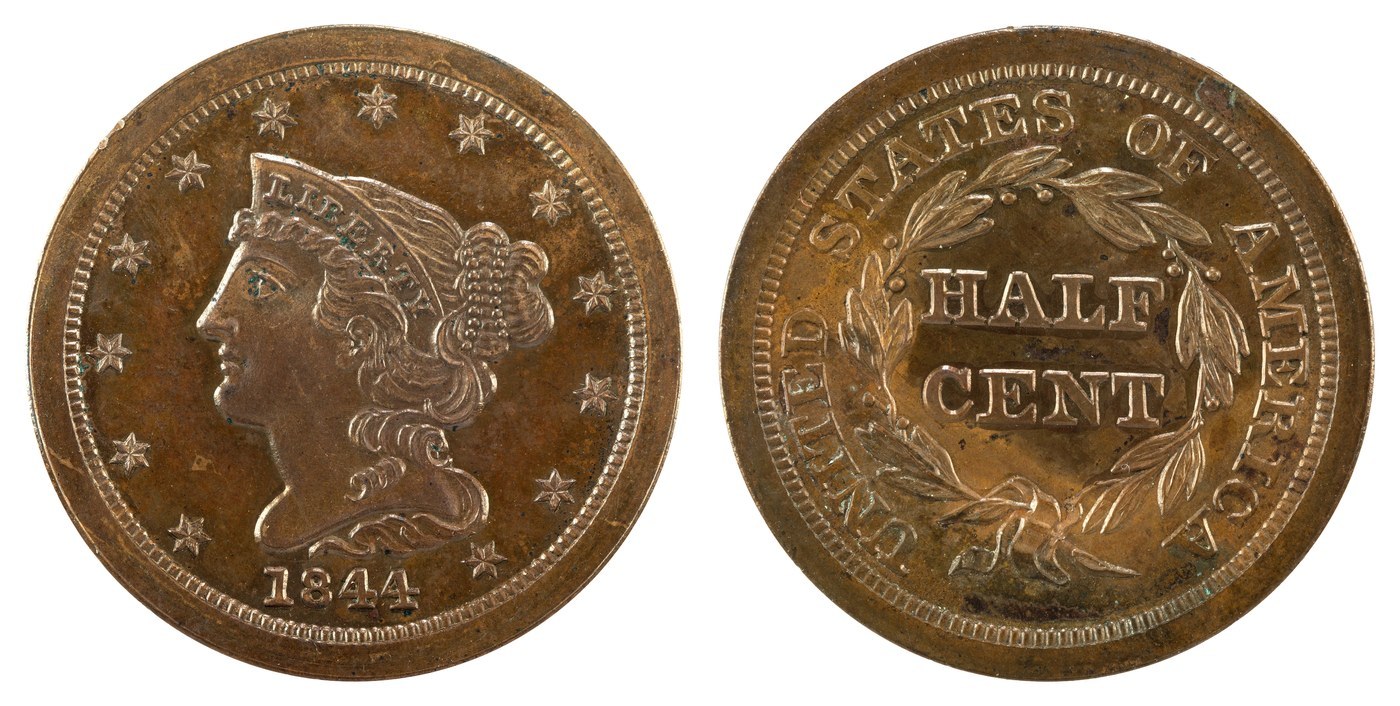
Braided Hair Half Cent
The final U.S. half cent design, a small copper coin showing Liberty with braided hair and a coronet, paired with a wreath reverse, struck 1840–1857.
- Country
- United States
- Denomination
- 1/2 Cent
- Metal
- Copper
Got a coin like this?
Identify any coin from a photo, free.
Overview
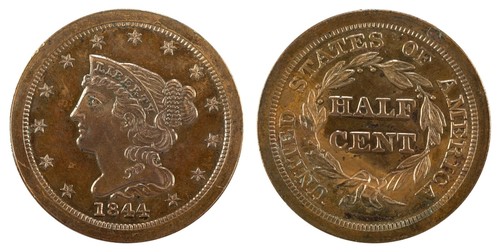
The Braided Hair Half Cent is the last design used for America's smallest-denomination coin, the half cent, worth one two-hundredth of a dollar. Struck in pure copper from 1840 through 1857, it shows the head of Liberty facing left, her hair drawn back into a tight braid beneath a coronet lettered LIBERTY, encircled by thirteen stars. The example shown here is dated 1844.
The series is prized by collectors as the closing chapter of the half cent, a denomination the United States retired entirely in 1857. Because half cents were never struck in large numbers and many dates in this run exist only as low-mintage proofs, the type is more scarce and specialized than the copper large cents that circulated alongside it.
As a plain, low-value copper coin with no precious-metal content, the Braided Hair Half Cent is collected for its history and design rather than bullion, with condition and specific date driving nearly all of its value.
History & Background
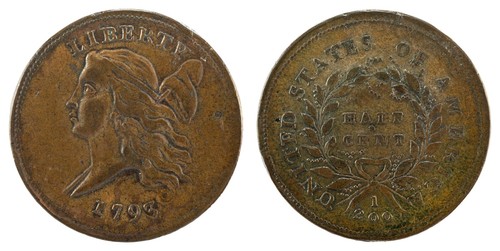
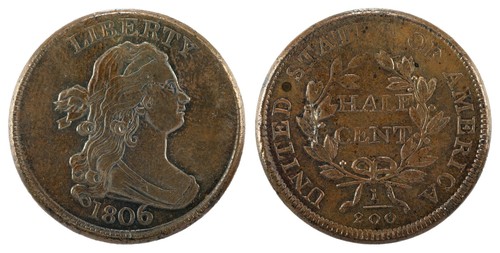
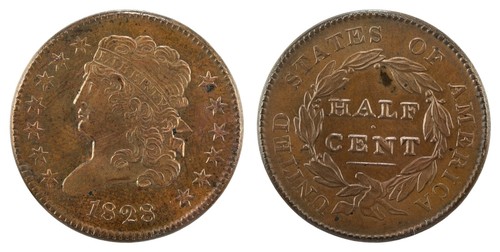
The half cent was authorized by the Coinage Act of 1792 as the lowest denomination in the new federal system and was produced at the Philadelphia Mint. By the late 1830s its earlier Classic Head design was replaced by the Braided Hair type, engraved by Christian Gobrecht, whose matching Liberty head also appeared on the contemporary large cent.
Half cents were never popular in everyday commerce, and output was small and irregular. Many dates in the 1840–1849 span, including 1844, were struck only as proofs for collectors rather than for circulation, while regular business strikes resumed for several dates in the 1850s. This uneven production is why the series is studied date by date.
Rising copper prices and the coin's limited usefulness led Congress to abolish the half cent in 1857, ending more than sixty years of the denomination. The Braided Hair type was its final form, making these coins the last half cents the United States ever produced.
How to Identify
Look first at the obverse: Liberty faces left with her hair gathered into a distinct braid behind a coronet inscribed LIBERTY, surrounded by thirteen stars with the date below. The reverse carries a continuous wreath tied with a bow, the words UNITED STATES OF AMERICA around the rim, and the denomination HALF CENT inside the wreath. The photographed coin is dated 1844.
The coin is copper, about 23 mm across, with a plain (smooth) edge and a weight near 5.4 grams. There is no mint mark on any half cent, as all were struck in Philadelphia. Genuine copper of this age typically shows brown to reddish-brown toning rather than bright new-penny red.
The most important thing to confirm is the denomination on the reverse: it must read HALF CENT, not ONE CENT. That legend, together with the coin's smaller size, separates the half cent from the visually similar Braided Hair large cent.
Value & Collectibility
Value is driven almost entirely by the specific date and the coin's condition. Common circulated business-strike dates from the 1850s are affordable and widely available, while the proof-only early dates such as 1844 are much scarcer and command substantial premiums even in modest grades. Because the coin is plain copper, none of its value comes from metal content.
Surface quality matters greatly: original brown color, sharp braid and wreath detail, and the absence of cleaning, corrosion, or heavy wear all raise a coin's desirability. Copper is easily damaged, so problem-free examples are worth considerably more than pitted or harshly cleaned ones.
Because several dates were issued as originals and later restrikes, and because copper is frequently cleaned or artificially toned, higher-value pieces are best purchased with certification from an established grading service.
Frequently asked questions
Is the Braided Hair Half Cent made of silver?
No. It is struck in pure copper and has no precious-metal content. Its value comes from age, date rarity, and condition rather than bullion.
Why does it say HALF CENT instead of ONE CENT?
It is a half cent, a denomination worth one two-hundredth of a dollar. The reverse reads HALF CENT inside the wreath, which distinguishes it from the larger one-cent coin of the same era.
Are 1844 half cents rare?
Yes. Half cents dated in the 1840s, including 1844, were generally struck only as proofs in small numbers rather than for circulation, so they are scarce and sought after by specialists.
Does it have a mint mark?
No. Every U.S. half cent was struck at the Philadelphia Mint, which used no mint mark, so a blank spot for one is normal and correct.
When was the half cent discontinued?
Congress abolished the half cent in 1857. The Braided Hair type, made from 1840 to 1857, was the final design of the denomination.
Braided Hair Half Cent guides
In-depth guides for identifying, valuing, and collecting Braided Hair Half Cent.