
How to Identify the Classic Head Half Cent
A collector's guide to confirming a Classic Head half cent by its Liberty portrait, wreath reverse, small copper size, and star varieties.
Read the full Classic Head Half Cent encyclopedia entry →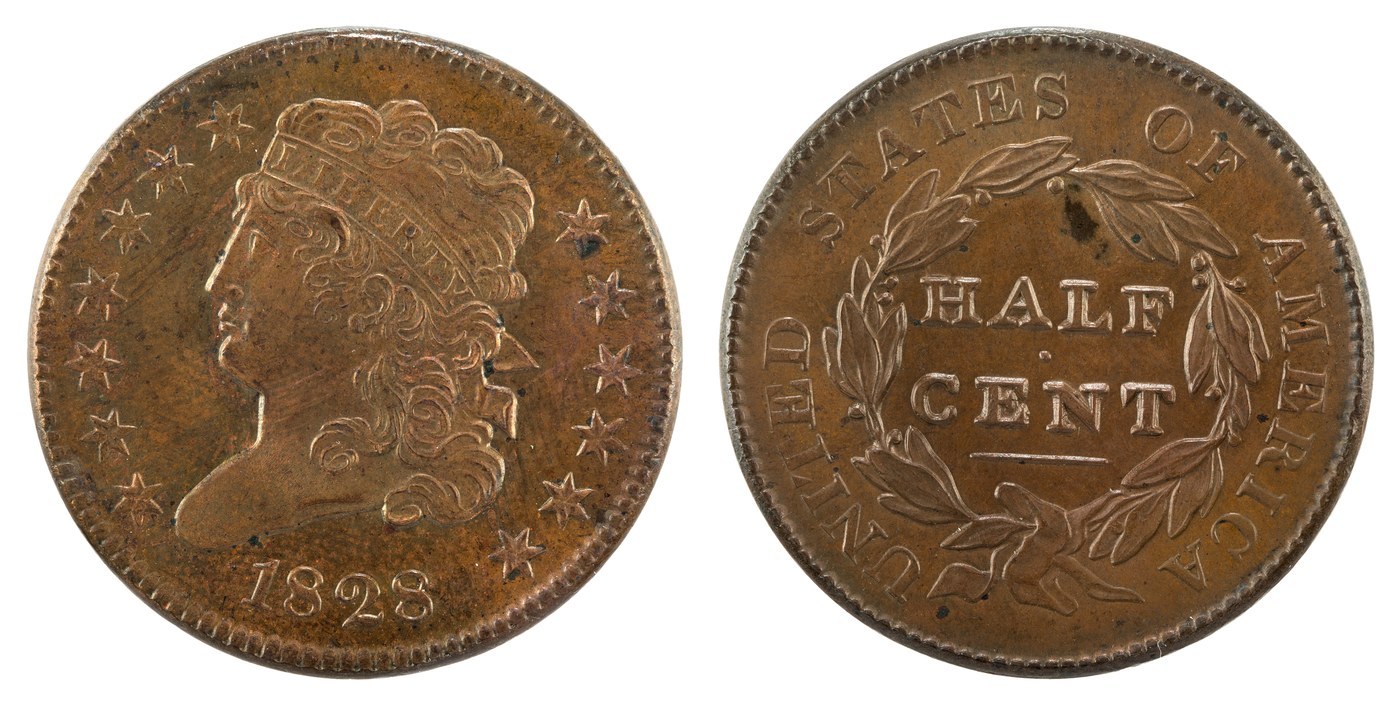
Start with the two design elements that define the type. The obverse must show a left-facing Liberty head with curled hair bound by a beaded band bearing the word LIBERTY, ringed by stars with the date beneath. The reverse must show a wreath tied at the bottom enclosing HALF CENT, with UNITED STATES OF AMERICA around the rim. If the denomination reads anything other than HALF CENT, you do not have a half cent.
Confirm the physical characteristics next. A genuine half cent is pure copper and small — about 23 mm in diameter and lighter than a modern cent — which distinguishes it at a glance from the larger copper cent of the same era. Weigh and measure the coin if you can; correct size and weight are a basic authenticity check for early copper.
There is no mint mark to look for: every half cent came from the Philadelphia Mint, so a missing mint mark is normal, not a red flag. Instead, use magnification to read the date and count the obverse stars. On the 1828 issue this matters, because the coin exists as both a common 13-star variety and a scarcer 12-star variety, and the star count directly affects value.
Be cautious about condition and authenticity. Early copper is often cleaned, re-colored, corroded, or environmentally damaged, all of which reduce value even when the coin is genuine. Watch for tooling, filled or altered dates, and cast fakes with soft, mushy detail or a seam on the edge. Because look-alikes include the earlier Draped Bust and the later Braided Hair half cents, match the portrait style carefully, and send any high-value or questionable piece to a reputable third-party grading service for authentication.
Frequently asked questions
How can I tell a half cent from a large cent?
The half cent is noticeably smaller (about 23 mm) and its reverse reads HALF CENT within the wreath. The large cent is bigger and reads ONE CENT. Size and the denomination legend are the quickest tells.
How do I distinguish the Classic Head from other half cent types?
Look at Liberty's portrait. The Classic Head faces left with curls under a beaded LIBERTY band and stars around the rim. The earlier Draped Bust and later Braided Hair types show different hair and drapery styles, so match the portrait to confirm the 1809–1836 Classic Head.
Should I clean a half cent I found?
No. Cleaning copper almost always lowers a coin's value by disturbing its original surface and color. Leave the coin as-is and let a specialist or grading service assess it.
How do I confirm a half cent is authentic?
Check that size, weight, and pure-copper composition are correct, inspect the design for sharp original detail, and watch for cast seams, tooling, or altered dates. For valuable or uncertain coins, use a reputable third-party grading service.