
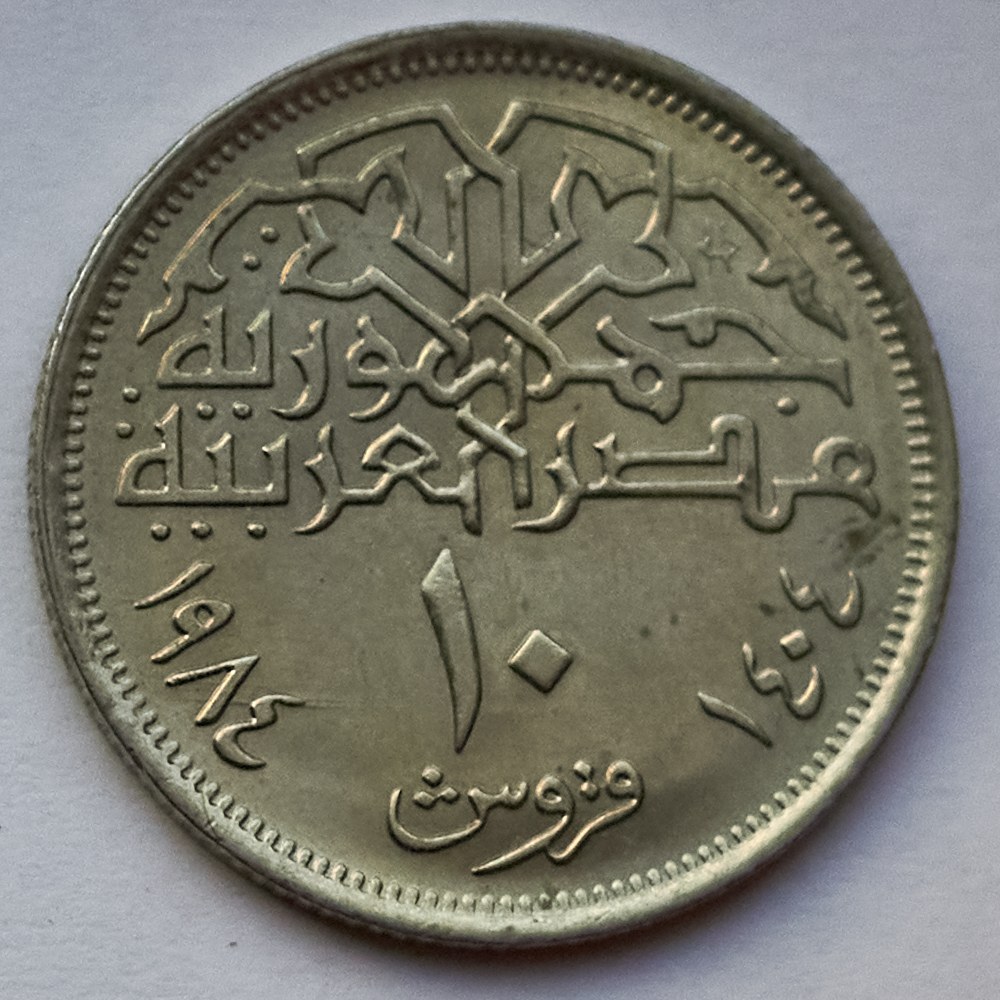
Egyptian 10 Piastres Commemorative
A cupro-nickel Egyptian 10 piastres commemorative dated 1984, showing a domed mosque on one face and Arabic legends throughout.
- Country
- Egypt
- Denomination
- 10 Piastres
- Metal
- Cupro-nickel
Got a coin like this?
Identify any coin from a photo, free.
Overview
The Egyptian 10 piastres commemorative dated 1984 is a mid-size cupro-nickel coin from the modern coinage of the Arab Republic of Egypt. The face shown here carries a mosque with multiple domes, a common motif on Egyptian commemorative issues that celebrate national institutions and anniversaries.
During the 1980s Egypt regularly struck 10 piastres (also written 10 qirsh) coins to mark events, organizations, and milestones, so a single date such as 1984 can cover more than one distinct design. These pieces circulated as ordinary money while also serving a commemorative purpose, which is why they are common today yet still collected as a themed series.
All legends are in Arabic, and the Islamic (Hijri) year AH 1404 typically appears alongside or in place of the Gregorian 1984, a normal feature of Egyptian coinage of this period.
History & Background
Egypt's decimal system divides the pound (junayh) into 100 piastres, and the 10 piastres has long been a workhorse denomination. From the 1970s onward the Central Bank of Egypt issued a steady stream of commemorative 10 piastres coins, often struck at the Cairo mint, to honor institutions, congresses, and national anniversaries.
The 1984 dating places this coin in that active commemorative program. Coins of this era commonly pair a themed obverse design, frequently a mosque, monument, or institutional emblem, with a value side giving the denomination and dates in Arabic. Because the government issued several different commemorative themes across the early-to-mid 1980s, the specific subject of any given 10 piastres depends on the exact legend and imagery rather than the date alone.
Over time Egypt's circulating 10 piastres shifted away from larger cupro-nickel pieces toward smaller and eventually different alloys, so the 1980s cupro-nickel commemoratives represent a distinct earlier phase of the modern series.
How to Identify
Look first at the design and metal. This is a round cupro-nickel coin with a pale silvery-gray tone, showing a mosque crowned by several domes on the pictorial face. The denomination reads as 10 piastres (10 qirsh) in Arabic numerals and script, and the coin is dated 1984 in the Gregorian calendar, usually accompanied by the Hijri year AH 1404.
All inscriptions are Arabic, so identification relies on reading the numeral for the value and matching the mosque imagery rather than on Latin lettering. The reverse of the specific example here is not shown, but Egyptian 10 piastres of this type generally place the value, country name, and dual dates on the opposite face.
Because 1984 covers more than one commemorative theme, confirm the exact issue by the full legend and the building or emblem depicted, not by the year by itself. The dual Gregorian and Hijri dating is a reliable marker that the piece is a modern Egyptian coin rather than an older Ottoman-era Egyptian issue.
Value & Collectibility
Egyptian 10 piastres commemoratives of the 1980s were struck for circulation and are generally common, inexpensive coins. Well-worn examples typically carry only modest value, often in the low single digits of US dollars, while bright, uncirculated pieces with full detail bring somewhat more.
Value is driven mainly by condition, eye appeal, and the specific commemorative theme, since some subjects and varieties are scarcer or more sought after than others. Attractive uncirculated coins and any harder-to-find themes command the strongest premiums within an otherwise affordable series.
As with all modern world coins, prices vary with the market and the individual piece, so treat any single figure as a rough guide. Grading, originality of surfaces, and demand for the particular design matter more than the fact that the coin is labeled commemorative.
Frequently asked questions
What is 10 piastres in Egyptian money?
The piastre (qirsh) is a subdivision of the Egyptian pound, with 100 piastres to the pound. A 10 piastres coin is therefore a fractional denomination, and in the 1980s it was a common circulating value often used for commemorative issues.
What does the mosque on the coin represent?
A mosque with multiple domes is a frequent motif on Egyptian commemorative coins, evoking the country's Islamic heritage and its landmark religious architecture. The exact building depends on the specific commemorative theme.
Why does it show two different years?
Egyptian coins of this era typically carry both the Gregorian year (1984) and the Islamic Hijri year (AH 1404). Seeing the two dates together is normal and helps confirm the coin is a modern Egyptian issue.
Is this coin made of silver?
No. This 10 piastres is struck in cupro-nickel, a copper-nickel alloy with a silvery-gray appearance. It is not a precious-metal coin, so its value comes from condition and collector interest rather than metal content.
Is my 1984 10 piastres valuable?
Most examples are common and modestly priced, with worn coins worth only a little and bright uncirculated pieces worth more. The specific commemorative theme and the coin's condition are what most affect value.
Egyptian 10 Piastres Commemorative guides
In-depth guides for identifying, valuing, and collecting Egyptian 10 Piastres Commemorative.
Other coins you may enjoy
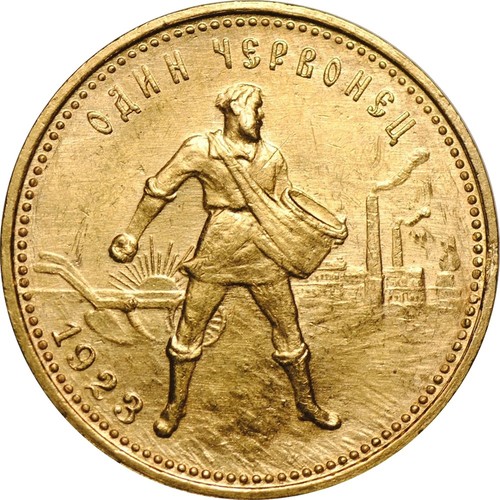
Gold Chervonets
1923
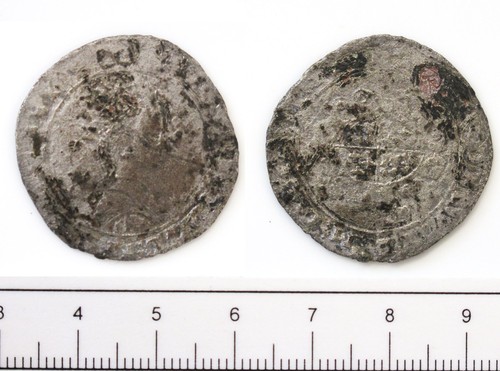
Shilling of Edward VI
1547–1553 (reign of Edward VI)
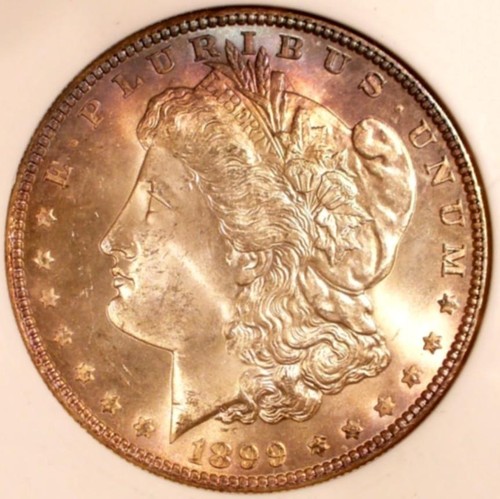
French Silver Franc
c. 1871–1920 (example dated 1899)
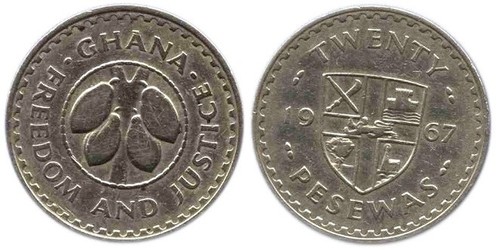
Ghana 20 Pesewas
1967
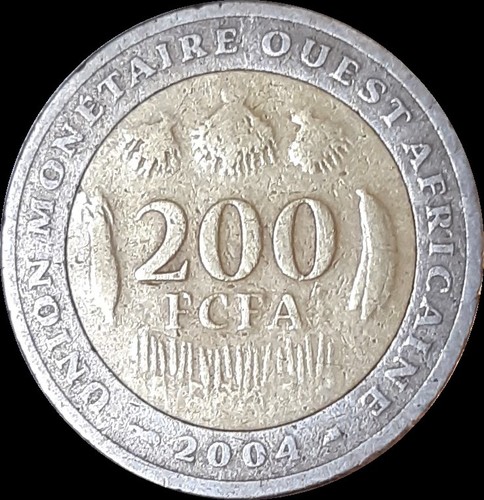
200 CFA Francs
2003–present
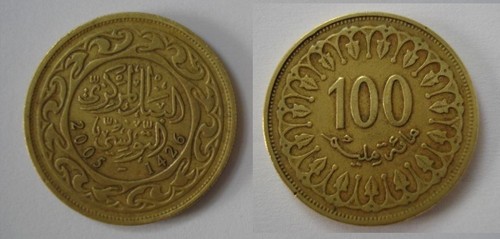
Tunisia 100 Millimes
1983–2005 (this brass type)
Israel Half Lira (25th Anniversary)
1973 (5733)
Israel 100 Sheqalim Hanukka Commemorative
1985
British West Africa 2 Shillings
1936–1952 (George VI type)
British Florin
Victorian issues c. 1849–1901 (example dated 1890)
Swiss 5 Francs
1888–1916 (this design)
North Yemen 1 Rial
1963 (AH 1382)