
How to Identify the Egyptian 10 Piastres Commemorative
A collector's guide to identifying the 1984 Egyptian 10 piastres by its mosque design, cupro-nickel metal, Arabic value, and dual dating.
Read the full Egyptian 10 Piastres Commemorative encyclopedia entry →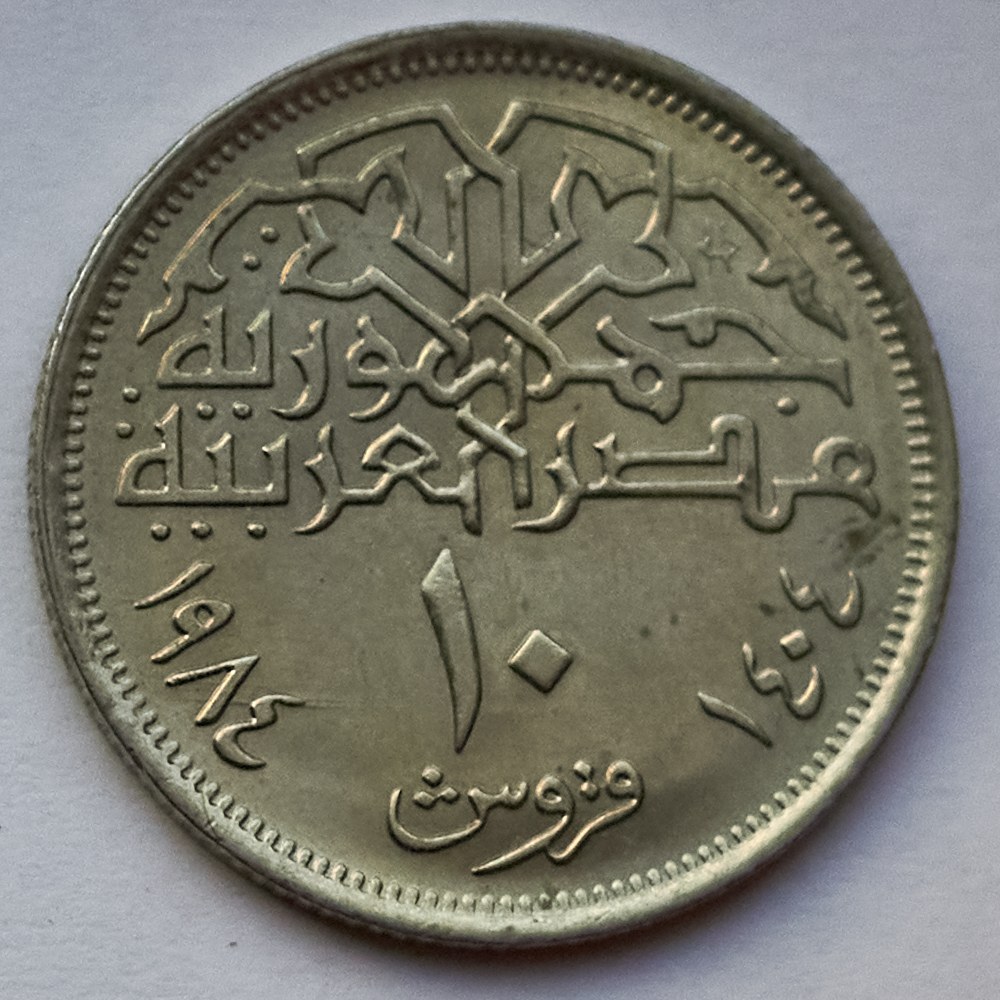
Begin with the imagery and the metal. This coin is a round cupro-nickel piece with a pale silvery-gray color, and the pictorial face shows a mosque topped by several domes. Cupro-nickel has a cooler, harder look than brass or bronze and will not show the yellow tone of the later small brass 10 piastres coins, which is a quick way to place it in the 1980s cupro-nickel phase of the series.
Read the denomination and dates. The value appears as 10 piastres (10 qirsh) in Arabic script and numerals, and the coin is dated 1984 in Western figures, usually alongside the Hijri year AH 1404. Because the legends are entirely Arabic, focus on matching the Arabic numeral for 10 and locating the two dates rather than looking for English text. The presence of both a Gregorian and a Hijri date together is a dependable sign of a modern Arab Republic of Egypt issue.
Confirm the exact commemorative theme, not just the year. Egypt struck several different commemorative 10 piastres designs in the early-to-mid 1980s, so 1984 alone does not identify a single coin. Note the specific building or emblem and read the full legend to pin down the subject; two coins sharing the date can honor different institutions or events.
Check size and edge as a cross-reference. Weigh and measure the coin and compare it against catalog figures for the Egyptian 10 piastres of this period; a piece that is far off the expected diameter, thickness, or weight, or that shows a mismatched edge, deserves a second look. Genuine strikes have crisp, evenly raised devices and clean fields rather than the soft, grainy surfaces of a cast copy.
Mind the look-alikes and authentication basics. Other Egyptian denominations of the era share the mosque-and-Arabic style, so verify the value numeral to avoid confusing a 10 piastres with a 5 or 20 piastres. Older Ottoman-era Egyptian coins also use Arabic legends but lack the dual modern dating and use different designs. When uncertain, compare the coin to a reference image of the specific 1984 type and consult a catalog of modern Egyptian coinage.
Frequently asked questions
How do I read the value on the coin?
Look for the Arabic numeral for 10 paired with the word for piastres (qirsh). Confirming that numeral is important, because other Egyptian coins of the same era share the mosque-and-Arabic style at different denominations.
How can I tell it apart from a later brass 10 piastres?
Color is the fastest clue. This 1980s coin is cupro-nickel with a silvery-gray tone, while later small 10 piastres coins are brass with a yellow color. Metal and size together separate the two.
Does the 1984 date identify a single coin?
Not on its own. Egypt issued more than one commemorative 10 piastres design in this period, so you should confirm the specific theme by the building shown and the full Arabic legend rather than by the year alone.
How do I spot a fake or reproduction?
Check that the diameter, thickness, and weight match published figures for the type, and look for sharp struck detail. Soft, grainy surfaces, seams, or an off weight can indicate a cast copy rather than a genuine strike.