Indian Head Gold Dollar
Tiny U.S. one-dollar gold coin (1854–1889) with an Indian-princess Liberty in a feathered headdress and a denomination-and-date wreath reverse.
- Country
- United States
- Denomination
- 1 dollar
- Metal
- Gold
Got a coin like this?
Identify any coin from a photo, free.
Overview
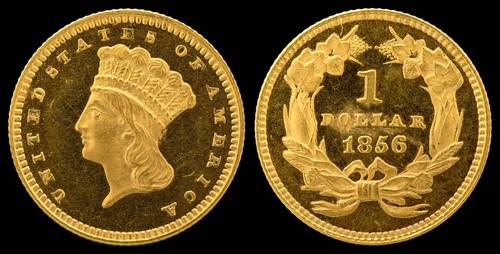
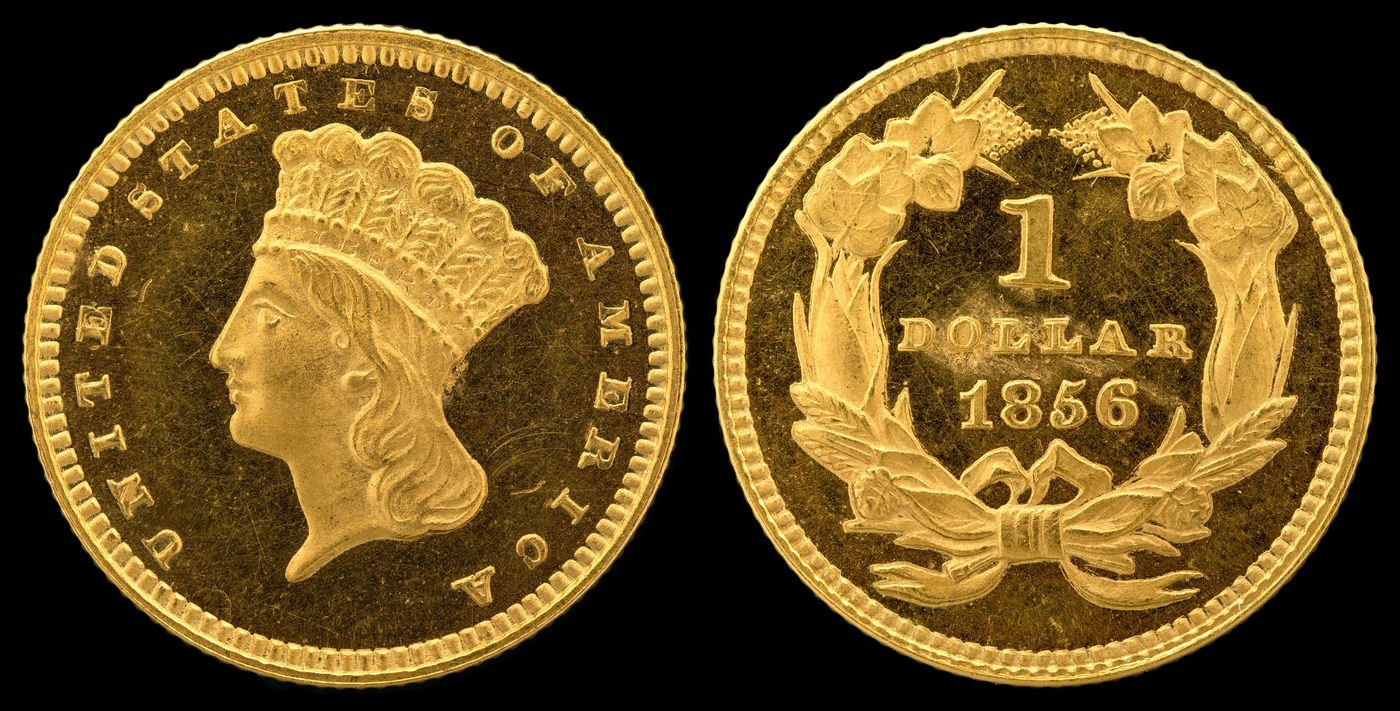
The Indian Head Gold Dollar is a very small United States one-dollar coin struck in gold from 1854 through 1889. Its obverse shows Liberty as an "Indian princess" facing left, wearing an elaborate feathered headdress — a design by James B. Longacre that replaced the earlier coronet-style Liberty Head gold dollar. The example shown here is dated 1856, the year the design transitioned from the short-lived Type 2 to the longer-running Type 3.
Despite the "dollar" denomination, this is a diminutive coin: about 15 mm across (roughly the size of a shirt button) and weighing only about 1.67 grams. It is struck in 90% gold with 10% copper, giving it a warm yellow-gold color and a small but real intrinsic gold content. Because the coin is so tiny yet made of precious metal, it has always been popular with collectors.
History & Background
The gold dollar denomination began in 1849 with a coronet Liberty Head (Type 1). In 1854 the Mint enlarged the coin's diameter and introduced Longacre's Indian-princess portrait. The first version of that portrait, the Type 2 "Small Indian Head," was made only from 1854 to 1856 and was notorious for weak, incomplete strikes, especially at the center where the date and lettering sit opposite the high relief of the head.
To fix that problem, Longacre reworked the design in 1856 into the Type 3 "Large Indian Head," with a broader, flatter portrait that struck up more cleanly. Type 3 then ran all the way to 1889. A coin dated 1856 can therefore be either type, which is one reason collectors examine 1856 pieces closely. Gold dollars were struck at several mints — Philadelphia, plus the Southern gold mints at Charlotte (C) and Dahlonega (D), New Orleans (O), and San Francisco (S) — and demand for the denomination faded after the Civil War, leading to its discontinuation in 1889.
How to Identify
The obverse is the key diagnostic: Liberty faces left wearing a tall feathered headdress with the word LIBERTY on the band, and the legend UNITED STATES OF AMERICA runs around the rim. This headdress portrait distinguishes the Indian Head gold dollar from the earlier Type 1 coin, which instead shows Liberty in a plain coronet. The reverse carries the denomination "1 DOLLAR" and the date stacked inside an agricultural wreath of corn, wheat, cotton, and tobacco leaves — not an eagle. Any mint mark appears on the reverse, below the wreath.
Size and metal are decisive. This is a tiny gold coin about 15 mm in diameter and roughly 1.67 grams, struck in 90% gold. That small size plus the feathered-headdress obverse and wreath reverse together confirm the type. On 1856 coins, compare the head: the Type 2 "Small Head" is in higher relief with the date often weak, while the Type 3 "Large Head" is broader and better struck.
Because it is small and valuable, this coin is a frequent target for counterfeits and for jewelry mounting. Look for solder marks, filed or smoothed rims, or a bent flan from having been worn as a pendant, all of which reduce value. Weight and diameter that fall outside the standards, or mushy detail, are warning signs.
Value & Collectibility
Indian Head gold dollars carry both collector demand and a small bullion value from their gold content, so even common, well-worn Philadelphia examples trade for a meaningful premium over face value. Type 3 coins from Philadelphia are the most available, while Type 2 pieces (1854–1856) are scarcer and more sought after, and coins from the Charlotte and Dahlonega mints command strong premiums because those Southern mints struck them in small numbers.
Value depends heavily on date, mint mark, type, strike quality, and whether the coin has been cleaned, mounted as jewelry, or damaged. Certain dates and mint marks are genuine rarities. Because tiny gold coins are widely faked, have any example authenticated and graded by a reputable service such as PCGS or NGC before buying or selling. Treat all figures here as general context rather than firm prices.
Frequently asked questions
What years was the Indian Head Gold Dollar made?
The Indian-princess (headdress) design was struck from 1854 through 1889. The Type 2 'Small Head' ran 1854–1856 and the Type 3 'Large Head' from 1856 to 1889, so an 1856 coin can be either type.
How big is the coin and what is it made of?
It is very small — about 15 mm across and roughly 1.67 grams — and struck in 90% gold with 10% copper, giving it a real but modest gold content.
Does the reverse show an eagle?
No. The reverse shows the denomination '1 DOLLAR' and the date inside an agricultural wreath, not an eagle. The eagle-and-shield motif belongs to other U.S. series, not the gold dollar.
Where is the mint mark?
On the reverse, below the wreath. Philadelphia coins carry no mint mark; others show C (Charlotte), D (Dahlonega), O (New Orleans), or S (San Francisco).
Why are some of these coins weakly struck?
The Type 2 design of 1854–1856 placed the high-relief head opposite the date and lettering, so many Type 2 coins show a weak date and soft centers. The 1856 Type 3 redesign corrected this.
Indian Head Gold Dollar guides
In-depth guides for identifying, valuing, and collecting Indian Head Gold Dollar.