
Coin Encyclopedia
Search and identify coins from around the world — with country, denomination, metal, mint, history, and how to tell them apart.
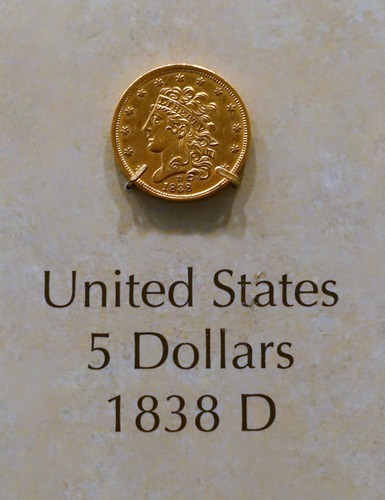
Liberty Head Half Eagle
United States $5 gold coin with a left-facing Liberty head ringed by stars and a spread-winged eagle reverse; the pictured piece is dated 1838.
United States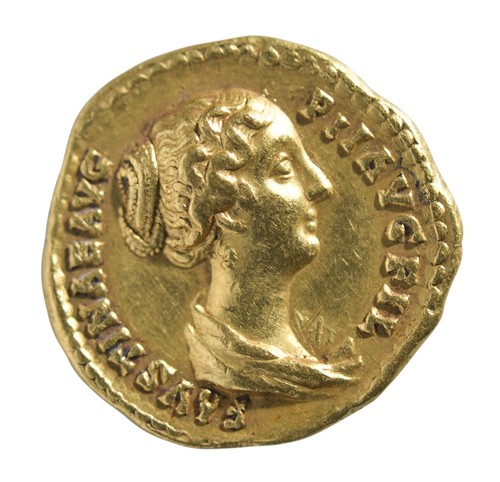
Aureus of Faustina II
Roman imperial gold coin with the draped bust of Faustina II, daughter of Antoninus Pius and wife of Marcus Aurelius, struck around 147-150 AD.
Ancient Coins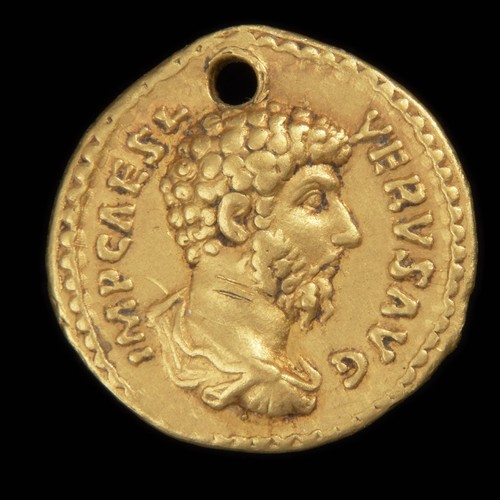
Aureus of Marcus Aurelius
Small Roman gold coin of the reign of Marcus Aurelius; this piece shows a diademed portrait and a standing deity or personification, dated to 163 AD.
Ancient Coins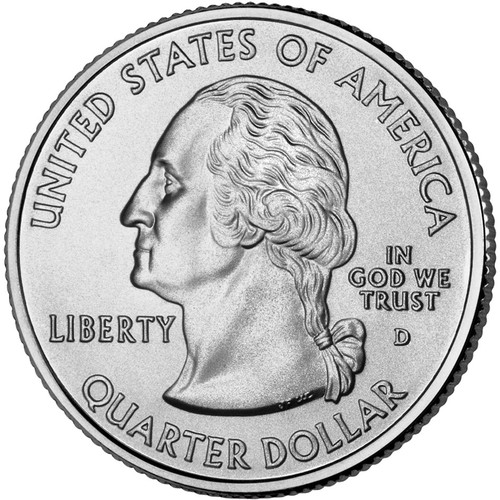
Washington Quarter
U.S. twenty-five-cent coin introduced in 1932, showing George Washington's profile and an eagle reverse; early issues struck in 90% silver.
Quarter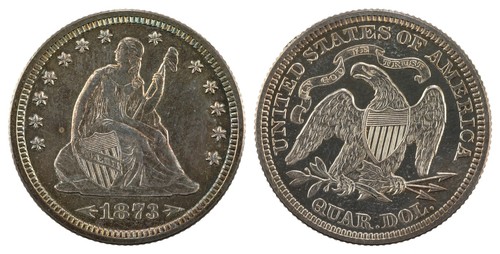
Seated Liberty Quarter
U.S. twenty-five-cent silver coin struck 1838–1891, showing Liberty seated with shield and staff on the obverse and a shield-breasted eagle on the reverse.
Quarter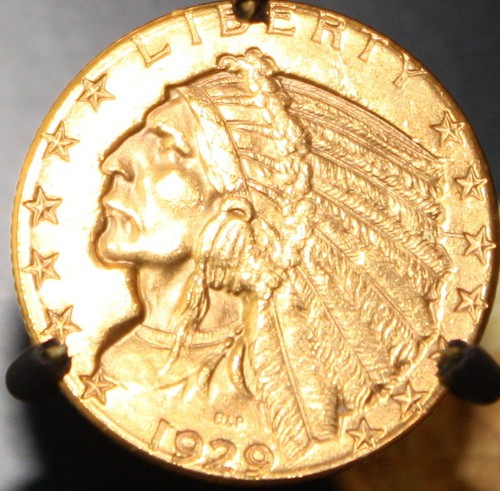
Indian Head Half Eagle
U.S. $5 gold half eagle struck 1908–1929, with an unusual sunken (incuse) design: a headdressed Native American obverse and a standing eagle reverse.
Half Eagle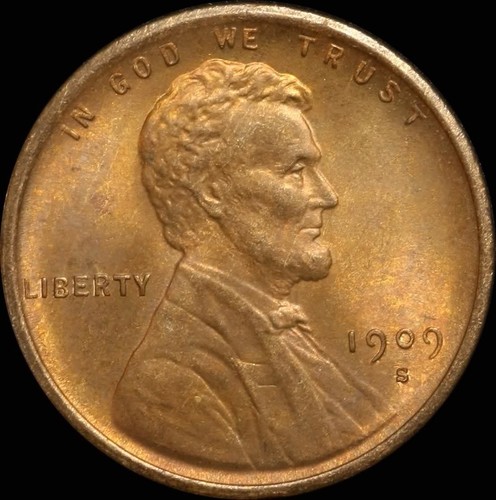
Lincoln Wheat Cent
U.S. one-cent coin struck 1909–1958 with Lincoln's profile and a pair of wheat ears framing ONE CENT; the 1909-S here is a scarce first-year San Francisco issue.
Small Cent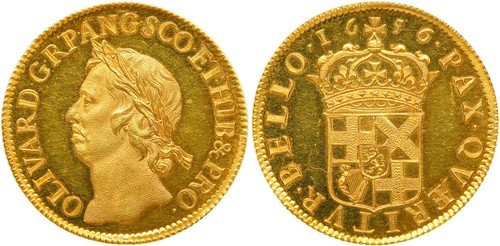
Broad
A gold twenty-shilling coin of the Protectorate bearing Oliver Cromwell's Roman-style profile and a crowned quartered shield, dated 1656.
Hammered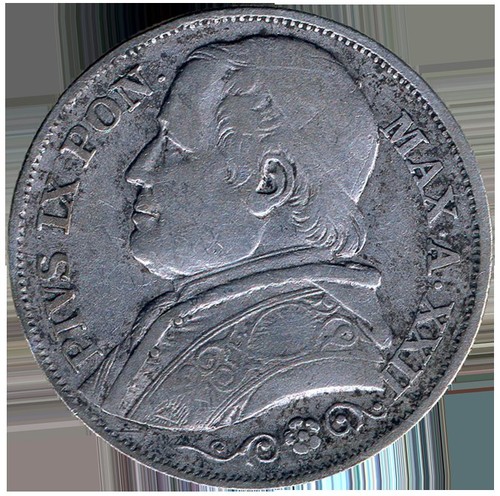
2 Lire
Silver 2 Lire of the Papal States struck under Pope Pius IX, part of the Italian lira system adopted by Rome in the 1860s.
Modern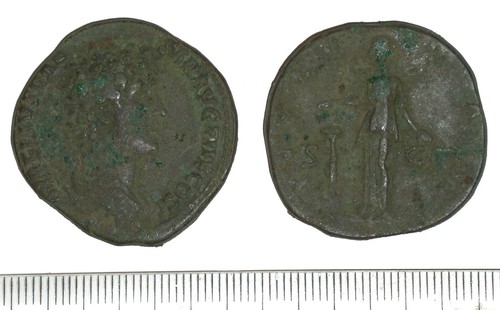
Sestertius of Marcus Aurelius
A large Roman bronze sestertius struck during the reign of Marcus Aurelius (161–180 CE), with his laureate portrait facing right and a Latin legend.
Ancient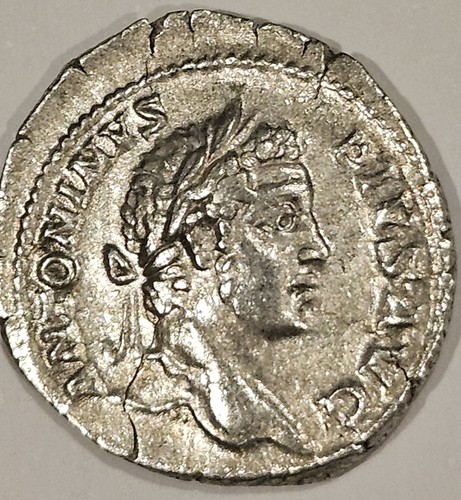
Denarius of Caracalla
A silver denarius of the Roman emperor Caracalla, struck 198–217 CE, showing his laureate right-facing bust and a Latin legend encircling the design.
Ancient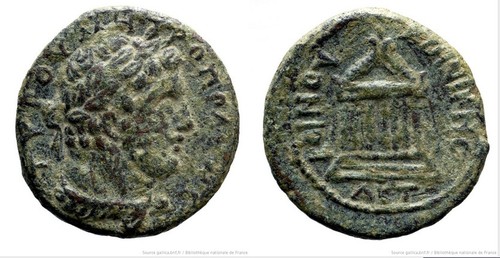
Bronze Coin of Septimius Severus (Tyre)
Roman provincial bronze struck at Tyre (Phoenicia) under Septimius Severus, 193-211 AD, with the emperor's bust on the obverse and a temple or deity reverse.
Ancient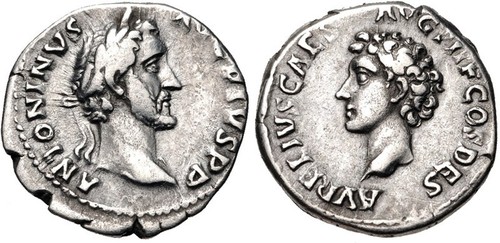
Denarius of Antoninus Pius and Marcus Aurelius
Roman silver denarius of Antoninus Pius (138–161 AD), a dynastic type showing the emperor and the two young Caesars, Marcus Aurelius and Lucius Verus.
Ancient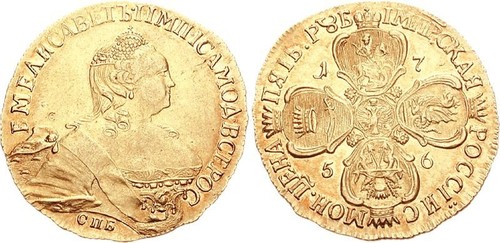
5 Roubles (Alexander III)
An Imperial Russian gold 5 Roubles of Alexander III, showing the tsar's bearded profile and the crowned double-headed eagle, struck in the late 1880s.
Modern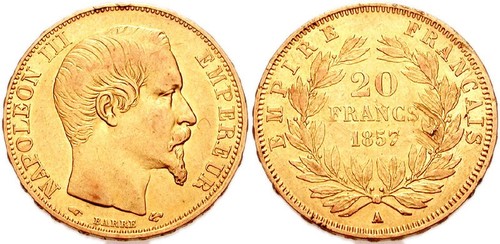
Napoleon III 20 Francs
French gold 20 francs of Emperor Napoleon III, showing his bare head facing right and a wreathed value on the reverse; example dated 1857.
World Coins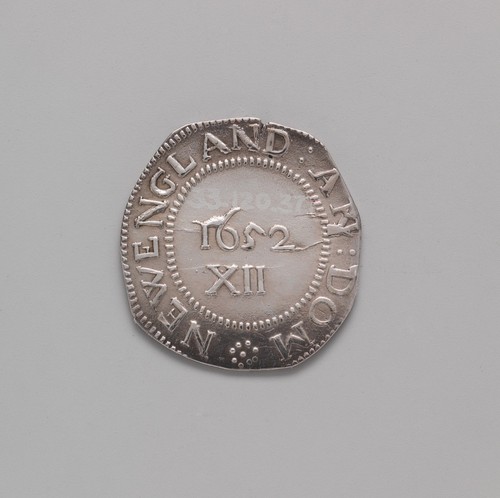
English Shilling
English silver shilling of William III, showing his right-facing laureate bust and a crowned cruciform-shield reverse; this example is dated 1692.
World Coin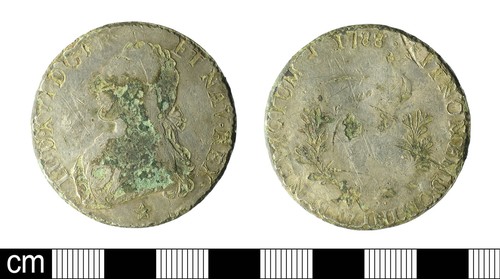
Contemporary Forgery of Louis XVI Ecu
A period-style counterfeit imitating a Louis XVI silver ecu: a copied royal portrait obverse and a copied standing-figure reverse dated about 1792.
Forgery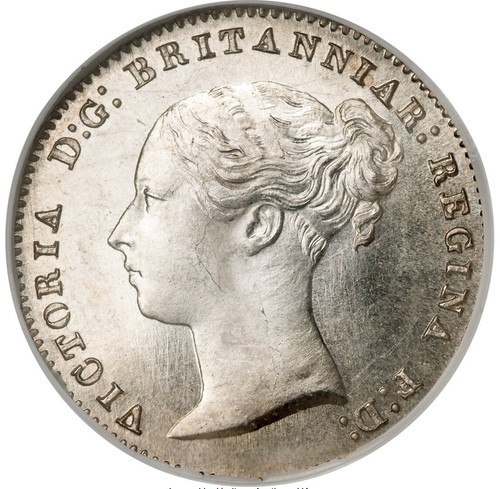
British Silver Threepence
Tiny sterling-silver threepence of Queen Victoria; the young-head type shown here dates to 1858 and is one of Britain's smallest circulating coins.
British Isles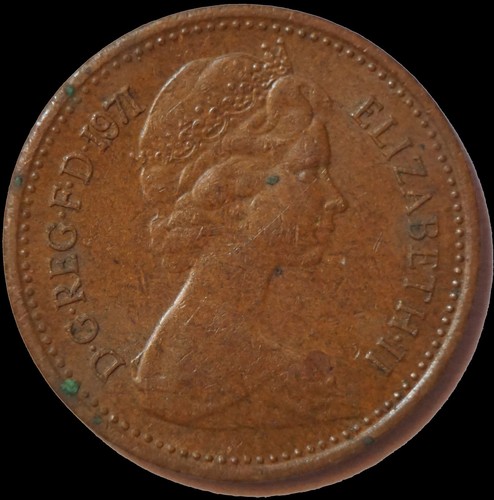
British Decimal Half Penny
The smallest UK decimal coin, a tiny bronze half-penny introduced with decimalisation in 1971, bearing a crown reverse and the Machin portrait of Elizabeth II.
British Isles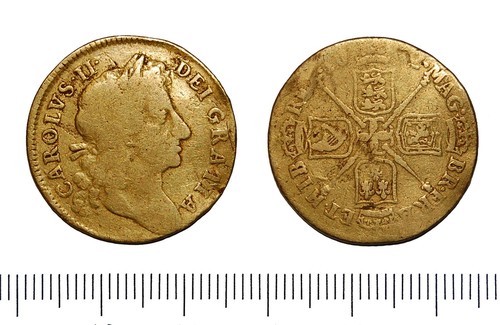
Gold Guinea
English gold coin of the Guinea denomination; the example shown bears the right-facing bust of Charles II with a crowned cruciform shield reverse dated 1668.
World Coins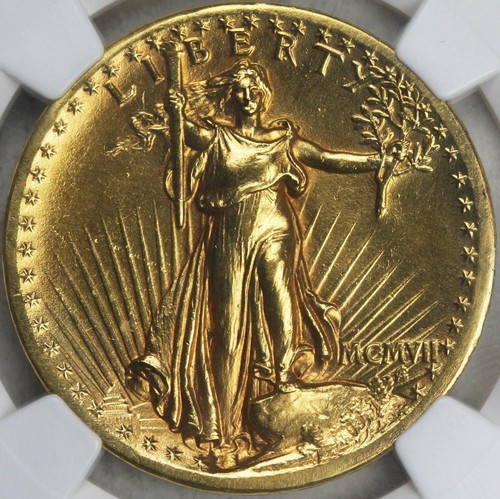
Saint-Gaudens Double Eagle
United States $20 gold coin (1907–1933) designed by Augustus Saint-Gaudens, showing a striding Liberty with torch and olive branch before a radiant sun.
Gold Type Coin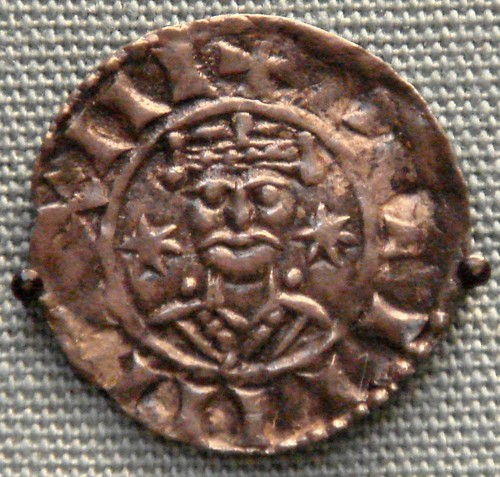
Penny of William I
Hammered silver penny of William the Conqueror, the example showing a profile portrait of the king and a decorated cross reverse, struck circa 1075.
Medieval Coins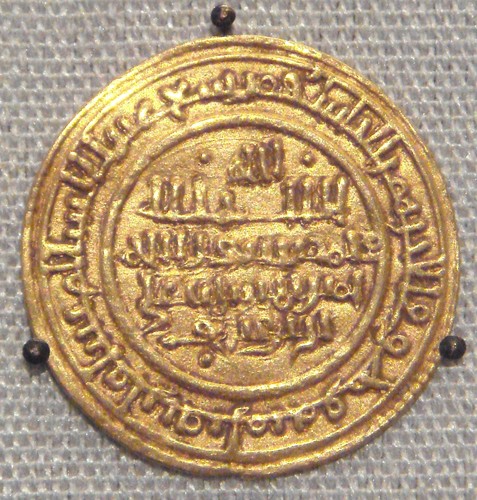
Almoravid Gold Dinar
Pure-gold dinar of the Almoravid dynasty, struck in Islamic Spain and North Africa with concentric Arabic legends; this piece is dated 1116 CE.
Medieval Islamic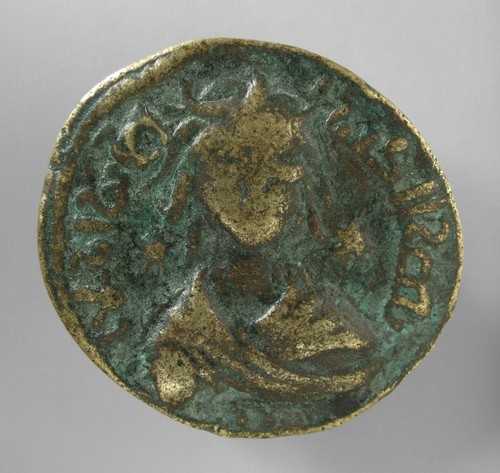
Artuqid Bronze Dirham
A 12th-century bronze coin of the Artuqid Turkmen dynasty, struck with Arabic inscriptions inside ornamental borders across eastern Anatolia.
Medieval Islamic