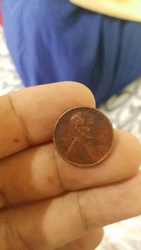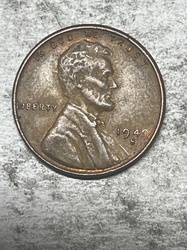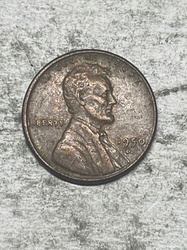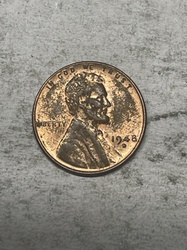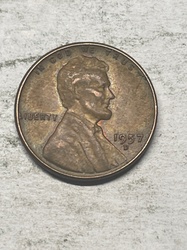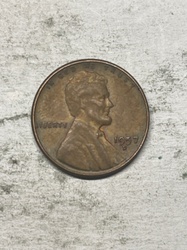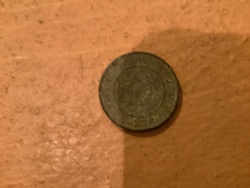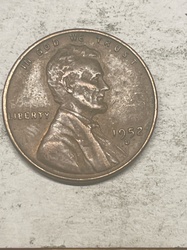
Lincoln Wheat Cent
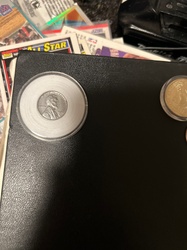
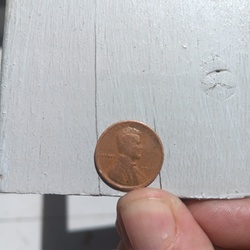
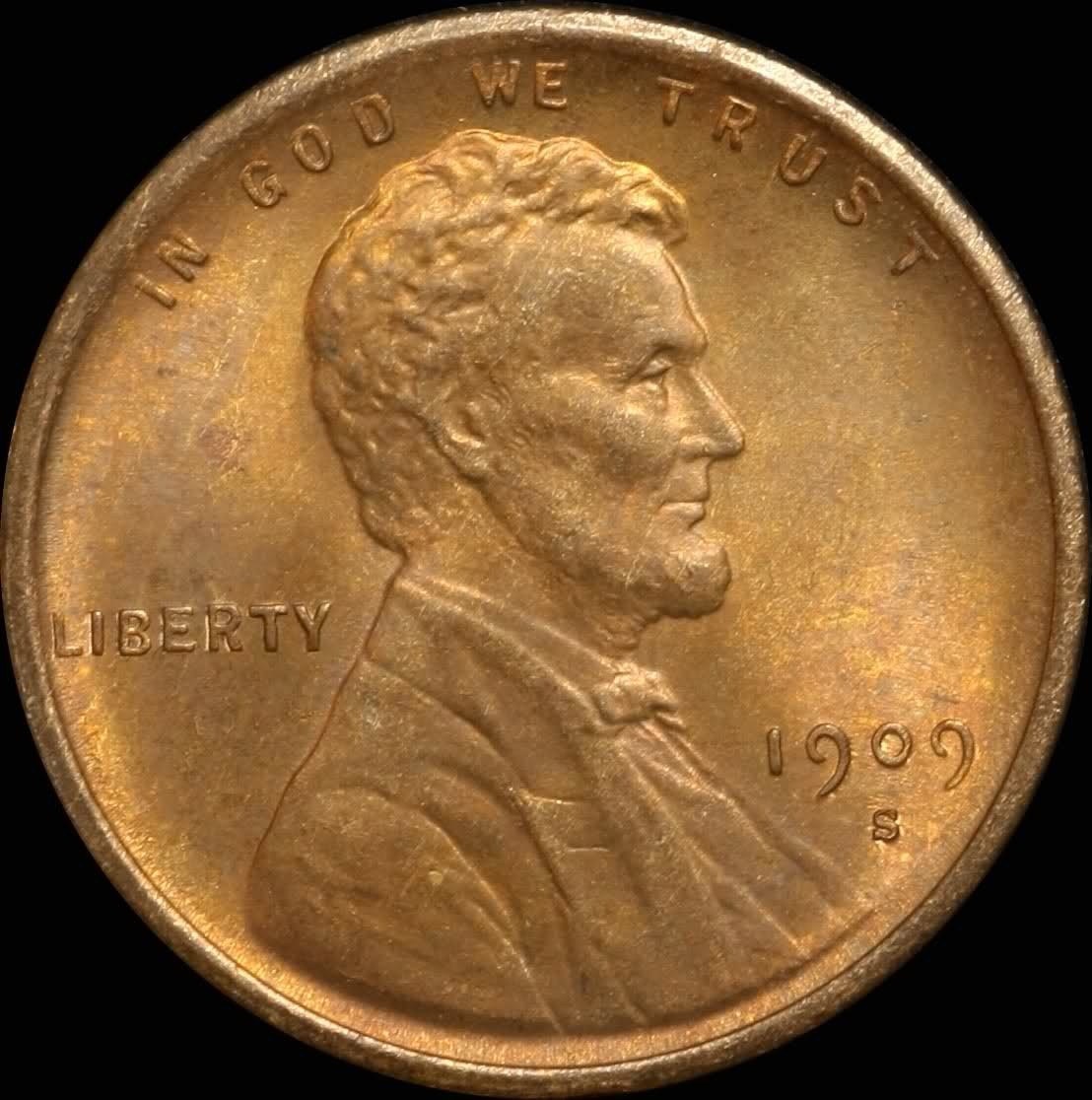
U.S. one-cent coin struck 1909–1958 with Lincoln's profile and a pair of wheat ears framing ONE CENT; the 1909-S here is a scarce first-year San Francisco issue.
- Country
- United States
- Denomination
- 1 Cent
- Metal
- Bronze
Got a coin like this?
Identify any coin from a photo, free.
Overview
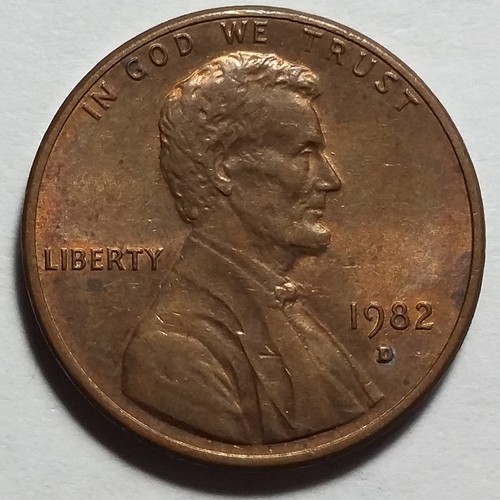
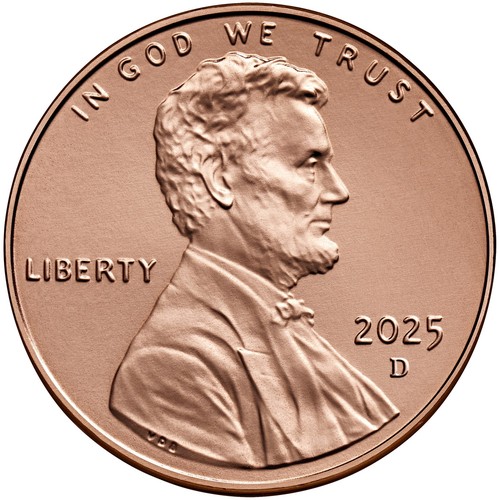
The Lincoln Wheat Cent is a small United States one-cent coin produced by the U.S. Mint from 1909 through 1958. The obverse carries a right-facing profile of Abraham Lincoln with "LIBERTY" at left, "IN GOD WE TRUST" arced across the top, and the date at right. The reverse — the source of the popular nickname "wheat penny" — shows two curved ears of wheat flanking the words "ONE CENT" and "UNITED STATES OF AMERICA."
The example shown here is dated 1909 and carries a small "S" mint mark, marking it as a first-year coin struck at the San Francisco Mint. Like other bronze wheat cents it measures about 19 mm across and weighs roughly 3.1 grams, with a plain (smooth) edge and a brown to reddish-brown color.
History & Background
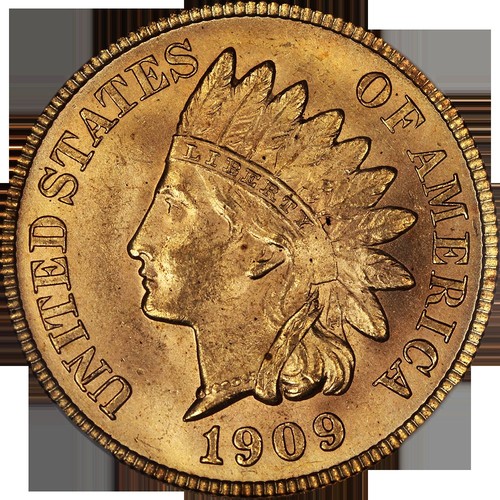
The Lincoln Cent debuted in 1909 to mark the 100th anniversary of Abraham Lincoln's birth, replacing the Indian Head Cent. It was designed by sculptor Victor David Brenner, and it was the first regular-issue U.S. coin to depict a real historical person. The reverse's twin wheat ears gave the series its lasting nickname and remained in use until 1959, when the design was changed to the Lincoln Memorial for the sesquicentennial of Lincoln's birth.
The 1909 first-year coins are notable for a design controversy: Brenner's initials "V.D.B." originally appeared prominently at the bottom of the reverse, and public objection led the Mint to remove them partway through the year. This produced both "V.D.B." and plain reverses in 1909, at both Philadelphia and San Francisco. Wheat cents were struck in bronze for most of the series, with a well-known wartime exception in 1943 when cents were made of zinc-coated steel to conserve copper.
How to Identify
The obverse is unmistakable: a bust of Lincoln facing right, "IN GOD WE TRUST" along the top rim, "LIBERTY" to the left of the portrait, and the date to the right. On this coin the date reads 1909 with a small "S" mint mark below it. The reverse shows "ONE CENT" and "UNITED STATES OF AMERICA" between two symmetrical ears of wheat, with "E PLURIBUS UNUM" across the top.
The coin is small at about 19 mm in diameter with a plain edge, and bronze examples weigh roughly 3.1 grams and appear brown to reddish. Mint marks, when present, sit directly beneath the date on the obverse: "S" for San Francisco and "D" for Denver. Coins with no mint mark were struck at Philadelphia. The 1909-dated San Francisco pieces exist both with and without the small "V.D.B." initials at the base of the reverse, so the reverse should be checked closely on any 1909 coin.
Value & Collectibility
Most Lincoln Wheat Cents from the 1930s onward are common and trade for modest sums in circulated grades, with value rising for lightly circulated and uncirculated coins that retain original red color and sharp detail. Because billions were struck over five decades, worn common-date wheat cents are among the most affordable of all collectible U.S. coins.
The early San Francisco issues are a different story. The 1909-S — and especially the 1909-S V.D.B. — is a famous key date with a low mintage, and genuine examples command substantial premiums, the V.D.B. variety far more so. Because of this, a 1909-S like the one shown is worth careful attention, and its precise value depends heavily on grade, color, and whether the reverse carries the V.D.B. initials. Given the strong incentive to counterfeit these dates, high-value coins should be authenticated by a reputable third-party grading service before any purchase or sale.
Frequently asked questions
Why is it called a wheat penny?
The nickname comes from the reverse, which shows two curved ears of wheat framing "ONE CENT." The design was used from 1909 to 1958, after which the Lincoln Memorial reverse replaced it.
What is a 1909 Lincoln cent made of?
It is bronze — mostly copper with small amounts of tin and zinc — weighing about 3.1 grams and measuring roughly 19 mm across, with a plain edge and brown to reddish color.
Where is the mint mark on a Lincoln Wheat Cent?
Directly below the date on the obverse. "S" means San Francisco and "D" means Denver; no mint mark means Philadelphia. The coin shown carries an "S."
Is a 1909-S wheat cent valuable?
Yes, potentially. The 1909-S is a scarce key date, and the 1909-S V.D.B. variety is one of the most sought-after wheat cents. Value depends on grade, color, and whether the reverse shows the V.D.B. initials, so authentication is recommended.
What does V.D.B. mean on a 1909 cent?
They are the initials of designer Victor David Brenner. They appeared at the base of the reverse early in 1909 before being removed after complaints, creating both V.D.B. and plain-reverse coins that year.
Lincoln Wheat Cent guides
In-depth guides for identifying, valuing, and collecting Lincoln Wheat Cent.
Lincoln Wheat Cent identified by the community
Real coins identified with Coin Identifier.