Flying Eagle Cent
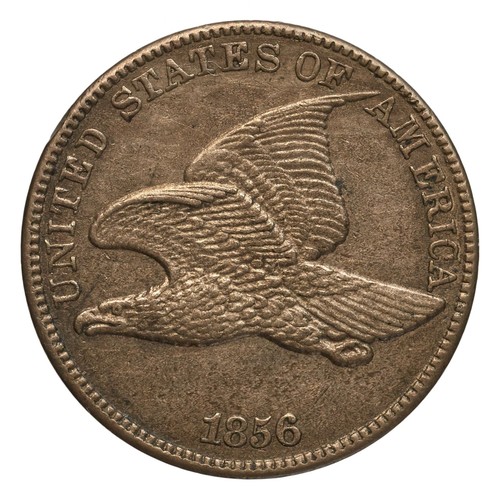
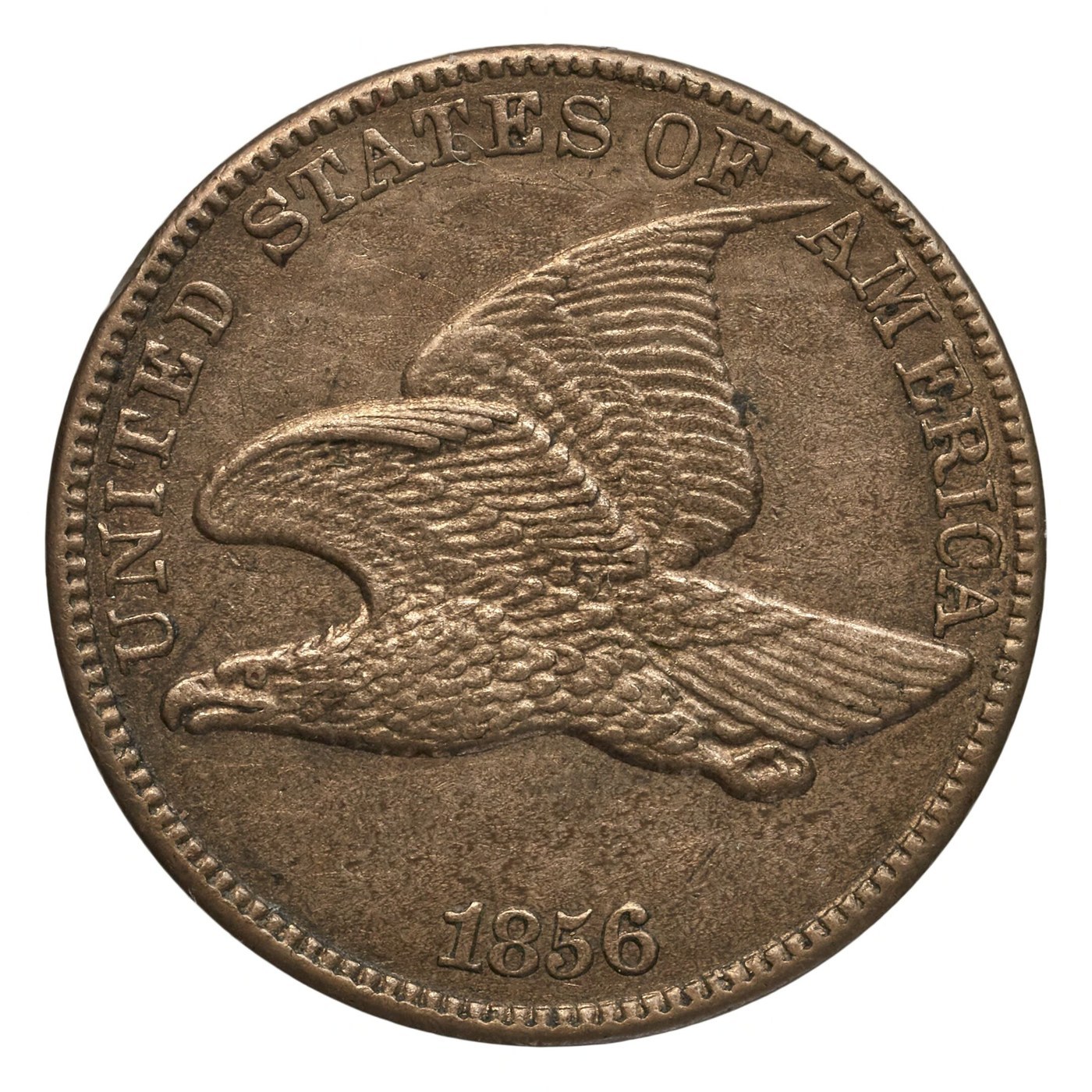
America's first small cent, showing an eagle in flight on the obverse and an agricultural wreath on the reverse; struck 1856–1858 in copper-nickel.
- Country
- United States
- Denomination
- 1 Cent
- Metal
- Copper-Nickel (88% Copper, 12% Nickel)
Got a coin like this?
Identify any coin from a photo, free.
Overview
The Flying Eagle Cent was the United States' first small-diameter one-cent piece, replacing the large copper cent that had circulated since 1793. Struck from a pale copper-nickel alloy, it introduced the roughly 19 mm format that American cents still use today.
The series is short and self-contained, which makes it a favorite among type collectors. The obverse features an eagle in flight with spread wings, encircled by "UNITED STATES OF AMERICA" and the date, while the reverse carries an agricultural wreath surrounding the denomination "ONE CENT."
Because it was produced only for a few years and includes the famous rarity dated 1856, the Flying Eagle Cent occupies an outsized place in American numismatics relative to its brief production run.
History & Background
By the 1850s the large copper cent had become expensive to produce and unpopular for its size and weight, prompting the U.S. Mint to experiment with a smaller, lighter coin. Mint Engraver James B. Longacre developed the Flying Eagle design, adapting the soaring eagle from Christian Gobrecht's earlier silver dollar work and pairing it with a wreath of agricultural crops.
Coins dated 1856 were produced as patterns and transitional pieces to show members of Congress and officials before the small cent was formally authorized by the Act of February 21, 1857. Only a limited number were struck, which is why the 1856 date is treated as a celebrated rarity rather than a regular circulation issue.
Regular production followed in 1857 and 1858, when the new cents were released widely and eagerly exchanged for old large cents and Spanish silver. Striking problems with the high-relief eagle and dense wreath, however, led the Mint to replace the design after 1858 with Longacre's Indian Head Cent.
How to Identify
Look first at the obverse: a single eagle shown in full flight with wings spread, surrounded by "UNITED STATES OF AMERICA" above and the date below. The reverse shows a wreath of grain and other crops enclosing the words "ONE CENT." There is no portrait or Liberty head on this type.
The coin is small, about 19 mm across, and struck in copper-nickel, giving it a distinctive pale tan, buff, or whitish appearance rather than the reddish-brown of pure copper. The edge is plain and smooth. All Flying Eagle Cents were struck at the Philadelphia Mint, so genuine pieces carry no mint mark.
Dates encountered are 1856, 1857, and 1858, with 1858 further divided into Large Letters and Small Letters varieties distinguished by the size and shape of the lettering in "AMERICA." The 1856 is scarce and frequently faked, so date and authenticity deserve close attention.
Value & Collectibility
Values depend heavily on date and condition. The 1857 and 1858 issues are relatively available and are typically modest in circulated grades, rising into higher premiums for sharply struck, problem-free, or uncirculated examples. As a short-lived type coin, even common dates carry collector demand beyond face value.
The 1856 is the key to the series and commands substantial premiums because so few were made. Its desirability has produced many counterfeits and altered coins, so a high-value 1856 should be authenticated by a reputable grading service.
As always, eye appeal matters: original surfaces, even color, strong wreath and eagle detail, and the absence of cleaning, corrosion, or damage all raise value. Condition ranges are broad, so consult recent price guides and auction records for current figures.
Frequently asked questions
Why is the 1856 Flying Eagle Cent so famous?
Coins dated 1856 were made as patterns and transitional pieces before the small cent was officially authorized, so only a limited number exist, making it a celebrated rarity in the series.
Why does my Flying Eagle Cent look pale instead of copper-colored?
The type was struck in a copper-nickel alloy (88% copper, 12% nickel), which gives it a lighter tan, buff, or whitish tone compared to the reddish-brown of a pure copper cent.
Does the Flying Eagle Cent have a mint mark?
No. All Flying Eagle Cents were struck at the Philadelphia Mint, which used no mint mark during this period, so a genuine coin will not carry one.
What is the difference between the 1858 Large Letters and Small Letters?
The two 1858 varieties are told apart by the size and spacing of the lettering in the legend, most easily seen in the letters of "AMERICA" on the obverse.
Why was the Flying Eagle Cent discontinued so quickly?
The high-relief eagle and detailed wreath were difficult to strike fully, so after 1858 the Mint replaced the design with the Indian Head Cent.
Flying Eagle Cent guides
In-depth guides for identifying, valuing, and collecting Flying Eagle Cent.