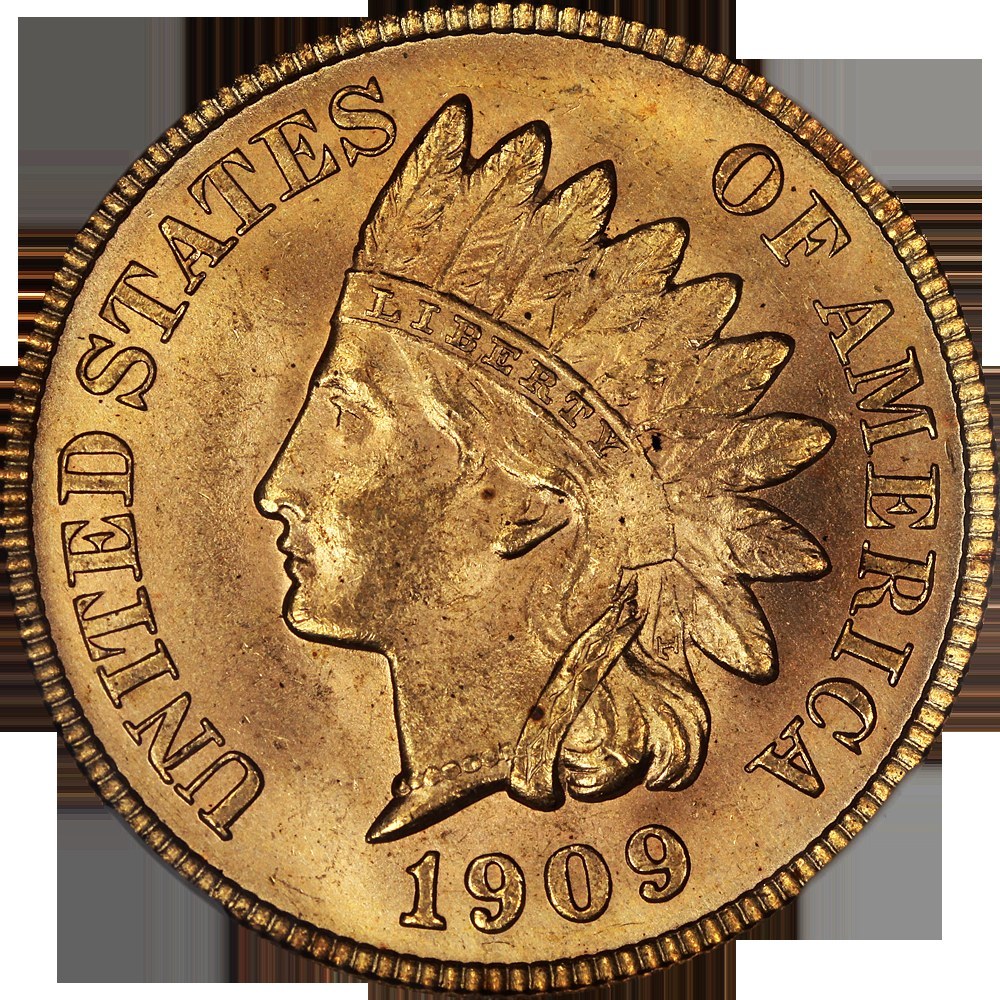
Indian Head Cent
Classic U.S. one-cent piece struck 1859–1909, showing Liberty in a feathered headdress; later dates like 1909 are bronze with an oak-wreath-and-shield reverse.
- Country
- United States
- Denomination
- 1 Cent
- Metal
- Bronze
Got a coin like this?
Identify any coin from a photo, free.
Overview
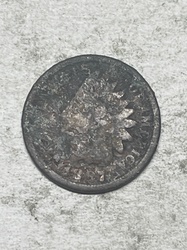
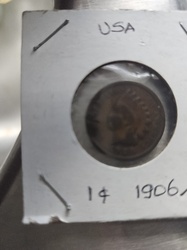
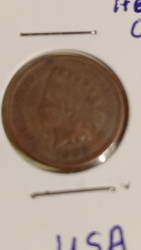
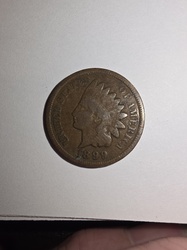
The Indian Head Cent is a small United States one-cent coin produced by the U.S. Mint from 1859 through 1909. Despite its name, the obverse does not depict a Native American but rather a profile of Liberty wearing a feathered headdress, with the word "LIBERTY" on the headband. It is one of the most widely collected American coins because of its long run, affordability, and nostalgic appeal.
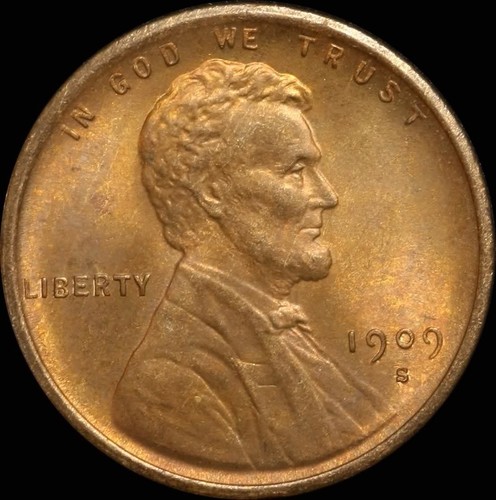
The 1909-dated example shown here is a bronze coin from the final year of the series. It measures about 19 mm across and, in bronze form, weighs roughly 3.1 grams. Its reverse frames the denomination within an oak wreath topped by a small shield.
History & Background
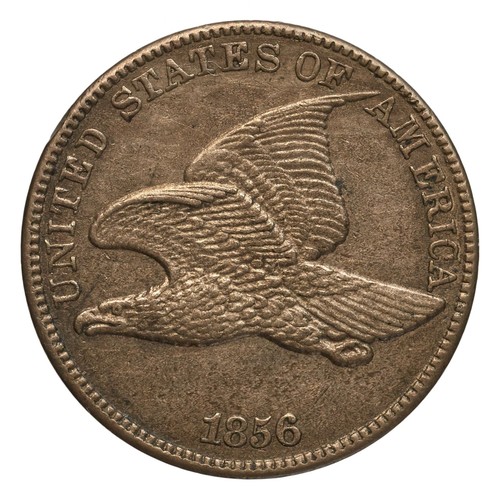
The Indian Head Cent was designed by U.S. Mint Chief Engraver James Barton Longacre and introduced in 1859 to replace the larger, short-lived Flying Eagle cent. Its composition changed over the series: early issues (1859 through 1864) were struck in a pale copper-nickel alloy, while from 1864 onward the coin was made of bronze, a copper alloy with small amounts of tin and zinc.
The reverse also evolved. The 1859 coins used a laurel wreath, which was replaced in 1860 by the oak wreath with a shield at the top that remained through the end of the series. Production ran uninterrupted until 1909, when the Lincoln Cent was introduced to mark the centennial of Abraham Lincoln's birth. The 1909 date therefore represents the last year the Indian Head design was struck for circulation.
How to Identify
The obverse shows a left-facing head of Liberty wearing a Native-American-style feathered headdress, with "LIBERTY" lettered on the band of the headdress. "UNITED STATES OF AMERICA" arcs around the rim and the date sits at the bottom. The reverse displays the words "ONE CENT" enclosed by a wreath — an oak wreath tied with a ribbon and capped by a small shield on coins from 1860 onward, as seen on this 1909 piece.
The coin is small at about 19 mm in diameter with a plain (smooth) edge. Bronze examples show a brown to reddish-brown color; copper-nickel issues (1859–1864) look paler and slightly thicker. Mint marks appear only on 1908 and 1909 San Francisco coins, as a small "S" on the reverse below the wreath; all other dates were struck at Philadelphia and carry no mint mark.
Value & Collectibility
Most Indian Head Cents are common and inexpensive in worn grades, often trading for a modest sum apiece, with prices rising sharply for well-preserved, lightly circulated, or uncirculated examples with original red color. Condition, eye appeal, and the presence of full detail in the headdress feathers drive most of the value.
Key and semi-key dates carry strong premiums: the 1877 and the 1909-S are the most famous scarcities, and early copper-nickel dates and better San Francisco issues also sell for more. A standard 1909 Philadelphia coin is a common date, while the 1909-S is much scarcer and far more valuable. Actual prices vary widely with grade and market conditions, so certified examples from a grading service are the safest guide.
Frequently asked questions
Does the Indian Head Cent actually show a Native American?
No. The portrait is Liberty wearing a feathered headdress, with "LIBERTY" lettered on the headband. The design is symbolic rather than a real individual.
What is a 1909 Indian Head Cent made of?
By 1909 the coin was struck in bronze — mostly copper with small amounts of tin and zinc — weighing about 3.1 grams and measuring roughly 19 mm across.
Why did the Indian Head Cent end in 1909?
It was replaced that year by the Lincoln Cent, issued to mark the 100th anniversary of Abraham Lincoln's birth. 1909 was the final year for the Indian Head design.
Where is the mint mark on an Indian Head Cent?
Only 1908 and 1909 San Francisco coins have one — a small "S" on the reverse below the wreath. All other dates were made in Philadelphia and have no mint mark.
Are Indian Head Cents valuable?
Most are common and affordable in worn condition, but high-grade coins with original color and key dates such as 1877 and 1909-S can be worth substantially more.
Indian Head Cent guides
In-depth guides for identifying, valuing, and collecting Indian Head Cent.
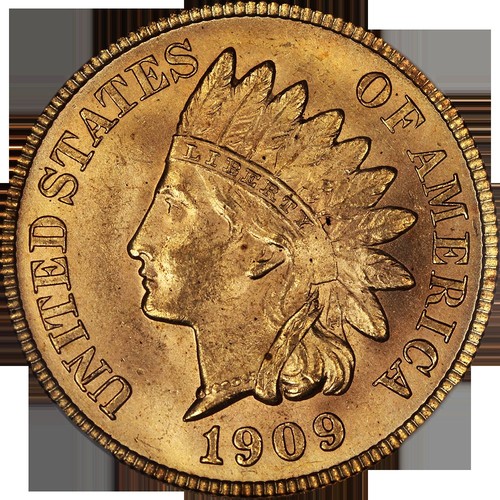
Indian Head Cent identified by the community
Real coins identified with Coin Identifier.