
Coin Encyclopedia
Search and identify coins from around the world — with country, denomination, metal, mint, history, and how to tell them apart.
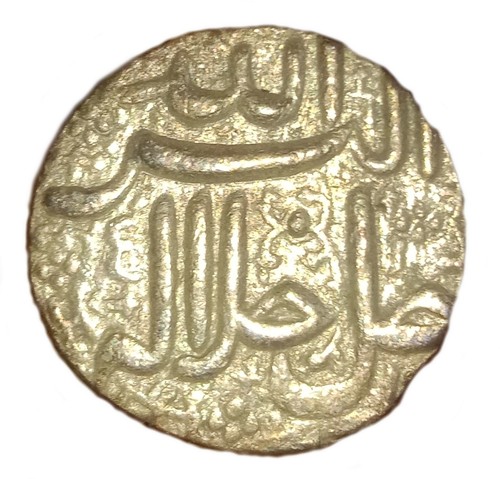
Silver Rupee of Ahmadabad
Hand-struck Mughal silver rupee of Emperor Akbar from the Ahmadabad mint in Gujarat, dated Regnal Year 47.
Mughal India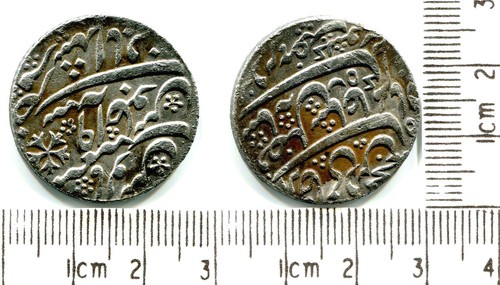
East India Company Rupee
British East India Company silver rupee struck to the Mughal pattern, carrying only Persian/Urdu calligraphy naming the reigning emperor.
British India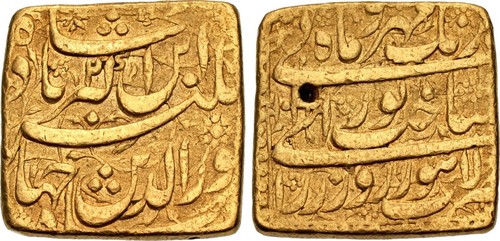
Gold Square Mohur of Jahangir
A square gold mohur of the Mughal emperor Jahangir, bearing Persian calligraphy, the Lahore mint, and regnal-year dating.
Mughal India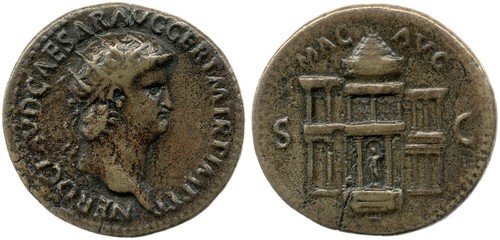
Bronze As of Nero
A Roman bronze as struck under the emperor Nero (54–68 AD), bearing his laureate portrait on the obverse and an imperial reverse type.
Ancient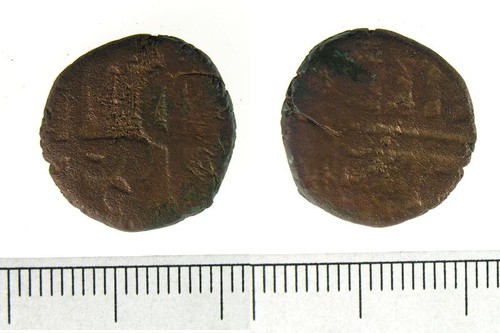
Indian Paisa
A hand-struck copper paisa from early 19th-century India, its legends worn smooth by age and circulation. A humble base-metal coin of everyday commerce.
Princely & Presidency States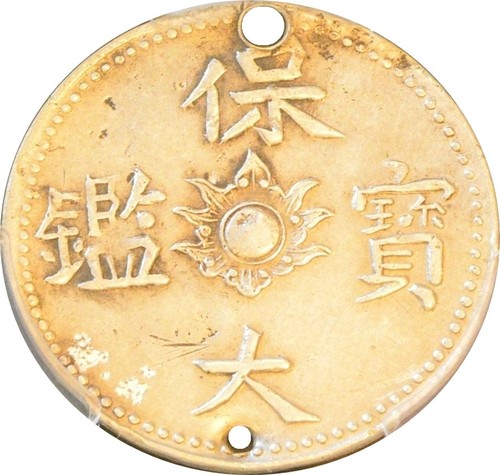
Vietnam 2 Tien - Bao Dai
A gold 2 Tien of Vietnam's last emperor, Bao Dai (1926-1945), its face bearing a radiant sun motif and Chinese-Vietnamese court inscriptions.
Southeast Asia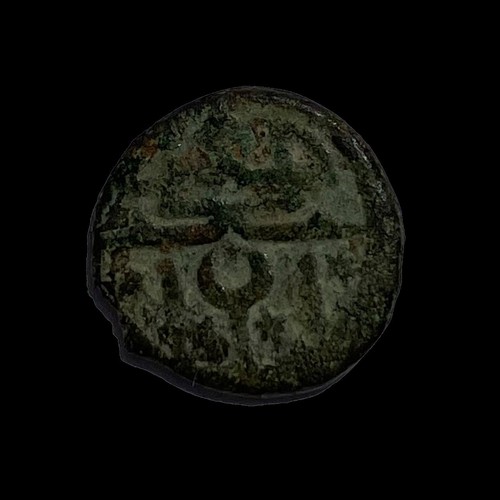
Ottoman Manghir
The manghir was the small copper coin of the Ottoman Empire, used for everyday change; this example bears a tughra and dates to the reign of Murad II.
Medieval Islamic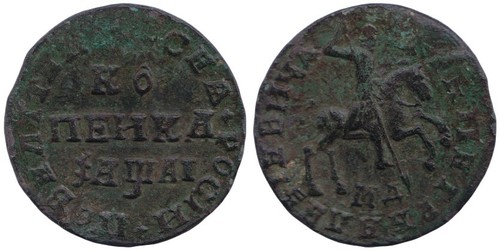
Kopek (Peter I)
An early copper kopek of Peter the Great, showing a profile of Peter I and Cyrillic legends on one side and the Russian double-headed eagle on the other.
Early Modern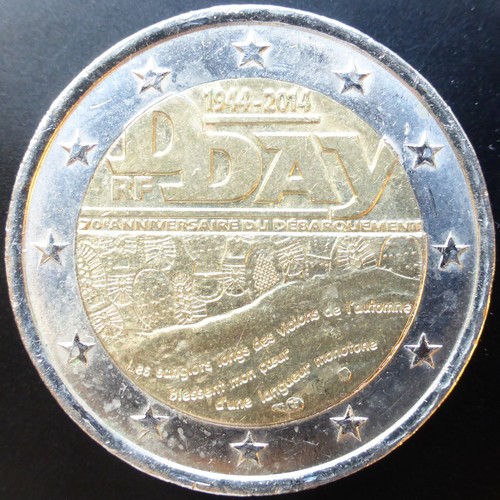
France 2 Euro D-Day Anniversary Commemorative
A 2014 French bi-metallic 2 euro commemorating the 70th anniversary of the D-Day landings, dated 1944-2014 with a ring of EU stars.
Commemorative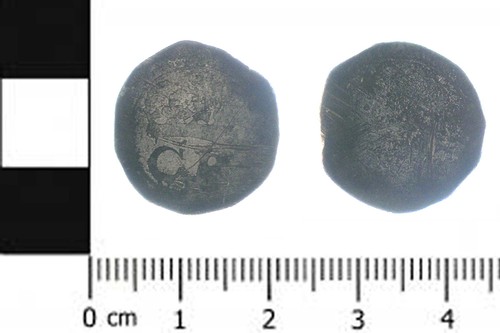
Scottish Coin (Uncertain)
A worn hammered copper-alloy Scottish coin, apparently of the reign of Charles I, showing a bearded profile and a heraldic reverse with lettering.
Hammered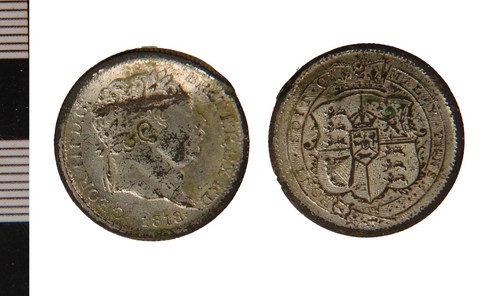
British Bank Token
Copper token of the late George III period bearing the king's left-facing bust and a quartered royal-arms reverse, dated 1819.
British Isles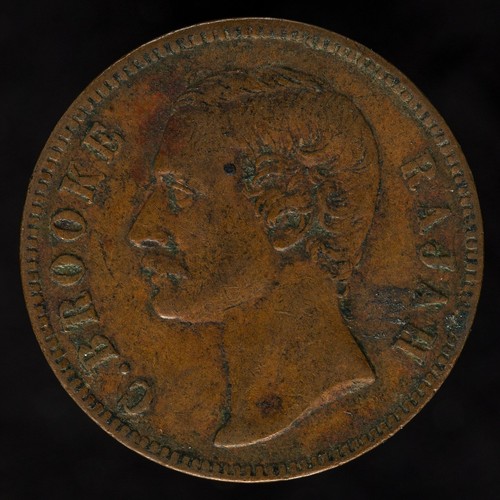
Sarawak One Cent
A large copper cent of the Brooke Rajahs of Sarawak, showing the Rajah's portrait on the obverse and SARAWAK ONE CENT with a wreath and the year 1870.
Colonial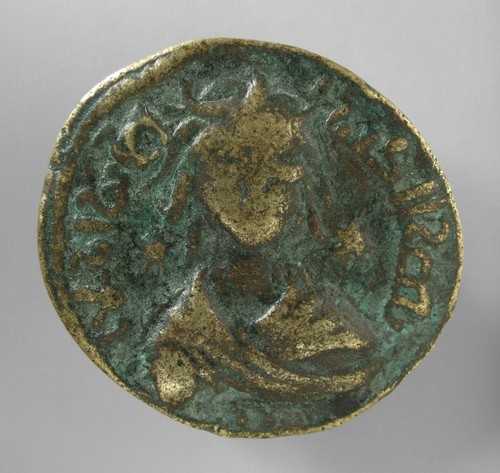
Artuqid Bronze Dirham
A 12th-century bronze coin of the Artuqid Turkmen dynasty, struck with Arabic inscriptions inside ornamental borders across eastern Anatolia.
Medieval Islamic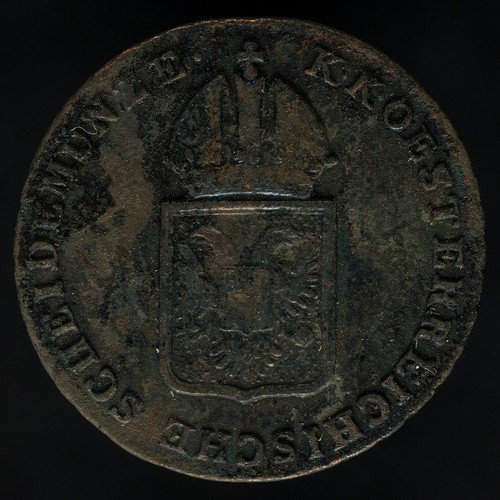
Austria-Hungary 1/4 Kreuzer
A small copper 1/4 Kreuzer of the Austrian Empire dated 1816, showing Emperor Franz I in crowned right-facing profile.
Circulation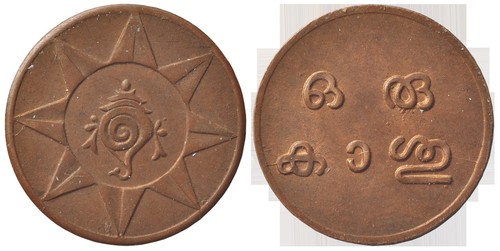
Travancore One Cash
A tiny copper coin of the princely state of Travancore, carrying the state's conch-shell emblem on one side and its cash value in local script on the other.
Princely & Presidency States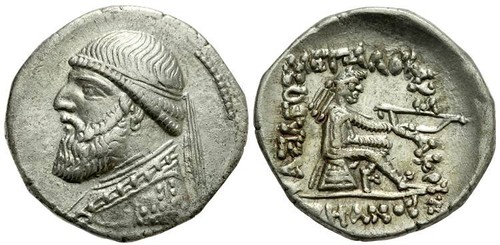
Parthian Drachm
Silver drachm of the Parthian (Arsacid) Empire, pairing a bearded royal profile with a seated archer holding a bow, struck in the era of Mithradates II.
Ancient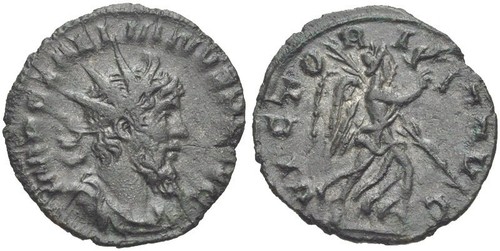
Antoninianus of Laelianus
Rare billon antoninianus of the short-lived Gallic usurper Laelianus, showing his radiate-crowned bust and a Roman deity or personified virtue.
Ancient Coins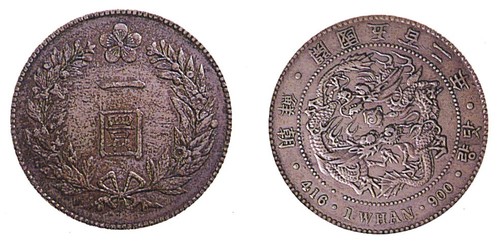
1 Hwan
A late-Joseon Korean bronze coin of one hwan, carrying a chrysanthemum-and-cartouche obverse and a traditional dragon motif with East Asian characters on the reverse.
Historic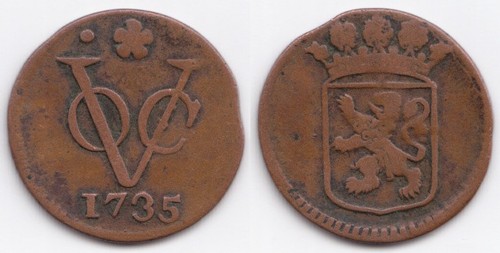
Dutch East Indies Duit
Small copper duit of the Dutch East India Company (VOC), showing the interlaced VOC monogram and a crowned provincial coat of arms, dated 1735.
Southeast Asia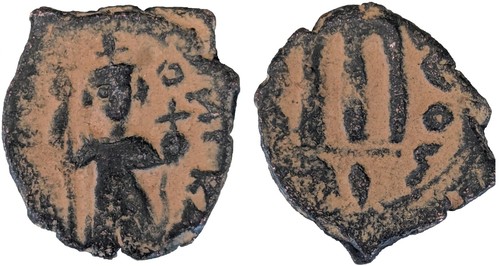
Byzantine Follis
Large bronze follis of the Byzantine Empire, this example under Constans II (from 641 AD), with an imperial portrait and a big M value mark topped by a cross.
Medieval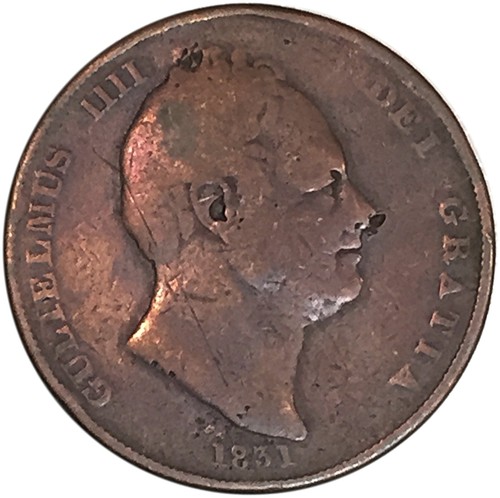
Penny of William IV
A large copper penny of King William IV, struck in the 1830s, with the king's right-facing head and the Latin legend GULIELMUS IIII D:G.
Milled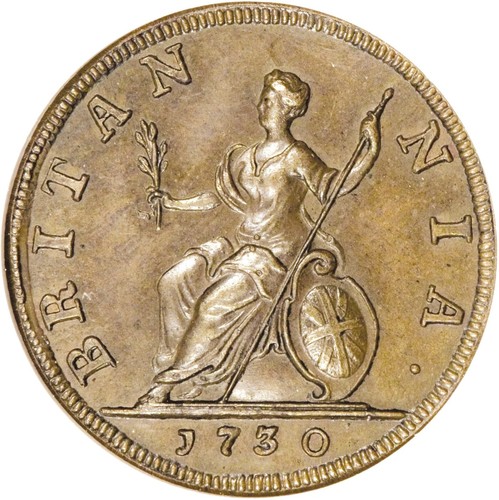
British Farthing
Small copper farthing of King George II, with his laureate bust facing left and a seated Britannia on the reverse; struck in the 1730s.
British Isles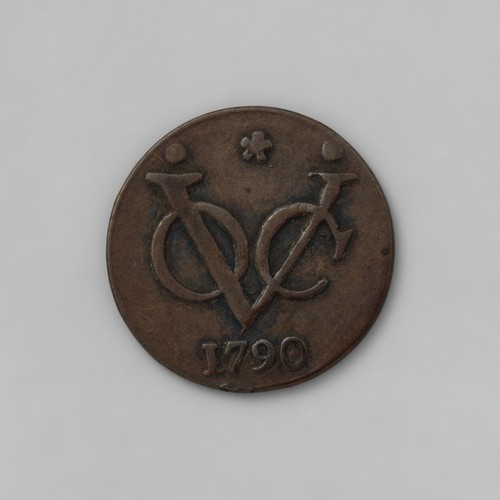
Duit (VOC)
A small copper duit struck for the Dutch East India Company (VOC), showing the crowned VOC monogram and the date 1790 on the obverse.
Early Modern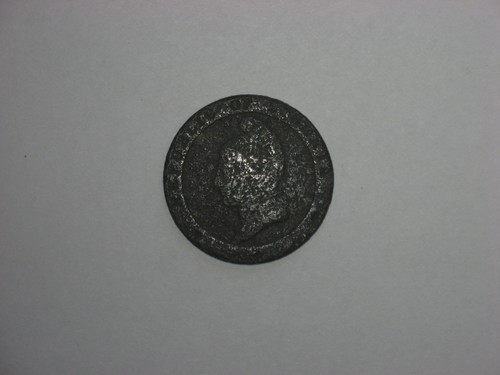
Liberia One Cent
An early copper cent tied to Liberia's founding, dated 1847, with a profile portrait obverse and warm brown patina.
World