
Coin Encyclopedia
Search and identify coins from around the world — with country, denomination, metal, mint, history, and how to tell them apart.
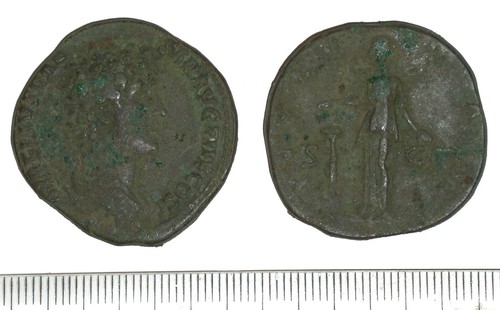
Sestertius of Marcus Aurelius
A large Roman bronze sestertius struck during the reign of Marcus Aurelius (161–180 CE), with his laureate portrait facing right and a Latin legend.
Ancient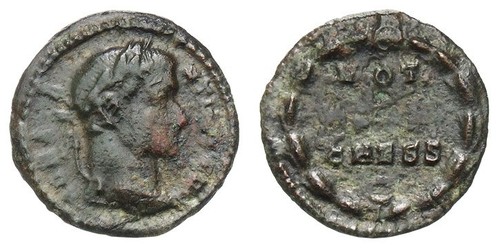
Nummus of Constantine I
Small late Roman bronze nummus (follis) of Constantine I the Great (306-337 CE), identified by his right-facing imperial portrait on the obverse.
Ancient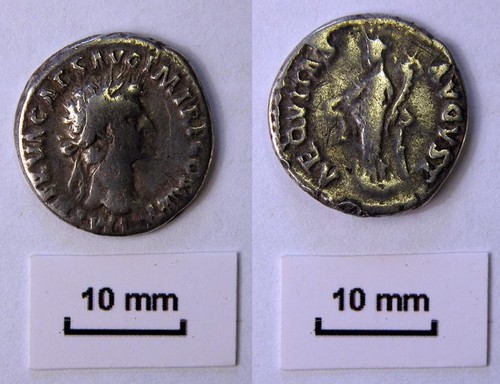
Denarius of Nerva
Roman Imperial silver denarius of Emperor Nerva (96-98 AD), with his laureate portrait and the legend IMP NERVA CAES AVG, and a seated Concordia reverse.
Ancient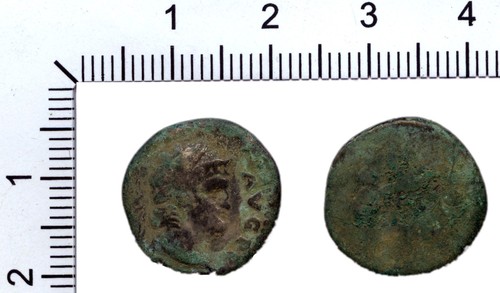
Denarius of Nero
Silver denarius of the emperor Nero (AD 54-68), the last Julio-Claudian ruler, shown with a laureate portrait and a military-standards reverse.
Ancient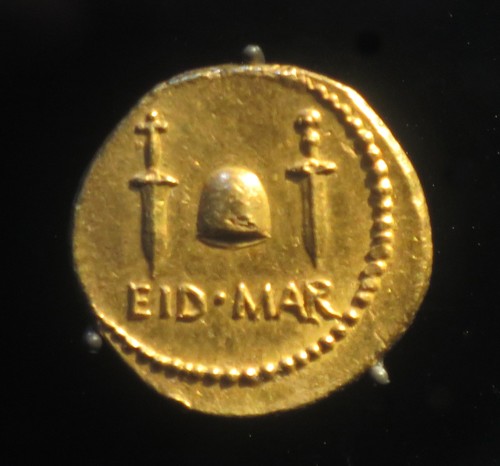
Brutus Aureus
The gold aureus of Marcus Junius Brutus, struck 42 BC, whose reverse celebrates Caesar's assassination with EID MAR, a cap of liberty, and two daggers.
Ancient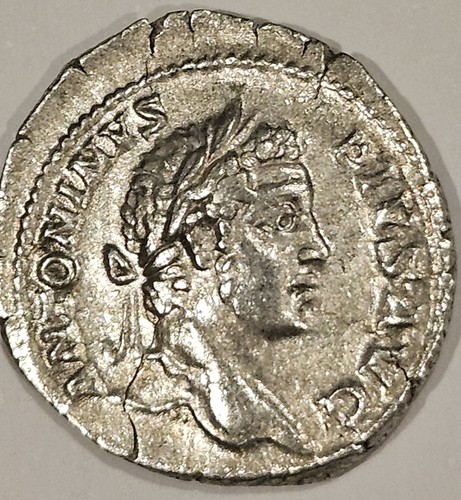
Denarius of Caracalla
A silver denarius of the Roman emperor Caracalla, struck 198–217 CE, showing his laureate right-facing bust and a Latin legend encircling the design.
Ancient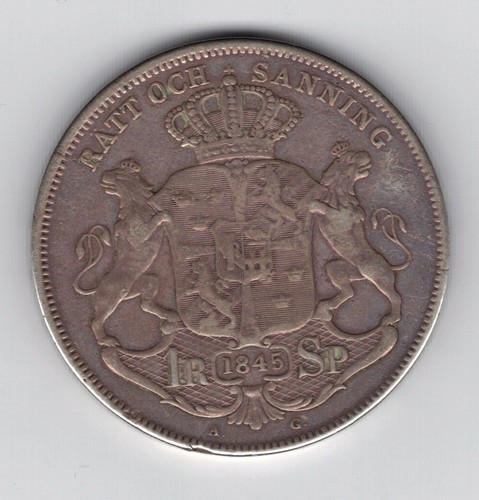
1 Riksdaler Specie
Large silver Riksdaler Specie of Sweden under King Oscar I, dated 1845, bearing his right-facing portrait, royal motto, and the Swedish coat of arms.
Modern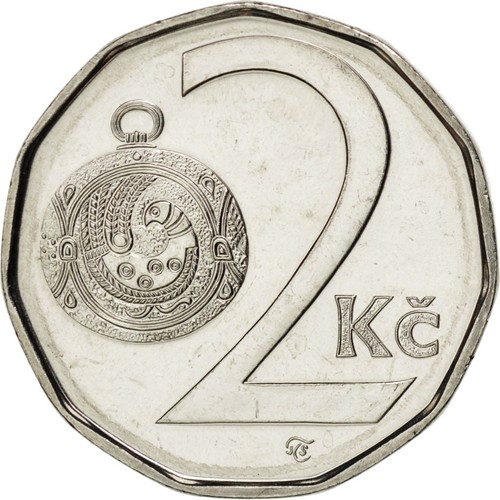
2 Koruny
A circulating Czech Republic coin introduced in 1993, known by its eleven-sided shape, the Czech heraldic lion, and a Great Moravian jewel motif beside 2 Kč.
Modern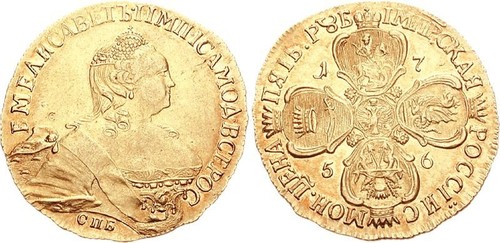
5 Roubles (Alexander III)
An Imperial Russian gold 5 Roubles of Alexander III, showing the tsar's bearded profile and the crowned double-headed eagle, struck in the late 1880s.
Modern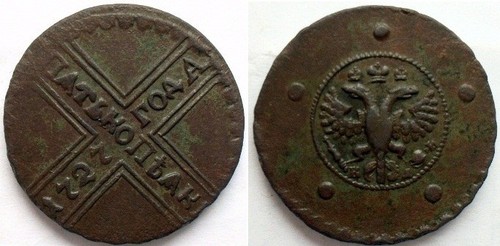
5 Kopecks (Catherine II)
Large copper 5 Kopecks of Catherine the Great, dated 1790 with the EM mint mark, showing a crowned monogram and the imperial double-headed eagle.
Early Modern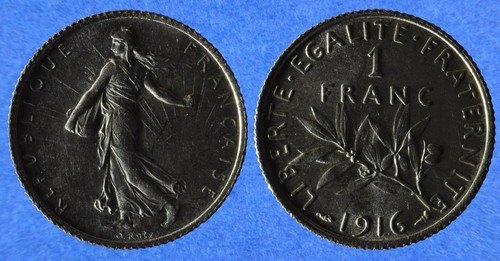
French Semeuse 1 Franc
France's classic silver 1 franc showing the Semeuse (Sower) with a liberty cap, backed by an oak-and-olive wreath around the value; this example is dated 1916.
Circulation
English Shilling
English silver shilling of William III, showing his right-facing laureate bust and a crowned cruciform-shield reverse; this example is dated 1692.
World Coin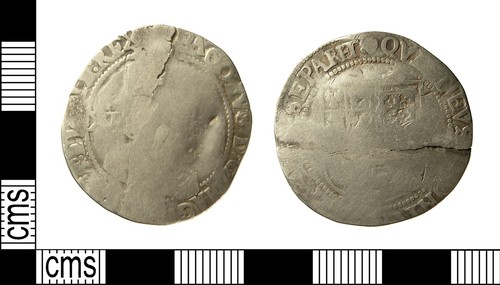
Shilling of James I
Hammered silver shilling of King James I, showing his crowned left-facing bust and a quartered heraldic shield of England, Scotland, Ireland and France.
World Coins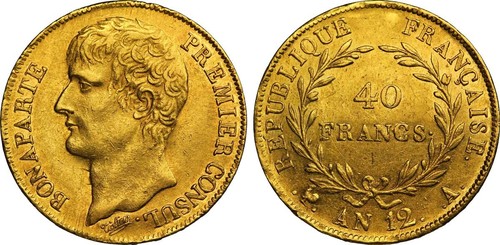
40 Francs Napoleon
A large early French gold 40 francs of Napoleon's Consulate, with the bare-headed BONAPARTE PREMIER CONSUL bust and a laurel-framed 40 FRANCS reverse dated 1804.
Bullion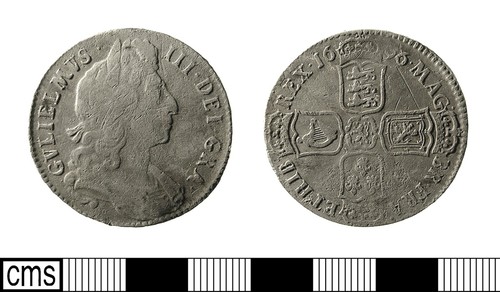
Halfcrown of William III
A silver two-shilling-and-sixpence coin of William III showing his laureate profile facing right and crowned cruciform shields of arms, dated 1696.
Milled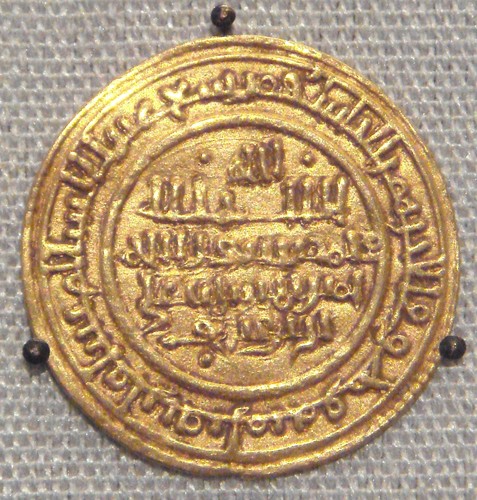
Almoravid Gold Dinar
Pure-gold dinar of the Almoravid dynasty, struck in Islamic Spain and North Africa with concentric Arabic legends; this piece is dated 1116 CE.
Medieval Islamic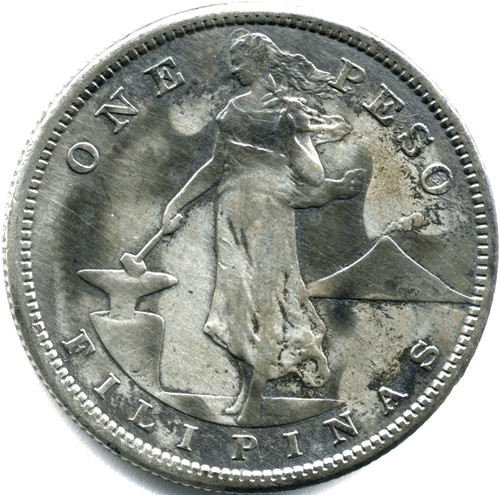
Philippines One Peso
A silver peso struck for the U.S.-administered Philippine Islands, with a standing Liberty and torch and an eagle-over-shield reverse naming the United States.
Southeast Asia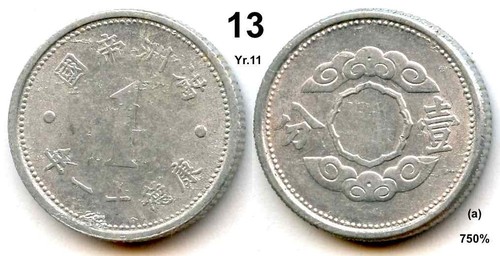
Manchukuo 1 Fen
A small bronze 1 fen from Manchukuo, dated 1944, with a large numeral 1 and Chinese inscriptions on one side and an ornamental circular design on the other.
Circulation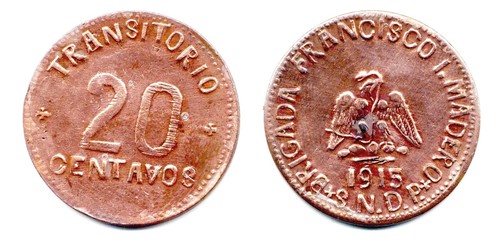
Chiconcuautla 20 Centavos
A 1915 copper 20 centavos struck as a local Revolutionary-era issue at Chiconcuautla, with a numeral 20 on one side and the Mexican national eagle on the other.
Revolutionary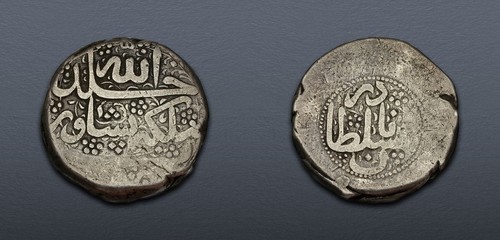
Double Rupi
A large Afsharid silver coin of Nader Shah, the double rupi, dated AH 1151 and covered in flowing Persian calligraphy and ornamental scrollwork.
Historic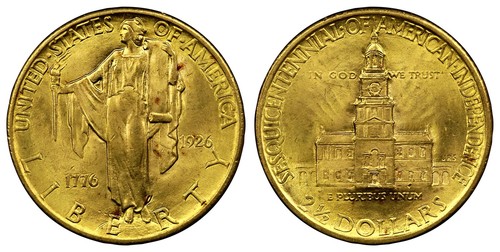
Sesquicentennial of American Independence Quarter Eagle
A 1926 U.S. commemorative $2.50 gold coin marking 150 years of American independence, with Liberty holding a torch and scroll and Independence Hall on the reverse.
Classic Commemorative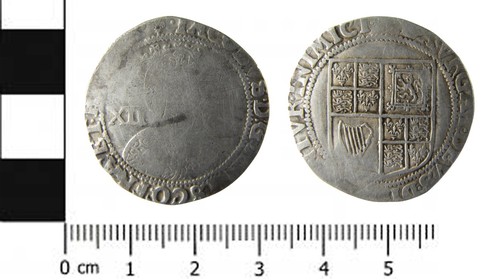
Shilling of Charles I
A hammered silver English shilling of King Charles I, showing his crowned left-facing profile with the value mark XII and a quartered royal shield.
World Coins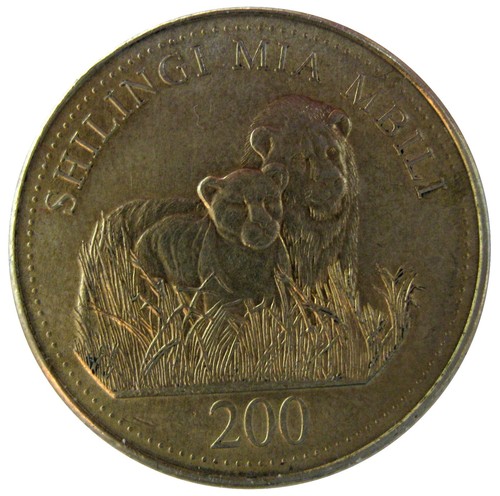
Tanzania 200 Shillings
A golden-brass circulating coin of the United Republic of Tanzania, showing a large African animal in grass with a bold 200 and a Swahili shilling legend.
World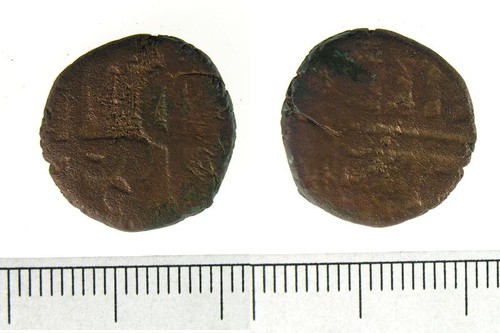
Indian Paisa
A hand-struck copper paisa from early 19th-century India, its legends worn smooth by age and circulation. A humble base-metal coin of everyday commerce.
Princely & Presidency States