
Eisenhower Dollar
Large U.S. dollar coin struck 1971–1978 with Eisenhower's profile and an eagle landing on the Moon, most circulation issues in copper-nickel clad.
- Country
- United States
- Denomination
- 1 dollar
- Metal
- Copper-nickel clad
Got a coin like this?
Identify any coin from a photo, free.
Overview
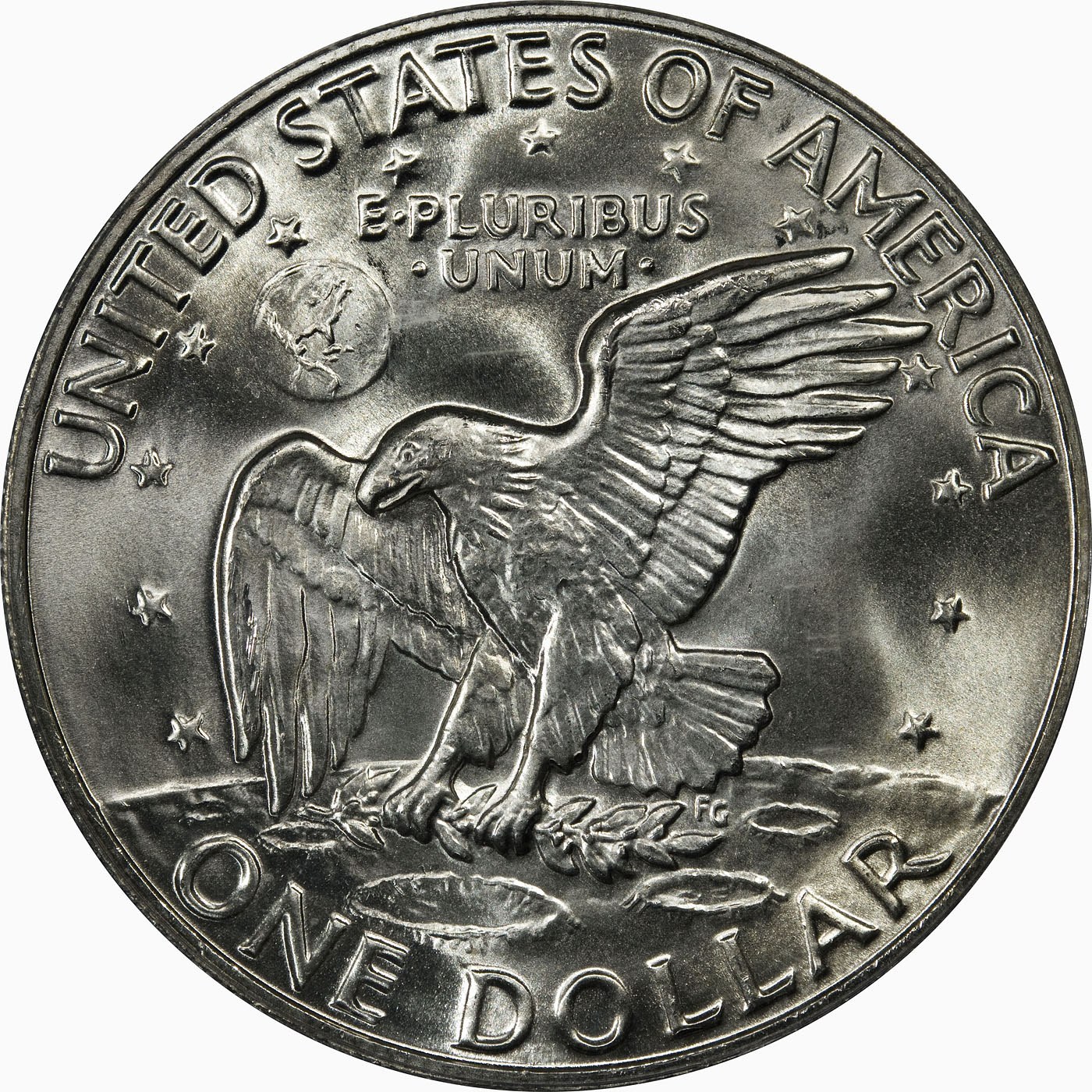
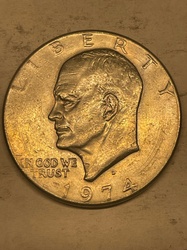
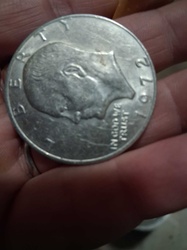
The Eisenhower Dollar is a large United States one-dollar coin struck from 1971 through 1978, named for President Dwight D. Eisenhower, whose left-facing profile appears on the obverse alongside LIBERTY and IN GOD WE TRUST. The reverse shows an eagle descending toward the Moon carrying an olive branch, encircled by E PLURIBUS UNUM — a design adapted from the Apollo 11 mission insignia. The example shown here is dated 1974.
Most Eisenhower Dollars made for circulation, including this one, were struck in copper-nickel clad: outer layers of 75% copper and 25% nickel bonded to a pure copper core. The coin is physically imposing at about 38.1 mm across and roughly 22.7 grams, with a reeded edge. Special collector versions were also produced in a 40% silver-clad composition, but the everyday circulating coins carry no silver.
History & Background
President Eisenhower died in March 1969, and later that year the same Apollo 11 crew returned from the first Moon landing. Congress authorized a new dollar coin to honor both the president and the lunar mission, and Chief Engraver Frank Gasparro created the design: Eisenhower's portrait on the obverse and, on the reverse, an eagle alighting on the Moon after the Apollo 11 emblem. Production began in 1971, making it the first circulating U.S. dollar coin struck since the Peace Dollar series ended in 1935.
The series ran from 1971 to 1978 at the Philadelphia, Denver, and San Francisco mints. In 1975 and 1976 the reverse was temporarily changed to a Liberty Bell superimposed on the Moon for the United States Bicentennial, with those coins dual-dated 1776–1976; the eagle-on-the-Moon reverse seen here belongs to the standard non-Bicentennial years such as 1974. The large, heavy coin proved unpopular for everyday use, and it was replaced in 1979 by the much smaller Susan B. Anthony Dollar.
How to Identify
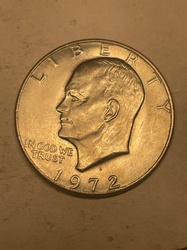
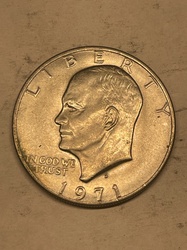
The obverse is the fastest confirmation: a bare left-facing profile of Dwight D. Eisenhower, with LIBERTY arching above and IN GOD WE TRUST in small letters to the left of the neck. The date appears below the truncation of the bust; on this coin it reads 1974.
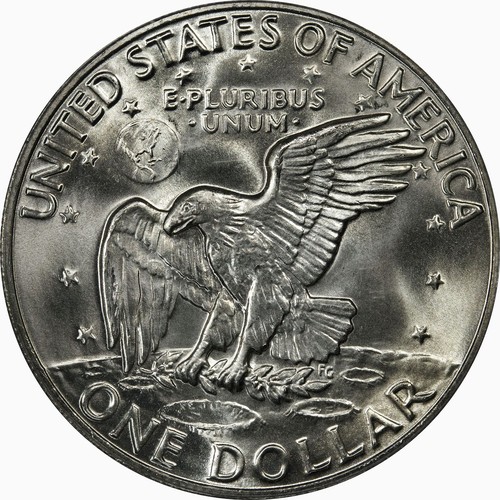
The reverse shows a stylized eagle, wings raised, landing on the cratered surface of the Moon and clutching an olive branch, with a small Earth in the background and thirteen stars above. E PLURIBUS UNUM and UNITED STATES OF AMERICA encircle the design, with ONE DOLLAR at the bottom. This eagle-on-the-Moon reverse identifies a standard-issue Ike Dollar and separates it from the 1776–1976 Bicentennial coins, which instead show a Liberty Bell over the Moon.
Physically the coin is large — about 38.1 mm in diameter, roughly 22.7 grams, with a reeded edge. The mint mark, when present, sits on the obverse just above the date: D for Denver or S for San Francisco, while Philadelphia coins carry no mint mark. A circulating copper-nickel clad example shows a plain copper stripe along its edge; 40% silver collector versions (struck only at San Francisco) look slightly brighter and were sold in special packaging rather than released into change.
Value & Collectibility
Most circulated Eisenhower Dollars are extremely common and trade at or only a little above face value, since they were struck in copper-nickel clad with no precious-metal content. Well-preserved uncirculated examples, sharply struck coins, and certain scarcer date-and-mint combinations bring modest premiums, and top-grade certified pieces can be worth substantially more to specialists.
The 40% silver-clad versions — sold by the Mint in blue envelopes (uncirculated) or brown boxes (proof) — carry silver value and generally sell for more than the clad coins. Values depend on date, mint mark, finish, and condition, so treat these as general context rather than fixed prices; check recent sales for your specific coin. Because the eagle-and-Moon reverse of a 1974-type coin is not silver, its worth rests mainly on grade and eye appeal rather than metal.
Frequently asked questions
Is a 1974 Eisenhower Dollar made of silver?
Not the circulating version. Standard 1974 Eisenhower Dollars, like the one shown, are copper-nickel clad with no silver. Only special 40% silver-clad collector coins struck at San Francisco contain silver.
What is on the back of the Eisenhower Dollar?
An eagle landing on the Moon while holding an olive branch, adapted from the Apollo 11 mission insignia, with E PLURIBUS UNUM around it. Bicentennial 1776–1976 coins instead show a Liberty Bell over the Moon.
Where is the mint mark on an Eisenhower Dollar?
On the obverse, just above the date. D means Denver and S means San Francisco; no mint mark means the coin was struck in Philadelphia.
Why is the Eisenhower Dollar so large?
It was designed as a full-size dollar coin, about 38 mm across and roughly 22.7 grams, in the tradition of earlier silver dollars. Its size and weight made it awkward for daily use, and it was later replaced by the smaller Susan B. Anthony Dollar.
Is my Eisenhower Dollar worth more than a dollar?
Often only a little. Most circulated clad examples are worth about face value. Uncirculated coins, silver-clad versions, and high-grade or scarcer dates can bring premiums, so condition and composition matter most.
Eisenhower Dollar guides
In-depth guides for identifying, valuing, and collecting Eisenhower Dollar.
Eisenhower Dollar identified by the community
Real coins identified with Coin Identifier.
Other coins you may enjoy
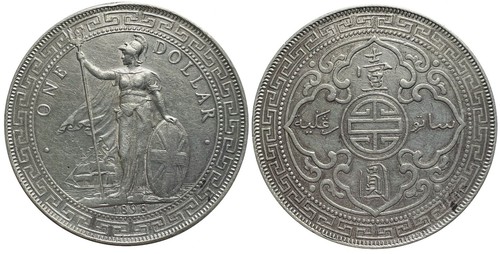
British Trade Dollar
1895–1935
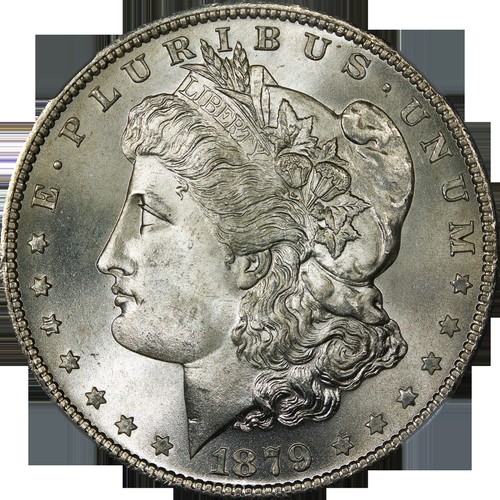
Morgan Dollar
1878–1904, 1921
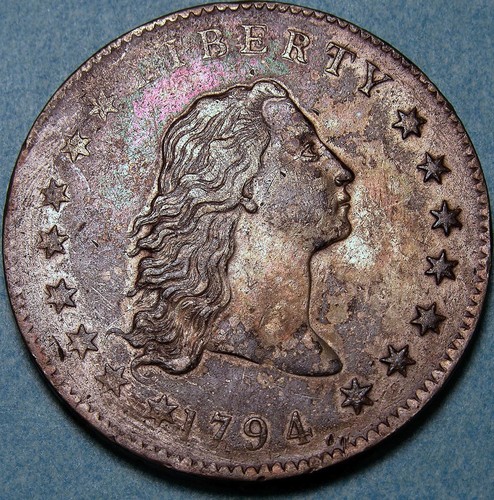
Flowing Hair Dollar
1794–1795
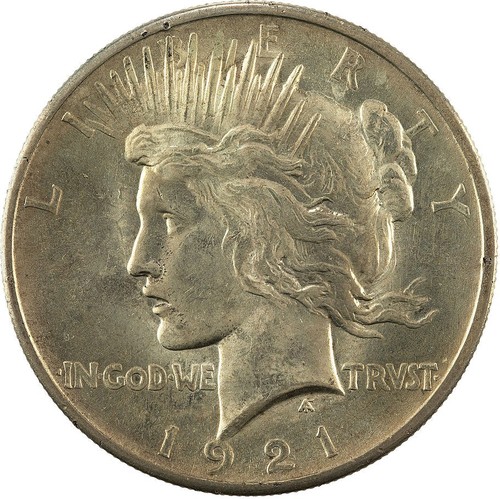
Peace Dollar
1921–1928, 1934–1935
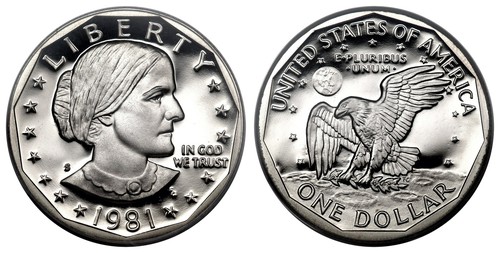
Susan B. Anthony Dollar
1979–1981, 1999
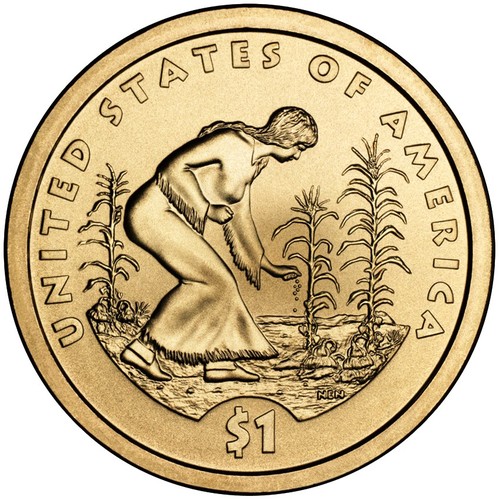
Native American Dollar
2009–present
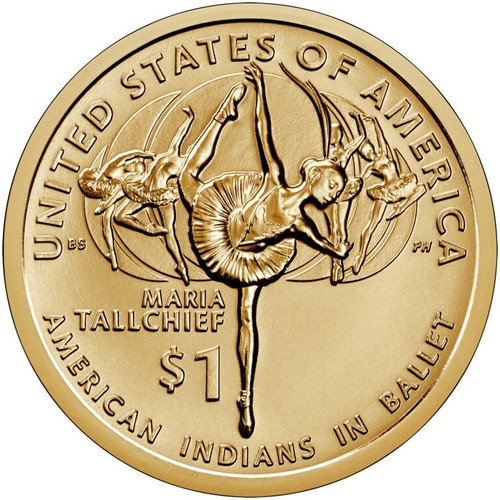
Native American Dollar - Tallchief
2023
Gobrecht Dollar
1836
Franklin Pierce Presidential Dollar
2010
Seated Liberty Dollar
1840-1873
Sacagawea Dollar
2000–2008
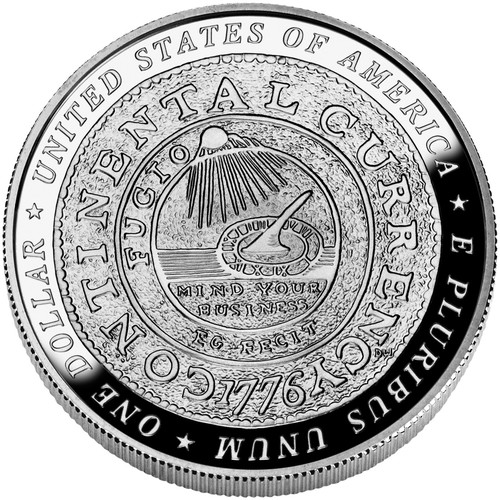
Benjamin Franklin Founding Father Commemorative Silver Dollar
2006