How to Identify the Eisenhower Dollar
A collector's walkthrough for confirming an Eisenhower Dollar: the Ike profile, the eagle-on-the-Moon reverse, size and metal, mint marks, and silver vs. clad.
Read the full Eisenhower Dollar encyclopedia entry →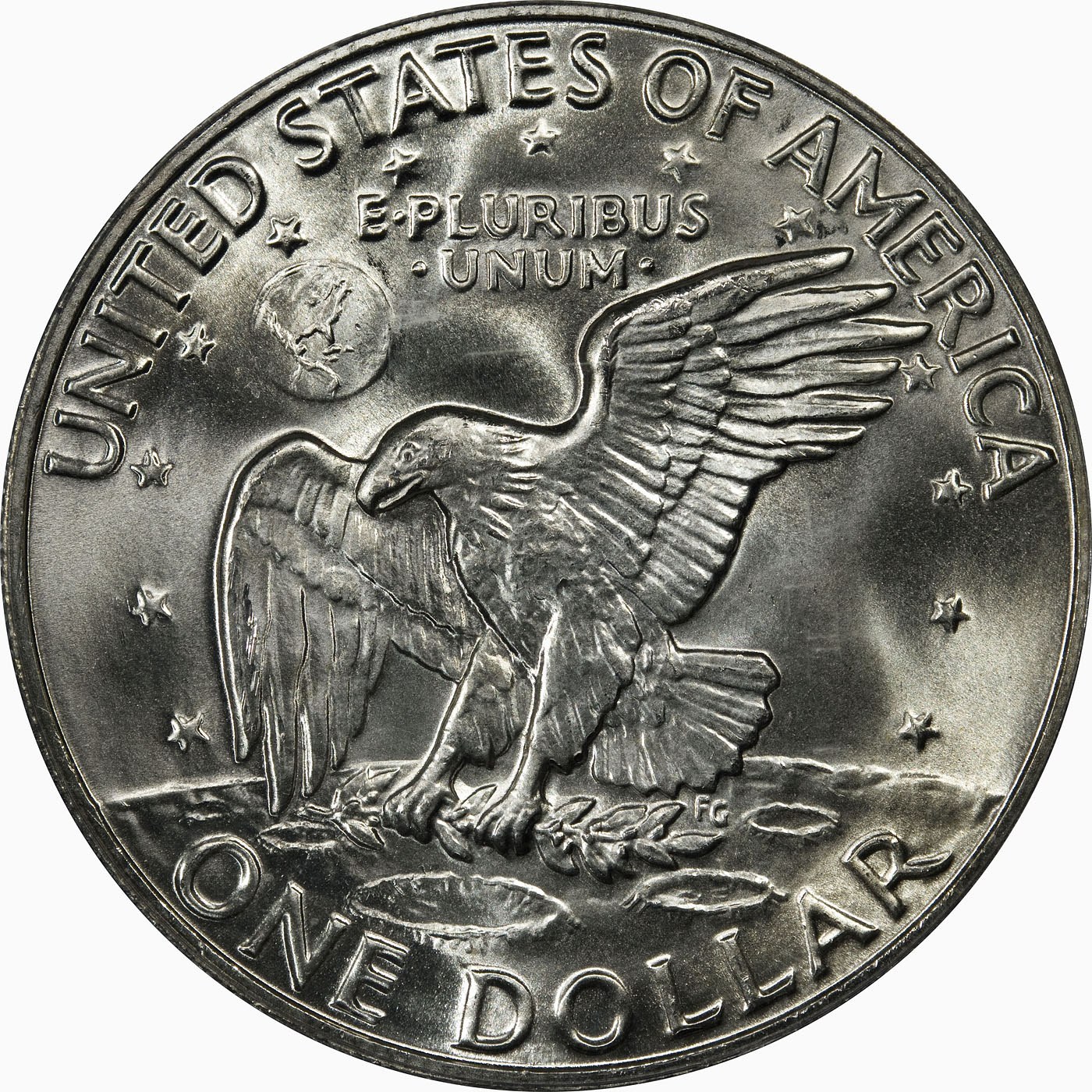
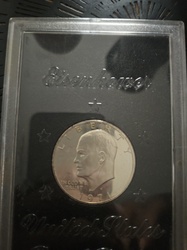
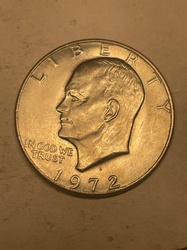
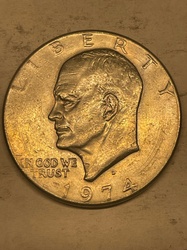
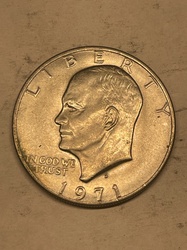
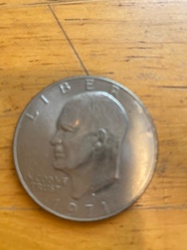
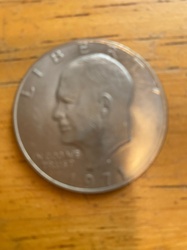
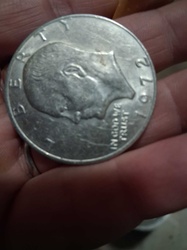
Begin with the obverse. An Eisenhower Dollar shows a bare left-facing profile of Dwight D. Eisenhower, with LIBERTY curving across the top and IN GOD WE TRUST in small letters in front of the neck. The date sits below the bust; a standard example like the one here reads 1974. That presidential profile is the quickest way to confirm the type.
Turn the coin over and read the reverse carefully, because it tells you which kind of Ike Dollar you have. The standard reverse — used in 1971–1974 and 1977–1978 — shows an eagle with raised wings landing on the cratered Moon, gripping an olive branch, with a small Earth behind it and E PLURIBUS UNUM around the rim. If instead you see a Liberty Bell superimposed on the Moon, you have a 1776–1976 Bicentennial coin, a different reverse. The eagle-on-the-Moon design is the non-Bicentennial issue.
Check size and metal next. The Eisenhower Dollar is large: about 38.1 mm across (roughly the size of the old silver dollars) and near 22.7 grams, with a reeded edge. Look at that edge closely. A circulating copper-nickel clad coin shows a distinct copper-colored stripe sandwiched between silver-gray faces; a 40% silver-clad collector coin has a more uniform, brighter edge. This edge view is one of the most reliable ways to tell clad from silver-clad.
Locate the mint mark on the obverse, just above the date. D is Denver, S is San Francisco, and no mint mark means Philadelphia. The S-mint coins are generally the collector proofs and silver-clad issues, so an S mark is a cue to check whether you have a special version rather than a circulation strike. Because most Eisenhower Dollars are common, the main authentication caution is simply matching composition to expectation: only San Francisco silver-clad coins contain silver, so be skeptical of any seller claiming a plain 1974 D or no-mint-mark coin is silver. For high-value or purportedly rare varieties, a reputable grading service can confirm both the strike and the metal.
Frequently asked questions
How do I tell a Bicentennial Ike Dollar from a regular one?
Look at the reverse and the date. A regular Eisenhower Dollar has an eagle landing on the Moon and a single date like 1974. The Bicentennial coin is dual-dated 1776–1976 and shows a Liberty Bell over the Moon instead of the eagle.
How can I tell if my Eisenhower Dollar is silver or clad?
Check the edge. A copper-nickel clad coin shows a copper stripe between two silver-gray layers. A 40% silver-clad coin (struck only at San Francisco and sold in special packaging) looks brighter and more uniform along the edge.
My coin has no mint mark — what does that mean?
It was struck at the Philadelphia Mint. Denver coins show a D and San Francisco coins show an S, both located on the obverse just above the date.
Should I clean my Eisenhower Dollar before identifying it?
No. Cleaning scratches the surface and lowers collector value. Identify the coin as-is by its design, size, edge, and mint mark, and let a professional service authenticate anything you think is scarce or silver.
Eisenhower Dollar identified by the community
Recent Eisenhower Dollar coins identified with Coin Identifier.