
Coin Encyclopedia
Search and identify coins from around the world — with country, denomination, metal, mint, history, and how to tell them apart.
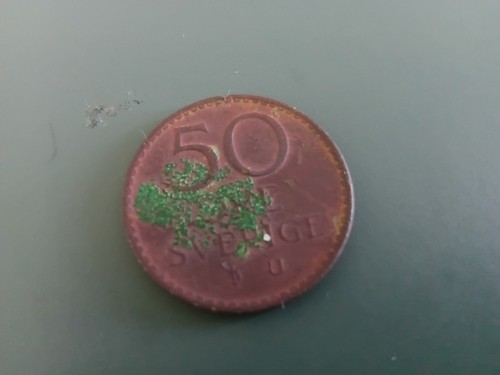
50 Öre (Silver)
A small Swedish silver 50 ore of the Oscar II era, dated 1898, with the value and date in a laurel wreath on one side and the crowned Swedish arms on the other.
Modern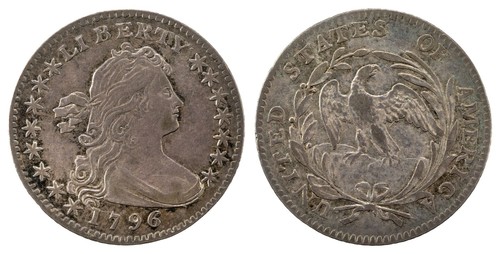
Draped Bust Half Dime
An early U.S. silver five-cent piece showing a draped bust of Liberty ringed by stars; the tiny half dime was struck 1796–1805.
Half Dime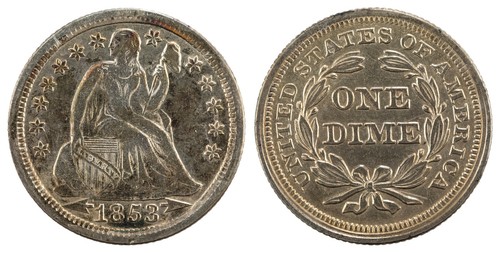
Seated Liberty Dime with Arrows
A silver Seated Liberty dime with small arrows flanking the date, marking the 1853 weight reduction; struck 1853–1855, with the pictured coin dated 1853.
Dime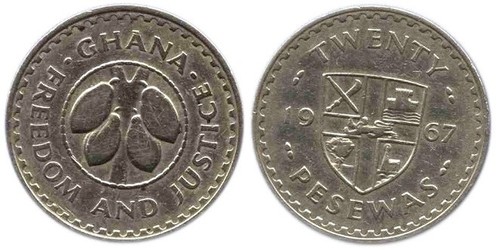
Ghana 20 Pesewas
A one-year 1967 Ghanaian coin bearing a national eagle and the motto FREEDOM AND JUSTICE, with the country's coat-of-arms shield on the reverse.
World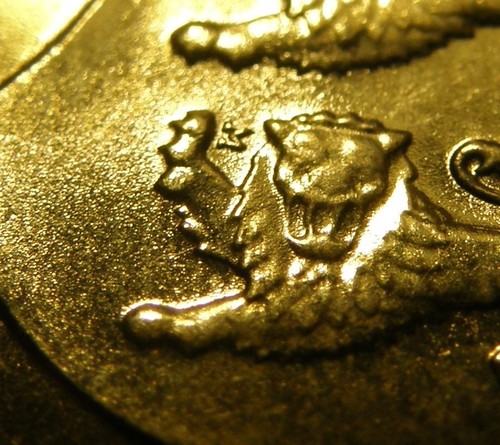
5 Krooni
A silver 5 krooni of the Republic of Estonia dated 1993, carrying the national coat of arms with its three heraldic lions.
Modern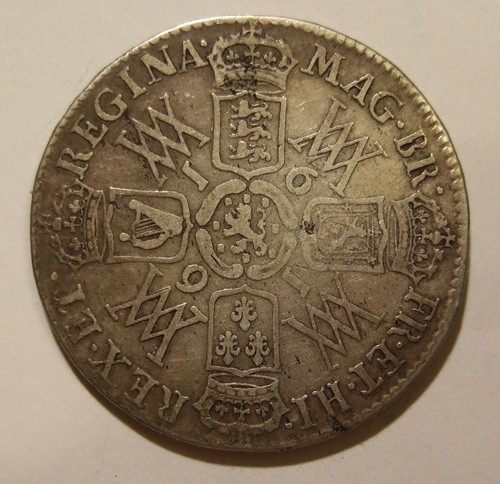
Half Crown of William III and Mary II
A milled silver half crown of the joint reign of William III and Mary II, showing their conjoined busts and a crowned heraldic shield, dated 1691.
Milled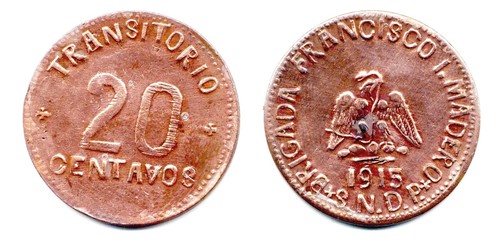
Chiconcuautla 20 Centavos
A 1915 copper 20 centavos struck as a local Revolutionary-era issue at Chiconcuautla, with a numeral 20 on one side and the Mexican national eagle on the other.
Revolutionary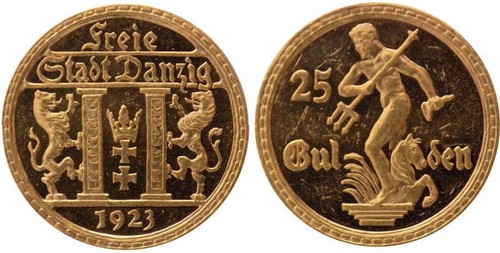
25 Gulden
The gold 25 Gulden of the Free City of Danzig, dated 1923, pairing the lion-supported Danzig arms with an armed female figure holding a trident.
Modern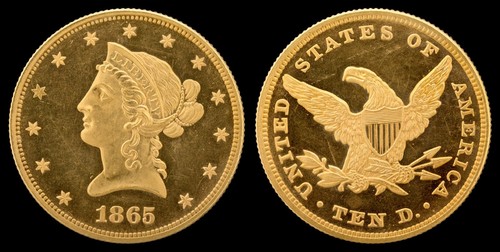
Liberty Head Eagle
A United States $10 gold coin struck 1838-1907, with Christian Gobrecht's coronet-crowned Liberty head and a shielded eagle. The example shown is dated 1839.
Eagle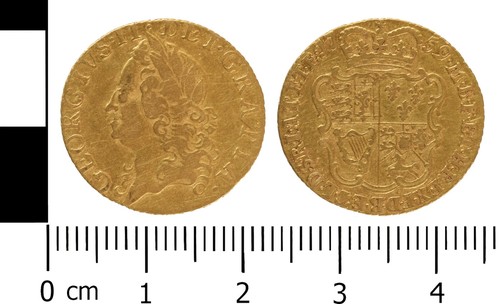
Half Guinea of George II
A small British gold coin of the reign of George II, worth half a guinea, with the king's left-facing bust and a crowned heraldic shield reverse.
Milled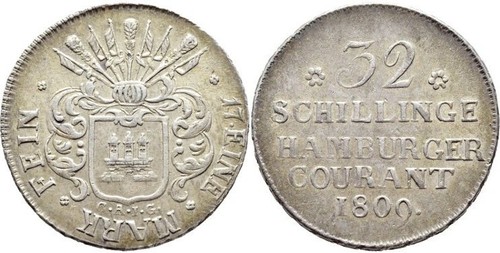
Hamburg 32 Schilling
A 1800 silver 32 Schilling of the Free City of Hamburg, with the city coat of arms and a 'HAMBURGER COURANT' reverse.
German States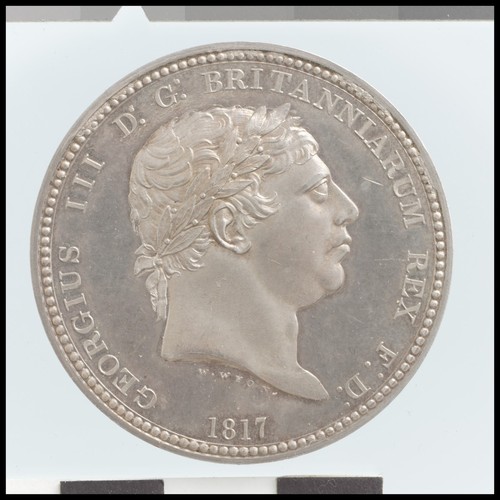
Three Graces Pattern Crown
A celebrated 1817 silver pattern crown of George III, engraved by William Wyon and never issued for circulation — a prized masterpiece of British coinage.
Pattern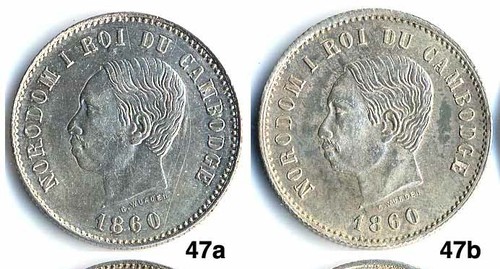
Cambodia Two Francs
A crown-sized Cambodian Two Francs of King Norodom I, its obverse a royal profile and DEUX FRANCS reverse over a crowned coat of arms; dated 1860 but long restruck.
Southeast Asia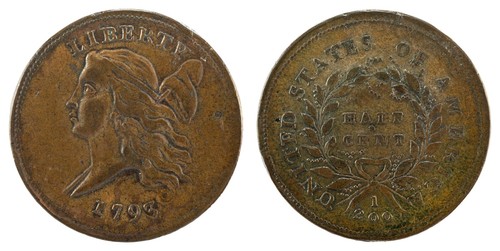
Liberty Cap Half Cent
The first U.S. half cent, struck only in 1793, showing Liberty in a cap facing left with a wreath reverse. A famous one-year copper key date.
Half Cent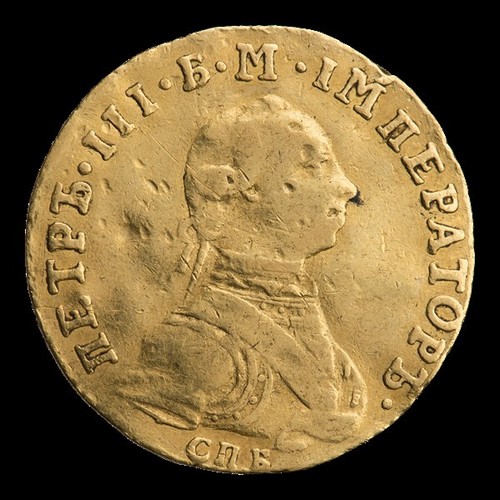
Imperial Chervonets
A small imperial Russian gold chervonets bearing the right-facing bust of Peter III with regalia and the crowned double-headed eagle, dated 1762.
Early Modern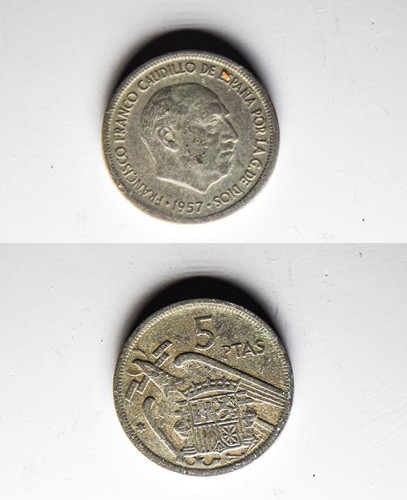
25 Pesetas (Franco)
Spain's common Franco-era 25 pesetas, a silvery copper-nickel coin bearing the national coat of arms and the value 25; dated 1957 but struck into the 1970s.
Modern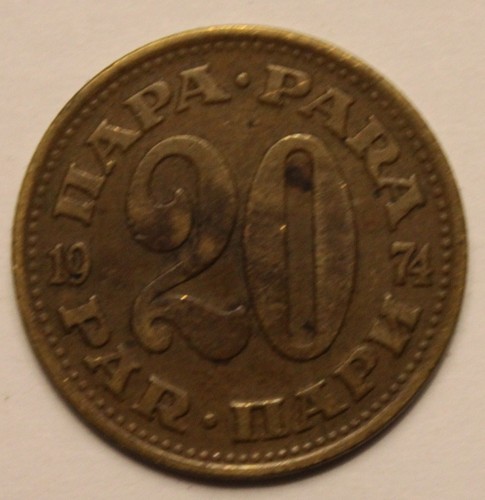
20 Para
A small base-metal coin of socialist Yugoslavia, showing the value 20 with the date 1974 on one side and the six-flame Yugoslav state emblem on the other.
Modern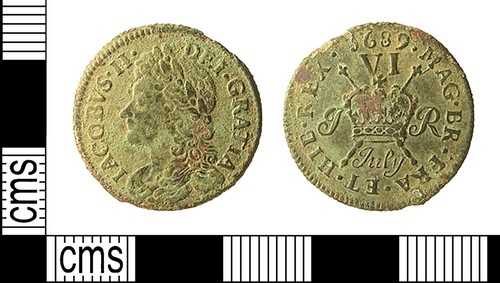
Irish Gun Money Sixpence
A base-metal emergency sixpence struck for James II in Ireland during the Williamite War, its brass alloy cast from melted guns, bells, and scrap.
Emergency Coinage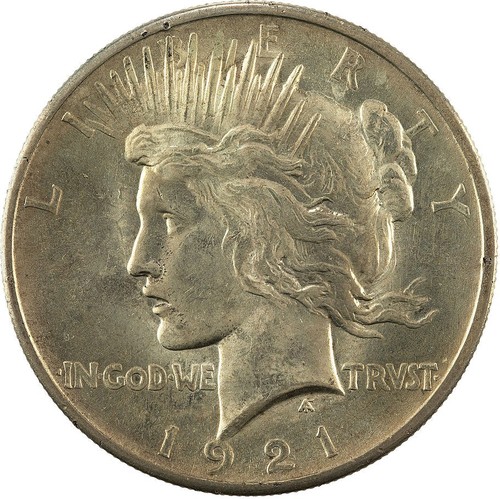
Peace Dollar
U.S. 90% silver dollar first struck in 1921, with a radiant-crowned Liberty head and a perched eagle over the word PEACE.
Dollar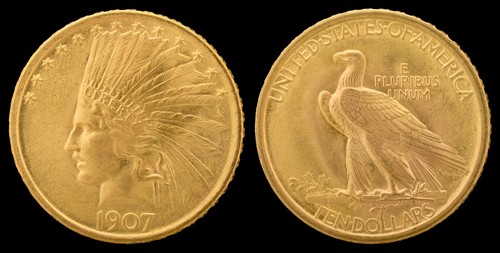
Indian Head Eagle
U.S. $10 gold eagle struck 1907–1933, designed by Augustus Saint-Gaudens, with a feathered-headdress Liberty and a standing eagle reverse.
Eagle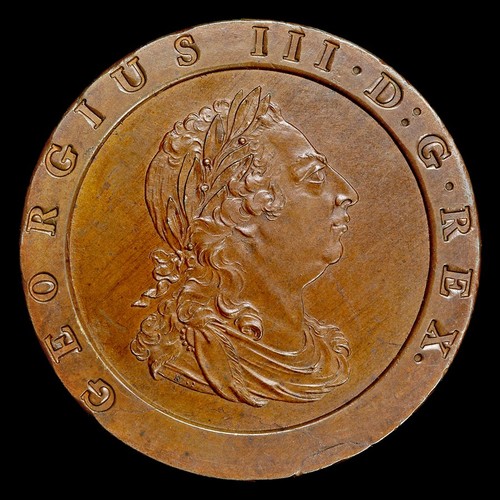
Cartwheel Twopence
The massive 1797 copper twopence of George III, famous for its broad raised rim and full ounce of copper, struck at Boulton's Soho Mint.
Milled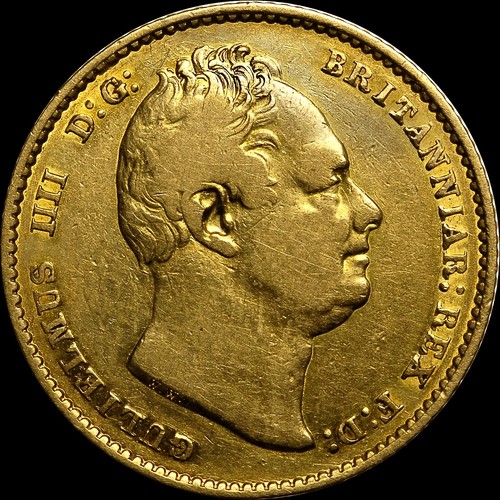
Sovereign of William IV
A 22-carat gold sovereign of William IV, with the king's bare head facing right and a crowned royal shield of arms on the reverse.
Milled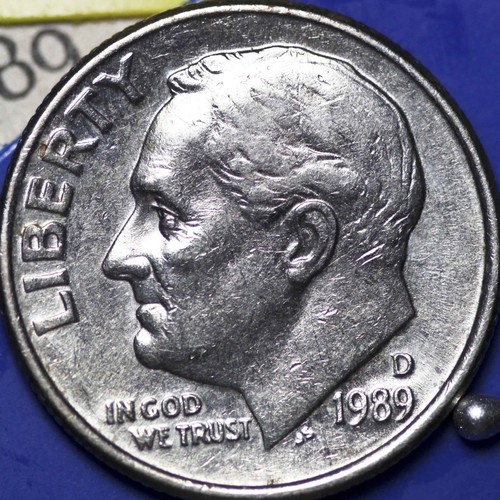
Roosevelt Dime
The circulating U.S. ten-cent coin honoring Franklin D. Roosevelt, shown here as a 1965 copper-nickel clad issue with a torch, olive, and oak reverse.
Dime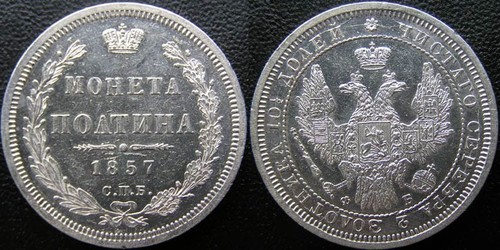
Poltina (½ Rouble)
Silver half-rouble of Imperial Russia dated 1857, marked ПОЛТИНА on one side and bearing the crowned double-headed eagle of the Romanov empire.
Modern