
Coin Encyclopedia
Search and identify coins from around the world — with country, denomination, metal, mint, history, and how to tell them apart.
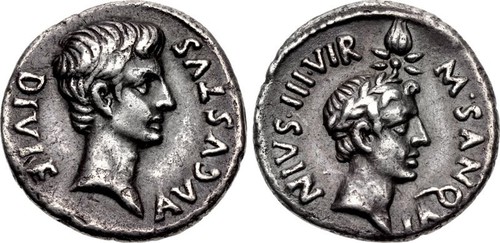
Denarius of Octavian and Caesar
A Roman Imperatorial silver denarius pairing the young Octavian with his adoptive father Julius Caesar, struck around 43–42 BC.
Ancient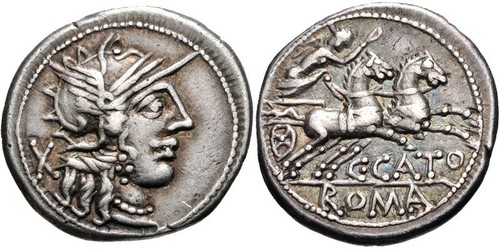
Denarius of C. Cato
Silver Roman Republican denarius struck at Rome in 123 BC by the moneyer C. Cato, with a helmeted head of Roma and Victory driving a chariot.
Ancient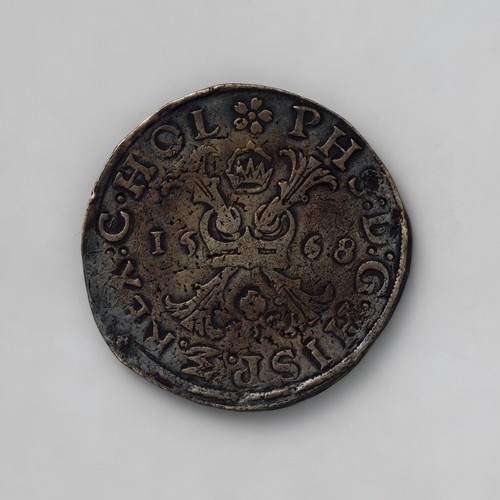
Bourgondische Rijksdaalder
A large silver rijksdaalder of the Habsburg Netherlands showing Philip II in helmeted armor, with a compartmented heraldic shield and the Golden Fleece collar.
Early Modern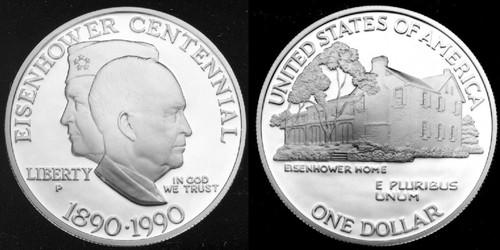
Eisenhower Centennial Dollar
A 1990 U.S. commemorative silver dollar marking 100 years since Dwight D. Eisenhower's birth, with his left-facing profile and his Gettysburg home on the reverse.
Dollar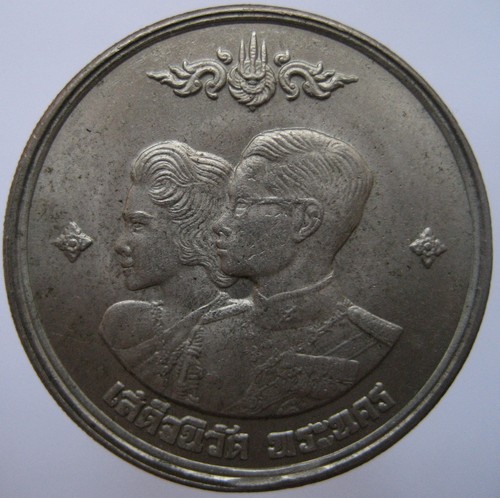
Thailand One Baht Commemorative
A 1961 Thai one-baht commemorative bearing the conjoined profiles of King Rama IX and Queen Sirikit, paired with the Thai royal arms on the reverse.
Southeast Asia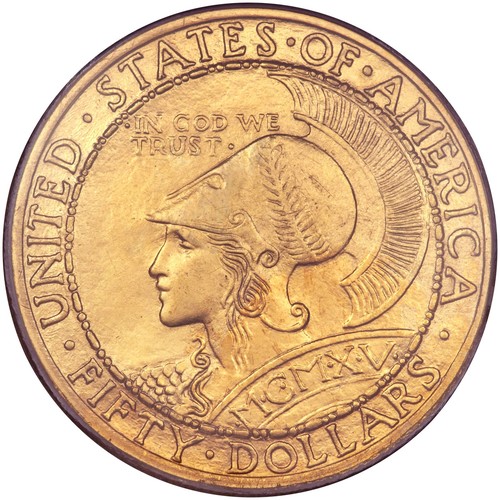
Panama-Pacific Exposition $50 (Octagonal)
An eight-sided $50 gold commemorative struck for San Francisco's 1915 world's fair, showing Minerva and her owl — the largest U.S. coin of its era.
Classic Commemorative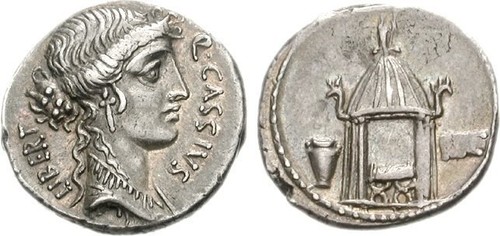
Denarius of Cassius Longinus
Silver denarius struck in 42 BC by Gaius Cassius Longinus, one of Caesar's assassins, to pay his legions before the Battle of Philippi.
Ancient
8 Reales (Portrait/Bust Type)
Large silver Spanish Empire dollar showing the bust of King Carlos III and a crowned coat of arms with lions and castles.
World Coins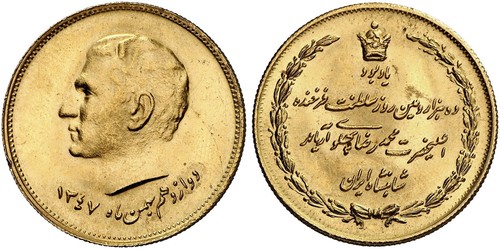
Pahlavi Reign Gold Medal
A gold medal of Pahlavi-era Iran, its obverse a left-facing royal portrait and its reverse the Lion and Sun beneath a crown, dated 1971.
Persia / Iran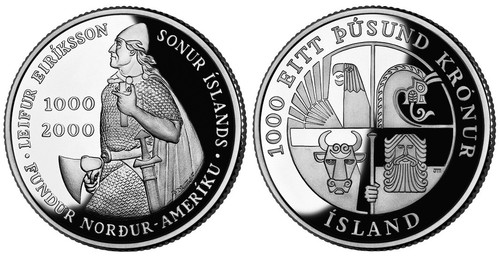
Leif Erikson Commemorative 1000 Króna
Icelandic silver commemorative dated 2000, marking the millennium of Leif Erikson's voyage and the Norse discovery of North America.
Commemorative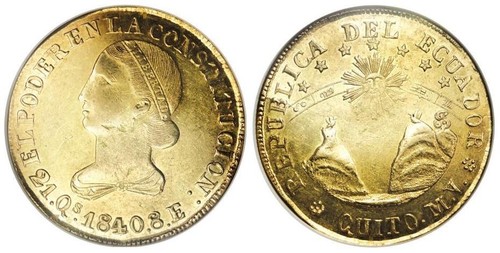
Escudo (Joanna and Charles V, contemporary copy)
A contemporary gilded copper-alloy copy imitating a Spanish gold escudo of Joanna and Charles V, made to pass as the real Habsburg gold coin.
Early Modern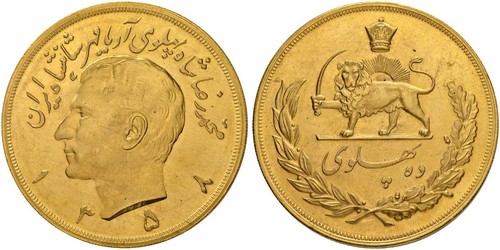
10 Pahlavi Gold Coin
A large gold coin of Imperial Iran valued at ten Pahlavi, showing Mohammad Reza Shah on the obverse and the crowned Lion and Sun on the reverse.
Persia / Iran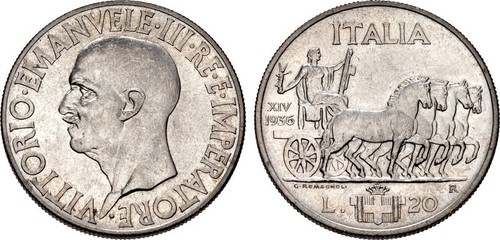
20 Lire
Silver-colored Italian 20 Lire piece of the Fascist era, showing a Mussolini profile and a horse-drawn chariot, dated 1936.
Modern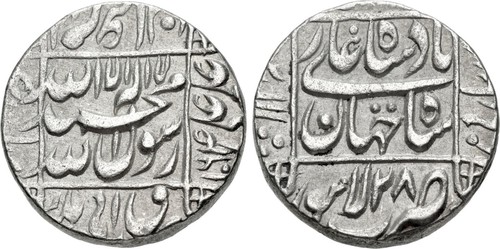
Shah Jahan Rupee
Hand-struck silver rupee of Mughal emperor Shah Jahan, all-Persian calligraphy in ornate cartouches, dated AH 1064 (AD 1653-1654).
Mughal India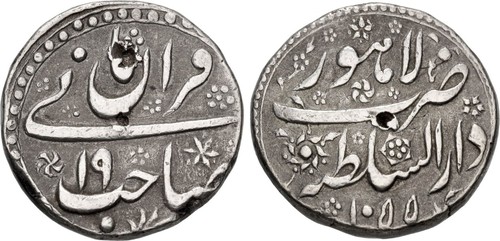
Shah Jahan Half Rupee
Silver half rupee of Mughal emperor Shah Jahan, dated AH 1055, carrying Persian-script inscriptions and ornamental borders instead of any portrait.
Mughal India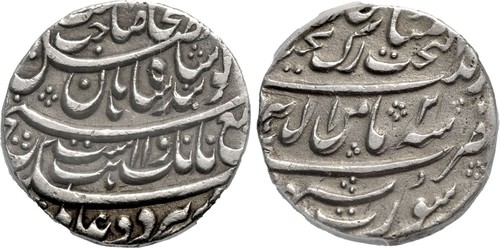
Banda Singh Bahadur Sikh Rupee
A hand-struck silver rupee of the early Sikh Khalsa, issued in the name of the Sikh Gurus during Banda Singh Bahadur's short-lived sovereignty, dated Khalsa Era Year 2.
Asian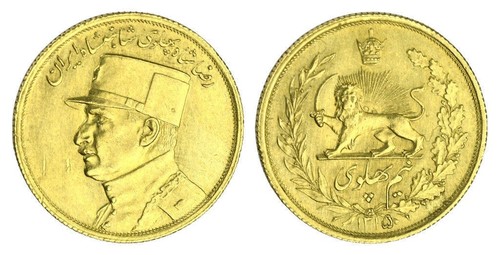
Half Pahlavi Gold Coin
A small Iranian gold coin worth half a Pahlavi, showing Reza Shah in a military cap on one side and the Lion and Sun with a crown on the other.
Persia / Iran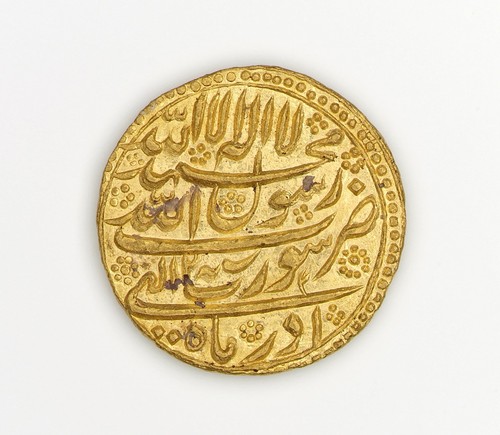
Gold Mohur of Shah Jahan
High-purity gold mohur struck under Mughal emperor Shah Jahan (1628-1658), bearing Persian imperial titles; this example carries the Balkh mint mark.
Mughal India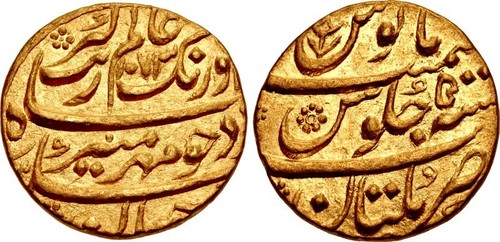
Gold Mohur of Aurangzeb
A hand-struck gold mohur of Mughal emperor Aurangzeb Alamgir, bearing Persian couplets and a mint name such as Multan.
Mughal India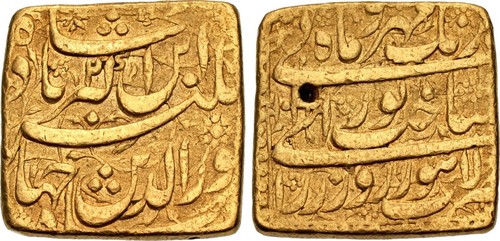
Gold Square Mohur of Jahangir
A square gold mohur of the Mughal emperor Jahangir, bearing Persian calligraphy, the Lahore mint, and regnal-year dating.
Mughal India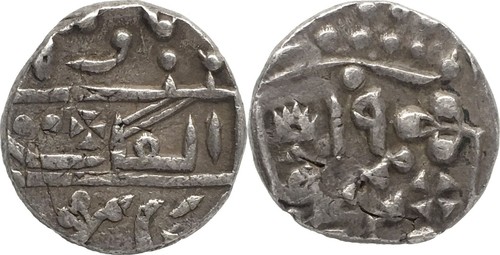
Kotah State Rupee
Silver rupee of the princely state of Kotah in Rajputana, struck with Persian and Devanagari legends and the state's katar-dagger emblem.
Princely & Presidency States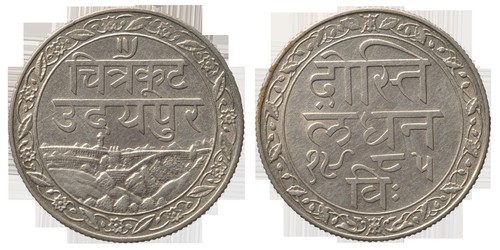
Mewar Chitrakut Half Rupee
A silver half rupee of the princely state of Mewar (Udaipur), dated VS 1985 (c. 1928), with Devanagari legends including the denomination अर्धरुपये.
Princely & Presidency States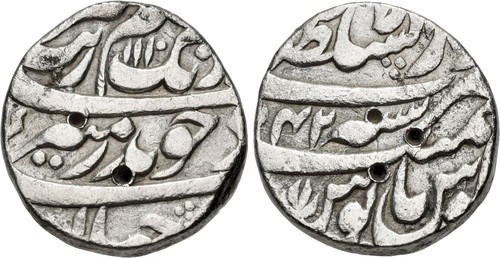
Aurangzeb Rupee
A broad, hand-struck silver rupee of the Mughal emperor Aurangzeb (Alamgir), carrying a Persian couplet and mint-and-year data rather than the usual Islamic creed.
Asian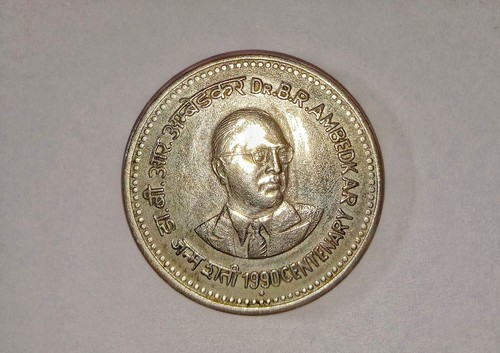
Ambedkar Centenary One Rupee
A 1990 Indian one-rupee commemorative honoring the birth centenary of Dr. B.R. Ambedkar, its obverse bearing his bespectacled portrait and bilingual legend.
Modern India