Spanish Colonial Gold Escudo (Doubloon)
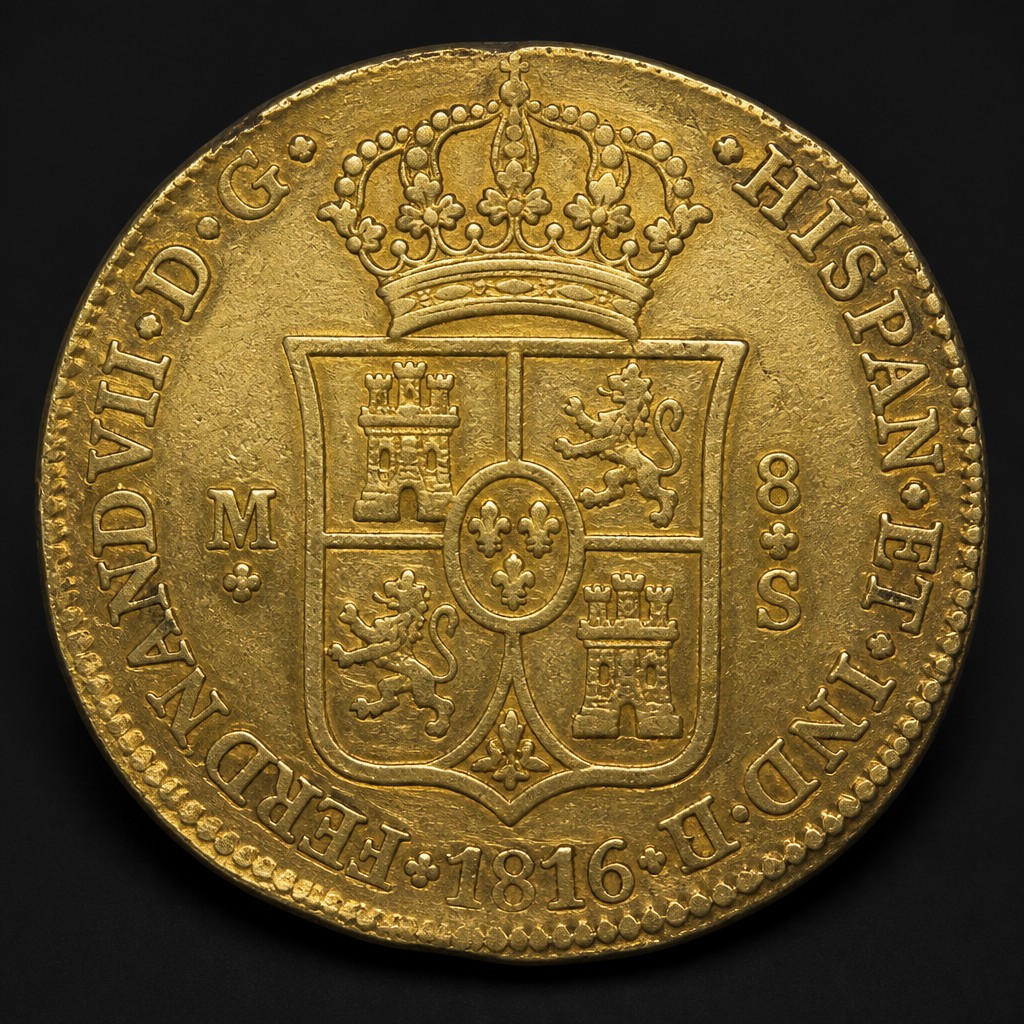
The gold coinage of the Spanish American colonies, popularly nicknamed the doubloon, struck in denominations up to 8 escudos and famous from pirate and shipwreck lore.
- Country
- Spanish Colonial Americas (Spain)
- Denomination
- 1/2, 1, 2, 4, and 8 Escudos
- Metal
- Gold, approximately .875 to .931 fine depending on period
Got a coin like this?
Identify any coin from a photo, free.
Overview
The Spanish colonial gold escudo was the backbone gold coinage of Spain's vast American empire, struck at mints throughout the colonies to convert locally mined gold into a standardized currency accepted across the Atlantic world. The popular term 'doubloon' entered English usage largely through literature and folklore, and today is loosely applied to escudo coins generally, though it originally referred more specifically to the two-escudo piece.
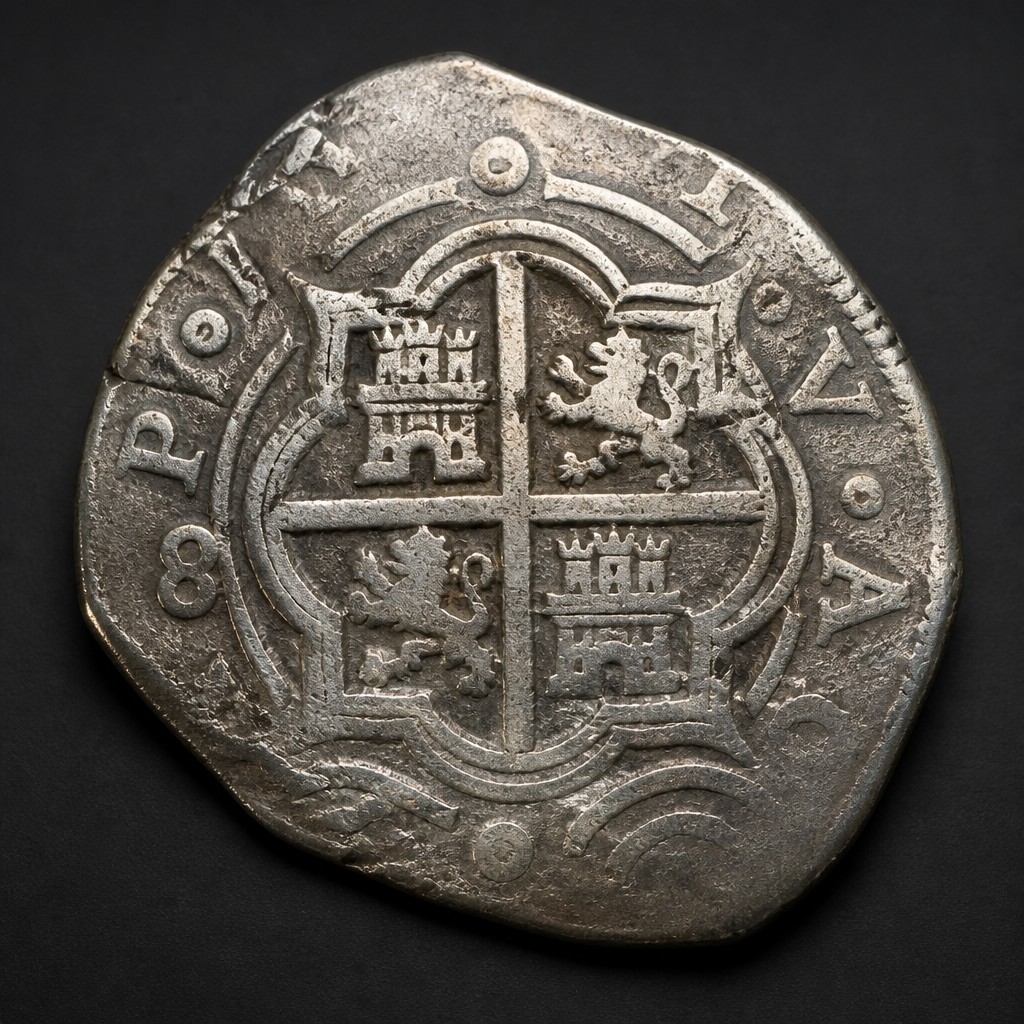
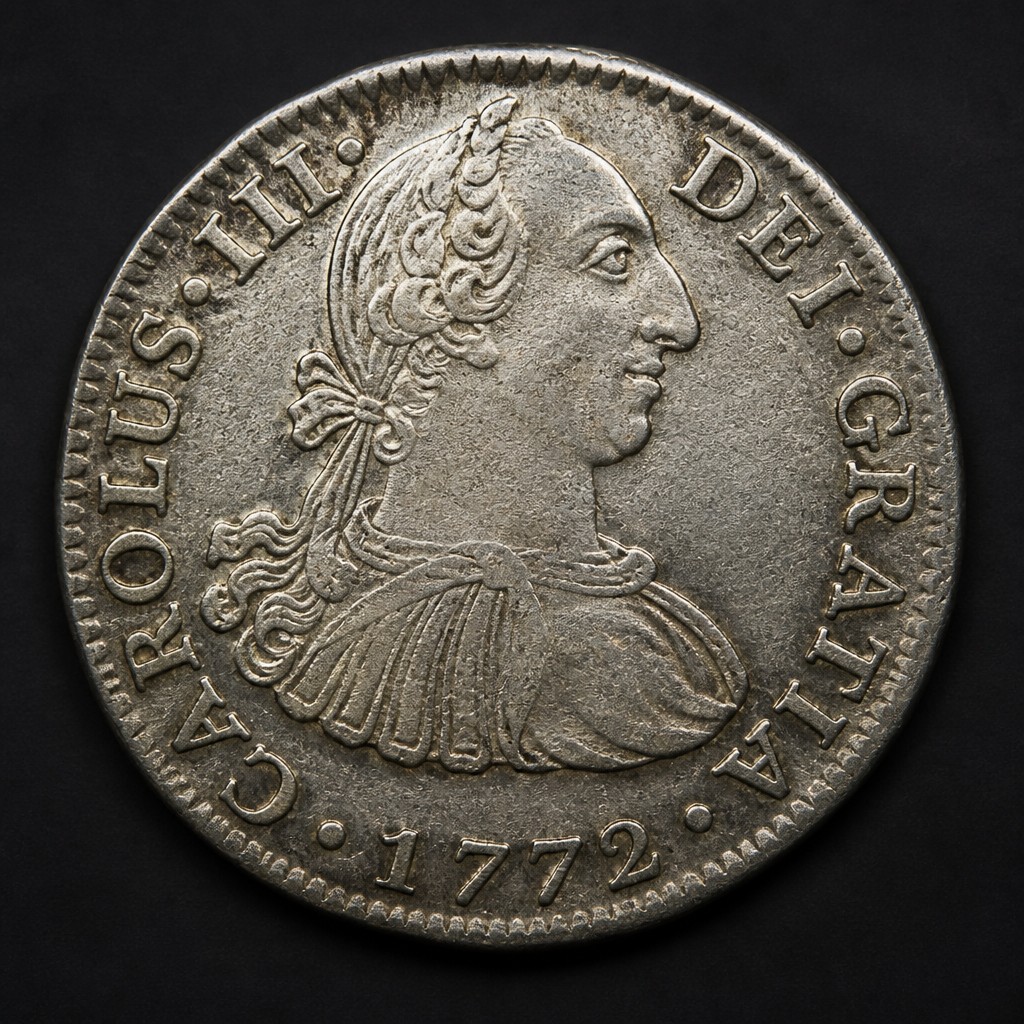
Early colonial escudos were produced as 'cobs,' irregularly shaped pieces cut from silver or gold bars and struck by hand with simple dies, often bearing a cross and quartered shield design rather than a portrait. After the mid-eighteenth-century monetary reforms, colonial mints shifted to machine-struck 'milled' coinage featuring a portrait of the reigning Spanish king, producing a more uniform and aesthetically refined coin.
These gold coins funded Spain's empire and global trade, moved with treasure fleets across the Atlantic, and today are strongly associated with shipwreck recoveries, pirate history, and the broader story of Spanish colonial commerce in the Americas.
History & Background
Spain began issuing escudo-denominated gold coinage in the sixteenth century, and colonial mints in the Americas, drawing on the vast gold resources of Mexico, Peru, Colombia, and Central America, soon became major producers in their own right. For roughly two centuries, most colonial gold was struck as crude, hand-hammered 'cob' coinage: irregular in shape, often clipped to weight, and bearing simplified cross and shield designs rather than fine portraiture.
The treasure fleet system that carried Spanish American gold and silver to Spain made escudos and their silver counterparts, the pieces of eight, central to global trade during the colonial period, financing Spain's wars and trade across Europe and Asia. Pirates, privateers, and shipwrecks associated with this treasure trade gave rise to much of the popular romance surrounding the word 'doubloon' in later English literature.
Following Spain's mid-eighteenth-century coinage reforms, colonial mints adopted screw-press technology to strike more uniform, portrait-bearing 'milled' escudos, continuing production until the wars of independence in the early nineteenth century dismantled Spanish colonial rule and, with it, the colonial mint system.
How to Identify
Early cob escudos are irregular in outline, thick, and roughly struck, typically showing a cross with lions and castles (representing the Spanish royal arms) on one side and a shield or similar heraldic device on the other, with legends often partially off-flan due to the crude striking process. Denomination and mint can sometimes be identified from small assayer initials and mint marks visible on the design, though this often requires careful examination due to weak or incomplete strikes.
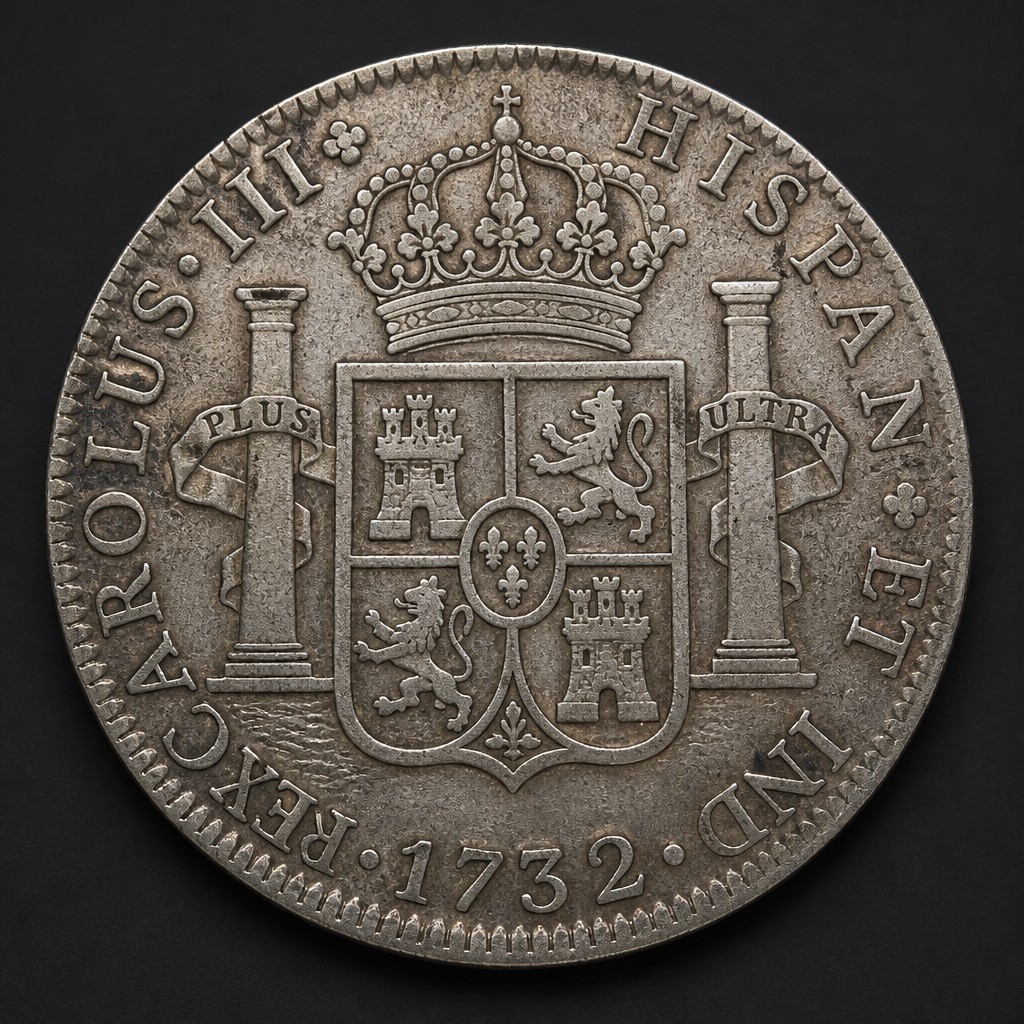
Later milled colonial escudos, struck from the 1730s onward, show a clear portrait bust of the reigning Spanish king on the obverse with a Latin legend naming him, and a crowned Spanish coat of arms on the reverse. These coins are round, well-centered, and carry visible mintmarks identifying the colonial mint (such as Mo for Mexico City, Lima's mint mark, or others) along with assayer initials and the denomination.
Genuine identification of cob-era pieces, especially shipwreck-recovered examples, generally benefits from expert numismatic or conservation assessment, since corrosion, encrustation, and irregular shape can make authentication and grading more difficult than with later milled coinage.
Value & Collectibility
Values for Spanish colonial gold escudos vary enormously by denomination, mint, date, and condition, ranging from a few hundred dollars for common, well-worn smaller denominations to many thousands of dollars for rare mints, early dates, or large 8-escudo pieces in high grade. Coins recovered from documented shipwrecks often carry a premium tied to their historical story and any accompanying certification of provenance.
Cob coinage, despite its crude appearance, is often prized precisely for its handmade, irregular character and historical association with the treasure fleets; well-struck, more complete cobs bring more than heavily clipped or weakly struck examples. Milled portrait escudos are generally valued more like standard world gold coinage, with rarer dates and mints commanding significant premiums over common issues.
Because of the coin's fame, counterfeit and reproduction 'doubloons' are common in the marketplace, particularly tourist-grade reproductions; buyers should rely on reputable dealers and, where possible, certification from recognized grading services, especially for shipwreck-related pieces.
Frequently asked questions
Is 'doubloon' an official coin name?
Not exactly; it is a popular nickname, originally tied to the two-escudo piece, that later became a general term for Spanish colonial gold coinage.
What does 'cob' mean for these coins?
A cob is an irregularly shaped, hand-struck coin cut from a gold or silver bar, typical of early Spanish colonial minting before machine presses were introduced.
Which mints produced colonial escudos?
Major mints included Mexico City, Lima, Potosí, Bogotá, and Guatemala, each identifiable by distinct mintmarks on later milled coinage.
Why are some doubloons associated with shipwrecks?
Spanish treasure fleets regularly lost ships to storms and piracy, and modern underwater recoveries have brought many colonial gold coins back to light.