Spanish Colonial Cob (Macuquina)
Crude, irregularly shaped hand-struck coins produced at Spanish colonial mints in the Americas for over two centuries, forming the basis of the famous 'pieces of eight' that circulated worldwide.
- Country
- Spanish Colonial Americas
- Denomination
- 1/2, 1, 2, 4, and 8 Reales (silver); Escudos (gold)
- Metal
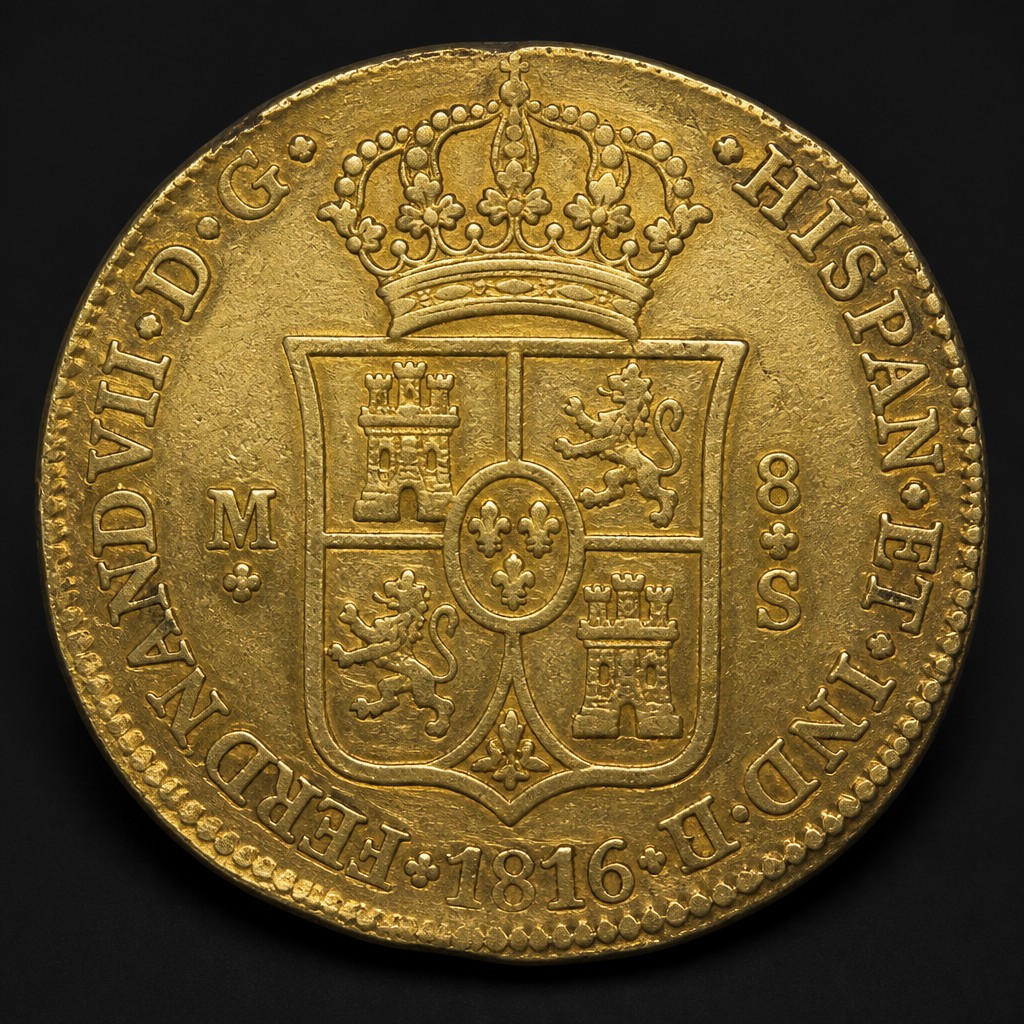
- Silver or gold, hand-cut and hand-struck
Got a coin like this?
Identify any coin from a photo, free.
Overview
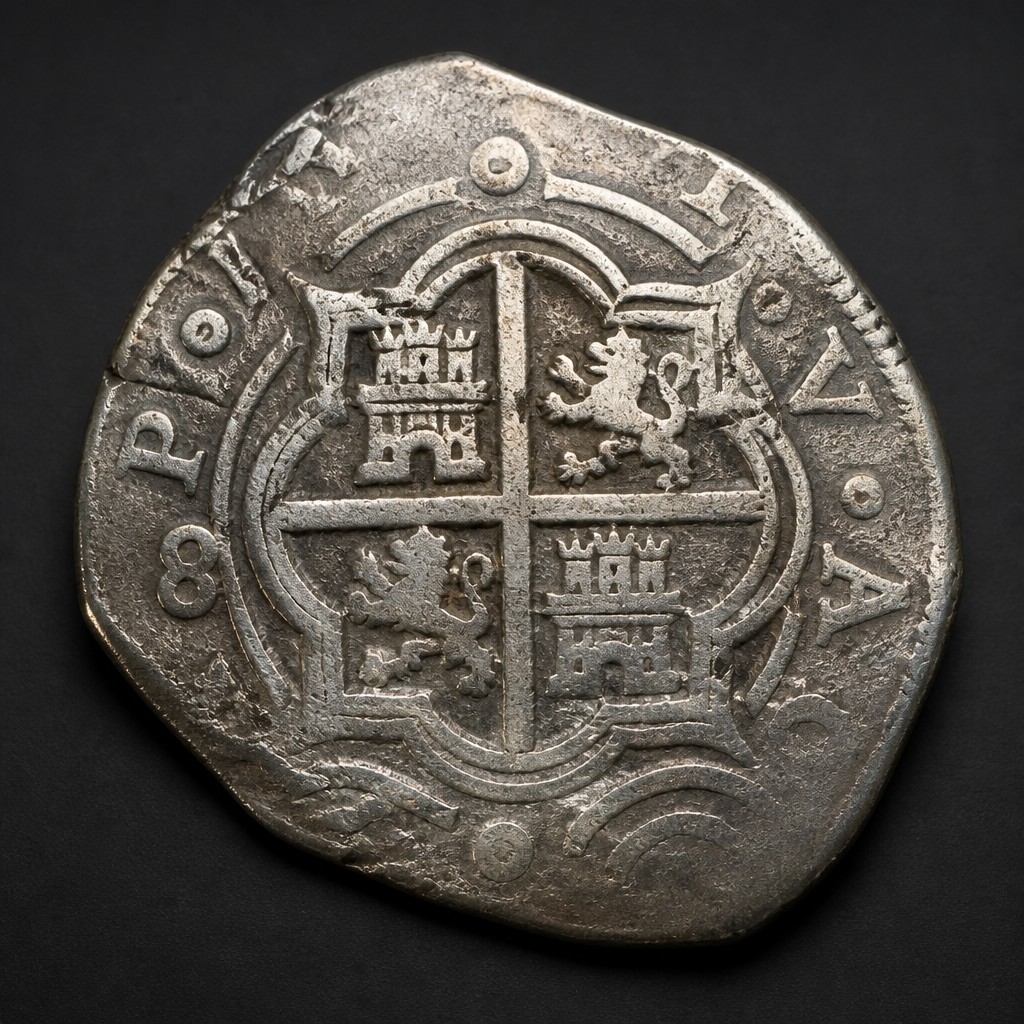
Spanish colonial cobs, known in Spanish as macuquina, are irregularly shaped silver and gold coins produced by hand at mints throughout the Spanish Americas from the mid-16th century through much of the 18th century. Rather than being cut from perfectly round, pre-measured planchets, cobs were sliced roughly to weight from cast silver or gold bars or rods, then struck between hand-engraved dies, resulting in their characteristically crude, often clipped or irregular outline.
Despite their rough appearance, cobs were produced under strict weight and fineness standards and carried denominations ranging from small half-real pieces up to the famous eight-real coin, popularly known as a 'piece of eight,' which became one of the most widely circulated and internationally trusted coins in world history, used from the Americas to Europe to Asia. Gold cob coinage in escudo denominations was also produced at several mints.
Because of their long production span across numerous mints including Mexico City, Potosí (in modern Bolivia), and Lima, cobs vary enormously in design details, mintmarks, and assayer initials, making them a rich and complex specialty within Latin American and world colonial numismatics.
History & Background
Spain's American colonies were rich sources of silver, especially from the enormous deposits at Potosí discovered in 1545, and the Spanish crown established mints throughout its colonial territories to convert this bullion into standardized coinage for trade and taxation. Cob coinage was the dominant form of colonial silver and gold coin production for roughly two centuries, valued for the speed and simplicity of manufacture even at the cost of a crude, irregular appearance compared to the more refined milled coinage gradually being adopted in Europe.
The basic cob production method involved casting silver into a long bar or rod, cutting rough segments (cospels) to approximate the correct weight, and then striking each piece by hand with a hammer between engraved dies, without the aid of the coining presses that would later create the smoother 'milled' coinage. Because exact roundness was not required, and weight rather than diameter was the essential standard, cobs could be irregular, clipped at the edges, or off-center, yet still pass at full value in commerce, since merchants weighed and assayed silver coin as a matter of course.
Cob production continued until the Spanish crown began transitioning its colonial mints to modern screw-press 'milled' coinage during the 18th century, a change implemented at different mints at different times, gradually phasing out the older hand-struck cob method by the mid-to-late 1700s.
How to Identify
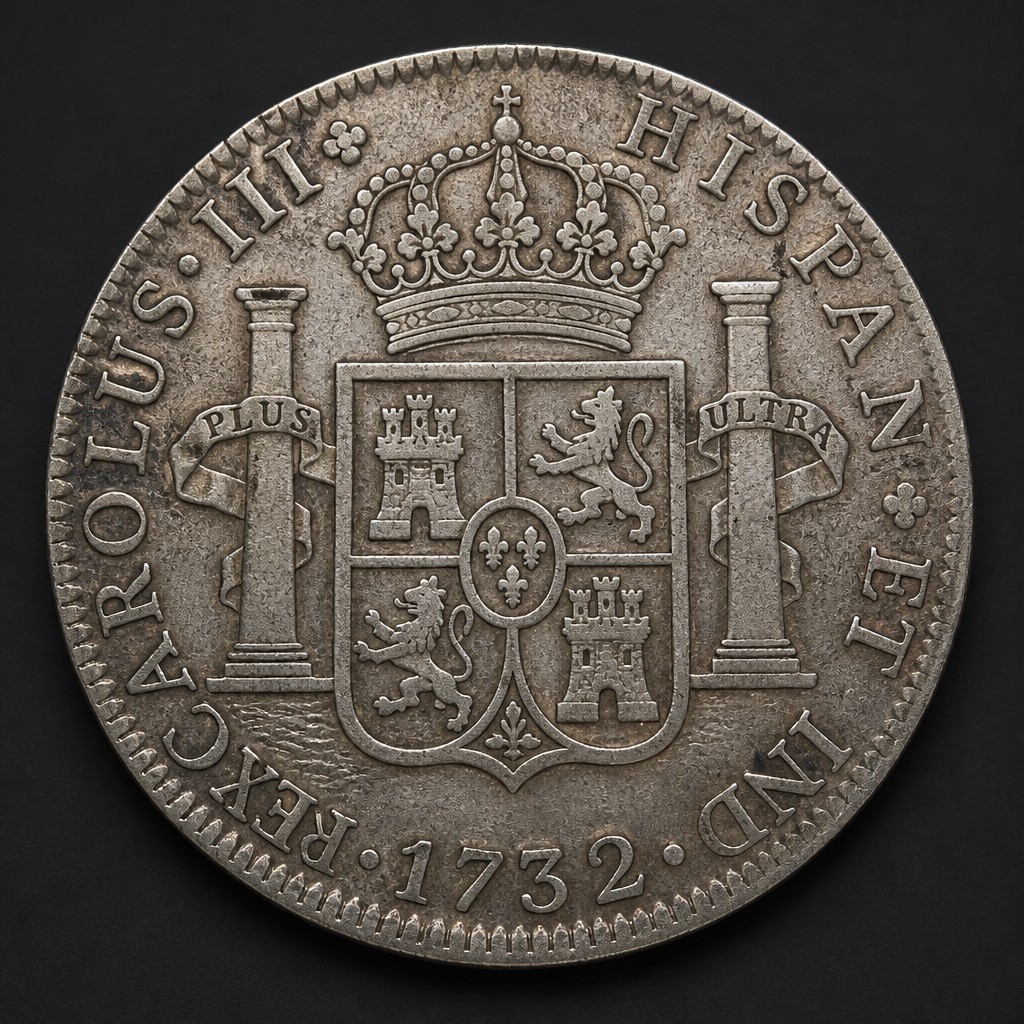
Cob obverse designs generally feature a cross, often a Jerusalem-style cross with quatrefoils or dots in its angles, sometimes flanked by castles and lions representing the arms of Castile and León. Reverse designs commonly show the crowned Pillars of Hercules with a banner, referencing the Spanish motto 'Plus Ultra,' though earlier cobs sometimes carry a shield design instead, with specific imagery varying by period and mint.
Because cobs were cut and struck by hand, no two pieces are perfectly alike: shapes are irregular, striking is often off-center or only partially visible, and full legends are rarely complete on a single coin. Mintmarks (a letter or symbol identifying the mint, such as Mexico City, Potosí, or Lima) and assayer initials (identifying the official responsible for verifying fineness) appear on most cobs and are essential for precise attribution, though they can be hard to locate on a crudely struck example.
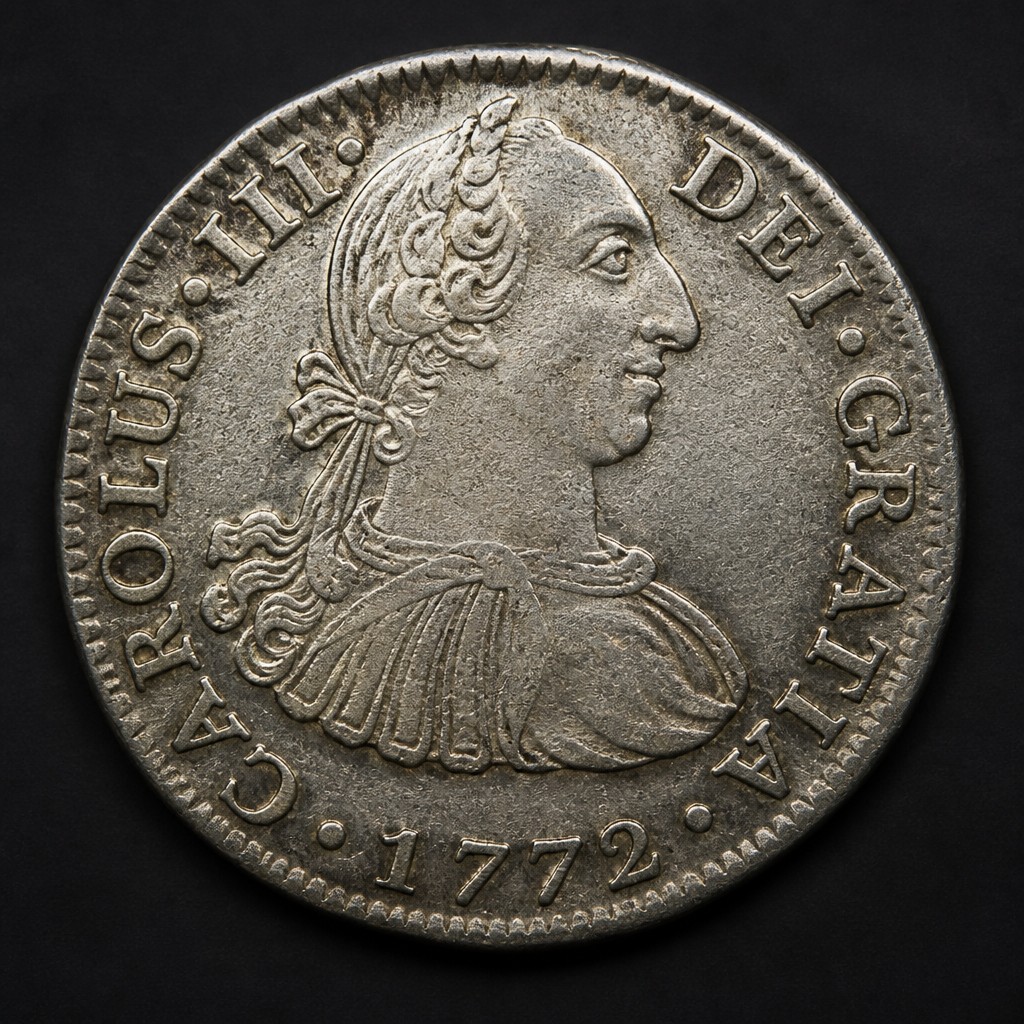
Distinguishing a genuine cob from a later replica or a 'shipwreck' cleaning artifact requires attention to metal color, weight standards for the claimed denomination, and die style consistent with the claimed mint and period; collectors specializing in this area rely heavily on published mint and assayer reference charts to attribute individual pieces.
Value & Collectibility
Values for Spanish colonial cobs vary enormously depending on denomination, mint, date legibility, condition, and whether the piece has documented shipwreck or hoard provenance, with common small-denomination or low-grade eight-real cobs sometimes available for modest sums, while well-struck, fully dated, or rare-mint examples, and pieces with verified shipwreck pedigree, can bring prices from the hundreds into the thousands of dollars or more. Gold escudo cobs generally command higher prices than silver reales due to their gold content and relative scarcity.
Because so many cobs entered the market through documented shipwreck recoveries (from vessels lost in Spanish treasure fleets), pedigree and accompanying documentation can add meaningfully to a piece's desirability and price beyond its base numismatic grade. Collectors should be cautious of pieces marketed primarily on romantic shipwreck stories without verifiable documentation, and should expect significant price variation based on how legible the date, mintmark, and assayer initials are on any given example.
Frequently asked questions
Why are cob coins so irregularly shaped?
They were cut by hand to approximate weight from cast silver or gold bars rather than punched from uniform round planchets, so exact shape was not considered essential as long as the weight and fineness standard was met.
What is a 'piece of eight'?
It refers to the eight-real cob coin, one of the most widely circulated coins in world history, used extensively in trade across the Americas, Europe, and Asia.
What does 'macuquina' mean?
It is the Spanish term for hand-struck, irregularly shaped cob coinage produced at colonial mints before the adoption of milled coin presses.
Where were most Spanish colonial cobs minted?
Major mints included Mexico City, Potosí (in present-day Bolivia), and Lima, along with several smaller colonial mints across Spanish America.
Why do some cobs come from shipwrecks?
Spanish treasure fleets regularly transported large amounts of colonial silver and gold coin back to Spain, and several of these ships sank, leading to documented modern recoveries of cob coinage from wreck sites.