Mexican 8 Reales Pillar Dollar
Minted in colonial Mexico City from 1732 to the early 1770s, the pillar dollar's crowned globes and Pillars of Hercules design made it one of the most widely trusted silver trade coins in the world.
- Country
- New Spain (Colonial Mexico)
- Denomination
- 8 Reales
- Metal
- Silver (approx. .917–.930 fine)
Got a coin like this?
Identify any coin from a photo, free.
Overview
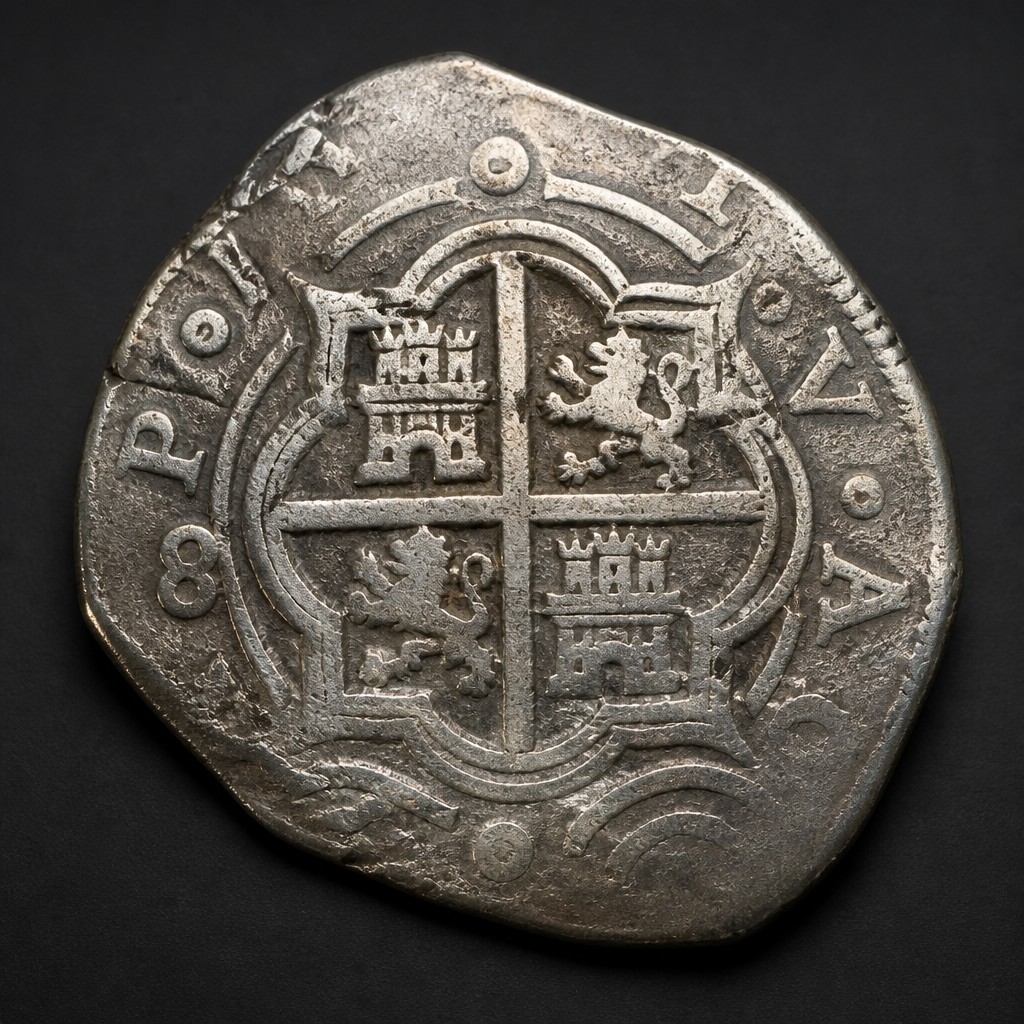
The pillar dollar, formally an 8 reales piece struck under Spanish colonial authority in Mexico City, replaced the earlier hand-struck 'cob' coinage with a more uniform, machine-milled design. Its distinctive imagery of two crowned globes flanked by the Pillars of Hercules made it instantly recognizable in markets from the Americas to Asia.
Collectors value the pillar dollar as a bridge between the rough cob coinage of earlier Spanish America and the later, more familiar 'bust' style 8 reales, and as a coin whose reliable silver content made it a genuine world currency of its era, circulating and being counterstamped in places as far away as China and colonial North America.
Because it predates the more famous bust dollar type by several decades, the pillar dollar has its own dedicated following among collectors of Spanish colonial and world trade coinage.
History & Background
Spain introduced milled, screw-press coinage to its American mints in the early 18th century to replace the irregular, hand-cut cob coins that had circulated since the 16th century. Mexico City's mint began striking the new pillar-design 8 reales around 1732, part of a broader effort to standardize and modernize colonial silver coinage across the Spanish Empire.
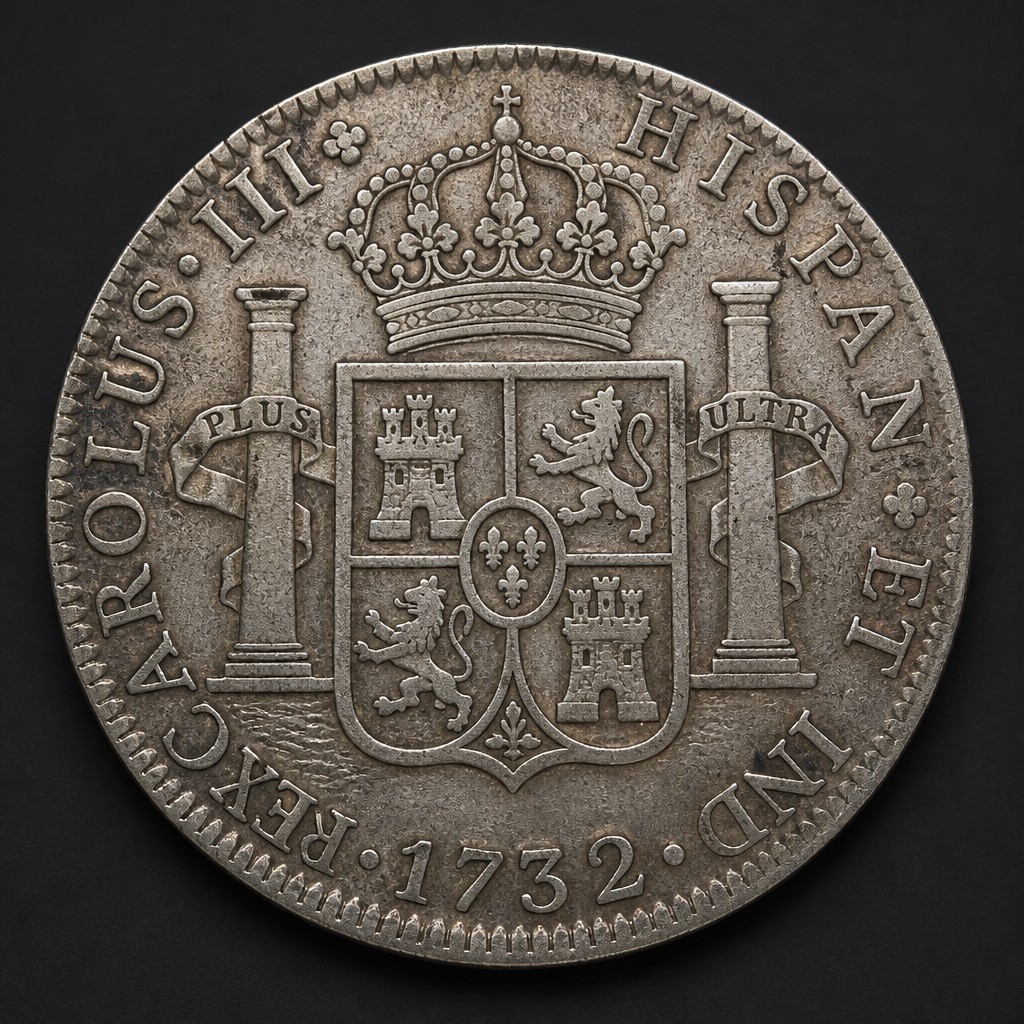
The design's twin globes represented the Old and New Worlds under Spanish rule, flanked by the Pillars of Hercules, the ancient symbol for the Strait of Gibraltar, wrapped with a banner reading PLVS VLTRA, meaning 'further beyond,' a motto referencing Spain's overseas empire.
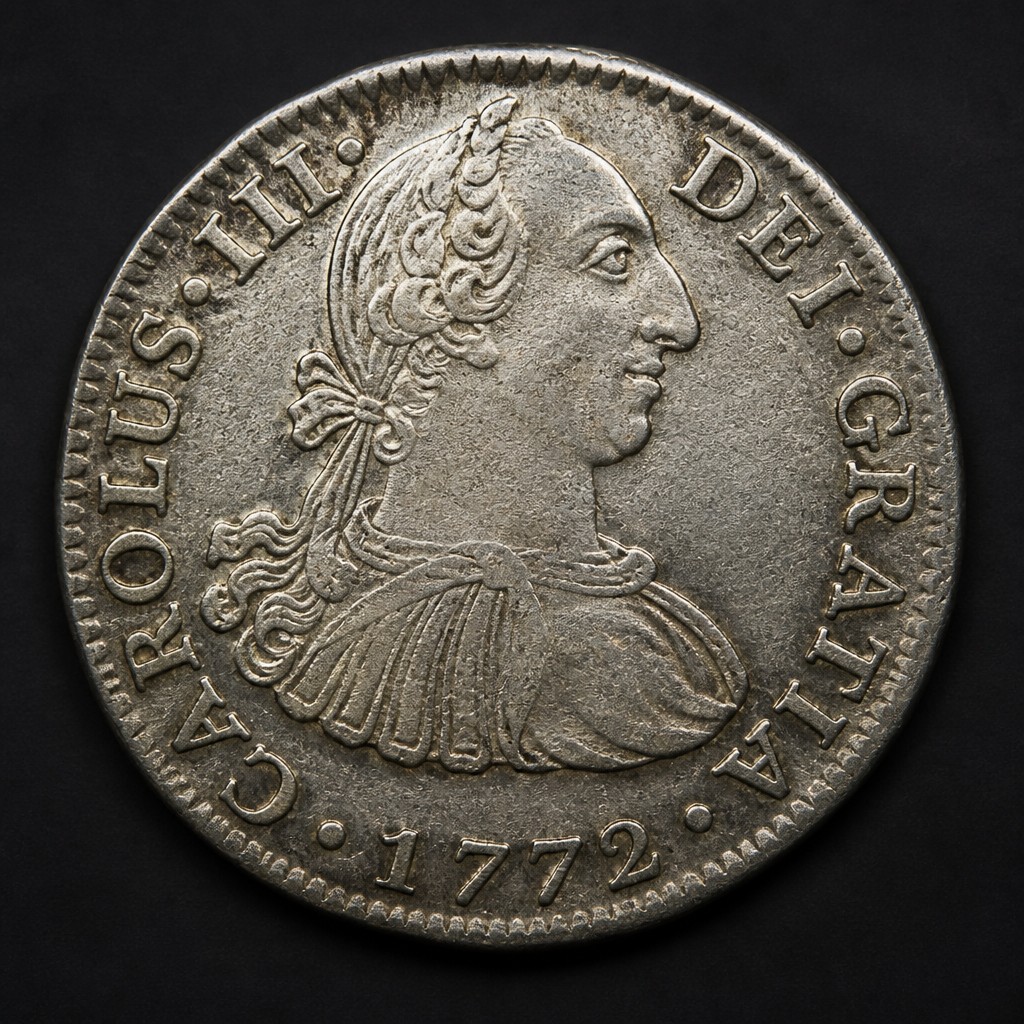
The pillar dollar circulated widely as a trusted international trade coin throughout the 18th century, including extensively in the American colonies where it directly influenced later U.S. currency, before Spain replaced the design in the early 1770s with the bust-portrait style 8 reales bearing the reigning monarch's image.
How to Identify
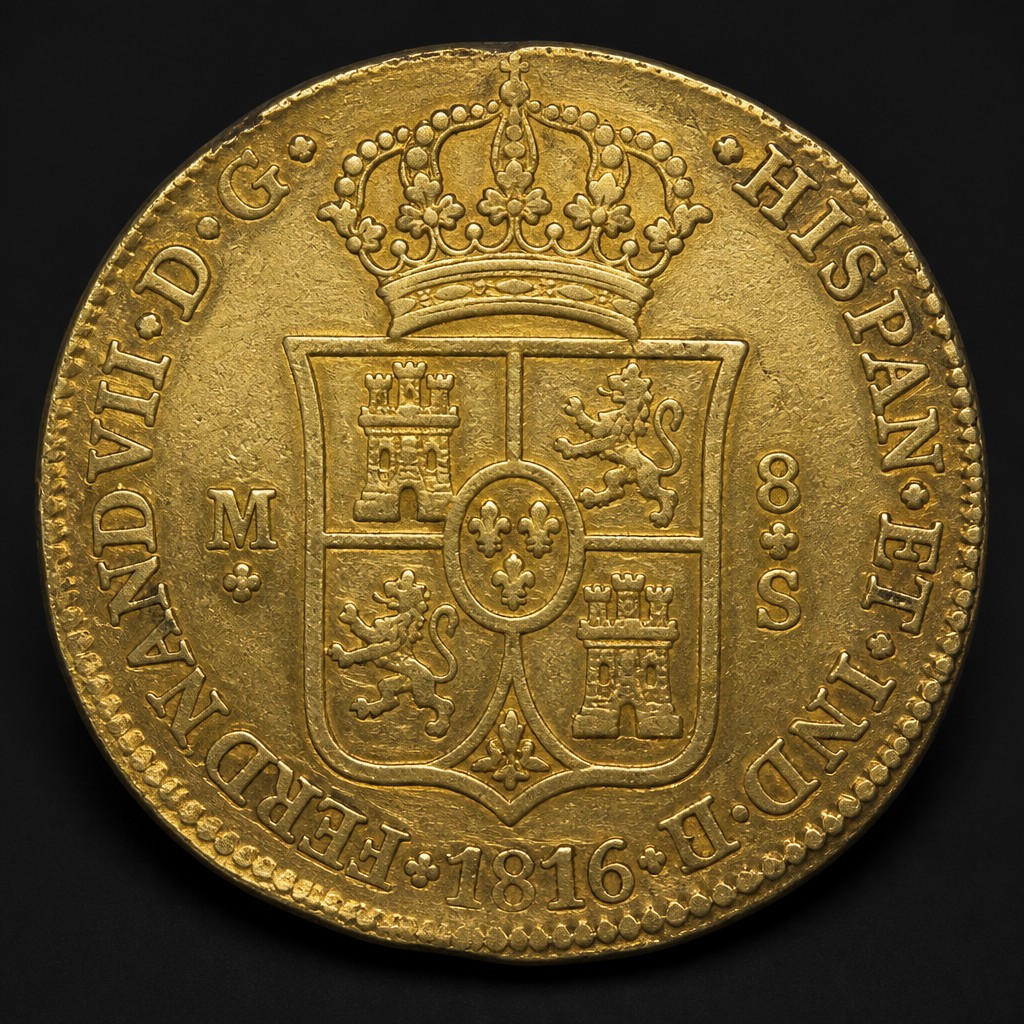
The obverse shows the crowned Spanish royal arms in a shield, surrounded by a legend naming the reigning Spanish monarch, such as Philip V or Charles III, along with the mint mark and assayer's initials. The reverse displays the signature pillar design: two crowned globes representing the hemispheres, flanked by the two Pillars of Hercules wrapped in the PLVS VLTRA banner, with waves at the base symbolizing the ocean.
The coin is silver, roughly 39-40mm in diameter and about 27 grams, with a fineness typically around .917 to .930, and was produced on a screw press giving it a more uniform round shape than earlier hand-struck cobs. A small 'M' or 'Mo' mint mark for Mexico City, along with assayer initials, typically appears on the coin and helps confirm its origin among the various Spanish colonial mints that struck similar pillar coinage.
Collectors should distinguish the pillar dollar from the earlier, irregularly shaped cob 8 reales and from the later bust-type 8 reales, which replaced the pillar design with a portrait of the king starting in the early 1770s.
Value & Collectibility
Common, well-worn pillar dollars are relatively accessible to collectors, often trading in the low hundreds of dollars, reflecting the large quantities originally minted for trade. Well-struck, higher-grade examples, especially from scarcer dates or with strong eye appeal, can bring significantly more, sometimes into four figures.
Because these coins circulated heavily as working money across multiple continents, most surviving examples show noticeable wear, and coins in choice condition with sharp design details and good luster are disproportionately valuable relative to average circulated pieces.
Frequently asked questions
What is a pillar dollar?
It is the common name for the Spanish colonial 8 reales coin struck in Mexico City and other mints from the 1730s to the early 1770s, featuring crowned globes flanked by the Pillars of Hercules.
Why is it called a pillar dollar?
The nickname comes from the two Pillars of Hercules depicted on the reverse, an ancient symbol representing the Strait of Gibraltar.
What does PLVS VLTRA mean?
It is Latin for 'further beyond,' a motto celebrating Spain's overseas empire beyond the traditional limits of the ancient world.
How is a pillar dollar different from a bust dollar 8 reales?
The pillar dollar shows crowned globes and pillars on the reverse, while the later bust dollar type replaced that design with a portrait of the Spanish king.
What is the pillar dollar made of?
It is struck in silver, typically around .917 to .930 fine, weighing about 27 grams.