
Coin Encyclopedia
Search and identify coins from around the world — with country, denomination, metal, mint, history, and how to tell them apart.
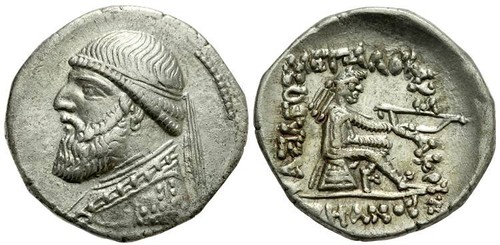
Parthian Drachm
Silver drachm of the Parthian (Arsacid) Empire, pairing a bearded royal profile with a seated archer holding a bow, struck in the era of Mithradates II.
Ancient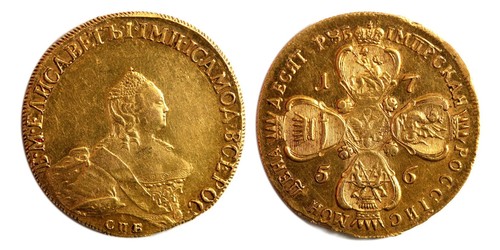
10 Roubles (Elizabeth)
An Imperial Russian gold 10 Roubles of Empress Elizabeth, showing her crowned portrait and the double-headed eagle with orb and scepter, dated 1756.
Early Modern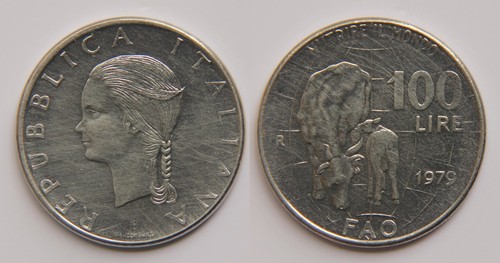
100 Lire
Italy's 1979 100 Lire, a nickel-hued FAO commemorative with a woman's profile on the obverse and an allegorical figure beside the value on the reverse.
Modern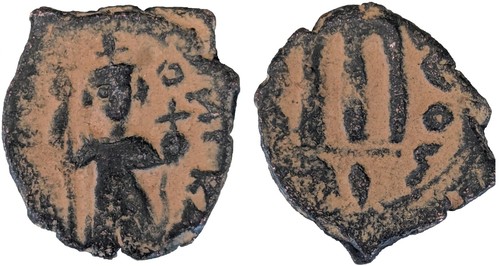
Byzantine Follis
Large bronze follis of the Byzantine Empire, this example under Constans II (from 641 AD), with an imperial portrait and a big M value mark topped by a cross.
Medieval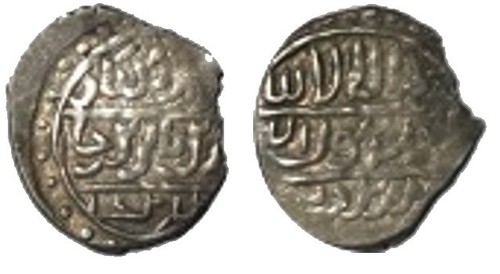
Akçe
The akçe was the tiny silver coin at the heart of the early Ottoman economy, struck with Arabic-script inscriptions and no portrait or figural imagery.
Medieval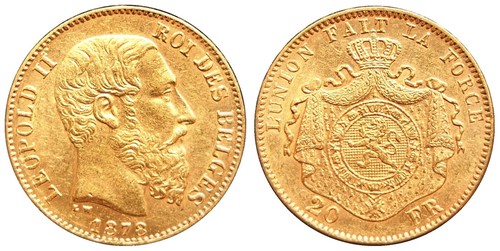
20 Francs (Leopold II)
Belgium's gold 20 francs under King Leopold II, a small Latin Monetary Union coin with the bearded king's profile and the crowned national arms.
Modern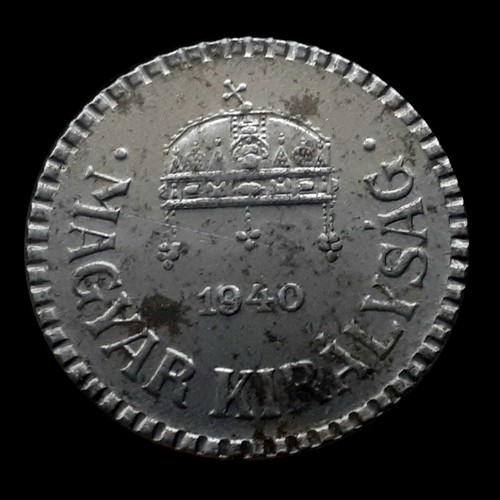
2 Fillér
A small early-20th-century Hungarian 2 fillér in copper-based bronze, showing the crowned Hungarian coat of arms on the obverse and the value with date on the reverse.
Modern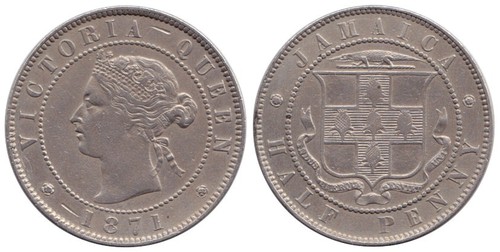
Jamaica Half Penny
An 1871 colonial Jamaica halfpenny in copper-nickel: young Queen Victoria facing left on the obverse, the crowned Jamaican shield of arms on the reverse.
Colonial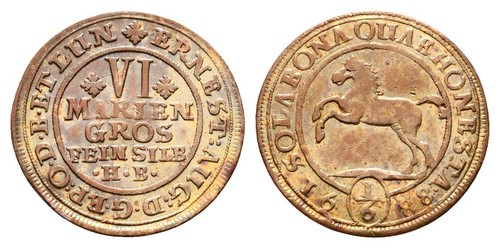
Hanover 1/6 Thaler
A German States silver 1/6 Thaler of Hanover (Brunswick-Luneburg) dated 1688, showing the leaping Saxon Steed and a fractional-denomination reverse.
German States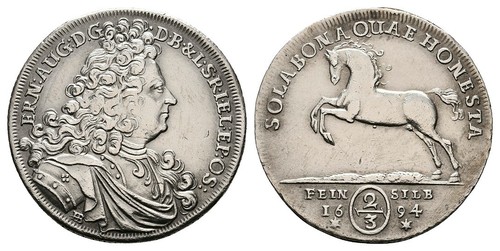
Hanover 2/3 Thaler
A large German States silver 2/3 Thaler of Brunswick-Luneburg (Hanover) dated 1694, with an ornate coat of arms and the leaping Saxon horse reverse.
German States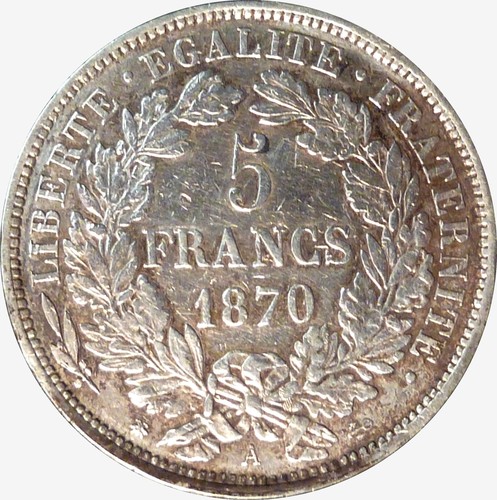
French Cérès 5 Francs
A large silver French 5 francs showing the head of Cérès, goddess of the harvest, wearing a liberty cap, with the republican motto LIBERTÉ ÉGALITÉ FRATERNITÉ.
Circulation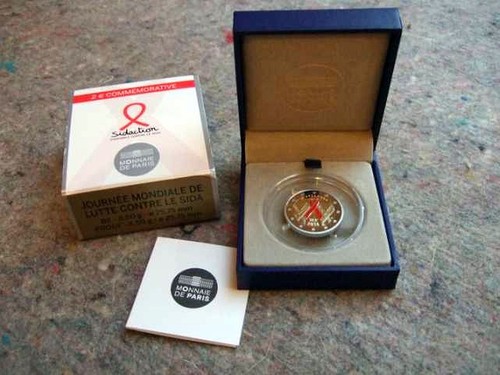
France 2 Euro Sidaction Commemorative
France's 2014 bi-metallic 2 euro commemorative honouring Sidaction, shown with a red AIDS-awareness ribbon and paired with the shared European reverse.
Commemorative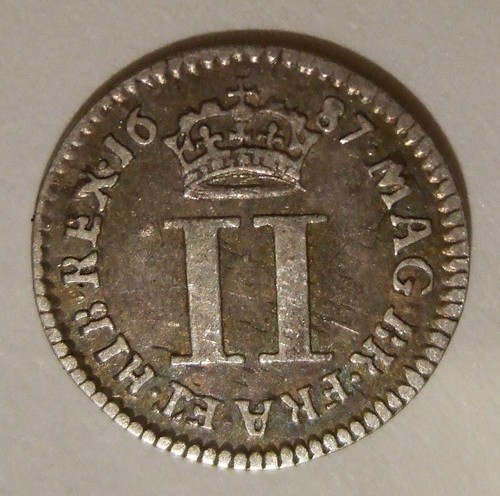
Maundy Money Twopence
A tiny sterling-silver British twopence with a crowned Roman numeral II reverse; this example bears the profile of King James II, dated 1687.
Maundy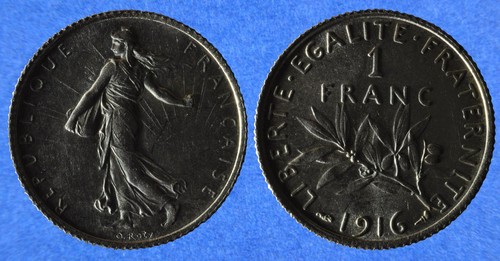
1 Franc Semeuse
A small silver French franc showing Roty's Semeuse, the striding Sower scattering seed at dawn, with the 1916 date on the LIBERTE EGALITE FRATERNITE reverse.
Circulation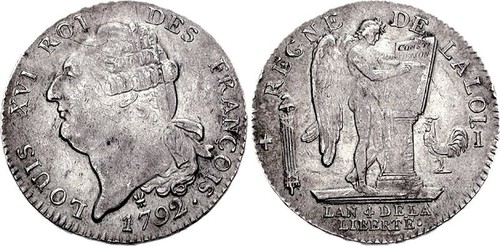
Constitutional Ecu
A French silver ecu of the constitutional-monarchy era showing King Louis XVI on the obverse and a standing armed Liberty figure on the reverse, dated 1792.
Revolutionary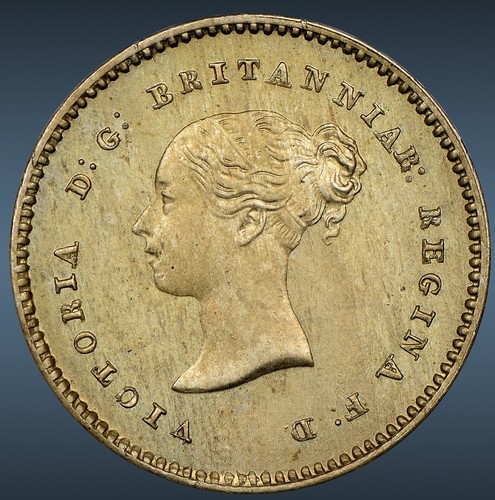
Quarter Farthing
Tiny copper coin of Queen Victoria worth one-sixteenth of a penny, struck for use in Ceylon; the smallest-value British denomination ever made.
British Isles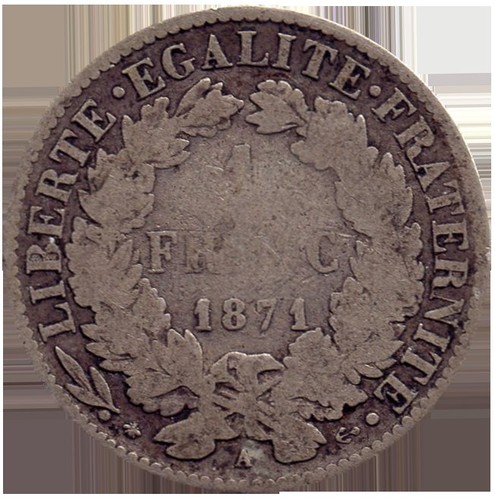
1 Franc Ceres
A small silver French franc showing the head of Cérès, goddess of the harvest, wearing wheat and a star, with the LIBERTE EGALITE FRATERNITE reverse dated 1871.
Circulation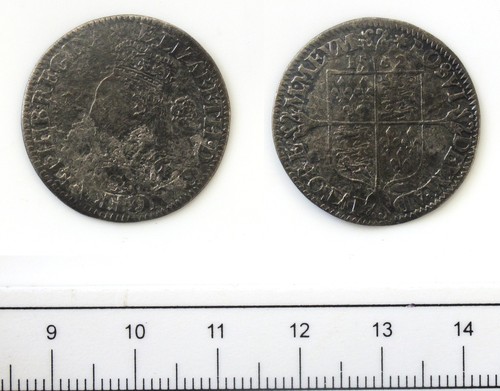
Sixpence of Elizabeth I
A hammered silver sixpence of Elizabeth I, showing the crowned, ruff-collared queen in profile and the royal shield, most bearing a date beside a mint mark.
Hammered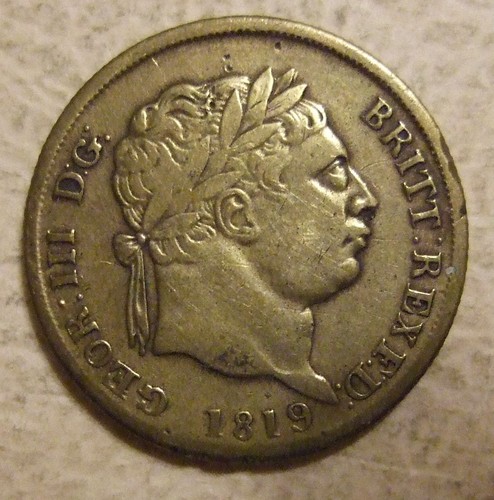
Shilling of George III
A milled silver shilling of George III from the Great Recoinage, with his laureate bust facing right and a crowned quartered royal shield within the Garter.
Milled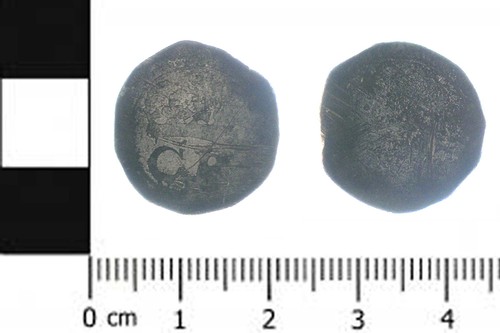
Scottish Coin (Uncertain)
A worn hammered copper-alloy Scottish coin, apparently of the reign of Charles I, showing a bearded profile and a heraldic reverse with lettering.
Hammered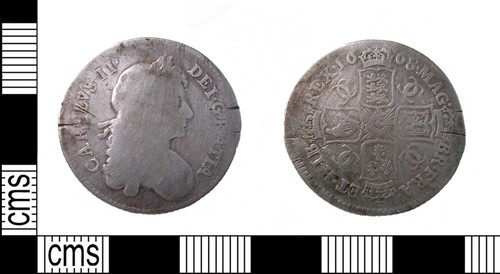
Charles II Shilling
A machine-struck Stuart silver shilling of Charles II, with his laureate bust facing right and a reverse of crowned shields bearing the royal arms.
Milled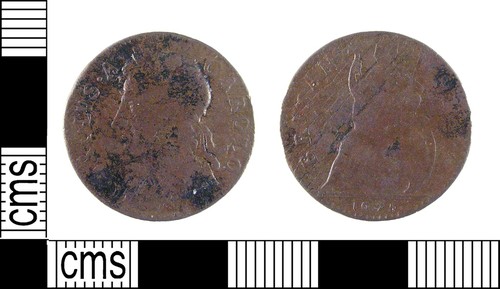
Charles II Halfpenny
A milled copper halfpenny of Charles II showing his laureate bust and a seated Britannia, part of the first regal copper coinage of England, dated 1675.
Milled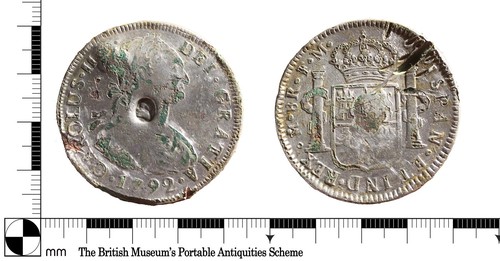
Counterstamped 8 Reales
A Charles IV silver 8 reales later punched with counterstamps and pierced with a central hole, layering a second life onto the classic Spanish dollar.
Colonial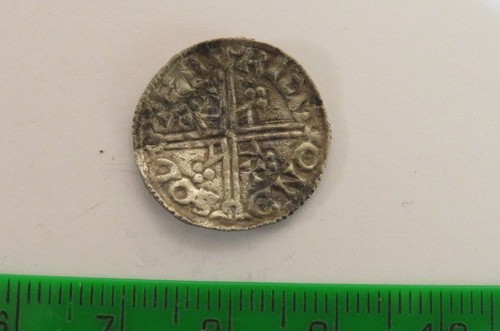
Medieval Penny
England's standard medieval coin: a small hammered silver penny with a crowned royal head on one side and a cross on the other, struck by hand across many reigns.
Medieval Coins