
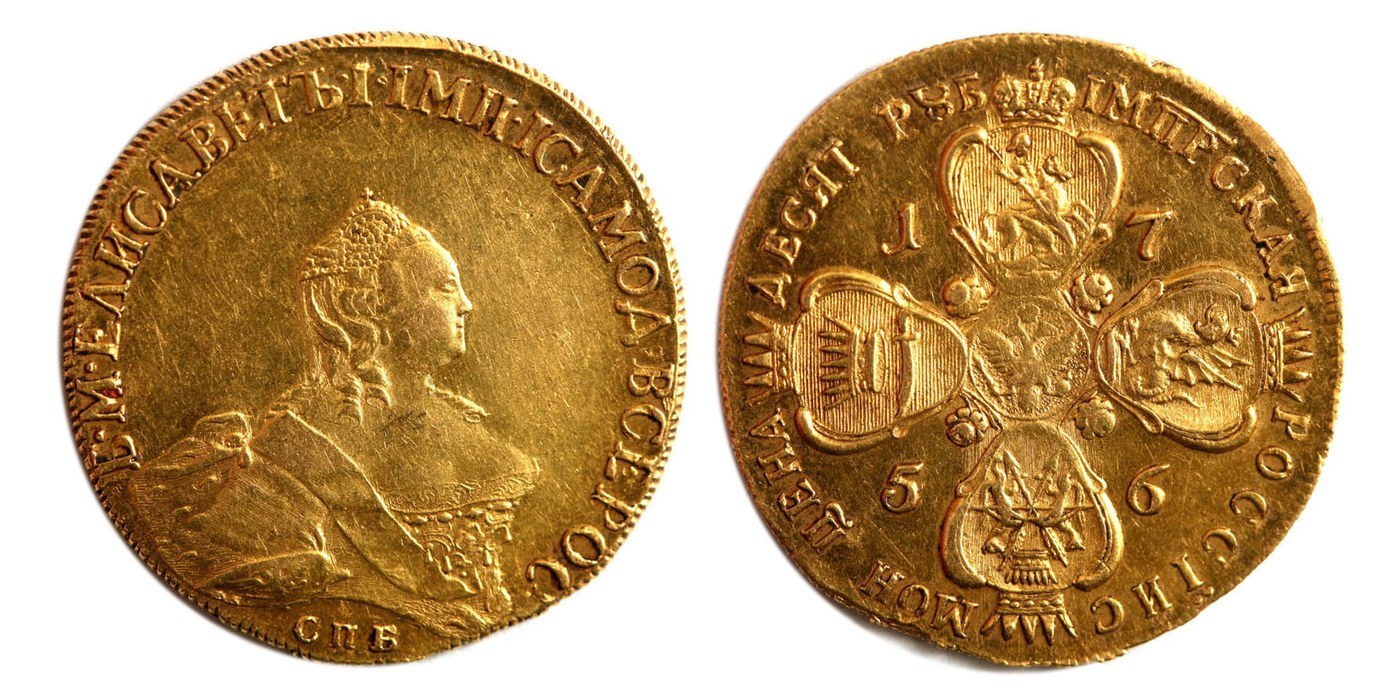
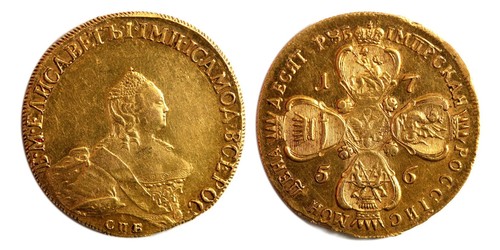
10 Roubles (Elizabeth)
An Imperial Russian gold 10 Roubles of Empress Elizabeth, showing her crowned portrait and the double-headed eagle with orb and scepter, dated 1756.
- Country
- Russia
- Denomination
- 10 Roubles
- Metal
- Gold
Got a coin like this?
Identify any coin from a photo, free.
Overview
The 10 Roubles of Empress Elizabeth is the large gold denomination of mid-eighteenth-century Imperial Russia, known in Russian numismatics as the Imperial (Imperial). The example shown here is an 1756 piece bearing the crowned, draped bust of Elizabeth (Elizaveta Petrovna) facing right on the obverse, with a Cyrillic legend giving her name and titles, and the crowned Imperial double-headed eagle holding an orb and scepter on the reverse.
Struck in gold, the 10 Roubles was the top gold value of Elizabeth's reign and the flagship of a two-coin gold series, sitting above the 5 Roubles (the half-imperial, or poluimperial). It is a substantial coin, roughly 30 mm across, and its portrait style places it firmly in the Baroque tradition of eighteenth-century European court coinage.
Collectors prize the type both as a portrait gold coin of a famous Russian empress and as a scarce, precious-metal issue from before Catherine the Great. The combination of a finely engraved Baroque bust and the state eagle makes it one of the more recognizable Russian gold coins of the period.
History & Background
Elizabeth Petrovna, a daughter of Peter the Great, seized the throne in a 1741 palace coup and reigned until her death in 1762. Her reign is remembered for cultural expansion, the founding of Moscow University, and a lavish court, and its coinage reflects that ambition with carefully engraved portrait gold and silver.
The gold 10 Roubles, or Imperial, was introduced in the mid-1750s alongside the 5 Rouble half-imperial as part of a reform that gave Russia a regular, high-value gold coinage tied to the rouble. The observed 1756 date falls early in this series, which continued through the closing years of Elizabeth's reign. The coins were struck at the imperial mints, principally in Saint Petersburg, and later Imperials under subsequent rulers kept the same denomination name.
Because these were high-denomination gold pieces used for large transactions and stores of value rather than everyday commerce, they were struck in limited numbers and many were later melted or reminted. Genuine Elizabeth-era 10 Roubles are consequently scarce today and are among the more sought-after gold coins of pre-Catherine Imperial Russia.
How to Identify
The obverse shows the crowned, draped bust of Empress Elizabeth facing right, with a Cyrillic legend running around the rim giving her name and imperial titles. The portrait is in the Baroque court style, with elaborate hair, drapery, and often an order sash or brooch. The reverse of this example carries the crowned Imperial double-headed eagle with wings displayed, holding an orb and scepter, with the denomination and date in Cyrillic.
The coin is gold, warm yellow in color, and dense in the hand, with a diameter of roughly 30 mm and a weight in the mid-teens of grams typical of the Imperial. As a portrait coin it is easy to place: the direction the bust faces, the empress's name in Cyrillic, and the eagle reverse together identify the type and reign.
Note that some Russian gold coins of this era instead use a cross of four crowned monograms on the reverse rather than the eagle; the piece shown here is the eagle-reverse type. The date 1756, the right-facing Elizabeth portrait, the Cyrillic titles, and the orb-and-scepter eagle are the key diagnostic combination for this coin.
Value & Collectibility
The 10 Roubles of Elizabeth is a scarce gold coin with value drawn from three sources at once: its gold content, its scarcity as a short-lived high-denomination portrait issue, and strong collector demand for eighteenth-century Imperial Russian gold. Even at the level of metal alone it is a meaningful precious-metal coin, and desirable examples sell well above bullion.
Prices vary widely with authenticity, date, mint, and condition, and confirmed original strikes in collectible grades command substantial sums. Because surviving numbers are low and the market for Russian gold is active, this is a coin best appraised individually rather than valued from a fixed list.
Authentication is central to value. Imperial Russian gold has been widely copied and restruck, so an unattributed piece is worth far less than one certified by a recognized grading service. Any 10 Roubles being bought or sold at a meaningful price should be independently authenticated first.
Frequently asked questions
What is a 10 Roubles of Elizabeth?
It is the large gold coin of Empress Elizabeth's reign, known in Russian as the Imperial. It shows her crowned portrait on the obverse and the Imperial double-headed eagle on the reverse, and it was the top gold value above the 5 Rouble half-imperial.
Is this coin made of gold?
Yes. The 10 Roubles was struck in gold and was the highest gold denomination of Elizabeth's coinage. It is a warm yellow, dense coin about 30 mm across.
Who is shown on the coin?
Empress Elizabeth Petrovna, a daughter of Peter the Great, who reigned over Russia from 1741 to 1762. Her crowned, draped bust faces right, with her name and titles in Cyrillic around the edge.
What is on the reverse?
This example shows the crowned Imperial double-headed eagle with wings displayed, holding an orb and scepter, together with the denomination and the date 1756 in Cyrillic. Some Russian gold of the era instead uses a cross of four crowned monograms.
How rare is it?
Genuine Elizabeth 10 Roubles are scarce. They were high-value coins struck in limited numbers, and many were later melted or reminted, so surviving originals are among the more sought-after gold coins of pre-Catherine Imperial Russia.
10 Roubles (Elizabeth) guides
In-depth guides for identifying, valuing, and collecting 10 Roubles (Elizabeth).
Other coins you may enjoy
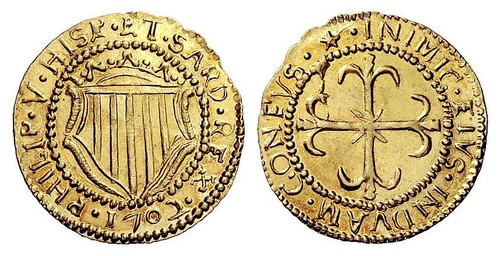
Scudo (Philip V)
c. 1701–1708
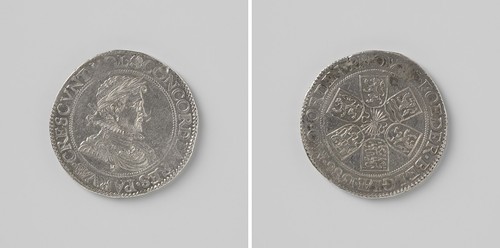
Rijksdaalder van Leicester
1580s-1590s
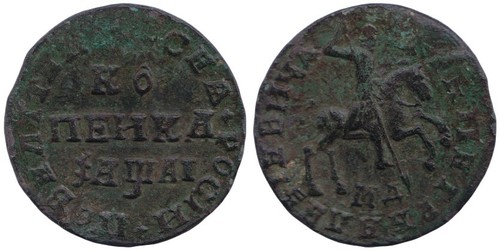
Kopek (Peter I)
c. 1704–1718 (observed 1711)
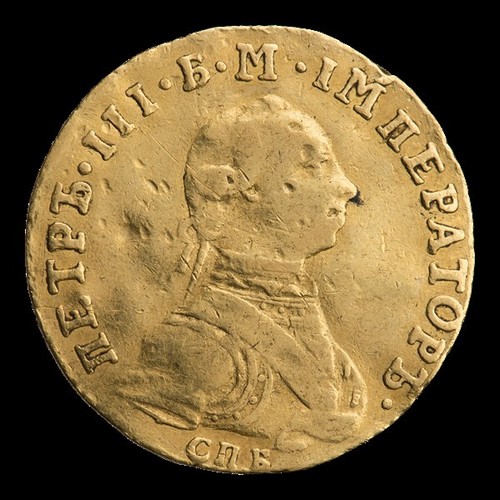
Imperial Chervonets
1762
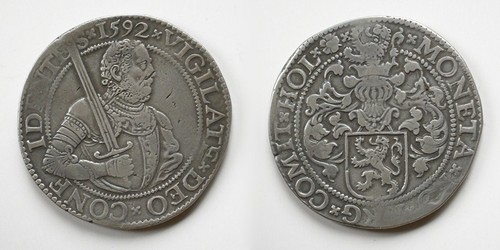
Prinsendaalder (Rijksdaalder)
1592
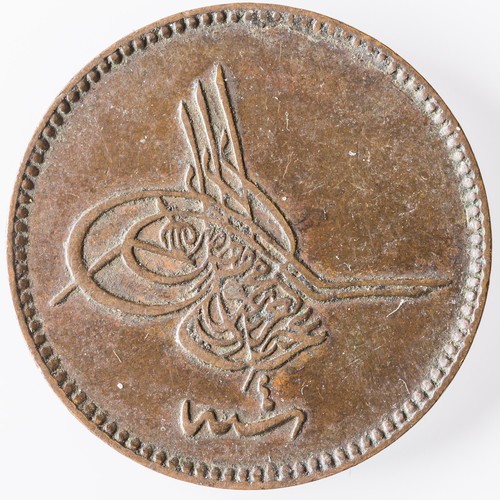
10 Para
AH 1280 (1863-1864 CE)
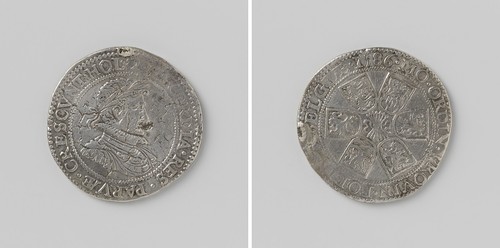
Halve Rijksdaalder van Leicester
1580s-1590s
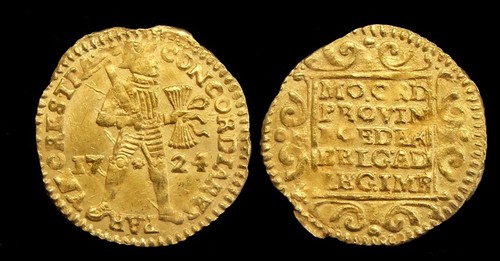
Gouden Dukaat
1724
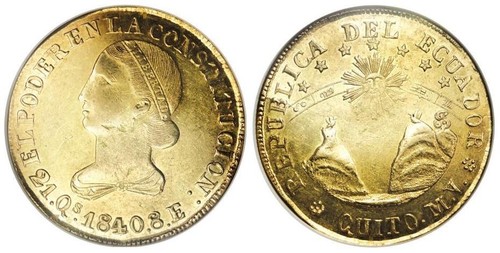
Escudo (Joanna and Charles V, contemporary copy)
1516-1558
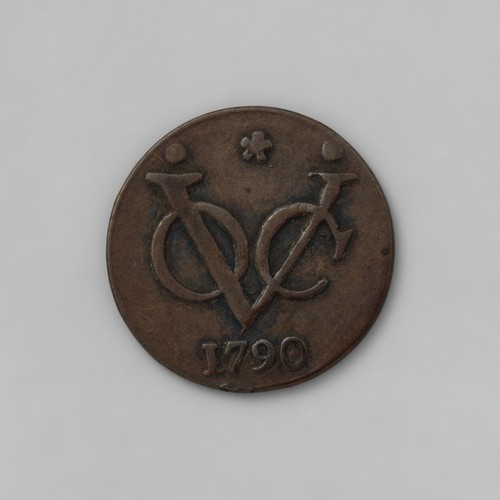
Duit (VOC)
1790
4 Escudos
1780s
Tymf
1663