
How to Identify the 10 Roubles (Elizabeth)
Recognize the Russian gold Imperial by Elizabeth's right-facing crowned bust, Cyrillic titles, and the orb-and-scepter double-headed eagle reverse.
Read the full 10 Roubles (Elizabeth) encyclopedia entry →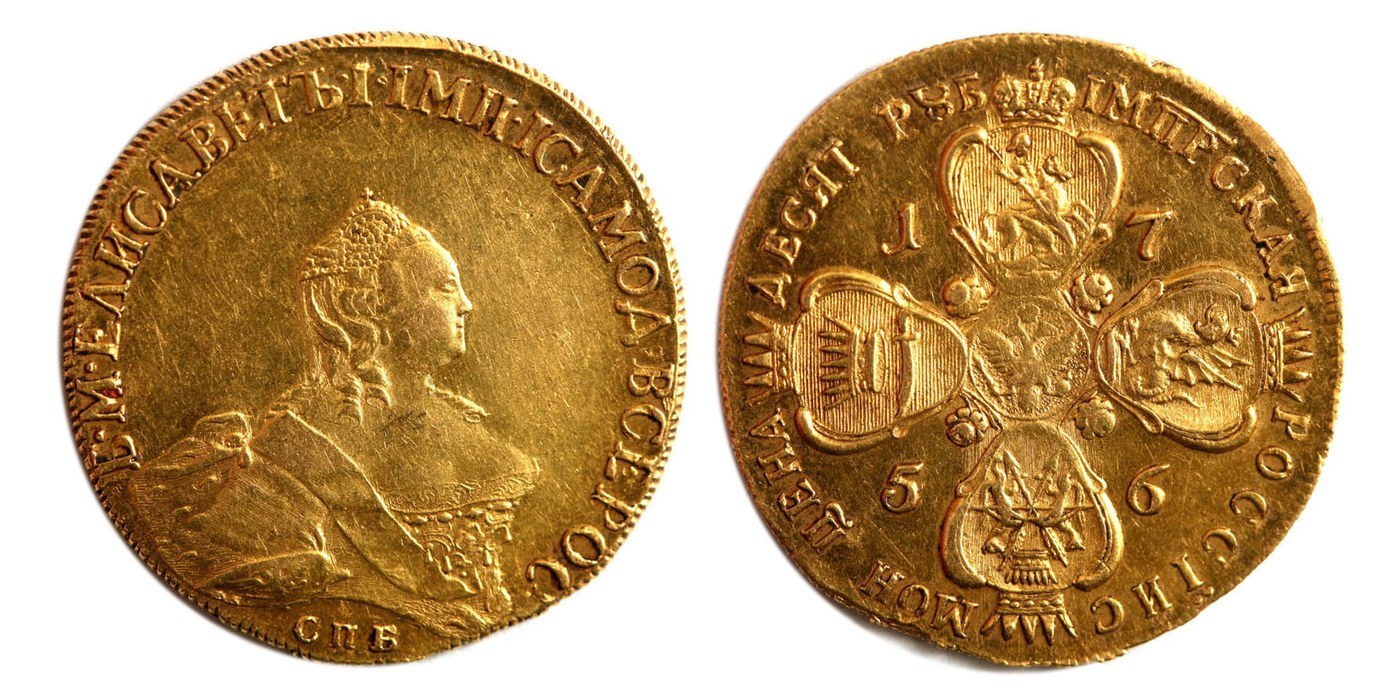
Start with the portrait, because it fixes the reign. The obverse should show a crowned, draped female bust facing right in an ornate Baroque style, surrounded by a Cyrillic legend naming Elizabeth (Elizaveta Petrovna) with her imperial titles. If the bust faces left, names a different ruler, or is in Latin lettering, it is not this type. The right-facing empress plus Cyrillic titles is the first checkpoint.
Read the reverse next. On the piece shown here it carries the crowned Imperial double-headed eagle, wings displayed, holding an orb and scepter, with the denomination and the date 1756 in Cyrillic. Be aware that some Russian gold of this era uses a reverse of four crowned monograms in a cross instead of the eagle; both are period designs, so match the reverse to the specific type rather than assuming one layout.
Confirm the metal and physical size. This is a gold coin, warm yellow throughout with no silver-grey or copper tone, about 30 mm in diameter and weighing in the mid-teens of grams for the full Imperial. Gold is dense and non-magnetic, so a coin that is light for its size, magnetic, or shows base-metal color under wear points to a plated or counterfeit piece. The 5 Rouble half-imperial is the smaller, lighter companion coin; do not confuse a half-imperial for the 10 Roubles.
Watch for the look-alikes and fakes that follow valuable Russian gold. Modern replicas, gilt base-metal copies, and later restrikes exist, and cast fakes betray themselves through grainy fields, soft or mushy lettering, weak eagle feathers, and sometimes an edge seam. A genuine struck coin shows crisp Cyrillic legends, sharp portrait detail, and clean eagle plumage even with honest wear.
Because the stakes are high, treat weight, diameter, and gold color as a set and check them together against published specifications for the Imperial. For any coin of real value, independent authentication and certification by a recognized grading service is essential; the combination of high price and heavy faking makes professional confirmation more important than usual here.
Frequently asked questions
Which way does Elizabeth's portrait face?
On this type her crowned, draped bust faces right, surrounded by a Cyrillic legend giving her name and imperial titles. A left-facing bust or one with Latin lettering indicates a different coin or ruler.
How do I tell the 10 Roubles from the 5 Roubles?
The 10 Roubles (the Imperial) is the larger, heavier gold coin; the 5 Roubles half-imperial is smaller and lighter. Check the denomination in Cyrillic on the reverse along with the diameter and weight.
Why do some Elizabeth gold coins have monograms instead of an eagle?
Both designs were used in the period. This example carries the double-headed eagle with orb and scepter, but some Russian gold of the era uses a cross of four crowned monograms on the reverse. Match your coin to the specific type.
Should I get one authenticated before buying?
Yes. Given the high value and the volume of copies, gilt fakes, and restrikes of Imperial Russian gold, any 10 Roubles should be certified by a recognized grading service before a meaningful purchase or sale.